
In This Article
There’s a moment every cyclist has. You’re standing in a bike shop — or more likely, scrolling Amazon.co.uk at 11pm — squinting at two helmets that look nearly identical. One costs £49. The other costs £89. The only obvious difference? A tiny yellow liner and three letters: M-I-P-S. And you think: is it actually worth it, or is this just marketing dressed up in science?
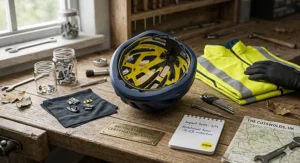
Here’s the short answer: yes, is a MIPS helmet worth it for cycling — almost certainly. Here’s the longer, more interesting answer: it depends on which MIPS helmet, what kind of riding you do, and whether you understand what MIPS is actually protecting you against (hint: it’s not the crash you’re imagining).
MIPS — the Multi-directional Impact Protection System — was developed in Sweden in the 1990s by a neurosurgeon and an engineer who realised that most cycling helmet testing at the time ignored a critical type of impact: the oblique, angled hit. When you fall off a bike, you rarely hit the ground perfectly perpendicular, like a coconut dropped from a building. You glance, skid, and twist. And that rotational force — the angular acceleration your brain experiences — is, according to biomechanical research from the Royal Institute of Technology in Stockholm, associated with some of the most serious brain injuries, including diffuse axonal injury and subdural haematoma.
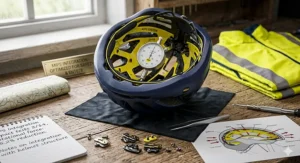
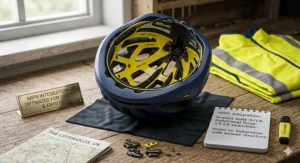
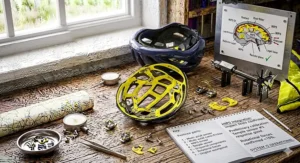
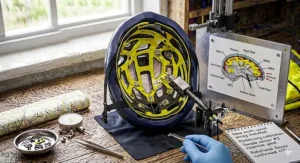
MIPS adds a low-friction slip plane inside the helmet — typically a thin yellow shell — that allows roughly 10–15mm of independent movement during an oblique impact. The idea is elegantly simple: let the helmet rotate slightly so your brain doesn’t have to. For most road cyclists navigating Britain’s potholed tarmac, wet leaves in October, and the occasional lorry wing mirror at close quarters, that extra layer of protection is, in this writer’s view, worth every penny of the price difference. Let’s get into which specific helmets on Amazon.co.uk actually deliver on that promise — and which ones are coasting on the MIPS badge without the quality to back it up.
Quick Comparison: Top MIPS Cycling Helmets Available on Amazon.co.uk
| Helmet | Type | Price Range | Weight (approx.) | Best For |
|---|---|---|---|---|
| Specialized Align II MIPS | Budget Road/All-round | Under £55 | ~374g (M/L) | Value seekers, commuters |
| Giro Agilis MIPS | Mid-Range Road | £60–£100 | ~292g | Everyday road cyclists |
| OutdoorMaster Gem II MIPS | Budget Commuter | Under £50 | ~290g | Urban riders, beginners |
| ABUS PowerDome MIPS | Mid-Range Road | £120–£155 | ~248g | Weight-conscious riders |
| POC Ventral MIPS | Premium Road | £150–£200 | ~190g | Performance enthusiasts |
| POC Ventral Air MIPS | Premium Ventilated | £180–£220 | ~195g | Summer/sportive riders |
| ABUS GameChanger 2.0 MIPS | Pro Aero | £200–£235 | ~250g | Racers, fast club riders |
The table above tells a clear story: MIPS is no longer the preserve of premium helmets. From under £50 to over £200, there is now a MIPS option at virtually every price point on Amazon.co.uk. That said, price does matter here — not because cheaper helmets are unsafe, but because the quality of the MIPS integration, the overall construction, and the comfort features differ considerably. The Specialized Align II offers remarkable value for casual riders; the ABUS GameChanger 2.0 MIPS is a different beast entirely, built for riders who care about aerodynamics, weight, and being the fastest person in their club run. The middle ground — particularly the ABUS PowerDome MIPS and the Giro Agilis MIPS — represents the sweet spot for most British road cyclists.
✨ Don’t Miss These Exclusive Deals!
🔍 Take your cycling safety to the next level with these carefully selected MIPS helmets. Click on any highlighted item to check current pricing and availability on Amazon.co.uk. These picks will help you find exactly the right lid for your head and your riding style!
💬 Just one click — help others make better buying decisions too! 😊
Top 7 MIPS Cycling Helmets for UK Riders: Expert Analysis
1. Specialized Align II MIPS — Best Budget MIPS Helmet Under £55
The Align II is something of a small miracle in the cycling world. MIPS technology at a price that undercuts most non-MIPS rivals? It shouldn’t exist, yet here it is. The headline specification is the Headset SX dial retention system, which lets you fine-tune the fit with one hand while rolling — useful when you’ve misjudged how cold it is and you’re trying to pull a cap underneath without stopping. The 4th Dimension Cooling System provides decent ventilation through its multi-channel design, and the all-round fit suits a wide range of head shapes, which is worth knowing given how many budget helmets are oddly sized.
What most UK buyers overlook about this model is the weight: at around 374g for a medium/large, it’s noticeably heavier than mid-range rivals. You won’t feel it on a 20-minute commute, but on a three-hour ride through the Peaks or along the South Downs Way, it starts to register. That said, it has earned a five-star rating from Virginia Tech’s independent helmet safety testing programme — a rating that many helmets costing three times as much have failed to achieve.
UK reviews are consistently positive for its value and fit, though a handful note that the polycarbonate outer shell feels less premium than the price-points above. This is genuinely one of the best entry points into MIPS protection for UK riders on a budget.
✅ Excellent MIPS safety rating for the price
✅ Adjustable dial fit works with gloves on
✅ Good colour and size range for UK market
❌ Heavy for a road helmet
❌ Ventilation adequate rather than impressive
Around £45–£55 on Amazon.co.uk. For the money, the protection it offers is, frankly, remarkable.
2. Giro Agilis MIPS — Best All-Round Mid-Range Performer
The Agilis MIPS is the kind of helmet you buy and then forget you’re wearing — and that is, genuinely, the highest compliment you can pay a cycling lid. Weighing in at around 292g (a full 80g less than the Specialized above), it immediately distinguishes itself from the budget tier the moment you put it on. The Roc Loc 5.5 MIPS adjustment system is worth particular attention: unlike systems that separate fit and MIPS integration, Roc Loc 5.5 combines both in a single, elegant mechanism at the rear of the helmet, which means no extra bulk and no rattling yellow liner that migrates when you sweat.
Thirty-two ventilation openings run through a Wind Tunnel system with internal channels, meaning airflow is active and directed rather than just passively blowing around your head. In the drizzle-to-downpour spectrum of British summer riding, that matters: a poorly ventilated helmet fogs up your glasses and soaks your head in sweat before you’ve reached the end of the high street.
The In-Mold construction — where the polycarbonate outer shell is fused directly to the EPS foam liner — adds structural integrity without the extra weight of a separate shell. It’s a manufacturing detail that the spec sheet often buries, but it’s what separates a helmet that flexes slightly in your hands from one that feels solid and purposeful.
UK and European reviews praise the secure, wrapped fit, particularly for riders with longer or narrower head shapes. Several British reviewers specifically note how well the adjustable retention handles both a summer skullcap and a winter buff — a genuine quality-of-life consideration for 10 months of the year.
✅ Genuinely comfortable, disappears on your head
✅ Roc Loc 5.5 is the best retention system at this price
✅ In-Mold construction adds durability in the wet
❌ Not the most aerodynamic option if you care about speed
❌ Colour palette can be limited on Amazon.co.uk depending on stock
Around £60–£100 on Amazon.co.uk. One of the most satisfying helmets at any price point — the spec doesn’t tell the half of it.
3. OutdoorMaster Gem II MIPS — Best Budget Commuter Choice
The OutdoorMaster Gem II MIPS occupies a slightly different niche from the Specialized Align II: it’s built more explicitly for urban commuters and casual riders than for road cyclists chasing fitness goals. The integrated USB-rechargeable rear LED is the feature that sets it apart — a detail that sounds like a gimmick until you’re cycling home from the office in November at 5:30pm with the rain horizontal and the battery in your clip-on light at 3%. The light runs for up to 13 hours on a full charge and offers three modes, covering everything from steady daylight visibility to rapid flash for low-light conditions.
Twenty-one vents with internal air channels keep the head cool during stop-start urban cycling, though at higher speeds the ventilation is less impressive than dedicated road helmets. The removable, washable padding is a thoughtful addition — anyone commuting in British autumn knows that a helmet liner that can be laundered is worth its weight in gold (or at least in dry shampoo savings).
MIPS integration is genuine rather than token: the slip plane mechanism meets the standard rotational protection spec, which is what you need it to do. The spec sheet won’t tell you this, but the fit runs slightly narrow, which is worth knowing if you have a rounder head shape — size up if in doubt.
UK commuters on Amazon.co.uk rate this well for its value and the integrated light, with most noting it represents a significant upgrade from non-MIPS alternatives at a similar price.
✅ Integrated rechargeable rear light — genuinely useful
✅ Washable liner (essential for commuting)
✅ MIPS certified at a budget price point
❌ Fit runs narrow — check sizing carefully
❌ Ventilation average at higher speeds
Under £50 on Amazon.co.uk. For the urban commuter who wants MIPS protection and visibility without spending serious money, this is a sharp choice.
4. ABUS PowerDome MIPS — Best Mid-Range for Weight-Conscious Riders
ABUS is a German brand better known for making the locks that secure your bike than the helmet that protects your head, but the PowerDome MIPS demonstrates they’ve brought the same engineering rigour to both ends of the security equation. At approximately 248g in a medium — lighter than the Giro Agilis despite sitting in a similar price bracket — the PowerDome achieves something genuinely tricky: meaningful weight reduction without sacrificing structural integrity.
The sculpted, slim profile and cut-off rear section give it a slightly aerodynamic silhouette that’s rare at this price, making it a crossover choice for riders who want road helmet performance without the premium road helmet invoice. MIPS integration is standard and well-executed. The ventilation, however, is where most reviewers find the trade-off: the helmet looks sleeker than it breathes, and in warm weather it runs somewhat warmer than rivals with more open vent channels. For the nine months of the year when British cycling involves temperatures under 15°C, this is barely a concern. July, though, may require a cap.
The ActiCage internal reinforcement structure — an ABUS proprietary feature — stabilises the EPS liner and prevents deformation, which is relevant for riders who live in terror of sitting on their helmet in a café (not an uncommon cycling calamity). The Zoom Ace retention system is quick to adjust and holds its position well even on rough surfaces.
UK buyers highlight the premium feel relative to the price, and it’s worth noting it’s Made in Italy — a fact ABUS rather enjoy mentioning and, to be fair, the build quality supports the claim.
✅ Impressively light for the price bracket
✅ ActiCage internal reinforcement adds durability
✅ Slim, aerodynamic profile — looks more expensive than it is
❌ Ventilation could be better in warm weather
❌ Colour selection limited on Amazon.co.uk
Around £120–£155 on Amazon.co.uk. A serious helmet for serious riders who haven’t yet committed to the serious price of a flagship model.
5. POC Ventral MIPS — Best Premium Performance Helmet
POC is the Swedish brand that occasionally appears to have been founded by a collaboration between a neurosurgeon and a furniture designer: everything is clean, intentional, and ever so slightly austere in the best Scandinavian way. The Ventral MIPS is their core performance road helmet, and it earns its place at the premium tier through the Whole Helmet Concept — POC’s design philosophy which considers not just how the helmet performs on impact, but how it functions in the seconds, minutes, and hours before and after a crash.
The one-piece unibody shell construction is immediately apparent when you pick it up: this is not a helmet assembled from separate parts but moulded as a single continuous structure, which optimises both weight distribution and impact performance. At around 190g in a medium, it is startlingly light. The lightweight size adjustment system spans the full circumference of the head rather than just the rear, giving a genuinely secure and even fit that doesn’t shift during sprints or out-of-the-saddle climbs.
MIPS integration here is about as sophisticated as the base technology gets: the low-friction liner is thin, unobtrusive, and doesn’t interfere with the fit system or the ventilation. The Venturi-effect airflow zones and the 22° aerodynamic trailing edge mean this is also a quick helmet — not just a safe one. For British road cyclists who spend serious time on sportives, club runs, or chasing Strava segments on the A roads of North Yorkshire or the Surrey Hills, the POC Ventral MIPS is a genuine upgrade over mid-range options.
UK reviewers frequently mention the unusual sizing — POC uses XS-S and M-L designations with narrower tolerances than most brands, so check the head circumference chart carefully before ordering.
✅ Exceptional build quality — feels like it costs more than it does
✅ Unibody shell for superior structural integrity
✅ Genuinely aerodynamic profile that improves comfort at speed
❌ POC sizing runs unusual — measure carefully before buying
❌ Premium price reflects premium quality, but it’s a commitment
Around £150–£200 on Amazon.co.uk. If you’re going to spend this kind of money on a helmet, you should be spending it here.
6. POC Ventral Air MIPS — Best for Summer Sportives and Hot Days
The Ventral Air MIPS is the Ventral MIPS with the volume turned up on ventilation — and in the context of the British cycling calendar, that has a specific meaning. You’ll reach for this helmet perhaps ten to fifteen days a year when the temperature genuinely climbs above 20°C, or on long summer sportives where heat management becomes as important as aerodynamics. For those days, the Ventral Air MIPS is extraordinary.
Precise ventilation ports with internal channels control air intake and release at both low and high speeds, creating what POC describe as a supreme cooling effect over the entire head. In practice, this means active channelling of airflow rather than passive holes — the difference is noticeable above 20km/h, where the Ventral Air becomes perceptibly cooler than conventional helmets. The aerodynamically optimised trailing edge reduces turbulence while maintaining the cooling properties, which is a technical balance that took, by all accounts, considerable wind-tunnel hours to get right.
At around 195g, it sits just slightly heavier than the standard Ventral MIPS while offering meaningfully superior ventilation. The same unibody construction applies, and the eye garage — high-friction recesses designed to securely hold sunglasses while riding — is a detail that sounds minor until you’ve had a pair of £150 sunglasses bounce off your helmet mid-descent.
UK customers consistently praise the ventilation as among the best they’ve experienced at any price point, though several note the aerodynamics are marginally compromised compared to the non-Air version on windier days.
✅ Best ventilation of any helmet in this guide
✅ Eye garage holds sunglasses securely at pace
✅ Unibody construction matches the standard Ventral
❌ Aerodynamics slightly compromised versus Ventral MIPS on windy days
❌ Premium pricing may be hard to justify for occasional summer use
Around £180–£220 on Amazon.co.uk. The helmet you’ll feel most grateful for on that one transcendent summer weekend cycling the Lake District in July.
7. ABUS GameChanger 2.0 MIPS — Best for Club Racers and Fast Riders
This is not a helmet for everyone. The ABUS GameChanger 2.0 MIPS is a helmet for riders who use the word “wattage” unironically, have an opinion on tyre pressure, and consider 40km/h on a flat road a reasonable warm-up pace. Developed in cooperation with the Movistar professional cycling team and refined in the wind tunnel, it represents ABUS’s most serious road racing product — and the MIPS Air Node Rotation System is a significant update over the previous generation, integrating rotational protection without interfering with any of the 12 ventilation channels.
The Aero Blade — a special grid structure at the rear of the helmet — is the standout technical feature. At lower speeds it allows air to flow through, maintaining ventilation. As speed increases, the grid structure effectively closes aerodynamically, creating a smooth trailing surface that reduces drag. It’s a genuinely clever piece of design that addresses one of the classic trade-offs in helmet engineering: ventilation versus aerodynamics. The AirBoost inlet at the front ensures you still get meaningful cooling even when the Aero Blade is functioning in aero mode.
The ActiCage reinforcement structure and Multi Shell In-Mold construction provide the structural rigidity you’d expect at this level. The Zoom Ace Aero retention system offers precise micro-adjustment while maintaining a low-profile rear that doesn’t create aerodynamic drag.
For British club cyclists targeting charity sportives, criteriums, or simply wanting to be the fastest person on their Saturday morning chain gang, the GameChanger 2.0 MIPS is a serious tool. German engineering meets Italian manufacturing — ABUS make it in Italy — and the build quality reflects both influences.
✅ Wind-tunnel optimised aerodynamics with MIPS Air Node
✅ Aero Blade intelligently balances ventilation and drag reduction
✅ Pro-level quality trusted by WorldTour cyclists
❌ Overkill for casual or commuter cycling
❌ At the top of the budget for most UK recreational riders
Around £200–£235 on Amazon.co.uk. A pro-calibre helmet at a price that’s steep but honest about what you’re getting.
How MIPS Technology Actually Works — And What the Research Says
Understanding MIPS properly changes how you evaluate every helmet you’ll ever buy. The technology was developed following research into how the brain sustains injury during rotational impacts — not just straight-line collisions. When you fall off a bike at an angle, which is most falls, the impact applies both linear force (the bang on the head) and angular acceleration (the spinning motion transmitted to the brain).
Research from MIPS AB and peer-reviewed biomechanics journals indicates that rotational acceleration — rather than linear deceleration — is the primary mechanism behind diffuse axonal injuries, a particularly serious form of traumatic brain injury. Traditional helmet testing standards, including EN1078 (the European standard applicable in the UK) and the newer EN17092 standard, test primarily for linear impacts. This is why independent testing from Virginia Tech’s Helmet Lab — which specifically tests rotational and oblique impacts — has become such a trusted resource for serious cyclists. Helmets with MIPS consistently outperform their non-MIPS counterparts in Virginia Tech’s ratings, which explains why all seven helmets in this guide carry that five-star seal.
The key insight for UK cyclists is this: you don’t need to crash at speed for the rotational protection to matter. Low-speed urban falls — the kind that happen when you clip a kerb in Islington, lose traction on a wet painted cycle lane in Manchester, or miscalculate a tight corner on a Peak District descent — are precisely the oblique-impact scenarios MIPS was designed to address.
What MIPS Does NOT Do
MIPS is not a substitute for proper helmet fit, and it doesn’t improve a poorly ventilated or poorly constructed helmet. The slip plane only functions correctly when the helmet is properly sized and adjusted. A loose helmet that moves on your head before impact negates much of the rotational protection benefit. This is why the fit systems in the helmets above — Roc Loc 5.5, Zoom Ace, BOA — matter almost as much as the MIPS liner itself.
MIPS vs Non-MIPS: What the Oblique Impact Tests Actually Show
The question of MIPS vs non-MIPS has generated more forum arguments than virtually any other topic in cycling safety. Here is what the independent testing actually shows, stripped of marketing.
| Test Factor | Non-MIPS Helmet | MIPS Helmet | Practical Meaning |
|---|---|---|---|
| Linear Impact (direct) | ✅ Protected | ✅ Protected | Both types protect equally |
| Oblique Impact (angled) | ⚠️ Partial | ✅ Enhanced | MIPS reduces rotational forces by 10–15% on average |
| Virginia Tech Rating | Variable | Consistently higher | MIPS helmets dominate the top-rated list |
| Price premium | Baseline | £10–£30 more | Marginal cost per ride over helmet life |
| Weight penalty | Baseline | +25–45g typically | Negligible for most riders |
The data is reasonably clear. MIPS helmets consistently achieve higher scores in oblique impact testing. The price premium has shrunk considerably as the technology has become more mainstream — in 2026, you can get MIPS for under £50, which was unimaginable five years ago. The weight penalty is real but small; the Giro Agilis MIPS at 292g disproves the idea that MIPS necessarily makes helmets heavy.
For road cycling specifically — where oblique impacts on tarmac are the most common crash scenario — MIPS makes measurable sense. The debate is largely settled. What’s less settled is which alternative rotational protection systems (Kask’s WG11, Lazer’s KinetiCore, POC’s own SPIN technology in older models) perform comparably, but MIPS remains the most independently tested and publicly data-supported option.
✨ Don’t Miss These Exclusive Deals!
🔍 Ready to upgrade your cycling helmet? Click any highlighted product in this guide to check current pricing and availability on Amazon.co.uk. All picks are Prime-eligible — free next-day delivery if you’re already a Prime member!
How to Choose a MIPS Cycling Helmet in the UK: 7 Key Criteria
Buying a MIPS helmet in Britain involves considerations that don’t always appear in international buying guides. Here’s what actually matters, in order of importance.
1. Fit above everything else No helmet technology compensates for a poor fit. MIPS functions correctly only when the helmet sits properly — level, two finger-widths above the brow, with the rear retention snug but not tight. Most returns of cycling helmets on Amazon.co.uk relate to fit issues rather than product defects. Use the head circumference measurements (in centimetres) provided in each product listing, not generic S/M/L assumptions.
2. EN1078 certification This is the European safety standard that all helmets sold in the UK must meet. Post-Brexit, the UK has retained EN1078 compliance as the operative standard — UKCA marking is being phased in but EN1078 remains the benchmark. Every helmet in this guide meets EN1078. Do not buy a helmet from an unrecognised seller that cannot confirm this certification.
3. Ventilation versus weather British cycling weather is particular. You need a helmet that performs adequately in both a November drizzle and a rare June heatwave. Highly aero helmets with minimal venting are miserable on warm days; highly ventilated helmets can be cold in winter. The mid-range options — Giro Agilis MIPS, ABUS PowerDome MIPS — represent a sensible balance for year-round British riding.
4. Weight relative to riding style If you’re commuting 5km each way, helmet weight is genuinely irrelevant. If you’re riding a 160km sportive, 80g saved starts to matter by hour five. Match the weight priority to your actual riding — don’t pay a premium for a 190g helmet if most of your miles are short urban hops.
5. Retention system quality The dial-adjust retention system at the rear is what holds the helmet in position during a crash. Systems like Giro’s Roc Loc 5.5 and ABUS’s Zoom Ace can be adjusted with gloves on, one-handed, while moving. Cheaper systems sometimes strip or slip. Test it in-store if possible, or buy from Amazon.co.uk for the 14-day return window under the Consumer Contracts Regulations.
6. Amazon.co.uk availability and delivery All seven helmets in this guide are available on Amazon.co.uk. Prime members get free next-day delivery, which matters when you’ve just cracked your old helmet and have a Sunday ride planned. Order before the Friday afternoon cutoff for Saturday delivery in most UK postcodes.
7. Replacement after any impact This is the criterion cyclists most often forget. Any helmet involved in a significant impact — even if it looks undamaged — should be replaced. The EPS foam is designed to crush on impact, which means it’s already partially compromised. Factor the cost of occasional replacement into your budget decision: a £55 helmet you replace every three to four years may be a better long-term investment than a £230 helmet you hesitate to replace after a minor fall.
Who Should Buy Which MIPS Helmet: Real UK Rider Scenarios
The London Commuter
You’re cycling from Peckham to Canary Wharf — 8km each way, five days a week. You’re navigating bus lanes, navigating the Elephant and Castle roundabout’s remaining chaos, and arriving at the office in a state that needs to be at least vaguely presentable. You need a helmet that protects you in stop-start urban traffic, has decent ventilation for sweaty arrivals, and ideally features integrated lights or an obvious mount for them.
Best pick: OutdoorMaster Gem II MIPS. The integrated rear LED removes one charging cable from your life, the washable liner handles the daily reality of sweating through a commute, and the MIPS protection is exactly what you need for the low-speed oblique impacts that urban cycling produces. Budget under £50 with Amazon Prime delivery means you can have it by tomorrow.
The Weekend Club Rider
Saturday mornings, 60–100km, Surrey Hills or the Chilterns. You care about performance, you’ve developed opinions about chain lube, and you’d rather not be the only person in the chain gang with a budget lid. But you’re not racing, and you’re not spending £400 on a helmet.
Best pick: Giro Agilis MIPS or ABUS PowerDome MIPS. The Agilis offers the better ventilation and the lighter weight (292g vs 248g) with the Roc Loc 5.5 system that weekend riders universally appreciate. The PowerDome gives you a slightly more aerodynamic profile and marginally lighter build if that matters to you. Either sits in the £60–£155 range and will be quietly impressive on the bike.
The Sportive Rider
You’ve entered the Fred Whitton, the Etape Caledonia, or a Cyclosportive Event. Long days in the saddle, variable British weather, and the occasional proper hill. Comfort over eight hours matters considerably more than raw aerodynamics.
Best pick: POC Ventral Air MIPS. The ventilation is exceptional for prolonged efforts, the fit is secure across varied terrain, and the 195g weight means you won’t notice it by hour six. The eye garage keeps your sunglasses — essential on a full-day event — safely stowed when the weather turns, which in Scotland or the Lake District it reliably will.
The Racing Cyclist
Club TT, local crits, or genuinely trying to be faster. You’ve read the aerodynamic data, you track your wattage-to-weight ratio, and you’d like a helmet the professional peloton would recognise.
Best pick: ABUS GameChanger 2.0 MIPS without hesitation. The Aero Blade technology is genuinely effective at racing speeds. The MIPS Air Node provides rotational protection without compromising any of the aerodynamic or ventilation design. If you’re going to race, this is the helmet to race in.
Common Mistakes When Buying a MIPS Cycling Helmet in the UK
Buying the wrong size by ignoring the measurements Manufacturers’ size descriptions vary wildly. A “medium” from Giro is not the same as a “medium” from POC. Always use the head circumference in centimetres, and always check the specific brand’s size chart — not a generic S/M/L guide.
Assuming all MIPS helmets are equal The MIPS slip plane is licensed technology, and the quality of its integration varies. A helmet that incorporates MIPS as an afterthought — shoe-horning a yellow liner into an otherwise unchanged design — will not perform as well as one designed from the outset to incorporate rotational protection. POC and Giro in particular design the MIPS integration into the overall architecture; it’s not a bolt-on.
Buying a US-market helmet from a grey-market seller Some Amazon.co.uk sellers list helmets that are technically US-market models. While this rarely affects the helmet itself (unlike electrical products, there’s no voltage difference), it can affect your warranty and return rights. Always check the seller is dispatching from UK or EU stock, and verify that the helmet is EN1078 certified for UK sale. Look for the CE or UKCA mark on the listing.
Ignoring the replacement schedule British cyclists, who are famously stoic about discomfort, are particularly prone to riding with a compromised helmet long after they should have replaced it. Any helmet over five years old, or any helmet that has absorbed a significant impact, should be replaced regardless of its visible condition. The EPS foam degrades over time even without impacts — exposure to sweat, sunscreen, and ultraviolet light all affect its protective properties.
Neglecting the Consumer Contracts Regulations UK online purchases come with a 14-day cooling-off period and 30-day right to a full refund if the product is faulty. Exercise these rights if your helmet arrives damaged or doesn’t fit as described. Amazon.co.uk’s return process is one of the simpler retail experiences in Britain — use it.
Long-Term Cost and Value: Is a MIPS Helmet Really Worth It in the UK?
Let’s do the honest maths that manufacturers prefer you don’t. The average British road cyclist rides approximately 100–150km per week across seven to nine months of the year. A quality MIPS helmet has a service life of roughly five years before degradation affects performance — longer if stored carefully and never impacted.
At five years of riding 120km per week for 35 weeks annually (a reasonable UK estimate), that’s approximately 21,000km of riding per helmet. The price difference between a comparable MIPS helmet and its non-MIPS equivalent is typically £15–£30 at the mid-range. Spread over 21,000km, you are paying between 0.07p and 0.14p per kilometre for rotational impact protection.
Put differently: the cost of a MIPS upgrade over five years is roughly equivalent to one café stop on a club ride. For protection against a category of brain injury that conventional helmets are not designed to address, that is, by any reasonable measure, excellent value.
The more interesting long-term question is about maintenance. All seven helmets in this guide offer replacement pads and liners through their UK distributors and on Amazon.co.uk — keeping the internal comfort system fresh is a much more economical alternative to whole-helmet replacement, and it extends the effective life of the outer shell. Replace the pads annually if you’re riding regularly; the £10–£15 investment is self-evidently worthwhile.
FAQ: MIPS Cycling Helmets — UK Questions Answered
❓ Is a MIPS helmet worth it for cycling on UK roads?
❓ Is MIPS technology worth the money compared to standard helmets?
❓ Do I need a MIPS helmet for road cycling specifically?
❓ Are MIPS cycling helmets available to buy on Amazon.co.uk with fast UK delivery?
❓ What safety standards should my cycling helmet meet in the UK?
Conclusion: Is a MIPS Helmet Worth It for Cycling in the UK?
After examining the science, the independent testing data, and seven real helmets across the full price range, the conclusion is about as definitive as cycling kit advice ever gets: yes. Is a MIPS helmet worth it for cycling? For the vast majority of British cyclists — commuters, club riders, sportive enthusiasts, and weekend warriors alike — the answer is yes, with very little genuine qualification.
The technology is well-established, the independent testing evidence is credible, and the price premium has become genuinely marginal. At under £55 for the Specialized Align II MIPS, rotational impact protection is now as accessible as basic road safety kit. At the top of the range, the ABUS GameChanger 2.0 MIPS and POC Ventral Air MIPS represent the best that road helmet engineering currently offers — genuinely exceptional tools for riders who take their safety as seriously as their performance.
The right MIPS helmet for you depends on your budget, your riding style, and your head shape — all of which this guide has tried to address honestly. What it doesn’t depend on is whether you’re fast enough, experienced enough, or serious enough to “deserve” the technology. MIPS is relevant every time you clip in, whether you’re commuting to a job in Birmingham, riding a sportive in the Scottish Highlands, or chasing a King of the Mountains segment on Strava.
Ride well. Ride safely. Check the pricing on Amazon.co.uk today — and if you’re a Prime member, you could be wearing a better helmet by tomorrow morning.
✨ Don’t Miss These Exclusive Deals!
🔍 Check current pricing and availability for all 7 MIPS helmets on Amazon.co.uk by clicking the highlighted products above. Your head is the most important piece of kit you own — treat it accordingly!
Recommended for You
- Best MIPS Road Cycling Helmet UK 2026: 7 Top Picks Rated
- Best Lightweight Road Cycling Helmets UK 2026: 7 Expert-Tested Picks
- Road Bike Helmet Buying Guide: 7 Best Picks UK 2026
Disclaimer: This article contains affiliate links. As an Amazon Associate, I earn from qualifying purchases. If you purchase products through these links, we may earn a small commission at no additional cost to you.
✨ Found this helpful? Share it with your mates! 💬🤗
