
In This Article
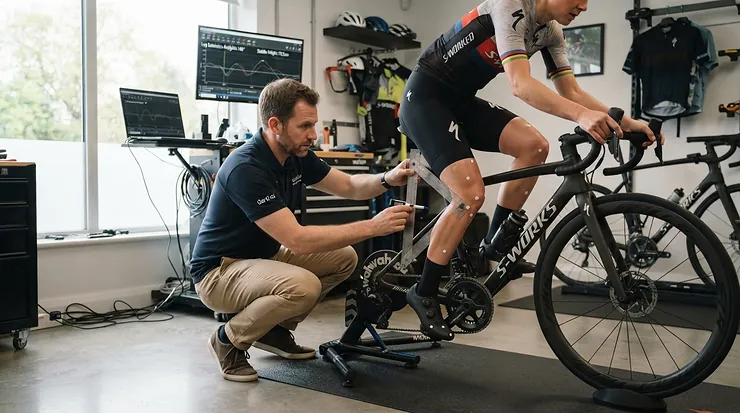
Your knee doesn’t care how expensive your carbon frame is. It cares about one small, unglamorous plastic triangle bolted to the bottom of your shoe — and if that triangle is fighting your natural pedal stroke, you’ll know about it by mile twenty. SPD-SL cleats for knee comfort are simply the versions of Shimano’s road cleat system built with extra rotational “float,” letting your foot twist a few degrees at the ankle instead of locking your leg into one rigid path for every single revolution. What is SPD-SL cleats for knee comfort, in plain terms? It’s the practice of choosing a cleat — usually Shimano’s yellow SM-SH11 or a compatible third-party equivalent — with enough float to absorb the natural rotation of your hip, knee and ankle, rather than forcing your joints to twist to match a fixed pedal.

Anyone who’s switched from flat pedals to clipless and immediately felt a nagging ache on the inside of the knee has met this problem head-on. It’s rarely the bike’s fault, and it’s almost never a fitness issue — Shimano’s SPD-SL cleats are offered in three float options, and a small amount of float may accommodate natural variations in foot positioning and reduce stress on the knees. This guide walks through seven real, currently available cleat options for UK riders, breaks down exactly how float, fore-aft position and pedal stroke alignment interact with knee comfort, and gives you a proper decision framework rather than a shrug and a “just try some.”
Quick Comparison Table: SPD-SL Cleats for Knee Comfort at a Glance
| Cleat | Float | Best For | Price Range |
|---|---|---|---|
| Shimano SM-SH11 (Yellow) | 6° | Knee comfort, beginners | around £15–£20 |
| Shimano SM-SH12 (Blue) | 2° | Efficiency with some float | around £15–£20 |
| Shimano SM-SH10 (Red) | 0° (fixed) | Racing, precise fit riders | around £15–£20 |
| Exustar EPS-SL | 6° | Premium replacement | £10–£15 range |
| ROCKBROS SPD-SL Compatible | 0–6° adjustable | Budget, adjustable comfort | under £10 |
Look at that float column for a second, because it’s doing all the work in this table. The wider the float range, the more your knee gets to make its own small decisions mid-pedal-stroke rather than being told exactly where to point. That’s why the two most float-generous options — Shimano SM-SH11 and ROCKBROS SPD-SL Compatible — sit at opposite price points but the same comfort logic. Riders chasing outright efficiency over comfort will drift toward the Shimano SM-SH10, but that’s a trade worth understanding before you buy, not after your first 40-mile ride.
💬 Just one click — help others make better buying decisions too!😊
Top 7 SPD-SL Cleats for Knee Comfort: Expert Analysis
1. Shimano SM-SH11 (Yellow) — the widest float for genuinely happy knees
If you read one paragraph in this whole article, make it this one. The Shimano SM-SH11 is the yellow-coded cleat in Shimano’s road lineup, and it has a six-degree float range, three degrees in each direction, allowing free foot movement and low joint stress, with the float’s pivot point in the centre of the cleat.
In practice that means your foot can rotate a good six degrees before it meets any resistance at all — roughly the difference between your toes pointing dead ahead and pointing slightly toward the kerb. This broad range provides more room for error when setting up cleats, which matters enormously if you’ve never had a professional bike fit and are, frankly, guessing.
Aggregated retailer and forum feedback consistently frames the yellow cleat as the default recommendation for anyone reporting discomfort, and Shimano itself positions the yellow cleat as the solid option for those new to cycling, experiencing knee pain, or lacking flexibility. The trade-off is a faint sensation of “vagueness” under hard sprinting efforts, which racing snobs love to complain about and everyone else never notices.
Pros:
- ✅ Widest float range for natural joint movement
- ✅ Forgiving of imperfect cleat installation
- ✅ Genuine Shimano OEM quality and compatibility
Cons:
- ❌ Slightly less direct power transfer under sprints
- ❌ Not ideal for riders wanting a fixed, locked-in feel
Prices sit around £15–£20 for a genuine pair, and given how directly this affects your joints on every single ride, it’s one of the least controversial “buy the proper one” purchases in cycling.

2. Shimano SM-SH12 (Blue) — the compromise pick between float and precision
Blue is Shimano’s newer middle child, sitting between the loose yellow and the rigid red. Blue cleats have two degrees of float, one degree in each direction, allowing for a small range of movement while still delivering a high amount of pedalling efficiency, with the float pivot point at the front of the cleat, eliminating lateral sliding while allowing a small amount of angle change back toward the heel.
What that means on the road: your foot still gets a bit of wiggle room, but the pivot geometry is engineered so you don’t feel that vague, slightly disconnected sensation some riders associate with the yellow cleat. One rider on a well-known cycling forum reported the opposite experience, however — for them, the yellow Shimano offered just the right amount of float, and the blue version caused knee pain within about 40 miles — which is a genuinely useful reminder that “middle ground” doesn’t automatically mean “right for you.”
This cleat rewards riders who already have a reasonably dialled-in position and want a bit less float rather than a bit more.
Pros:
- ✅ Balanced feel between comfort and efficiency
- ✅ Reduced lateral sliding versus the yellow cleat
- ✅ Good option once your fit is already dialled in
Cons:
- ❌ Not enough float for riders with existing knee issues
- ❌ Requires more accurate initial cleat positioning
Expect a similar around £15–£20 range as the yellow option — Shimano doesn’t charge a premium for colour.
3. Shimano SM-SH10 (Red) — zero float, maximum precision, for a specific type of rider
The red cleat is the one to approach with genuine caution if knee comfort is your priority, because red SPD-SL cleats have no float and are 100% fixed in position, which makes them great for sprinters, professional athletes, or people who value the most efficient power transfer possible and are not prone to knee pain. There’s an honesty to that specification most marketing copy doesn’t offer — Shimano is essentially saying “this is for people whose biomechanics already work.”
Red cleats require that you know your optimal cleat position precisely and are comfortable adjusting your cleats into that perfect position, which is a fair chunk of responsibility to hand to a rider who’s still experimenting. We’re including it here not as a knee-comfort pick, but because understanding why it exists sharpens your appreciation of why the yellow and blue variants matter so much for everyone else.
If you’ve had a professional bike fit and your fitter specifically recommends a fixed cleat, this is the one to buy; if you’re reading this article because your knee hurts, this almost certainly isn’t your cleat.
Pros:
- ✅ Maximum, most direct power transfer
- ✅ Rewards a precisely dialled-in bike fit
- ✅ Favoured by racers and sprint specialists
Cons:
- ❌ Zero forgiveness for imperfect knee alignment
- ❌ Can actively aggravate existing joint discomfort
Price sits in the same around £15–£20 range, so the decision here is purely biomechanical, never financial.
4. Exustar EPS-SL — the premium third-party replacement built for longevity
Once your OEM cleats wear down — and they will, usually faster than you expect — the Exustar EPS-SL is a genuinely solid step-up replacement rather than a compromise. It’s marketed as a direct Shimano SPD-SL compatible cleat with a six-degree float range matching the yellow original, and it includes a central twist-lock positioning system so you can swap a worn cleat without losing your carefully dialled-in foot position — a small design touch that saves an enormous amount of trial-and-error re-fitting.
The bonded TPU anti-slip pad on the underside is a genuinely useful addition for anyone who walks into cafés in cycling shoes rather than owning a separate pair of trainers for every stop.
Aggregated buyer feedback on this cleat tends to focus on the walkability improvement and the ease of the positioner system, though a handful of reviewers note the release tension feels marginally firmer out of the box than genuine Shimano cleats until they bed in.
Pros:
- ✅ Matches Shimano’s 6° float for knee comfort
- ✅ Twist-lock positioner preserves your foot alignment
- ✅ TPU anti-slip pad improves off-bike walkability
Cons:
- ❌ Slightly firmer release feel when brand new
- ❌ Smaller review pool than genuine Shimano parts
At £10–£15 range, it undercuts genuine Shimano pricing while matching the float geometry that actually matters for your knees.
5. ROCKBROS SPD-SL Compatible Cleats — adjustable float on a genuinely tight budget
Here’s where things get interesting for anyone still deciding whether they even get on with clipless pedals. ROCKBROS SPD-SL Compatible Cleats ship as a 0–6° adjustable-float design, meaning you can dial the float up toward the yellow-cleat range or down toward something closer to blue, using the same physical cleat.
That’s an unusually flexible proposition at this price point, and it’s specifically designed to work with popular Shimano SPD-SL pedal families rather than being a vague “universal” claim — worth checking against your exact pedal model before buying, since it explicitly isn’t compatible with Look KEO, Look Delta, or standard two-bolt SPD systems. The floating design is pitched directly at reducing pressure on knee and ankle joints, which lines up with everything we’ve covered about why float matters in the first place.
Given the price, expect nylon-and-silica construction rather than the metal spring components in genuine Shimano cleats — durable enough for regular commuting, less bomb-proof for daily 100-mile training rides.
Pros:
- ✅ Adjustable float lets you tune comfort yourself
- ✅ Genuinely low entry price for testing the system
- ✅ Comes complete with screws and gaskets included
Cons:
- ❌ Nylon construction wears faster than metal originals
- ❌ Not compatible with Look or standard SPD pedals
At under £10, it’s the cheapest legitimate way to experiment with float adjustment before committing to genuine Shimano parts.
6. Wowsport SPD-SL Compatible Cleats — a lightweight aluminium-pedal companion
Wowsport SPD-SL Compatible Cleats are usually sold either standalone or bundled with the brand’s own lightweight aluminium alloy pedals, and they carry the same 6° float figure that’s become the industry’s unofficial “comfort” benchmark. The appeal here isn’t exotic engineering — it’s straightforward value for riders building a first road setup from scratch, where buying pedals and cleats as a matched pair removes one variable from an already fiddly first fitting process. Aggregated feedback on budget clipless bundles like this one tends to be polarised: riders praise the low cost of entry and reasonably smooth engagement, while more experienced cyclists note the bearing feel softens noticeably faster than branded alternatives under heavy winter mileage. For someone testing whether clipless pedals even suit them before investing in a groupset-matched Shimano setup, that’s an entirely reasonable trade.
Pros:
- ✅ 6° float matches the comfort-focused benchmark
- ✅ Often bundled with matching lightweight pedals
- ✅ Low-risk way to trial the clipless system
Cons:
- ❌ Bearing feel degrades faster under heavy use
- ❌ Aftermarket build quality trails genuine Shimano
Priced under £12 in most cases, this is squarely a starter-kit product rather than a long-term investment.
7. Pinsync SPD-SL Cleats — the beginner-friendly budget yellow equivalent
Rounding out the list, Pinsync SPD-SL Cleats are explicitly marketed at beginner riders, sold with a 6° float and branded in the same yellow colourway Shimano uses for its own comfort-oriented cleat — a deliberate visual shorthand that tells you exactly what job this product is trying to do. The pitch is smooth clip-in and clip-out engagement alongside a TPU anti-slip sole cover, aimed squarely at riders doing long rides or indoor spin sessions who haven’t yet decided whether they want to spend Shimano money on cleats they might replace within a season anyway. It’s a sensible first purchase logic: buy the cheap version, confirm the float range actually helps your knees, then upgrade to genuine Shimano or Exustar parts once you know precisely what you need. Just don’t expect the same spring tension consistency after a wet winter of grit and road salt.
Pros:
- ✅ Marketed specifically at beginner riders
- ✅ 6° float for knee-friendly movement
- ✅ TPU anti-slip cover aids off-bike walking
Cons:
- ❌ Spring tension consistency fades with heavy wear
- ❌ Best treated as a trial product, not a lifetime one
Sitting under £10, it’s the lowest-risk way to test whether generous float actually solves your knee discomfort before spending more.
Float and Rotational Freedom Explained
Float and rotational freedom sound like marketing jargon until you actually feel the difference between a fixed cleat and a floating one on a long climb — then it becomes the single most tangible spec on the whole product page. In plain terms, float is the number of degrees your foot can rotate around the pedal axis before the cleat mechanically stops it, and rotational freedom is simply the practical effect of that number: how much your knee is allowed to track its own natural path rather than being forced into whatever line the pedal dictates. Research comparing fixed and floating clipless pedal designs found significantly attenuated moments at the knee joint when float was employed, compared with fixed pedals — in other words, the twisting force transmitted up through your leg drops measurably once float is introduced. That’s not a marginal, feel-good marketing claim; it’s a measurable reduction in joint loading.
Where it gets more nuanced is the actual clinical evidence. A systematic review of the biomechanical factors linked to cyclist knee pain noted that, theoretically, increasing float between the cleat and pedal could reduce rotation moments at the knee joint, but a prospective link between increased float and reductions in knee pain is currently lacking. That doesn’t mean float is pointless — it means the science hasn’t definitively proven a direct injury-prevention causation, even though the mechanical logic and rider-reported comfort both point the same direction. Treat float as a strong, sensible comfort lever rather than a guaranteed medical fix, and you’ll approach cleat shopping with realistic expectations.
SPD-SL Cleats for Beginners
Starting out with SPD-SL cleats for beginners is genuinely one of the more nerve-wracking transitions in cycling — that moment of realising you’re physically bolted to your bike and need to twist your heel outward to escape is responsible for more slow-motion tip-overs at traffic lights than any other single cause. The good news: nearly every problem a beginner encounters with SPD-SL cleats traces back to two fixable things — pedal tension set too high, and cleats with too little float for a still-developing natural pedal stroke.
For your first pair, the Shimano SM-SH11 or a budget equivalent like ROCKBROS SPD-SL Compatible Cleats makes far more sense than jumping straight to the fixed Shimano SM-SH10. Set your pedal release tension to its lowest setting initially — most road pedals have an adjustment screw for exactly this — and practise clipping in and out on grass or a soft verge before you ever do it in traffic. It sounds excessive. It isn’t. Every experienced cyclist has a slow-speed clipless fall story, and the ones who avoided it almost universally practised first.
How to Choose SPD-SL Cleats for Knee Comfort
If you only take away one structured checklist from this article, make it this one:
- Identify your neutral foot position first. Before buying anything, work out roughly how your foot naturally sits at rest — this neutral foot position is the most comfortable and efficient pedalling position, and for some riders that means both feet pointing perfectly straight ahead, though plenty of riders naturally toe out a few degrees.
- Start with maximum float, not minimum. Choose the yellow SM-SH11 or an equivalent 6° cleat as your baseline, then reduce float later only if you specifically want more precision.
- Check pedal compatibility before ordering. Third-party cleats like ROCKBROS or Wowsport work with mainstream Shimano SPD-SL pedals, but explicitly won’t fit Look KEO or standard two-bolt SPD systems.
- Prioritise fore-aft cleat position over float choice. Even the best float range can’t fix a cleat mounted too far forward or backward on your shoe sole.
- Budget for replacement, not just purchase. Cleats wear faster than pedals — factor a spare pair into your first purchase rather than waiting until yours fail mid-ride.
- Get a professional opinion if symptoms persist. If knee pain continues after switching to a high-float cleat and correcting position, that’s a bike-fit conversation, not another cleat purchase.
Pedal Stroke Alignment: Getting Your Cleats Right
Pedal stroke alignment is the unglamorous but genuinely decisive factor that determines whether all that carefully chosen float actually gets used. For SPD-SL road cleats, the cleat should position the pedal spindle directly beneath the first metatarsophalangeal joint — essentially the ball of your foot. Get that positioning wrong and even the most generous float range in the world won’t compensate, because you’ll be starting from a mechanically compromised baseline every single pedal revolution.
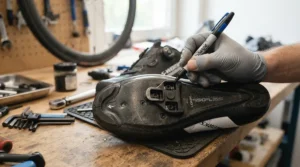
The practical fix is mercifully simple. Loosen the cleat bolts just enough that the cleat can slide but not flop, mark your current position with a fine pen before touching anything, then adjust in small increments — a few millimetres at a time — rather than guessing at a completely new position. Research testing a 15mm fore-aft cleat shift in competitive cyclists found no changes in power output or muscle activity, but significant changes in hip, knee and ankle joint angles — proof that your legs feel these tiny adjustments even when your power meter doesn’t register them at all. Ride each new position for at least two commutes before judging it; knees take time to signal a problem, not seconds.
Bike Fit Adjustments That Actually Fix Knee Pain
Bike fit adjustments are where SPD-SL cleats stop being the whole story and start being one variable among several. Lateral or medial knee pain almost always points to cleat alignment or stance width — if the knee tracks inward toward the top tube on the down-stroke, the cleat typically needs to move toward the shoe’s centreline, and outward tracking calls for the opposite correction. Saddle height plays an equally large role: adjusting the saddle-pedal distance and saddle height may help reduce knee pain, and it’s frequently the first thing a bike fitter checks before touching your cleats at all.
For a proper DIY starting point, British Cycling’s own fitting guide recommends setting cleats so the ball of your foot aligns with the pedal spindle as a neutral starting position, making sure shoes point straight forward with cleats tightened to spec — a checkable process that takes about ten minutes with an Allen key and a bit of patience. If you’ve corrected cleat position, tried a higher-float cleat, and checked saddle height with no improvement after a couple of weeks, that’s the point to book an actual bike fit rather than keep guessing.
Replacement SPD-SL Cleats: When and How to Swap Them
Replacement SPD-SL cleats aren’t an optional upgrade — they’re maintenance, in the same category as chain lube and brake pads. The tell-tale sign is a colour-coded wear indicator moulded into the cleat itself; once that indicator wears flush or the clip-in motion starts feeling looser and less positive, it’s time. Riding on worn cleats doesn’t just risk an unplanned unclip mid-corner — it also subtly changes your float and pivot geometry as the plastic degrades unevenly, which can reintroduce exactly the knee discomfort you thought you’d solved months earlier.
The fix is straightforward if you’ve kept your old cleats as a positioning reference: trace their outline with a marker before removing them, or better still, use a positioner-equipped replacement like the Exustar EPS-SL, which locks the new cleat into your exact previous alignment via its central twist-lock system. Budget for a spare set alongside your original purchase — most road riders find genuine Shimano cleats last somewhere between six months and a year of regular use, considerably less if you walk in them frequently on hard flooring.

Real-World Scenarios: Matching Cleats to Riders
The nervous returning commuter. Sarah hasn’t ridden clipless since a brief, unsuccessful attempt a decade ago that ended with a bruised hip outside a coffee shop. For her, the Shimano SM-SH11 paired with pedal tension turned right down to minimum is the obvious starting point — maximum float, maximum forgiveness, minimum drama while she rebuilds confidence over a few weeks of short rides.
The budget-conscious student cyclist. Tom is commuting eight miles each way to university and doesn’t want to spend groupset money on cleats he might outgrow. ROCKBROS SPD-SL Compatible Cleats let him experiment with adjustable float on a genuinely tight budget, with room to upgrade to genuine Shimano parts once his position is dialled in and his student loan allows it.
The returning racer nursing an old knee niggle. James used to race criteriums on fixed red cleats but developed medial knee discomfort after a training block increase. Moving to the Shimano SM-SH12 gives him back some rotational freedom without fully sacrificing the precise, locked-in feel he’s used to — a genuine middle-ground compromise rather than an either/or decision.
SPD-SL vs SPD vs Look Keo: Which Cleat System Suits Your Knees?
| System | Float Range | Walkability | Best For |
|---|---|---|---|
| SPD-SL (e.g. Shimano SM-SH11) | 0–6° depending on model | Moderate | Road riders wanting knee comfort options |
| SPD (two-bolt, mountain-style) | Similar float, smaller cleat | Excellent | Commuters, off-road, frequent walking |
| Look KEO | 0–9° depending on model | Moderate | Road riders already invested in the Look ecosystem |
SPD-SL cleats operate closer to the “single release” style, releasing with more sideward force than standard SPD, and offer a larger pedal contact area than SPD for long road rides, at the expense of ease of walking. That trade-off — bigger platform and more efficient power transfer versus a genuinely awkward duck-walk into any café — is the single biggest lifestyle factor most buying guides skip entirely. If you’re commuting and popping into shops all day, standard two-bolt SPD’s recessed cleat and easier walking may outweigh SPD-SL’s larger platform; if you’re doing dedicated road rides with minimal off-bike walking, SPD-SL’s stability advantage wins comfortably.
Common Mistakes When Buying and Fitting SPD-SL Cleats
Most SPD-SL knee-comfort complaints trace back to a small handful of repeatable errors, and it’s worth naming them plainly rather than letting you discover each one the hard way. Buying the fixed red cleat as a first-ever cleat purchase is the classic beginner mistake — it’s marketed as the “performance” option, so newcomers assume it’s simply the better product, when it’s actually the least forgiving choice available. Setting pedal spring tension to maximum straight out of the box is a close second, usually motivated by fear of accidentally unclipping mid-ride, but it makes both entry and exit dramatically harder and directly increases the twisting force transferred to the knee during release.
Skipping the positioning-reference step during cleat replacement is another quietly damaging habit — riders remove worn cleats, install new ones roughly “where the old ones were,” and then spend weeks wondering why their comfortable setup suddenly feels off. Finally, plenty of riders chase a more expensive cleat when their actual problem is saddle height or fore-aft position; no float range, however generous, fully compensates for a saddle sitting 15mm too low.
What to Expect: Real-World Performance
On paper, six degrees of float sounds abstract — translated into an actual ride, it feels like the difference between your foot being gently escorted through each pedal stroke versus being marched through it at gunpoint. Riders switching from a fixed cleat to a high-float option typically report the change within the first few rides, often describing a “looser” or “more natural” sensation rather than any dramatic transformation. It’s subtle rather than revolutionary, which is precisely why so many riders with knee discomfort never think to blame their cleats in the first place — the problem builds gradually, and so does the relief.
Expect a short adaptation period, too. Your knee has effectively been “trained” by whatever pedal stroke your previous cleats enforced, and a sudden increase in available float can feel briefly unfamiliar before it feels better. Give any new cleat setup at least 100–150 miles before drawing firm conclusions either way.
Long-Term Cost & Maintenance of SPD-SL Cleats
| Consideration | Genuine Shimano | Third-Party (Exustar/ROCKBROS) |
|---|---|---|
| Typical lifespan | 6–12 months regular use | 4–9 months regular use |
| Price range per pair | around £15–£20 | under £10 to £15 range |
| Positioner accuracy | Manufacturer-matched | Varies by brand |
| Best For | Long-term consistency | Budget-conscious experimentation |
Run the maths over two or three years and the picture shifts a little from the upfront price tags alone. Shimano SM-SH11 cleats cost more per pair, but their consistent wear pattern and readily available colour-coded indicators make replacement timing predictable, which matters if you’re managing knee comfort carefully. Budget options like ROCKBROS SPD-SL Compatible Cleats cost less individually but may need replacing more frequently, meaning the total cost of ownership narrows considerably over a full riding season — worth remembering before assuming “cheaper” automatically means “worse value.”
Frequently Asked Questions
❓ Which SPD-SL cleats are best for knee pain?
❓ Are yellow or red SPD-SL cleats better for beginners?
❓ How often should I replace SPD-SL cleats?
❓ Can I use third-party SPD-SL compatible cleats with any road shoe?
❓ Do SPD-SL cleats fit Look Keo pedals?
Conclusion
Knee comfort on a road bike rarely comes down to one dramatic fix — it’s usually a handful of small, correctable details stacking up until the discomfort finally lifts. Choosing a generous-float cleat like the Shimano SM-SH11 or a budget-friendly equivalent such as ROCKBROS SPD-SL Compatible Cleats solves a genuinely real mechanical problem, but pairing that choice with correct fore-aft cleat positioning, sensible pedal tension and a properly set saddle height is what actually delivers lasting relief. Whether you’re a nervous returning commuter, a budget-minded student, or a racer nursing an old niggle back to health, there’s a specific cleat and setup combination in this guide built for exactly your situation.
Treat your cleats as consumable, replaceable parts rather than a permanent fixture, keep an eye on wear indicators, and don’t be afraid to experiment with float before assuming your discomfort needs a professional bike fit. Sometimes the fix really is that small triangle of plastic under your shoe.
✨ Don’t Miss These Exclusive Deals!
🔍 Take your cycling comfort to the next level with these carefully selected cleats. Click on any highlighted product to check current pricing and availability. The right float range could be the difference between dreading your next ride and genuinely looking forward to it!
Recommended for You
- Best SPD-SL Cleats: 7 Top Picks For UK Road Riders (2026)
- SPD Cleats For Commuting: 7 Best Picks For UK Riders (2026)
- Best SPD Cleats: 7 Proven Picks For UK Riders (2026)
Disclaimer: This article contains affiliate links. As an Amazon Associate, I earn from qualifying purchases. If you purchase products through these links, we may earn a small commission at no additional cost to you.
✨ Found this helpful? Share it with your friends! 💬🤗
