
In This Article
Here’s the uncomfortable truth about helmets: most cyclists spend more time choosing their cycling jersey than their head protection. The good news — if you’re already reading this — is that you’re not that cyclist. And here’s the better news: finding a genuinely excellent MIPS helmet under £150 in 2026 is not only possible, it’s actually rather straightforward once you know what you’re looking for.
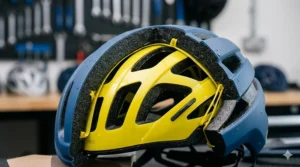
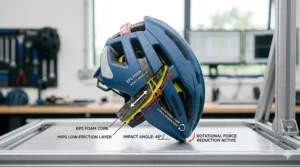
So, what exactly is a MIPS helmet under £150? In simple terms, it’s a cycling helmet fitted with the Multi-Directional Impact Protection System — a low-friction slip plane built inside the shell that allows the helmet to rotate slightly on impact, redirecting the rotational forces that cause the most serious brain injuries. The technology was developed by researchers at the Royal Institute of Technology (KTH) in Sweden, and independent testing consistently shows it can reduce rotational acceleration to the brain by up to 40% in angled impacts — which, incidentally, describes the vast majority of cycling crashes. At under £150, you’re no longer paying a premium for this protection. MIPS has trickled down from the pro peloton to the high street, and the helmets in this guide prove it handsomely.
For UK riders, the case is even more compelling. British roads — narrow, potholed, frequently damp, and shared with rather opinionated motorists — aren’t exactly the safest cycling environment. Whether you’re navigating the kerbs of central Manchester, hurtling down a Cotswolds lane, or filtering through Edinburgh city centre, the rotational impact scenarios MIPS protects against are precisely the kind you’ll encounter. Add the fact that the UK’s cycling casualty statistics continue to underline the importance of proper protective gear, and spending thoughtfully on a helmet starts to feel less like extravagance and more like basic common sense.
All seven helmets in this guide are available right now on Amazon.co.uk, have been thoroughly researched using real UK reviewer feedback, and are recommended with the kind of specific, honest commentary you’d get from a knowledgeable mate who happens to have tested a lot of lids. Let’s get into it.
Quick Comparison: Best MIPS Helmets Under £150 at a Glance
| Helmet | Weight | Vents | Fit System | Best For | Price Range (GBP) |
|---|---|---|---|---|---|
| Giro Register MIPS | ~310g | 22 | Roc Loc Sport | Budget commuters | Under £70 |
| Smith Network MIPS | ~300g | 21 | Boa Fit | Urban riders & beginners | £65–£90 |
| Bell Stratus MIPS | ~295g | 18 | Float Fit | Road riders, value seekers | £90–£125 |
| Giro Cinder MIPS | ~295g | 26 | Roc Loc 5 | Mid-range all-rounders | £100–£130 |
| Giro Agilis MIPS | ~271g (S) | 32 | Roc Loc 5.5 | Road & gravel cyclists | £100–£135 |
| ABUS PowerDome MIPS | ~260g | 17 | Zoom Ace | Performance road riders | £100–£140 |
| Giro Syntax MIPS | ~260g | 25 | Roc Loc 5 Air | Enthusiast road cyclists | £120–£149 |
From the table above, a clear picture emerges: you don’t have to spend anywhere near £150 to get solid MIPS protection, but spending more does buy you meaningfully better ventilation, lighter shells, and more refined fit systems. The sweet spot for most UK riders sits in the £100–£135 bracket, where helmets like the Giro Cinder MIPS and Agilis MIPS deliver a level of quality that was firmly premium territory just five years ago. Budget buyers should note that the Giro Register MIPS sacrifices some ventilation sophistication for its lower price — a fair trade for commuters, less so for summer sportive riders who’ll be generating serious heat.
💬 Just one click — help others make better buying decisions too! 😊
Top 7 MIPS Helmets Under £150: Expert Analysis
1. Giro Register MIPS — The Sensible Starting Point
If you’ve been riding without a helmet or with something ancient enough to vote, the Giro Register MIPS is the obvious upgrade. It’s the entry point of Giro’s MIPS range — and while it’s not trying to win any wind tunnel competitions, it does something rather important: it delivers genuine rotational impact protection at a price that doesn’t sting.
The Register uses Giro’s Roc Loc Sport MIPS fit system, which gives you a 7cm adjustment range and easy one-handed operation. The 22 vents are functional rather than spectacular — on a breezy British commute they’re perfectly adequate, though on a sweaty August sportive climb you’ll wish for more airflow. Construction is in-mould polycarbonate with EPS foam, which is the standard at this price point and entirely effective. The universal adult sizing (54–61 cm) means most heads are covered, though those with particularly narrow skulls may find it sits slightly wide.
UK reviewers are reliably positive about the Register’s value, frequently noting the comfort of the adjustable fit and the reassurance of MIPS tech at this price. What most buyers overlook is the quick-dry padding — actually quite useful for the damp British commute, where arriving at the office with a sweat-soaked head is one indignity too many.
This is the helmet for the urban commuter who cycles to work three days a week in all weathers and wants something reliable, CE EN 1078 certified, and unlikely to provoke existential questions about whether they could have bought something better.
✅ Genuine MIPS protection at budget price
✅ Easy one-handed Roc Loc Sport fit
✅ Universal sizing covers most adults
❌ Ventilation underwhelms on hard efforts
❌ Relatively heavier than mid-range options
Price range: Under £70. A genuinely excellent value proposition for casual riders and commuters.
2. Smith Network MIPS — The Urban Underdog Worth Knowing
Smith is better known for its sunglasses and ski goggles than its cycling helmets, which is precisely why the Network MIPS tends to fly under the radar. That’s a mistake on the buying public’s part, because this is a thoughtfully designed urban lid with some genuinely clever details.
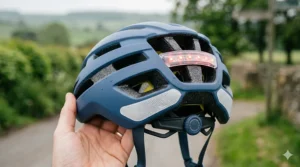
The Network MIPS is built around 21 vents, a lightweight shell, and Smith’s integrated MIPS® system — which, crucially, was designed from the ground up to work with Smith’s eyewear. There are dedicated channels for glasses storage and fog-free lens performance, which sounds like marketing fluff until you realise how genuinely useful it is when you’re pulling into a cafe mid-ride. The Boa-style adjustable dial provides a secure fit across a good range of head shapes, and the 300g weight (size M) is noticeably lighter than many helmets at this price.
What sets the Network apart for UK urban cycling is the versatility. It’s happy on a commute, perfectly at home on a weekend spin, and doesn’t look out of place locked to a bike outside a coffee shop. It’s CE EN 1078 certified and available on Amazon.co.uk in multiple colourways, with Prime delivery available.
UK reviewers appreciate the clean aesthetics and the quality of the build. What they often don’t mention — but is worth knowing — is that the Network runs slightly snug compared to Giro’s universal sizing; if you’re between sizes, size up.
✅ Designed for eyewear compatibility — genuinely useful
✅ 300g lightweight feel; barely noticeable on longer rides
✅ Clean, versatile aesthetic suits urban and road use
❌ Sizing runs slightly narrow
❌ Fewer colour choices than Giro equivalents
Price range: £65–£90. Strong value, particularly for commuters who wear glasses.
3. Bell Stratus MIPS — Road Performance Without the Road Tax
Bell built its reputation in motorsport, and that heritage shows up in the Stratus MIPS in some satisfying ways. The Float Fit system — an oversized, rubber-coated dial with an easy-grip surface — is one of the most user-friendly retention systems in this price bracket. You can adjust it wearing gloves, at speed, in the rain. That matters more than you’d think when you’re descending a Welsh mountain in October.
The Stratus MIPS runs 18 vents with Bell’s Overbrow Ventilation system, which pulls cool air through channels across the forehead — one of the main sweat hot-spots. At around 295g (size M), it’s competitive weight-wise, and the polycarbonate shell with EPS lining and integrated MIPS makes for a well-rounded safety package. MIPS implementation here uses Bell’s standard liner slip plane, properly integrated rather than retrofitted.
On British roads, the Stratus rewards systematic riding more than aggressive sprinting — it’s built for all-day comfort on moderately paced rides, sportives, and commutes rather than maximal aerodynamic efficiency. The No-Twist Tri-Glides straps are a small but genuinely appreciated feature: straps that don’t rotate and rub the neck on long rides are more valuable than they sound.
UK Amazon reviewers rate the Stratus highly for comfort and value, with the Float Fit system receiving particular praise. Several note it suits oval head shapes well — a common British head morphology that Giro’s round-biased fit systems occasionally struggle with.
✅ Float Fit system — outstanding in wet gloves
✅ Overbrow ventilation effective on climbs
✅ Suits oval head shapes well
❌ Fewer vents than similarly priced Giro options
❌ Aesthetic is functional rather than striking
Price range: £90–£125. A top pick for riders prioritising fit security and all-day comfort.
4. Giro Cinder MIPS — The Thoughtful Person’s Mid-Range Choice
The Giro Cinder MIPS holds a special place in the mid-range helmet market: it was one of the first helmets to be designed around MIPS rather than having the slip liner bolted on as an afterthought. That distinction matters, because poorly integrated MIPS can affect fit — creating a slightly loose, unsettling feeling that undermines confidence. The Cinder’s MIPS sits flush, invisible, and perfectly calibrated.
Twenty-six vents — more than the Bell Stratus and Register — keep air moving effectively across the head in most conditions. The Roc Loc 5 system (one generation behind the Agilis’s 5.5, but still excellent) allows single-hand tension and fore-aft tilt adjustment. At around 295g, it’s not the lightest lid in this guide, but it’s meaningfully refined: the Air-FX padding is moisture-wicking and comfortable on extended rides, and the thermoplastic internal skeleton adds structural integrity that’ll keep the helmet together after an initial impact — useful if you have the misfortune of actually needing it.
The Cinder’s styling lifts heavily from the Giro Synthe — which retails at more than twice the price — and on the road, it’s genuinely difficult to tell the two apart from a distance. In a country where summer cycling visibility sometimes feels like an extreme sport, the brighter colourway options are also worth considering.
For UK buyers, the Cinder is the helmet you choose when you take cycling seriously enough to want quality kit but not quite seriously enough (or flush enough) to spend £250 on a Synthe.
✅ MIPS designed in from scratch — optimal fit
✅ 26 vents; noticeably breathable on longer climbs
✅ Synthe-inspired styling at a fraction of the cost
❌ Not the lightest at ~295g
❌ Forehead vent coverage slightly less effective than the Synthe
Price range: £100–£130. Consistently excellent; one of the most popular road helmets in the UK market.
5. Giro Agilis MIPS — For Riders Who’ve Outgrown the Basics
The Agilis MIPS occupies an interesting niche: it’s a road helmet with the rear-coverage profile of a gravel or trail helmet, giving greater protection for riders who ride varied terrain, prefer a more enveloping fit, or have had the bruising experience of hitting the back of their head on a root or raised kerb. In the UK, where a “road ride” can turn into a gravel path, a bridleway, and then a muddy farm track within a single mile, that extra coverage is worth thinking about.
With 32 air channels, the Agilis has the most vents of any helmet in this guide — and it shows. UK reviewers describe it as one of the more effectively ventilated helmets at the price, with airflow that’s genuinely noticeable on long climbs rather than just convincing on a hanger. The Roc Loc 5.5 MIPS fit system is Giro’s most refined at this price point, integrating the MIPS slip liner directly into the retention mechanism to remove any residual lateral movement.
The two-piece Hardbody shell — combining a tough outer polycarbonate with an inner lower wrap fused to the EPS liner — adds durability without significant weight penalty. Weighing around 271g in a small (heavier in larger sizes), it’s lighter than the Cinder despite providing more coverage. For riders with narrow heads, reviewers note the Agilis fits particularly well — considerably better than helmets using more rounded shell geometries.
✅ 32 vents — best ventilation in this guide
✅ Extended rear coverage suits mixed-terrain riding
✅ Roc Loc 5.5 MIPS — Giro’s finest retention system in this range
❌ Slightly heavier in larger sizes than smaller
❌ Deeper profile may feel bulky to aero-focused road riders
Price range: £100–£135. Outstanding choice for versatile UK riders who want road performance with gravel security.
6. ABUS PowerDome MIPS — The Italian Job That Punches Well Above Its Weight
ABUS is famous for its locks — the sort of locks that embarrass other locks — and it brings that same Germanic obsessiveness to the PowerDome MIPS, which is, brilliantly, manufactured in Italy. The result is a helmet that somehow manages to look like it costs considerably more than it does.
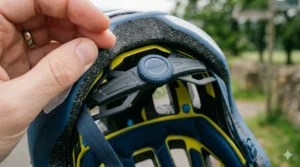
The PowerDome’s signature feature is its namesake: a sculpted air scoop on the crown that uses the Venturi effect to pull cool air through the helmet at speed. Ten air inlets and seven outlets (17 total, the fewest in this guide) are offset by this active cooling design, which makes the ventilation feel more efficient than the vent count alone suggests. The Zoom Ace fit system — ABUS’s proprietary retention mechanism — is height- and width-adjustable, with ponytail compatibility that’s actually been thought through rather than retrofitted as an afterthought.
At around 260g (the lightest in this guide alongside the Giro Syntax), the PowerDome MIPS is impressively svelte. The Italian manufacture — unusual in a market dominated by Asian production — means material quality and shell finish are notably refined, even if this has occasionally contributed to some variability in head shape compatibility. The spec sheet mentions that straps can be prone to twisting, which UK reviewers occasionally confirm; it’s a minor frustration rather than a deal-breaker.
For UK cyclists who care about how their kit looks as well as how it performs — and that’s a significant proportion of the Lycra-clad population — the PowerDome MIPS is the answer. At under £140, it genuinely competes with helmets at £200+.
✅ Lightest in this guide at ~260g
✅ Venturi air scoop — meaningfully clever, not just marketing
✅ Stunning Italian finish; looks premium at mid-range price
❌ Strap routing prone to occasional twisting
❌ Narrower shell may not suit all UK head shapes
Price range: £100–£140. The best-looking helmet in this guide, with performance to justify the aesthetic ambition.
7. Giro Syntax MIPS — The Closest Thing to a Pro Lid at This Budget
The Giro Syntax MIPS sits at the top of this guide’s price bracket, and it earns its position honestly. It shares DNA with the Giro Synthe — Giro’s flagship pro road helmet — and the lineage is evident in its sculpted shell, 25-vent layout, and refined Roc Loc 5 Air retention system. The “Air” suffix in the fit system name is significant: unlike the standard Roc Loc 5 on the Cinder, the Air variant lifts the retention cradle slightly off the skull, allowing a thin channel of airflow across the back of the head. On a hot day, in July, on the third hour of a climb, this is the difference between contentment and suffering.
At around 260g, the Syntax is impressively light for its feature set. MIPS integration is clean and transparent — you’re aware of the slip liner during handling, but once on the head and properly adjusted, it disappears. The shell has a svelte road profile that sits closer to aero territory than the Agilis or Register, making it the natural choice for riders who pin on a number occasionally, or who simply like to look like they might.
For UK buyers, the Syntax is the helmet you choose when you’ve committed to road cycling as a genuine hobby — Saturday club runs, summer sportives, the occasional early-morning chain gang — and you want a lid that matches that investment without requiring a second mortgage.
✅ Roc Loc 5 Air — superior ventilation over standard Roc Loc 5
✅ Sleek aero profile for road-focused riders
✅ ~260g — genuinely lightweight for the feature level
❌ At the top of the budget; value margin is narrower
❌ Less rear coverage than the Agilis — pure road focus
Price range: £120–£149. The enthusiast’s choice; justifies every penny for riders doing serious miles.
✨ Don’t Miss These Exclusive Deals! 🔍
Take your riding safety to the next level with these carefully selected MIPS helmets. Click on any highlighted product to check current pricing and availability on Amazon.co.uk — and find the one that fits your head and your riding.
How MIPS Actually Works — And Why British Conditions Make It Worth Having
It’s one thing to see “MIPS” on a product listing and assume it’s a marketing term designed to make you spend more. It’s another to understand why this technology was developed, and why it’s particularly relevant if you ride on British roads.
When your head hits a surface in a crash, the impact is rarely perfectly perpendicular — it’s almost always angled, which means the brain experiences both linear and rotational forces. It’s the rotational component that causes the most severe injuries: concussion, diffuse axonal injury, and subdural haematoma are all associated with rotation rather than direct compression. Research published in peer-reviewed biomechanical journals consistently shows that MIPS reduces these rotational accelerations by 10–40%, depending on impact angle and velocity.
The mechanism is elegantly simple: a thin low-friction slip liner sits between your head and the helmet’s EPS foam, connected by small elastomeric anchors. On angled impact, the shell can rotate 10–15mm relative to your skull — absorbing rotational energy that would otherwise be transmitted directly to the brain. You’ll never notice it’s there on a normal ride. In a crash, you’ll be rather glad it was.
For UK cyclists specifically, this matters because British crash scenarios tend to involve exactly the angled impacts MIPS was designed for: hitting a wet road after a car door opens, going over the bars into a kerb, sliding on autumn leaves and hitting a dry-stone wall at an awkward angle. None of these produce the perfectly perpendicular, laboratory-clean impacts that traditional helmets are optimised for.
The MIPS Brain Protection System is now covered by CE EN 1078 certification — the European standard that UK helmets must continue to meet under retained EU law, with UKCA marking increasingly visible on newer models. Any helmet in this guide carrying CE EN 1078 or UKCA certification has been independently tested and meets UK legal requirements for sale and use. Worth checking the label before you buy — not all MIPS helmets you’ll find in online marketplaces are certified to UK/EU standards.
How to Choose a MIPS Helmet Under £150 in the UK
Step 1: Establish your riding style first
The single most useful thing you can do is be honest about how you actually ride, not how you intend to ride. A £130 aero road helmet is a frustrating choice if 80% of your cycling is an eight-minute flat commute.
Step 2: Measure your head correctly
Use a flexible tape measure around the widest part of your skull — typically 2–3 cm above the eyebrows. Most brands publish size guides. A medium for Giro is typically 55–59 cm; Bell’s medium runs 55–59 cm as well; ABUS sizing varies by model. Get it right, because returning helmets can be inconvenient, and under the Consumer Contracts Regulations 2015, you have a 14-day cooling-off period for online purchases — use it if the fit isn’t right.
Step 3: Understand the fit system options
Roc Loc systems (Giro) and Float Fit (Bell) are among the more refined retention mechanisms in this price bracket. Both allow single-hand adjustment on the move. The Boa-style dial on Smith helmets is excellent for precision. ABUS’s Zoom Ace is solid and height-adjustable. Avoid generic push-button retention on any helmet over £60 — it’s a false economy.
Step 4: Prioritise ventilation honestly
If you ride primarily in summer, on long climbs, or at a challenging pace, ventilation matters significantly. The Giro Agilis (32 vents), Giro Cinder (26 vents), and ABUS PowerDome (17 vents with active cooling) lead this category. If you’re commuting in British drizzle year-round, fewer vents may actually keep your head warmer.
Step 5: Don’t assume higher price means better safety
Every helmet in this guide meets CE EN 1078 and includes MIPS. A £65 Smith Network MIPS offers the same class of brain protection as the £149 Giro Syntax MIPS. What you’re paying for at the top end is weight, ventilation, fit refinement, and aerodynamics — not fundamentally better safety certification.
Step 6: Check Amazon.co.uk stock and Prime eligibility
All seven helmets in this guide are available on Amazon.co.uk. Prime members benefit from next-day delivery, which is particularly useful if you need a helmet before a weekend ride. Free delivery typically applies to eligible orders over £25, which every helmet here comfortably meets.
Step 7: Replace after any impact — regardless of visible damage
This bears repeating because it’s routinely ignored: EPS foam is a single-use material. After any significant impact, the foam has done its job and the helmet must be replaced, even if it looks entirely intact externally. This applies to every helmet in this guide, at every price point.
What to Expect: Real-World Performance in British Conditions
The Commuter in Leeds
Imagine you’re a daily commuter cycling 6 miles each way through inner-city Leeds — a mix of A-roads, cycle lanes, and cobbled stretches that your bike protests about rather loudly. You ride year-round, including through January. You want MIPS protection, you don’t want to spend a fortune, and you’d quite like it to be comfortable enough to wear for 25 minutes without arriving at work in a foul mood.
The Giro Register MIPS or Smith Network MIPS serves you perfectly. Budget-friendly, genuinely comfortable, MIPS-equipped, and practical enough that you won’t be heartbroken if it spends six months cycling through road spray and city grime. The Network’s glasses-storage channels are a genuine bonus for the commuter wearing prescription cycling eyewear.
The Weekend Road Cyclist in Surrey
Now imagine you’re a 40-something Surrey Hills regular — Saturday chain gang, occasional sportive, annual trip to the Alps that you spend three months training for. You want a proper road lid, something that performs on a two-hour climb as well as it does on the descent back into Dorking.
The Giro Agilis MIPS, Giro Cinder MIPS, or Giro Syntax MIPS suits your use case. The Agilis’s 32-vent layout keeps you cool on efforts; the Syntax’s aero profile and Roc Loc 5 Air system earns its keep at the top of the budget. The Cinder sits comfortably in the middle — genuinely excellent and unlikely to leave you wishing you’d spent more.
The Gravel Explorer in the Peak District
Muddy bridleways, technical descents, and the occasional encounter with a dry-stone wall — Peak District riding is magnificent and unforgiving in equal measure. You want MIPS, you want rear coverage, and you want a helmet that doesn’t mind being caught in a 3-Capes weather system before September.
The Giro Agilis MIPS wins this one comfortably. The extended rear profile provides meaningful coverage on the back of the skull — the area most at risk in a gravel crash — while the 32 vents handle the varied intensity of mixed-terrain riding without causing either overheating on the climbs or uncomfortable cold on the fast descents.
Common Mistakes When Buying a MIPS Cycling Helmet in the UK
Buying the wrong size because you didn’t measure. This is the most common and most fixable error. Use a tape measure. The circumference numbers in size guides are real measurements, not approximations. A helmet that’s even slightly too large will move during a crash — which partially defeats the purpose of wearing one.
Assuming all MIPS helmets are equal. They’re not. Original MIPS from MIPS AB (Sweden) — used by Giro, Bell, Smith, and ABUS — is the validated, independently tested version. Be cautious of budget helmets from unfamiliar brands claiming “rotational protection systems” that haven’t disclosed testing data. If it’s not explicitly MIPS AB technology, ask what independent certification the system holds.
Ignoring UK certification requirements. Since January 2021, products sold in Great Britain should carry UKCA marking, though CE EN 1078 marking remains accepted under the current transitional arrangements. All seven helmets in this guide are CE EN 1078 certified. Avoid uncertified helmets regardless of price or claimed safety credentials.
Buying based on looks from product photos alone. The aerodynamic shell that looks magnificent on a glossy Amazon listing can feel completely wrong on your actual head shape. If possible, try before you buy — many Halfords and Evans Cycles stores stock at least some of these helmets for fitting. If buying online, use Amazon’s 30-day return window to verify fit before committing.
Neglecting to replace after a crash. This isn’t a buying mistake — it’s a post-purchase one, but it belongs here. EPS foam compresses permanently on impact. A helmet that’s been in a crash offers significantly reduced protection for the next one, even if it looks fine. Under the Consumer Rights Act 2015, you have rights if a product develops a fault — but a crash-damaged helmet has done its job correctly. It just needs replacing.
Buying a US-voltage product on a grey-market listing. This doesn’t apply to helmets per se, but it’s worth knowing that Amazon UK marketplace third-party sellers occasionally list products that are technically the US variant. Check that the listing explicitly states CE EN 1078 or UKCA certification before purchasing.
Long-Term Cost & Maintenance of a MIPS Cycling Helmet in the UK
The purchase price is only part of the story. A well-maintained helmet at the £100 level can comfortably last five years before manufacturer recommendations suggest replacement — that’s around £20 per year of protection, or roughly the cost of a single flat tyre repair at an independent bike shop. Looked at that way, spending an extra £30–£40 for the ABUS PowerDome MIPS over the Giro Register becomes almost trivially justifiable.
Maintenance is modest and achievable. Wash the padding regularly — weekly if you ride hard, monthly for casual users. Most helmets in this guide have removable, machine-washable padding that handles the British cyclist’s near-constant battle with cold-weather perspiration. The shell itself should be wiped with a damp cloth; avoid solvents, spray lubricants (particularly WD-40), and petroleum-based products, which can degrade EPS foam structurally without any visible signs.
Storage matters in British homes. In a country of terraced houses and compact flats with limited storage, a helmet on a peg near the front door is both practical and safe. Avoid storing helmets in car boots or sheds where temperature extremes and direct sunlight can degrade both the polycarbonate shell and the MIPS slip liner’s elastomeric anchors over time. A mesh bag hanging from a hook in a hallway costs almost nothing and extends helmet life considerably.
Parts availability: Replacement pads, buckles, and straps are available from Giro and Bell directly, and from Amazon.co.uk for most of the models in this guide. ABUS UK maintains a good spare-parts supply chain through its UK distribution network. Smith parts are slightly harder to source domestically but obtainable via the brand directly.
FAQ: MIPS Helmets Under £150 in the UK
❓ Is MIPS worth it on a budget cycling helmet?
❓ Do MIPS helmets need to be replaced after five years even without a crash?
❓ Are MIPS cycling helmets available with free delivery on Amazon.co.uk?
❓ Does MIPS technology affect the weight or fit of a cycling helmet?
❓ Which MIPS helmet under £150 is best for UK commuting specifically?
Conclusion: Which MIPS Helmet Under £150 Should You Actually Buy?
Right. If you’ve made it this far, you deserve a straight answer rather than another hedge.
For most UK cyclists — weekend road riders, occasional sportive participants, or anyone who simply wants a quality lid without a painful price tag — the Giro Cinder MIPS or Giro Agilis MIPS represents the ideal balance of protection, comfort, ventilation, and refinement. The Cinder is the safer all-rounder choice; the Agilis edges it for anyone riding mixed terrain or preferring deeper rear coverage.
If budget is the primary constraint, the Giro Register MIPS delivers genuine MIPS protection at a price that leaves money in the pocket for other kit. If aesthetics and weight matter as much as function, the ABUS PowerDome MIPS is the one to consider — it looks the part and then makes good on the promise. And if you’re a committed road cyclist prepared to use the full £150 budget, the Giro Syntax MIPS is as close to a pro-grade helmet as this price point realistically allows.
Whatever you choose, you’re making a sound decision. Every helmet in this guide offers certified MIPS protection, is available right now on Amazon.co.uk, and will serve you considerably better than the naked optimism of riding without one.
Check current pricing and availability on Amazon.co.uk using the highlighted links above, and ride well.
✨ Ready to Upgrade Your Protection?
🔍 Browse all seven helmets above, click any highlighted product to check the latest price on Amazon.co.uk, and make the choice that fits your head, your riding, and your budget. Your brain will thank you — and so will the people who cycle with you.
Recommended for You
- Is a MIPS Helmet Worth It for Cycling? 7 Best UK Picks 2026
- Best MIPS Road Cycling Helmet UK 2026: 7 Top Picks Rated
- Best Lightweight Road Cycling Helmets UK 2026: 7 Expert-Tested Picks
Disclaimer: This article contains affiliate links. As an Amazon Associate, I earn from qualifying purchases. If you purchase products through these links, we may earn a small commission at no additional cost to you.
✨ Found this helpful? Share it with your mates! 💬🤗
