
In This Article
Here’s an uncomfortable truth nobody tells you when you buy your first pair of clipless pedals: the cleats, not the pedals, are usually where knee pain starts. You can spend £300 on a beautiful carbon-bodied pedal system and still hobble off the bike wincing, because a fixed-float cleat has been quietly twisting your kneecap sideways for the last forty miles. Cleats for knee pain cycling aren’t some niche gadget — they’re the single cheapest, fastest fix available to a huge number of riders who assumed their aching joints were just “part of cycling.” They’re not.
This guide walks British riders through cleats for knee pain cycling from every angle: what float actually does to your leg, seven real products worth buying on amazon.co.uk, and the setup mistakes that quietly wreck knees over a season of riding. So, what is float, in plain English? Float is the amount of rotational give a cleat allows your foot before it releases from the pedal — think of it as a small, forgiving hinge between your shoe and the crank, letting your knee track its own natural path instead of being locked into someone else’s idea of “correct.”
If you’ve read anything about NHS guidance on knee pain, you’ll know that repetitive strain from misaligned joints is one of the most common — and most preventable — causes of ongoing discomfort. Cycling knee pain rarely comes from one dramatic moment; it accumulates, pedal stroke by pedal stroke, over hundreds of hours. The good news is that cleats are one of the few cycling components you can genuinely fix your way out of trouble with, for less than the cost of a decent lunch.
Quick Comparison Table
| Cleat | Float | Best For | Price Range |
|---|---|---|---|
| Shimano SPD-SL SM-SH11 | 6° fixed | First-timers & knee pain | £15-£20 |
| Look Keo Grip Red | 9° fixed | Max forgiveness, walkability | £18-£22 |
| Time ICLIC Xpresso Float | ±5° float | Pre-open engagement fans | £20-£25 |
| Wahoo Speedplay Zero | 0-15° adjustable | Total customisation | £45-£55 |
| Shimano SM-SH56 SPD | 4° multi-release | Commuters, nervous beginners | £15-£20 |
| Exustar E-RSL3H2 | 6° fixed | Budget-conscious riders | £12-£18 |
| Look Keo Grip Grey | 4.5° fixed | Efficiency with some give | £18-£22 |
Looking at the spread above, the range runs from a genuinely tiny outlay right up to a system that lets you dial in float like a bike fitter would. If your knee pain is acute and you want the broadest safety margin, Wahoo Speedplay Zero or Look Keo Grip Red give you the most room to move; if you’re just starting out and want something forgiving without breaking the bank, Shimano SPD-SL SM-SH11 or Shimano SM-SH56 SPD are the sensible entry points. Riders on a tight budget shouldn’t feel short-changed either — Exustar E-RSL3H2 delivers a comparable float range to the big brands for noticeably less outlay.
💬 Found a cleat that matches your riding style already? Save this comparison and come back to it before you buy — your knees will thank you.
Top 7 Cleats For Knee Pain Cycling: Expert Analysis
Picking the right cleat isn’t about finding the “best” one in the abstract — it’s about matching float, walkability and release behaviour to your body, your bike, and how much fiddling you’re willing to do. Here are seven real, currently available options that cover every rung of that ladder.
1. Shimano SPD-SL SM-SH11 — the classic knee-friendly starting point
The yellow Shimano cleat is the one nearly every bike shop mechanic reaches for first when a customer mentions knee twinges, and there’s a reason for that. It offers 6 degrees of float, which is the most generous option in Shimano’s three-cleat SPD-SL family (alongside the 2° blue and 0° red), and that extra few degrees is often the difference between a knee that tracks naturally and one that’s being nagged sideways on every stroke. At 72g per pair, it’s not adding meaningful weight to your setup, and it bolts straight onto any Shimano SPD-SL compatible pedal without adapters.
Shimano itself flags this exact cleat as suited to riders who experience knee discomfort or have limited hip and ankle flexibility, precisely because the wider float window means small alignment errors during fitting don’t translate into constant joint stress. Reviewers consistently describe the entry and exit action as smooth and predictable, with a light, confident click rather than a vague or mushy engagement — useful reassurance for anyone nervous about clipping in at junctions.
Pros:
- ✅ Widest float in the Shimano SPD-SL range for knee comfort
- ✅ Compatible with almost every Shimano road pedal on the market
- ✅ Light, consistent engagement praised across owner reviews
Cons:
- ❌ Less power-transfer precision than the fixed 0° red version
- ❌ Wears faster than the tougher composite Look Grip cleats
At around £15-£20, this is genuinely one of the cheapest ways to address knee pain on a bike — cheaper, in fact, than a single physio consultation. Given the low outlay and the fact that it’s the manufacturer-recommended pick for sore knees, it’s an easy first purchase to make before spending money elsewhere.
2. Look Keo Grip Red — maximum float for stubborn joint pain
If the Shimano yellow cleat still isn’t quite enough movement, the red Look Keo Grip steps things up to 9 degrees of angular float, the most forgiving option Look currently sells. That figure matters in practice: 9° is roughly the difference between your heel needing to sit within a couple of centimetres of “perfect” and having genuine room to wander through the pedal stroke without the cleat fighting back. The TPU inserts on the shoe-facing side also stop the cleat sliding around on carbon soles, which is a genuinely annoying problem with cheaper alternatives.
What most buyers overlook about the red Keo Grip is that it isn’t just a “beginner” cleat — plenty of experienced riders run it long-term specifically because chasing a perfect fixed position isn’t worth the knee strain it can cause. Aggregated reviewer feedback highlights the rubberised walking pads as a genuine quality-of-life upgrade for anyone who stops at cafés mid-ride, since standard road cleats turn a wet pavement into a hazard.
Pros:
- ✅ 9° float is the most forgiving option in the Keo range
- ✅ Anti-slip TPU pads make walking on hard floors far safer
- ✅ Memory positioner keeps your fit when cleats are replaced
Cons:
- ❌ Slightly less direct power transfer than the black 0° version
- ❌ Only compatible with Look Keo-pattern pedals, not SPD-SL
Priced around £18-£22, the red Keo Grip sits just above the Shimano yellow but adds genuine walkability, which is worth factoring into your value calculation if you’re commuting and popping into shops along the way.
3. Time ICLIC Xpresso Float Cleats — pre-open engagement with real float
Time’s ICLIC system does something the others on this list don’t: it pre-opens the moment you clip out, so the next time you go to clip in there’s no fumbling for the exact angle. Paired with ±5 degrees of angular float and roughly 1.25mm of lateral float, it’s a cleat built specifically around reducing hesitation at junctions and traffic lights — a scenario that often causes riders to twist awkwardly and aggravate a sore knee while trying to unclip in a hurry.
Based on the spec comparison with Shimano and Look, Time’s float figure sits in the middle of the pack, but the bi-material construction — a softer compound at the corners for grip, a harder compound through the body for longevity — means it holds its shape and its float consistency for longer under regular use. Reviewers who’ve switched from Shimano tend to note the entry feel is noticeably different: lighter, almost automatic, which is reassuring if a previous stiff or unpredictable clip-in has been contributing to nervous, knee-twisting dismounts.
Pros:
- ✅ Pre-open ICLIC engagement reduces fumbled, awkward unclipping
- ✅ Bi-material build resists wear better than single-material cleats
- ✅ ±5° float plus lateral movement track natural knee motion
Cons:
- ❌ Only fits Time XPro and Xpresso pedals, no cross-compatibility
- ❌ Less widely stocked in UK bike shops than Shimano or Look
At roughly £20-£25, it’s a mid-range option that rewards riders already on a Time pedal system rather than something to switch systems for on its own.
4. Wahoo Speedplay Zero Cleats — fully adjustable float for total control
This is the cleat for anyone who has tried fixed-float options and still hasn’t found relief. The Wahoo Speedplay Zero cleat offers a genuinely adjustable 0 to 15 degrees of float, tuned independently from a separate 0-7.5° release angle setting, plus three-axis positional adjustment covering fore-aft, lateral and rotational placement. In practical terms, that means a bike fitter — or a patient rider with an allen key and some trial and error — can dial in the exact amount of float your knee needs rather than being stuck choosing between someone else’s fixed increments of 0°, 4.5° or 9°.
What the spec sheet won’t tell you outright is how much this changes the fitting conversation: instead of buying a new cleat colour every time your needs change, you turn a dial. One retailer’s product notes specifically point out that the wide float range exists “to avoid any knee stress,” which lines up with why physiotherapists and bike fitters often recommend Speedplay for clients with a history of patellofemoral pain. The dual-sided pedal body (sold separately from the cleats, though most riders buy them together) also removes the “which way is up” fumble that trips up nervous clippers-in.
Pros:
- ✅ Fully adjustable 0-15° float, unmatched by any fixed-float rival
- ✅ Independent release-angle tuning separate from float itself
- ✅ Rubberised, walkable cleat edges for off-bike comfort
Cons:
- ❌ Noticeably pricier than every other cleat on this list
- ❌ Requires a 3-to-4-bolt adapter plate unless using Speedplay shoes
Expect to pay in the £45-£55 range for the cleats alone, which is a real jump — but for riders whose knee pain has resisted every cheaper fix, that cost compares favourably against repeated physio sessions or a full professional bike fit.
5. Shimano SM-SH56 SPD Multi-Release — the easiest exit for nervous beginners
Not every knee problem is about float in the pedal stroke — sometimes it’s about the fear and physical twist of clipping out under pressure. The Shimano SM-SH56 two-bolt SPD cleat is built around a 13-degree clip-out angle and genuine multi-directional release, meaning you can twist your heel either way, or simply pull upward, and the pedal lets go. That flexibility removes a specific, common cause of knee strain: the panicked over-rotation riders make when they can’t unclip fast enough at a junction.
Here’s what most buyers overlook about SPD cleats generally — they’re not just for mountain or gravel bikes. Plenty of road cyclists specifically choose the two-bolt SPD system over three-bolt road cleats because the recessed cleat lets you walk normally, which matters if joint pain already makes ordinary walking awkward. Aggregated review sentiment repeatedly flags this exact cleat as the go-to recommendation for riders “new to clipless pedals or with limited knee mobility,” language that comes directly from retailer product descriptions built around Shimano’s own guidance.
Pros:
- ✅ Multi-directional release removes panicked, knee-twisting unclips
- ✅ Recessed 2-bolt design allows normal, comfortable walking
- ✅ Compatible with nearly all Shimano SPD pedals on the market
Cons:
- ❌ Not compatible with 3-bolt road-specific shoes
- ❌ Slightly less aerodynamic float precision than dedicated road cleats
At around £15-£20, this is an easy recommendation for anyone commuting on a hybrid or gravel bike who wants the lowest-stress possible exit strategy while their knee settles down.
6. Exustar E-RSL3H2 — genuine float on a genuinely small budget
Not everyone wants — or can justify — spending £45 on cleats before they even know whether float will fix their knee pain, and that’s exactly the gap Exustar fills. The E-RSL3H2 is built to the same EPS-SL interface as Shimano SPD-SL pedals, offering 6 degrees of float in a red-coded cleat that mirrors the geometry buyers already understand from the big brands. It’s not a Shimano part, but it’s engineered to the same mounting pattern, so there’s no compromise on compatibility with existing pedals.
On paper this means you get the same float figure as the market-leading Shimano yellow cleat for a noticeably lower outlay, and reviewer sentiment on this exact product line consistently praises the anti-slip walk pads and straightforward installation. It’s a sensible way to test whether increased float actually solves your knee discomfort before committing to a pricier system — if it works, you’ve spent very little finding out; if you need more, you’ve lost nothing trying.
Pros:
- ✅ 6° float matches Shimano’s knee-pain-recommended geometry
- ✅ Fits directly onto existing Shimano SPD-SL pedals
- ✅ Noticeably cheaper than equivalent branded cleats
Cons:
- ❌ Build materials feel less refined than Shimano or Look originals
- ❌ Smaller warranty support network than the major brands
Typically priced around £12-£18, this is the value pick for anyone wanting to trial extra float without committing serious money to the experiment.
7. Look Keo Grip Grey — the balanced middle ground
Sitting between the fixed 0° black cleat and the maximum-float red version, the grey Look Keo Grip offers 4.5 degrees of float — enough to give the knee genuine room to move without sacrificing quite as much pedalling precision as the red variant. It’s actually the cleat Look ships as standard with most of its pedals, which tells you a lot about where the brand thinks the sweet spot sits for the average rider.
Here’s what to weigh with the grey option: it’s a strong compromise pick for riders who’ve already had a professional bike fit and know their alignment is reasonably close to correct, but who still want a safety margin against long-ride fatigue changing their pedalling mechanics. The same TPU walking pads and memory positioner from the red version carry over, so you’re not sacrificing the practical off-bike features to get the reduced float.
Pros:
- ✅ 4.5° float balances joint comfort with pedalling efficiency
- ✅ Standard-fit cleat supplied with most new Look pedals
- ✅ Anti-slip walking pads shared with the higher-float red version
Cons:
- ❌ Less forgiving than the red 9° version for acute knee pain
- ❌ Still requires a reasonably accurate initial cleat position
Look Keo Grip Grey typically sells for around £18-£22, making it a natural next step if the red cleat feels a little too loose once your knee pain has genuinely settled.
Practical Cleat Setup & Bike Fit Guide
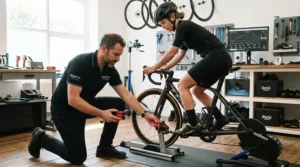
Buying a knee-friendly cleat is only half the job — how you fit it determines whether it actually helps. Start by marking your current cleat position before removing old cleats: most cleats have alignment lines moulded into the plastic specifically so you can transfer your fore-aft and rotational setup onto a replacement without guessing.
A proper bike fit assessment, according to British Cycling’s own guidance on identifying bad-fit symptoms, typically begins with the cleats rather than the saddle or handlebars, because foot position influences everything further up the kinetic chain. If you’ve never had your position checked, a simple home test works well: stand barefoot, close your eyes, and walk on the spot for ten paces before stopping naturally — the angle your feet settle at is roughly the rotational angle your cleats should be set to, rather than forcing your toes dead straight.
Common first-30-days mistakes include over-tightening pedal spring tension (which defeats the point of a multi-release cleat), setting cleats too far forward so the ball of the foot sits ahead of the pedal axle, and ignoring gradual wear that quietly reduces float over months of riding. A useful maintenance habit is checking cleat wear every 500-800 miles; once the plastic edges round off or the release action starts feeling inconsistent, it’s time for replacement cycling cleats rather than persisting with a worn set that no longer holds its intended float angle.
Real-World Rider Scenarios
The returning commuter: Sarah, 42, rides eight miles each way to work three times a week and started getting front-of-knee pain after switching from flat pedals to clipless six months ago. Her saddle height was fine, but her cleats were bolted on dead straight with zero attention to her natural foot angle. A switch to the Shimano SPD-SL SM-SH11 with a proper rotational fit resolved the discomfort within two weeks, because the extra float absorbed the small misalignment that had been quietly grinding at her kneecap.
The weekend century rider: Dev, 35, rides 60-80 miles most Sundays and developed outer-knee pain specifically on longer rides, not shorter ones — a classic sign of fatigue-related pedalling drift rather than a straightforward setup error. He moved to Wahoo Speedplay Zero cleats specifically for the adjustable float, allowing a bike fitter to widen his allowance to 12 degrees, giving his leg room to drift naturally as fatigue set in during the final third of a long ride.
The nervous returner-to-cycling: Priya, 58, hadn’t ridden clipless pedals in over a decade and was anxious about falling at junctions, which was causing her to tense her leg and twist awkwardly every time she needed to unclip. The Shimano SM-SH56 multi-release cleat removed that anxiety almost immediately, since the pedal releases with far less deliberate force than a standard road cleat.
Cleat Problems → Solutions
Front-of-knee pain during or shortly after rides usually points to a cleat set too far forward, effectively over-extending the knee at the top of the stroke — moving the cleat rearward by a couple of millimetres, combined with double-checking saddle height, is the standard first fix. Outer-knee pain that only appears on longer rides typically signals your foot rotating outward as fatigue increases, which more float (or a Speedplay-style adjustable system) directly addresses. Inner-knee pain often means your foot needs to point slightly further outward than it currently does — a rotational cleat adjustment rather than a fore-aft one. Pain that appears behind the knee more often traces back to saddle height being too high, or a cleat sitting too far rearward, rather than the cleat’s float rating at all. And clicking or popping sensations during pedalling, distinct from actual pain, usually mean it’s time for replacement cycling cleats rather than a repositioning — worn plastic can develop inconsistent release points that mimic alignment problems.
How To Choose Cleats For Knee Pain Cycling
- Identify where the pain sits — front, back, inner or outer knee each point toward a different fix, so don’t buy a cleat before narrowing this down.
- Check your current float rating — if you’re already on a 0° fixed cleat, moving to 4.5-6° is often enough on its own.
- Decide between fixed-float steps or adjustable float — fixed cleats (Shimano, Look) are cheaper and simpler; adjustable systems (Speedplay) suit riders who need precise, ongoing tuning.
- Prioritise walkability if you’re commuting — anti-slip cleats like the Look Keo Grip range genuinely reduce slips on wet pavements.
- Match your pedal system first — float rating means nothing if the cleat doesn’t physically fit your existing pedals.
- Book a bike fit if pain persists after 3-4 rides — cleats solve alignment issues, not saddle height or crank length problems.
- Replace worn cleats before adding more float — a worn 6° cleat can behave unpredictably in ways a fresh 2° cleat won’t.
Cleat Float and Alignment Explained
Float and alignment are two different things that get conflated constantly, and understanding the difference matters enormously for anyone shopping specifically for cleats for knee pain cycling. Alignment is where the cleat physically sits on your shoe — its rotational angle, and its fore-aft position relative to the ball of your foot. Float is how much the cleat then allows your foot to move once it’s clipped in, regardless of where it’s aligned.
Here’s what most buyers overlook about float and alignment when they research the topic: buying more float doesn’t fix bad alignment, it just makes bad alignment less painful. A cleat rotated 10 degrees off your natural walking angle will still cause discomfort with 9° of float — it simply takes longer to become noticeable, and often resurfaces on longer rides once fatigue reduces your leg’s ability to compensate. That’s precisely why the setup guide above tells you to check alignment before assuming you need more float. Reviewers who switch cleats and report instant relief have often unknowingly fixed alignment at the same time as float, which muddies a lot of online anecdotes about “which cleat is best” — the honest answer is that the right cleat for you depends on getting both variables right together, not chasing one number in isolation.
Cleats For Beginner Road Cyclists
If you’re new to clipless pedals altogether, the priority shifts slightly away from maximum float and toward predictable, confidence-building engagement. Cleats for beginner road cyclists should ideally combine a wider float range with an easy, low-tension release, because most early falls happen at low speed when a rider simply can’t unclip fast enough — not from actual mechanical failure. The Shimano SPD-SL SM-SH11 and Shimano SM-SH56 both fit this brief well, precisely because Shimano markets them explicitly at first-time clipless riders and anyone lacking confidence in their release technique.
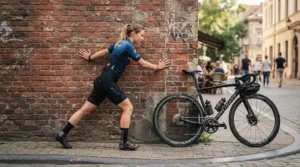
Practical beginner advice: practise clipping in and out while stationary, leaning against a wall or doorframe, for several minutes before ever riding on the road. Set pedal spring tension to its lowest setting initially — most pedals have a small tension screw — and only increase it once unclipping has become instinctive. It’s also worth accepting that a slightly looser, more forgiving cleat now is not a permanent compromise; plenty of riders move to a lower-float, more precise cleat once confidence and technique have developed over a season.
Pedal Stroke Biomechanics And Why Float Matters
A pedal stroke isn’t a simple up-and-down piston movement — the hip, knee and ankle all rotate through slightly different arcs as the crank spins, and no two riders’ joints move in exactly matching planes. Pedal stroke biomechanics research, including work looking at rearward cleat positioning, has found that shifting cleat position and allowing appropriate float can measurably alter knee extension angles without meaningfully affecting power output, which directly challenges the old assumption that a rigid, “efficient” fixed cleat position is automatically best for every rider.
What the spec sheet won’t tell you, but biomechanics research suggests, is that a small amount of float essentially acts as a pressure valve for the natural variation between your hip, knee and ankle rotation through each stroke. Riders with naturally toed-in or toed-out gaits — which is most people, to some degree — experience that variation as sideways stress on the kneecap if a cleat refuses to let the foot follow its own path. This is the core reason float-based cleats consistently outperform fixed 0° options for pain reduction, even though 0° cleats remain marginally more efficient for elite riders whose biomechanics have already been precisely measured and matched.
Replacement Cycling Cleats: When And How Often
Cleats wear faster than most riders expect, particularly if you walk in them regularly off the bike. As a rough guide, frequent commuters should plan on replacement cycling cleats roughly once a year, while riders doing shorter, less frequent trips might stretch that to 18-24 months. Visible signs it’s time include rounded-off edges where the cleat once had crisp corners, a noticeably looser or more unpredictable clip-in feel, and coloured wear indicators (built into most Shimano and Look cleats) disappearing or changing shade.
It’s worth noting that worn cleats can actively reintroduce knee pain even after a successful initial fix — a 6° float cleat that’s worn unevenly can behave closer to a 9° or an inconsistent, lopsided float depending on which edge has degraded most. Keeping a spare set in a saddle bag is sensible practice, since a cleat that snaps or a bolt that shears mid-ride otherwise leaves you stranded.
Common Mistakes When Buying Cleats For Knee Pain
The most frequent mistake is buying the highest-float cleat available and assuming more is automatically better — excessive float without any fixed reference point can itself feel unstable and cause a different kind of knee stress from constant micro-corrections. A second common error is ignoring pedal compatibility entirely; Look Keo, Shimano SPD-SL, Time and Speedplay cleats are not interchangeable, and buying the wrong cleat for your existing pedals is an easy, wasted purchase. Riders also frequently skip transferring their old cleat alignment marks onto new cleats, effectively starting their fit from scratch and reintroducing the very problem they were trying to solve. Finally, many buyers assume a single cleat swap will resolve knee pain that’s actually coming from saddle height or crank length — cleats fix rotational and lateral alignment issues, not vertical leg extension problems.
Cleats vs Fixed-Float Race Cleats: A Detailed Comparison
| Factor | Float Cleats (6-15°) | Fixed 0° Race Cleats |
|---|---|---|
| Best For | Knee pain, beginners, long rides | Sprinters, criterium racers |
| Power transfer precision | Good | Excellent |
| Knee stress risk | Low | Higher if misaligned |
| Setup forgiveness | High | Requires precise fitting |
| Recommended for injury history | Yes | No |
The written case for float cleats over fixed 0° race cleats isn’t close for anyone dealing with actual pain: the small precision advantage a fixed cleat offers a professional sprinter simply doesn’t outweigh the injury risk it carries for a rider whose alignment isn’t already dialled in by a professional fitter. Shimano themselves explicitly warn that their 0° red cleat is not a good choice for riders prone to knee pain, which is about as clear a manufacturer admission as you’ll find that float genuinely matters for joint health, not just marketing spin.
Long-Term Cost & Maintenance
Total cost of ownership for cleats for knee pain cycling is refreshingly low compared with most cycling upgrades. A budget pick like Exustar E-RSL3H2 at roughly £12-£18, replaced annually, costs less over five years than a single set of race wheels — yet the impact on comfort and injury prevention can be significant. Even the premium Wahoo Speedplay Zero cleats, at £45-£55, amortise to well under £15 a year if you’re commuting daily and getting genuine relief from persistent joint pain, which compares very favourably against repeated physiotherapy appointments.
If cost is the main barrier to trying a better cleat setup, it’s worth knowing that cycling equipment, including pedals and cleats bought alongside a new bike, can sometimes be covered under Cycle to Work salary sacrifice schemes, which reduce the effective cost through tax and National Insurance savings for employees whose workplace participates. It’s not applicable to every purchase — cleats bought alone, outside a bundled scheme order, typically fall outside the scope — but it’s a route worth checking with your employer if you’re planning a wider setup change alongside addressing knee pain.

FAQ
❓ Do cleats really help with knee pain when cycling?
❓ What degree of float is best for knee pain?
❓ How often should I replace my bike cleats?
❓ Can I use SPD cleats instead of road cleats to help my knees?
❓ Should I see a bike fitter before buying new cleats?
Conclusion
Cleats for knee pain cycling sit in that rare category of cycling upgrades that are genuinely cheap, genuinely effective, and genuinely under-discussed. Whether you land on the budget-friendly Exustar E-RSL3H2, the beginner-trusted Shimano SPD-SL SM-SH11, or the fully adjustable Wahoo Speedplay Zero, the underlying principle stays the same: your knee should be allowed to move a little, not locked rigidly into someone else’s idea of the perfect pedalling position. Pair the right float rating with correct alignment, keep an eye on wear, and most riders find that persistent knee pain quietly disappears within a handful of rides rather than requiring months of guesswork.
Before you buy, take the time to actually identify where your pain sits and what your current float rating is — the comparison table and buyer’s framework above should make that a five-minute job rather than an afternoon of research. Getting this one component right can be the difference between dreading your next ride and genuinely looking forward to it.
Recommended for You
- Road Bike Cleats: 7 Best Picks for Comfort & Power (2026)
- Women’s Road Shoes for Racing: 7 Best Picks for 2026
- Women’s Road Cycling Shoes: 7 Best UK Picks for Narrow Feet (2026)
Disclaimer: This article contains affiliate links. As an Amazon Associate, I earn from qualifying purchases. If you purchase products through these links, we may earn a small commission at no additional cost to you.
✨ Found this helpful? Share it with your friends! 💬🤗
