
In This Article
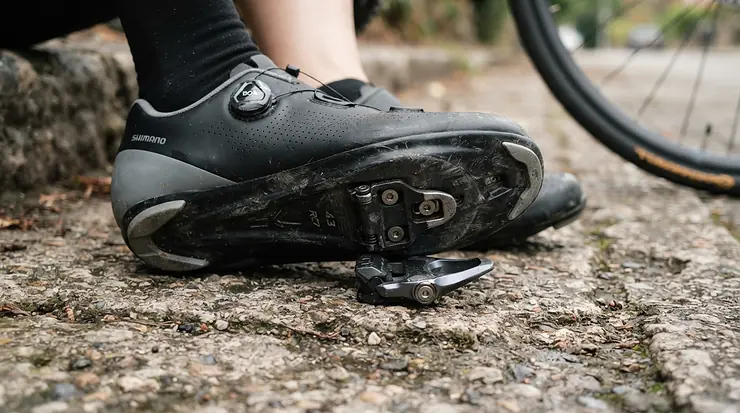
Somewhere between the third red light and the fourth pothole, you realise your cleats are doing more work than your legs. SPD cleats for commuting are the small, unglamorous metal wedges bolted to the sole of your shoe that lock your foot to the pedal — and unlock again, ideally without drama, the second your front wheel meets a junction. Unlike road-race cleats, they’re recessed into a walkable sole, so you can clip in for the ride and clip out to buy a coffee without waddling like you’ve just dismounted a horse.

For the daily commuter, that distinction matters more than any spec sheet admits. You’re not chasing marginal gains on a closed circuit; you’re threading through bus lanes, dodging wing mirrors, and occasionally sprinting for a train while still attached to a bicycle. The cleat you choose shapes how confidently you handle all of that — how easily you bail out at a roundabout, how long the thing survives being walked on across a car park, and whether your knees thank you or sue you after a wet Tuesday.
This guide breaks down seven real, currently available SPD cleats — from Shimano’s own line-up to genuinely useful third-party alternatives — with honest analysis of what each one is actually good at, drawn from published specifications and aggregated rider feedback rather than invented enthusiasm. We’ll also dig into touring-specific needs, walkable cleat design, and what “replacement SPD cleats” should mean when your current set is squeaking like a rusty gate.
Quick Comparison: SPD Cleats for Commuting at a Glance
Before the deep dive, here’s the shape of the market. Release style is the single biggest factor for commuters — it decides how your foot behaves the moment things go sideways at a junction.
| Cleat | Release Type | Float | Price Range | Best For |
|---|---|---|---|---|
| Shimano SM-SH51 | Single-direction | 4° | Under £20 | Confident, high-security commuting |
| Shimano SM-SH56 | Multi-release | 4° | Under £25 | Beginners, stop-start traffic |
| Shimano CL-MT001 | Multi-entry | 4° | £25-£35 range | Riders wanting the newest engagement tech |
| Wellgo SPD-Compatible Set | Single-direction | Similar to OEM | Under £15 | Budget backup pair |
| Exustar E-C01F | Single-direction | 4° | Under £20 | High-mileage durability on a budget |
| BV SPD/X-Track Cleats | Single-direction | Adjustable | Under £10 | Absolute entry-level spend |
| Shimano SM-SH51 + Cleat Nut | Single-direction | 4° | £20-£30 range | Replacing stripped shoe threads |
Looking at the table, the split is really between security and forgiveness. The Shimano SM-SH51 and its cleat-nut sibling reward riders who’ve already built the muscle memory to twist a heel out deliberately, while the Shimano SM-SH56 and Shimano CL-MT001 hand some of that control back to the pedal, which matters enormously when you’re unclipping in a hurry with a bus bearing down. Budget options like the BV SPD/X-Track Cleats and Wellgo SPD-Compatible Set aren’t inferior so much as unmeasured — less real-world data exists on their long-term wear, so they suit riders who want a cheap way to test the waters before committing to a premium set.
💬 Found a cleat that suits your commute? Bookmark this page — you’ll want it again when it’s time to replace them.
Top 7 SPD Cleats for Commuting: Expert Analysis
1. Shimano SM-SH51 — the security-first standard
The Shimano SM-SH51 is about as close to a factory default as SPD cleats get, and that reputation is earned rather than marketed. It uses a single-direction release, meaning the only way out is a deliberate outward heel twist — no accidental pop-outs from an upward tug or a diagonal knock. Shimano cold-forges and heat-treats the steel body for durability, and it ships with 4° of float, giving your knee a small margin to rotate naturally through the pedal stroke without straining the joint.
For commuting specifically, that single-direction release is a double-edged sword. Based on the spec comparison with its siblings, what most buyers overlook about this model is that “hard to release” also means “hard to release by accident” — genuinely useful when you’re weaving through potholes and speed bumps that would jolt a looser cleat free mid-stroke. Reviewers and long-term forum users consistently describe the Shimano SM-SH51 as the most dependable, least fussy cleat in the range, the kind you fit once and forget about for a year. It suits confident commuters who’ve already got the twist-to-release motion wired into muscle memory, rather than someone clipping in for the first time this week.
Pros:
- ✅ Hardest to unclip by accident on rough roads
- ✅ Cold-forged steel built for year-round reliability
- ✅ Compatible with virtually every SPD pedal on the market
Cons:
- ❌ Steeper learning curve for total beginners
- ❌ No forgiveness if you panic-twist the wrong way
At under £20, the Shimano SM-SH51 is genuinely hard to beat on value — it’s the cleat most bike shops reach for first, and for good reason.

2. Shimano SM-SH56 — the forgiving multi-release
Where the SH51 asks for commitment, the Shimano SM-SH56 hands some of it back. It uses a multi-release mechanism that lets you unclip via the usual outward twist, but also by lifting and twisting, which Shimano markets under its “Light Action” branding on compatible Explorer-series pedals. The float stays at 4°, so knee comfort is identical to the SH51 — the difference lives entirely in how easily your foot escapes the pedal.
That distinction earns its keep the moment traffic gets unpredictable. Here’s what to weigh: a cyclist stopped dead at a red light, foot still clipped in, has a fraction of a second to react if a car rolls closer than expected. The Shimano SM-SH56‘s wider release window makes that panic-unclip more forgiving, which is precisely why cycling forums and community write-ups repeatedly flag it as the go-to recommendation for people new to clipless pedals or riders who’ve had a scare with a stuck cleat before. The trade-off, and it’s a real one, is that the same forgiveness makes unintentional release during hard pedalling slightly more likely — noticeable if you’re sprinting for a gap in traffic.
Pros:
- ✅ Multiple release directions reduce panic-unclip failures
- ✅ Ideal for first-time clipless commuters
- ✅ Same 4° float as the security-focused SH51
Cons:
- ❌ Slightly more prone to unintentional release under load
- ❌ Silver finish shows wear marks sooner than black
Priced a touch above the SH51, usually under £25, this is the cleat worth choosing if stop-start city riding — not open-road efficiency — is your daily reality.
3. Shimano CL-MT001 — the newest engagement tech
Shimano’s Shimano CL-MT001 is the newer face of the two-bolt cleat family, originally bundled with premium off-road pedals like the XTR PD-M9220 before filtering down into general availability. It uses a “multi-entry” design, distinguished visually by an embossed line on the rear tab — a small detail, but it matters if you’re trying to work out which cleat is currently bolted to your shoe.
On paper this means faster, more confident engagement without having to glance down to find the pedal, which is exactly the kind of feature that pays off at a green light when you’ve got three seconds before the car behind starts getting impatient. Because it’s a newer design, aggregated review data is thinner than for the decades-old SH51 and SH56, so it’s fair to flag that long-term wear reports are still building — what’s verifiable is the engineering intent, not years of accumulated commuter mileage. Riders who want Shimano’s most current pedal-cleat interaction, and who are happy paying a premium for it, are the clearest audience here.
Pros:
- ✅ Faster engagement without looking down at the pedal
- ✅ Compatible with Shimano’s latest off-road and commuter pedals
- ✅ Distinctive embossed marker prevents mix-ups with older cleats
Cons:
- ❌ Premium price versus the decades-proven SH51/SH56
- ❌ Less long-term commuter wear data currently available
Sitting in the £25-£35 range, the Shimano CL-MT001 is the pick for early adopters rather than budget-conscious first-timers.
4. Wellgo SPD-Compatible Cleat Set — the sensible backup pair
The Wellgo SPD-Compatible Cleat Set exists in that useful grey zone between “genuine Shimano part” and “generic knock-off” — a reputable pedal manufacturer producing cleats engineered to match the SPD standard, sold at a noticeably lower price than the branded originals. It’s aimed squarely at riders who commute, hit the spin studio, or ride mountain trails and don’t want to pay a premium every time a cleat wears through.
What most buyers overlook about aftermarket-compatible cleats like this one is that “compatible” doesn’t always mean “identical tolerances” — a small amount of extra play or a slightly different release feel is common across third-party SPD cleats, and the Wellgo SPD-Compatible Cleat Set is no exception based on the spec comparison with genuine Shimano parts. That’s not a dealbreaker for most commuters, but it’s worth knowing before you fit a set the night before a big ride. Reviewers marketing it note fit across a range of cycling shoe brands, which makes it a sensible spare to keep in a desk drawer at work.
Pros:
- ✅ Noticeably cheaper than genuine Shimano cleats
- ✅ Fits most SPD-compatible cycling shoes
- ✅ Good as a backup pair for emergencies
Cons:
- ❌ Tolerances can feel slightly looser than OEM parts
- ❌ Release feel varies a little from genuine SPD cleats
At under £15, it’s an easy add-on when you’re already ordering other cycling kit, purely for peace of mind.
5. Exustar E-C01F — the durability-per-pound pick
Taiwanese component maker Exustar has built a long-standing reputation supplying OEM parts to bigger brands, and the Exustar E-C01F cleat reflects that pedigree. It’s built from forged Cr-Mo steel — the same family of alloy Shimano favours for its own cleats — and weighs a claimed 20g per cleat, keeping it competitive with branded options rather than settling for cheap stamped metal.
The real-world meaning here is straightforward: Cr-Mo steel resists the rounding-off and thread wear that kills cheaper cleats within months, especially if you’re the sort of commuter who walks the last half-mile from the bike rack to the office in full cleated shoes. Based on the material spec, riders putting serious mileage through a set — daily commuters and light tourers alike — should get more life out of the Exustar E-C01F than from unbranded stamped-steel alternatives at a similar price point, though as with any aftermarket cleat, individual longevity depends heavily on how much pavement walking it absorbs.
Pros:
- ✅ Forged Cr-Mo steel resists premature wear
- ✅ Competitive weight against genuine Shimano cleats
- ✅ Reputable OEM manufacturer behind the brand
Cons:
- ❌ Less brand recognition than Shimano at resale
- ❌ Release feel takes a short adjustment period
Usually available under £20, this is the cleat to reach for if you’re commuting five days a week and want your hardware to outlast the excuses for not servicing your bike.

6. BV SPD/X-Track Compatible Cleats — the entry-level test run
If you’re not yet convinced clipless is worth the investment, the BV SPD/X-Track Compatible Cleats are the cheapest sensible way to find out. Built from alloy with a single-direction release, they’re explicitly compatible with both Shimano SPD pedals and Look’s X-Track system, giving you flexibility if you’re not sure which pedal ecosystem you’ll settle into long-term.
Aggregated buyer feedback across major retail listings repeatedly makes the same comparison: several reviewers describe performance roughly on par with genuine Shimano single-release cleats, at close to half the price — though it’s worth being honest that budget compatible cleats as a category show more variance in quality control than established branded lines, so individual results can differ. What most buyers overlook about ultra-budget cleats generally is that the savings mostly show up in finish and long-term wear resistance, not in day-one clip-in feel, which for many commuters genuinely doesn’t matter. Riders switching from a spin studio to outdoor commuting for the first time are the obvious audience.
Pros:
- ✅ Lowest entry price of any cleat on this list
- ✅ Dual compatibility with SPD and Look X-Track pedals
- ✅ Sealed bearing compatibility for smooth engagement
Cons:
- ❌ Quality control varies more than branded alternatives
- ❌ Shorter expected lifespan under heavy daily use
Priced under £10, it’s the lowest-risk way to trial clipless commuting before spending more on a long-term set.
7. Shimano SM-SH51 with New Cleat Nut — the true replacement pick
Sometimes the cleat isn’t the problem — the threaded nut plate buried inside your shoe’s sole is. The Shimano SM-SH51 with New Cleat Nut bundles the standard single-release cleat with a fresh mounting nut, specifically solving the situation where years of clipping in and out have stripped or rounded the original threads, or where you’ve picked up secondhand shoes with no usable hardware at all.
Here’s what to weigh: buying just the cleat when your nut plate is damaged is a false economy, because the new cleat will still wobble or refuse to torque down properly against worn threads. Retailers list this bundle specifically as the fix, and it’s the version worth reaching for anyone searching for genuine “replacement SPD cleats” rather than a straightforward wear-and-tear swap. It carries the same security-focused single-direction release and 4° float as the standard SH51, so performance on the bike is identical — the value is entirely in what’s hiding underneath the cleat.
Pros:
- ✅ Solves stripped or damaged shoe-thread problems
- ✅ Same trusted single-release security as the standard SH51
- ✅ Ideal for secondhand shoes missing original hardware
Cons:
- ❌ Costs more than a bare cleat set
- ❌ Unnecessary if your existing nut plate is still sound
Sitting in the £20-£30 range, this is a small spend that saves you binning an otherwise perfectly good pair of shoes.
Practical Usage Guide: Fitting, Adjusting and Maintaining Your Cleats
Fitting cleats correctly is the difference between a commute that feels effortless and a knee that files a formal complaint by March. Start with position, not tension. Most riders should mount the cleat so the ball of the foot sits directly over — or very slightly behind — the pedal axle, with the cleat’s fore-aft position adjusted before you tighten anything permanently. A common first-30-days mistake is over-tightening the release tension screw on the pedal itself, mistaking “hard to unclip” for “more secure,” when really it just makes panic-stops more dangerous.
Once fitted, walk before you ride. Clip in and out a dozen times while the bike’s stationary, ideally leaning against a wall, until the motion stops requiring conscious thought. This matters enormously for commuters, because the first genuine emergency stop shouldn’t be the first time your foot has to find the release angle under pressure.
Maintenance is refreshingly low-effort. A light smear of grease or anti-seize on the mounting bolts before fitting prevents seizing months later, and a quarterly check of the cleat’s wear indicators — most Shimano cleats have a moulded line that disappears as the metal rounds off — tells you when replacement is due before the pedal starts feeling vague. According to guidance from Shimano’s own component documentation on Wikipedia’s overview of the SPD system, both single and multi-release cleats share the same fitting hardware, so switching between them mid-life doesn’t require new bolts, just a spare Allen key and five minutes.

Real-World Scenarios: Which Cleat Suits Your Commute
The traffic-light sprinter. If your commute involves eight sets of lights in four miles, stopping and restarting is your entire ride. A rider in this situation benefits most from the Shimano SM-SH56‘s forgiving multi-release, because the number of unclip events per journey is genuinely high, and every one of them is a small risk if the cleat doesn’t cooperate instantly.
The long-distance mixed commuter. Someone riding twelve miles each way, partly on quiet lanes and partly through town, wants security more than forgiveness once they’re up to speed, but still needs to bail out confidently at junctions. The Shimano SM-SH51 or the Exustar E-C01F both suit this rider — steady, predictable release, without the extra unclip-sensitivity that matters less when most of the ride is open road.
The budget-conscious student. A rider commuting to campus on a tight budget, wanting to try clipless without a big outlay, is the exact audience for the BV SPD/X-Track Compatible Cleats or the Wellgo SPD-Compatible Cleat Set — cheap enough to abandon the experiment without regret, functional enough that most people never feel the need to.
The secondhand-bike rebuilder. Anyone who’s picked up a used pair of cycling shoes with damaged or missing cleat hardware needs the Shimano SM-SH51 with New Cleat Nut before anything else — no amount of clever cleat choice fixes stripped threads underneath.
Commuter Cycling Gear: Building the Full Setup Around Your Cleats
Cleats are only as good as the ecosystem around them, and commuter cycling gear built without that in mind creates friction in places you wouldn’t expect. Pedals matter first — a two-bolt SPD pedal with a wide platform, rather than a tiny competition-weight design, gives your foot more stable contact before it’s even clipped in, which noticeably reduces the “hunting for the pedal” wobble at every junction.
Shoes come next, and this is where commuters most often get it wrong by borrowing kit designed for a different discipline. A stiff carbon-soled road shoe transmits power beautifully but turns into a hazard the second you’re walking across wet tiles at the office. Look instead for a recessed two-bolt sole with genuine tread, not a shallow moulding that only looks walkable on the shelf.
Beyond the shoe-pedal-cleat triangle, sensible commuter cycling gear includes a spare cleat set kept at your desk or in a pannier — cleats fail without warning far more often than they fail gradually — plus a 4mm Allen key, since that’s the bolt size across virtually every SPD-compatible cleat on this list. Reflective ankle bands and mudguards round out a setup that treats the commute as a daily utility ride rather than a weekend sport, which is precisely the mindset SPD cleats were designed to support in the first place.
How to Choose SPD Cleats for Commuting
Picking the right cleat comes down to a short list of genuinely decision-shaping factors, not marketing noise:
- Release style first. Decide whether you want the security of single-direction release (SH51-style) or the forgiveness of multi-release (SH56-style) — this single choice affects every ride more than any other spec.
- Float tolerance. Most commuter cleats sit around 4° of float; anything less can strain the knee on longer rides, so don’t assume all cleats are interchangeable on comfort.
- Material and finish. Forged Cr-Mo steel, as used in the Shimano SM-SH51 and Exustar E-C01F, resists wear better than stamped budget alloys.
- Compatibility check. Confirm your pedals accept two-bolt SPD cleats specifically — SPD-SL and Look-style three-bolt systems are a different standard entirely.
- Replacement hardware. If you’re fitting cleats to older or secondhand shoes, check whether you need a bundled cleat nut like the Shimano SM-SH51 with New Cleat Nut.
- Budget versus longevity. Cheaper compatible cleats like the BV SPD/X-Track Compatible Cleats are fine for testing the waters, but heavy daily commuters usually save money long-term by buying once, buying branded.
- Walkability. If you’re walking any real distance off the bike, prioritise a genuinely recessed cleat design over raw pedal efficiency.
SPD Cleats vs SPD-SL: Which Wins for Commuting
The SPD-SL family — Shimano’s three-bolt, road-race cleat system — trades walkability for a larger contact patch and marginally stiffer power transfer. For racing, that trade makes sense. For commuting, it rarely does.
| Factor | SPD (Two-Bolt) | SPD-SL (Three-Bolt) |
|---|---|---|
| Walkability | Recessed, genuinely walkable | Raised, awkward and slippery on foot |
| Cleat lifespan | Long, metal construction | Shorter, plastic wears faster |
| Power transfer | Good | Marginally stiffer |
| Best For | SPD cleats for commuting, touring, mixed terrain | Dedicated road racing |
As several UK cycling publications have noted in detailed pedal buying guides, SPD-SL cleats can be genuinely difficult to walk in and are comparatively expensive to replace once worn, which matters little on a closed training loop but becomes a real annoyance on a multi-stop commute. A detailed breakdown from Cyclist’s guide to the best clipless road pedals points out that two-bolt systems suit gravel riding, commuting and winter road riding specifically because they’re simpler to clip into and far more forgiving off the bike. Unless your commute is genuinely a closed, dry, traffic-free stretch of tarmac, the two-bolt SPD system wins on almost every commuter-relevant metric.
Common Mistakes When Buying Replacement SPD Cleats
The single biggest mistake is buying replacement SPD cleats based on price alone without checking wear indicators on the old set first — sometimes the pedal’s spring tension, not the cleat, is the actual culprit behind vague or inconsistent engagement.
The second mistake is mismatching release types mid-pair, fitting a single-release cleat on one shoe and a multi-release on the other after a partial loss — the inconsistent feel between feet genuinely throws off reflexive unclipping under pressure. Third, riders frequently skip the cleat nut check discussed earlier, buying a bare cleat set when the real fault lies in stripped shoe threads, which the Shimano SM-SH51 with New Cleat Nut exists specifically to solve. Fourth, some commuters assume any “SPD-compatible” cleat is a drop-in match for genuine Shimano hardware; based on the spec comparison earlier in this guide, tolerances can vary enough that pedal engagement feels noticeably different, which is worth testing in a car park before relying on it in traffic. Finally, don’t forget the mounting bolts themselves — reusing corroded bolts on a fresh cleat is a common false economy that leads to a repeat repair within weeks.

SPD Cleats for Touring: What Changes on Longer Rides
Touring shifts the priorities that matter for commuting cleats, because the variables multiply: multi-day mileage, unpredictable weather, off-bike walking through campsites or towns, and far less access to a bike shop if something fails.
Durability climbs to the top of the list. The Exustar E-C01F‘s forged Cr-Mo construction and the Shimano SM-SH51‘s heat-treated steel both suit multi-week tours better than budget alloy options, simply because there’s no quick replacement available two hundred miles from the nearest bike shop. Reviewers and long-distance riders sourcing SPD cleats for touring commonly favour carrying a genuine spare set rather than relying on found-in-town compatibility, precisely because tolerances between brands can differ enough to matter.
Walkability also becomes more important on tour than on a daily commute, since touring cyclists routinely spend hours off the bike exploring towns in the same shoes they rode in. A recessed cleat paired with a genuinely walkable sole — the same principle discussed in the walkable cleat design section below — avoids the slipping, clicking discomfort of a road-style cleat on cobblestones. Finally, float matters more over consecutive long days; the standard 4° found across most cleats on this list gives the knee enough freedom to avoid cumulative strain that a zero-float system would risk building up over a week in the saddle.
Walkable Cleat Design: The Features That Actually Matter
Not every two-bolt cleat is equally walkable, despite the marketing implying otherwise. The feature that matters most is recess depth — how far the cleat sits below the surrounding sole tread. A deeply recessed cleat, paired with a shoe that has genuine rubber lugs around it, lets you walk almost normally; a shallow recess leaves metal proud of the sole, clicking on hard floors and turning every step into a small hazard.
Material finish matters second. Silver multi-release cleats like the Shimano SM-SH56 show wear differently to black single-release options, but wear itself — rounded edges, thinning metal — is what actually degrades walkability over time, regardless of colour. What most buyers overlook is that cleat covers, small rubber caps that snap over the metal, extend walkable comfort significantly for anyone doing genuine distance on foot, though they add a step to your routine and need remembering when you clip back in.
Finally, sole flex around the cleat mounting point affects walkability as much as the cleat itself. A shoe with excessive flex around a rigid metal cleat creates an uneven, rocking step; a well-matched shoe-cleat pairing distributes pressure evenly. For commuters weighing walkable cleat design specifically, the honest takeaway is that the cleat is only half the equation — the shoe underneath it does at least as much of the work.
Everyday Cycling Shoes and SPD Compatibility
The shoe matters as much as the cleat, and this is where commuters most often shortchange themselves. Genuine everyday cycling shoes are built to disguise their function — trainer-styled uppers, discreet two-bolt recesses, and soles with real tread rather than a slick racing profile — so you can walk into a meeting without anyone clocking that you arrived by bike.
As one detailed UK buyer’s guide on commuter and casual cycling footwear notes, styles built around a recessed two-bolt SPD-style sole are specifically the ones you can walk normally in, making them best suited to commuting and off-road riding, while three-bolt SPD-SL shoes stay stiffer for road use but remain awkward on foot. That distinction should guide your shoe purchase before your cleat purchase, because the best cleat in this guide still won’t rescue a shoe with a shallow, unwalkable recess. If you already own SPD-SL shoes and are reluctant to replace them, note that some models accept a two-bolt adaptor plate, though this compromises the walkability gains you’re chasing in the first place — worth confirming compatibility with your specific shoe before assuming it’ll work.
Long-Term Cost & Maintenance
| Consideration | Budget Cleats (BV, Wellgo) | Mid-Range (Exustar, standard Shimano) | Premium (Shimano CL-MT001) |
|---|---|---|---|
| Upfront cost | Under £15 | Under £20-£25 | £25-£35 range |
| Typical lifespan* | Shorter, more variable | Solid, steady wear | Newest tech, data still emerging |
| Replacement frequency | More frequent | Roughly annual for daily riders | Likely similar to mid-range |
| Best For | Testing clipless riding | Daily, reliable commuting | Riders chasing the newest engagement feel |
*Lifespan estimates are directional, based on material and construction rather than fixed guarantees — actual wear depends heavily on how many miles are walked in cleats versus ridden.
Looking at the table, the maths tends to favour buying mid-range once, rather than repeatedly replacing budget cleats every few months. A rider putting genuine daily mileage through their commute will likely spend more over two years on repeat budget purchases than on a single durable set like the Exustar E-C01F or Shimano SM-SH51. Maintenance costs stay low across the board — cleats need no lubrication beyond the mounting bolts — which keeps total cost of ownership refreshingly predictable compared with almost any other component on a bike.

Frequently Asked Questions
❓ What's the difference between SPD and SPD-SL cleats?
❓ Are Shimano SM-SH51 or SM-SH56 cleats better for commuting?
❓ How often should I replace SPD cleats?
❓ Can I use SPD cleats for touring as well as commuting?
❓ Do all SPD-compatible cleats fit Shimano pedals?
Conclusion
Choosing SPD cleats for commuting isn’t really about chasing the flashiest spec sheet — it’s about matching release style, durability and walkability to the specific chaos of your actual ride. The Shimano SM-SH51 remains the dependable default for confident commuters, the Shimano SM-SH56 earns its keep in heavy traffic where a fast, forgiving bail-out matters, and the Shimano CL-MT001 is worth its premium for riders chasing the newest engagement feel. Budget options like the BV SPD/X-Track Compatible Cleats and Wellgo SPD-Compatible Cleat Set make sense as low-risk entry points, while the Exustar E-C01F rewards anyone racking up serious weekly mileage. And if your current cleats have simply outlived the threads underneath them, the Shimano SM-SH51 with New Cleat Nut is the honest fix rather than a fresh cleat papering over a deeper problem.
Whichever set you land on, the underlying advice barely changes: prioritise walkability if you’re off the bike often, prioritise security if your commute is fast and technical, and always keep a spare pair somewhere you won’t forget them.
✨ Ready to upgrade your commute? Check current prices on today’s pick and get rolling with confidence. 🚴♂️
Recommended for You
- Best SPD Cleats: 7 Proven Picks For UK Riders (2026)
- Cleats For Knee Pain Cycling: 7 Best Picks To Stop The Ache (2026)
- Road Bike Cleats: 7 Best Picks for Comfort & Power (2026)
Disclaimer: This article contains affiliate links. As an Amazon Associate, I earn from qualifying purchases. If you purchase products through these links, we may earn a small commission at no additional cost to you.
✨ Found this helpful? Share it with your friends! 💬🤗
