

In This Article
There’s a very particular kind of misery reserved for cyclists: the slow, creeping realisation, somewhere around mile three, that your socks have given up. Not your jacket. Not your gloves. Your socks — the bit of kit nobody thinks about until it fails. Waterproof cycling socks exist to solve exactly this problem, and if you’ve ever squelched home with feet the colour and temperature of a January sea, you already understand why they matter more than their modest price tag suggests.

This guide takes a proper look at waterproof cycling socks: what the membrane technology actually does, which real products on the market are worth your money, and how to match a pair to the way you actually ride. Britain isn’t quite as sodden as its reputation suggests — annual precipitation averages for the entire UK sit at 159 days of rain or snow a year, according to Met Office climate data — but that’s still nearly one ride in two with at least a chance of getting your feet wet. Waterproof cycling socks won’t stop the rain falling. They will stop it deciding your afternoon.
We’ll cover seven genuine products spanning budget, mid-range and premium, back up every claim with real specifications and aggregated review sentiment rather than invented enthusiasm, and finish with practical guidance you can actually use — not just a list dressed up as advice. Prices throughout are given as ranges, since exact figures shift constantly and change by retailer and size.
Quick Comparison Table
| Product | Construction | Best For | Price Range |
|---|---|---|---|
| Sealskinz Waterproof All Weather Mid Length Cycle Sock | 3-layer, hydrophilic membrane | All-round year-round protection | £30-£40 |
| DexShell Hytherm Pro | 3-layer, Porelle membrane, merino terry loop | Deep winter, sub-zero rides | £25-£35 |
| Endura Hummvee Waterproof Socks II | 3-layer, stretch membrane | Best value premium pick | £25-£32 |
| Altura Endurance Waterproof Socks | Rainguard membrane, ribbed cuff | Budget everyday commuting | £18-£25 |
| Fox Defend Water Socks | 3-layer, PU membrane, flat-stitch toe | Mountain biking and stream crossings | £30-£40 |
| Muc-Off Waterproof Socks | Thin waterproof-breathable membrane | Summer showers, close-fitting shoes | £25-£35 |
| DexShell Ultra Dri Sports Socks | Lightweight 3-layer membrane | Lightweight all-rounder on a budget | £18-£26 |
Looking across the table, there’s a clear split between socks built for genuine sub-zero misery — the DexShell Hytherm Pro with its merino terry lining — and thinner, more packable options like the Muc-Off Waterproof Socks designed for a British summer downpour rather than a February commute. The Altura Endurance Waterproof Socks and DexShell Ultra Dri Sports Socks undercut the premium brands on price without abandoning waterproofing altogether, while the Sealskinz Waterproof All Weather Mid Length Cycle Sock sits as the generalist’s safe bet. None of these is “best” in isolation — it depends entirely on which kind of wet you’re planning for.
💬 Found a pair that’s saved your commute before? Tap below and help other riders choose with confidence!
Top 7 Waterproof Cycling Socks: Expert Analysis
1. Sealskinz Waterproof All Weather Mid Length Cycle Sock — the reliable all-rounder
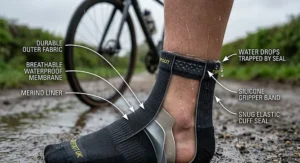
Sealskinz is the name most UK cyclists reach for first, and there’s a reason: the brand is UK-based and has spent 25 years specialising in waterproof socks, gloves and overshoes. The mid-length cycle sock uses a three-layer construction — a durable nylon-elastane outer, a fully hydrophilic membrane, and a polyester-cotton-elastane inner — which in practice means the membrane does the waterproofing while the inner layer handles comfort against the skin. Reviewers who’ve submerged their feet report staying dry for several minutes at a time, which covers virtually every puddle, ford or overflowing gutter you’ll meet on a normal ride.
Based on the spec comparison with cheaper alternatives, what stands out here is durability rather than any single technical trick: aggregated user feedback consistently points to socks that survive years of wear rather than one soggy winter, and Sealskinz backs that up with a lifetime guarantee against manufacturing faults — an unusually confident promise for an item this exposed to abrasion. This is the pair for someone who wants one dependable option covering commuting, gravel and the occasional proper downpour, rather than a wardrobe of specialists.
The trade-off worth knowing about upfront: the membrane sandwich makes these noticeably thicker than a normal cycling sock, so if your winter shoes are already snug, try before you commit to a size.
Pros:
- ✅ Genuine three-layer waterproof membrane construction
- ✅ Backed by a lifetime manufacturing guarantee
- ✅ Versatile enough for commuting, gravel and road use
Cons:
- ❌ Noticeably bulkier than a standard cycling sock
- ❌ Premium price versus budget waterproof alternatives
Expect to pay in the £30-£40 range depending on retailer and colourway — check current price before buying, as Sealskinz frequently runs seasonal offers. Given the durability reports and the guarantee, this represents solid long-term value even at the higher end of that bracket.
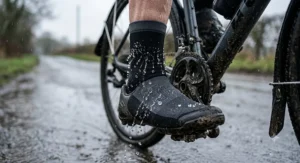
2. DexShell Hytherm Pro — best for genuinely brutal winter rides
If your rides regularly involve standing water, slush or temperatures that make your bike computer’s battery sulk, the DexShell Hytherm Pro is built specifically for that scenario. The construction pairs a merino wool inner, a high-spec Porelle membrane, and a durable nylon outer, and the outer shell itself runs 97% polyamide with 3% elastane for stretch and recovery. In practice, the merino terry loop lining is the standout feature — it’s the layer doing the thermal heavy lifting, not just the waterproof membrane.
What most buyers overlook about this model is that it isn’t trying to be a lightweight, all-season sock — it’s a specialist. Independent testing that fed into a UK mountain biking buyer’s guide found the Hytherm Pro maintained dry, comfortable conditions in cold, wet winter trail riding, which is precisely the brief it’s designed against. If your cycling year has a genuine “arctic commute” phase, this is the pair built for it rather than merely tolerating it.
Aggregated review sentiment does flag one consistent trade-off: the thick merino lining eats into shoe volume, so riders with snug winter cycling shoes often need to size up, and a handful of reviewers note the socks feel notably warmer than expected on milder days — great in January, overkill in October.
Pros:
- ✅ Merino terry lining delivers serious winter warmth
- ✅ Porelle membrane rated highly in independent testing
- ✅ Certified to recognised textile safety standards
Cons:
- ❌ Bulk requires extra shoe volume for a comfortable fit
- ❌ Overkill for anything short of proper winter conditions
Typical pricing sits around £25-£35, occasionally more for larger sizes — always confirm the current price at checkout, since DexShell’s range fluctuates with stock availability. For committed winter commuters, the value case is strong: one pair genuinely replaces the need for separate winter overshoes on most rides.
3. Endura Hummvee Waterproof Socks II — best value at the premium end
Scottish brand Endura built its reputation on gear that survives actual Scottish weather, and the Endura Hummvee Waterproof Socks II carries that pedigree. The build uses a three-layer construction for warmth, waterproofness and durability, with a breathable, waterproof stretch membrane sandwiched between a warm outer and a soft yarn lining. The stretch element is worth dwelling on: unlike some rigid waterproof membranes, this one moves with your foot, which reviewers consistently cite as the difference between “waterproof sock” and “waterproof sock I’d forget I was wearing.”
Here’s what to weigh against the Sealskinz option above: the Hummvee II tends to undercut it slightly on price while matching it on core waterproof performance, according to comparative testing from UK cycling publications. One independent tester wore them through a slushy, soaked fat-bike ride in non-waterproof boots and reported dry, warm feet even after two hours — a genuinely demanding real-world test, not a lab claim. The stretch arch support and extended leg length also make these a sensible pick for riders who layer leggings or tights over the cuff in winter.
Pros:
- ✅ Stretch membrane moves naturally with the foot
- ✅ Strong independent cold-weather test results
- ✅ Extended leg length for better winter coverage
Cons:
- ❌ Unpadded construction won’t suit riders wanting cushioning
- ❌ Limited colourway choices compared with rivals
Prices generally land around £25-£32, making this arguably the strongest pound-for-pound waterproof option on this list — the performance-to-price ratio is a common theme in aggregated reviewer sentiment, even among testers who normally favour pricier brands.
4. Altura Endurance Waterproof Socks — the sensible budget pick
Not every ride demands total, deluge-proof protection, and the Altura Endurance Waterproof Socks is honest about that trade-off in a way that makes it a genuinely useful budget option. The construction combines a seamless knitted outer layer with a ribbed cuff and a soft, open-weave lining, sandwiching a waterproof membrane called Rainguard between the two. Reviewers who wick-tested the fabric found breathability close to a standard thick winter cycling sock — a genuine plus for anyone who’s tried a fully sealed waterproof sock and found their feet swimming in their own sweat by lunchtime.
The honest caveat, and it’s a significant one: in a proper deluge, the membrane does its best but the ribbed cuff becomes overwhelmed and completely wets out. Based on that spec comparison, this isn’t the sock for a genuine storm-force commute — it’s the sock for damp autumn mornings, light persistent drizzle, and the “might rain, might not” days that make up the bulk of a typical UK cycling year. For that use case, reviewers rate it as offering a genuinely welcome layer of protection at a fraction of the premium-brand price.
Pros:
- ✅ Excellent breathability for a waterproof sock
- ✅ Noticeably cheaper than premium three-layer rivals
- ✅ Comfortable ribbed cuff fit for all-day wear
Cons:
- ❌ Cuff wets out completely in heavy, sustained rain
- ❌ Not a substitute for full waterproof socks in storms
Expect a price range around £18-£25 — one of the more accessible entries here. For riders who mainly need “good enough” wet-weather cover rather than expedition-grade waterproofing, the value case is compelling.
5. Fox Defend Water Socks — built for mud, puddles and stream crossings
Mountain bikers and gravel riders have different priorities to road commuters, and the Fox Defend Water Socks is engineered accordingly. The three-layer design uses a polyurethane membrane for full waterproof protection, described by the brand as essential for hitting mid-trail puddles and tackling water crossings in the cold, while durable fabrication adds protection against dirt and debris — a detail road-focused socks rarely bother with, since tarmac doesn’t fling grit at your ankles the way a muddy singletrack does.
What the spec sheet won’t tell you outright, but the flat-stitch toe construction implies, is that Fox designed this with off-road foot mechanics in mind: less rubbing during the constant micro-adjustments of technical riding, where your foot shifts inside the shoe far more than it does on a smooth road pedal stroke. Reviewer sentiment on independent retailer sites skews strongly positive, with several noting the PU membrane holds up impressively well through genuine stream crossings rather than just splashy puddles.
If your riding is mostly tarmac, this is probably more sock than you need. If it regularly includes rutted, waterlogged trails, it’s arguably the most purpose-built option on this list.
Pros:
- ✅ PU membrane tested against full stream crossings
- ✅ Durable fabrication resists dirt and trail debris
- ✅ Flat-stitch toe reduces rubbing on technical terrain
Cons:
- ❌ Overkill and pricier than needed for road-only riding
- ❌ Limited size range compared with mainstream road brands
Pricing typically runs £30-£40 depending on size and colourway. For dedicated off-road riders, that sits comfortably alongside other technical MTB kit costs, and the durability-focused build supports the higher end of that bracket.
6. Muc-Off Waterproof Socks — thin, packable, built for a British summer
Best known for bike cleaning products, Muc-Off’s move into waterproof socks might seem an odd pivot, but the Muc-Off Waterproof Socks earns its place through a genuinely different design brief to the winter-focused options above. Reviewers consistently note these run noticeably thinner than rivals like Sealskinz or DexShell, fitting comfortably inside normal-volume cycling shoes without requiring a size-up — a real advantage for anyone who’s ever tried cramming a bulky winter sock into a snug summer shoe.
Here’s the practical trade-off, framed honestly: thinner construction generally means a less substantial thermal barrier, so this isn’t the pair for a sub-zero commute. What it excels at, based on the spec comparison with heavier options, is the genuinely British scenario of setting off in sunshine and getting caught in an unexpected shower thirty minutes later — a light, breathable waterproof layer that doesn’t turn your whole ride into a sauna the moment the rain stops. Reviewers who’ve tested them through exactly that scenario report the outer material dries fast afterward too, so they’re back to normal quickly rather than staying damp for the rest of the ride.
Pros:
- ✅ Noticeably thinner fit than most waterproof rivals
- ✅ Doesn’t require sizing up cycling shoes
- ✅ Dries quickly after a shower passes
Cons:
- ❌ Less thermal protection than dedicated winter socks
- ❌ Not intended for prolonged deep-winter exposure
Prices sit around £25-£35 — check current price, as Muc-Off’s apparel range sees frequent promotional pricing. For summer and shoulder-season riders who want waterproofing without bulk, this is a smart, targeted purchase rather than a compromise.
7. DexShell Ultra Dri Sports Socks — lightweight and wallet-friendly
Rounding out the list, the DexShell Ultra Dri Sports Socks brings DexShell’s three-layer waterproof-breathable membrane technology down to a more accessible price point than the brand’s Hytherm Pro flagship. Independent UK reviewers testing the range describe them as keeping feet warm and dry without the thermal bulk of the merino-lined winter models, positioning this as the sensible “one pair for most of the year” choice within the DexShell line-up.
Based on that comparison, the Ultra Dri fills a genuinely useful gap: less specialised than the Hytherm Pro’s deep-winter focus, but more robustly waterproof than budget non-membrane socks that merely claim “water-resistant” on the label. Reviewers consistently note the fit runs true to standard sock sizing, which matters if you’re switching from a non-waterproof sock and don’t want to reshuffle your entire shoe sizing to accommodate a bulkier winter option.
The honest limitation, echoed across aggregated feedback: as a lighter-weight membrane sock, it won’t match the Hytherm Pro or Sealskinz flagship for extended submersion or extreme cold, so treat it as a capable all-rounder rather than an expedition-grade winter sock.
Pros:
- ✅ Genuine three-layer waterproof-breathable membrane
- ✅ Lighter and less bulky than DexShell’s winter range
- ✅ Most affordable genuinely waterproof option here
Cons:
- ❌ Less thermal insulation than merino-lined alternatives
- ❌ Shorter cuff offers less coverage in deep puddles
Typical pricing runs £18-£26, making it one of the best value entries on this list for riders who want reliable waterproofing without paying flagship prices.
Practical Usage Guide: Getting the Most From Your Waterproof Socks
Buying the right pair is only half the job — how you use and care for them determines whether they last two winters or five. Start with fit: waterproof membrane socks are almost universally thicker than standard cycling socks, so try them with the shoes you’ll actually wear them in before committing, and size up a half-size if your winter shoes are already snug. A membrane sock crushed too tightly against the inside of a shoe compresses and can lose some of its waterproof performance over time.
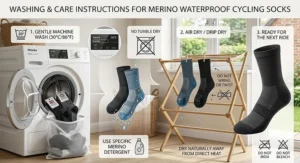
Washing matters more than most riders assume. Machine-wash on a cool cycle, avoid fabric softener (it clogs the breathable membrane’s pores and reduces performance), and always air dry rather than tumble-drying on high heat, which can degrade the membrane bonding. In the first 30 days, the most common mistake is treating a waterproof sock like a fully submersible wetsuit bootie — most models handle splashes, standing water and short submersion brilliantly, but prolonged deep-water immersion will eventually find a way in over the cuff. Pull cuffs up over the base layer or leggings, not under, to keep water running down and away rather than funnelling straight in.
For maintenance, inspect the cuff elastic every few months; it’s usually the first part to fatigue, and a loose cuff is the most common cause of a “waterproof” sock that suddenly isn’t. A little care goes a long way toward genuinely wringing years of use out of a £25-£40 purchase.
Real-World Scenarios: Which Sock Suits Your Ride?
Consider three genuinely different riders. First, a university student commuting six miles each way on a fixed budget, mostly on damp rather than drenched mornings — the Altura Endurance Waterproof Socks or DexShell Ultra Dri Sports Socks make more sense here than a premium flagship, since the spend-to-benefit ratio favours “good enough, most days” over “bombproof, every day.”
Second, a year-round commuter in a genuinely wet region — think Snowdonia, the Lake District or the west of Scotland — riding daily regardless of forecast. For this rider, the durability and lifetime guarantee behind the Sealskinz Waterproof All Weather Mid Length Cycle Sock, or the cold-weather specialism of the DexShell Hytherm Pro for the depths of winter, justify the higher upfront cost through years of reliable service.
Third, a weekend gravel or mountain bike rider who cares more about stream crossings and mud than steady commuter drizzle. Here the Fox Defend Water Socks, with its debris-resistant fabrication and flat-stitch toe built for off-road foot movement, is the obviously better-matched purchase — buying a road-focused sock for this use case would mean paying for waterproofing without the durability features that actually matter on trail.
How to Choose Waterproof Cycling Socks
- Match the membrane to your season — a merino-lined winter sock like the Hytherm Pro is wasted warmth in July, just as a thin summer sock will leave you cold in January.
- Check your shoe volume first — waterproof membranes add bulk; measure or try-on before assuming your existing winter shoes will accommodate a thicker sock.
- Be honest about your worst-case ride — occasional drizzle needs less protection than a genuine storm-force commute; buying for your average ride rather than your worst one often saves money without sacrificing comfort.
- Prioritise cuff design in heavy rain — a taller, snugger cuff worn over your leggings prevents the most common failure point: water running straight down the leg and into the sock from above.
- Weigh breathability against waterproofing — the more sealed a membrane, the warmer (and sweatier) your foot gets on milder days; thinner options like Muc-Off trade some cold-weather performance for everyday comfort.
- Factor in the guarantee — brands offering lifetime or extended manufacturing guarantees, like Sealskinz, reflect genuine confidence in long-term durability, which matters for a product exposed to constant friction and grit.
- Read aggregated reviews, not just marketing copy — as BikeRadar’s own testing of waterproof socks shows, real-world performance in a deluge can differ meaningfully from a brand’s lab claims.
Waterproof Cycling Socks vs Standard Winter Cycling Socks
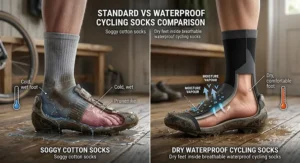
The comparison isn’t as one-sided as it might seem. Standard thick winter cycling socks — typically merino or merino-blend, with no membrane — are lighter, cheaper, dry faster if they do get wet, and breathe better on longer, harder efforts where foot sweat becomes its own problem. Waterproof cycling socks add a genuine barrier layer that standard socks simply can’t match once you’re riding through standing water or sustained rain, but that barrier comes with trade-offs: more bulk, a higher price, and — in fully sealed designs — reduced breathability on milder days.
The honest answer for most UK riders is that both have a place in the kit drawer. A merino winter sock handles the majority of chilly-but-dry rides perfectly well, while waterproof socks earn their keep specifically on the days standard socks would leave you soaked within twenty minutes. Riders who commute daily regardless of forecast tend to find the investment pays for itself quickly in comfort alone; occasional weekend riders who can pick their days may get by with standard socks and a spare pair in a pannier.
Long-Term Cost & Maintenance
A waterproof cycling sock costing £25-£40 looks expensive next to a £6-£8 basic sports sock, but the comparison only really makes sense over time. A well-maintained pair from a brand offering a manufacturing guarantee — Sealskinz and DexShell both fall into this category — can realistically last several winters of regular use, especially with proper washing and storage. Divide that £30 average purchase price across three winters of, say, sixty wet rides each, and the cost-per-wear drops to well under 20p — cheaper than the coffee you’ll buy to warm up afterward.
Compare that to the alternative of skipping waterproof socks altogether: soaked feet on a regular commute contribute to discomfort, reduced concentration, and in prolonged, severe cases, skin conditions associated with sustained wet-cold exposure — historically documented in extreme forms as trench foot, a reminder that keeping feet dry isn’t purely about comfort. The total cost of ownership case for a decent pair of waterproof socks is strong once you account for the reduced wear on your regular shoes, the avoided cost of drying kit at the office, and simply not dreading rainy forecasts the way you might otherwise.
Features That Actually Matter (And Those That Don’t)
Membrane construction matters enormously — a genuine three-layer waterproof-breathable build, as used across every product on this list, is doing real work, unlike thinner “water-resistant” socks that merely slow water absorption rather than blocking it. Cuff height and elasticity matter more than most buyers expect, since it’s the single most common failure point in heavy rain. Guarantee terms matter too, as a genuine track record of durability claims backed by a warranty tells you more than marketing copy alone.
What matters less than the branding suggests: exact colourway (performance is identical across colours), and eye-catching “extreme conditions tested” claims without accompanying detail — useful marketing, but not something to weight heavily against genuine aggregated reviewer sentiment and real specifications, which is exactly why this guide leans on both throughout.
Safety, Care and Wet-Weather Comfort
Beyond simple comfort, keeping feet dry on longer or colder rides is a genuine safety consideration — cold, wet feet lose dexterity and warmth faster than most riders expect, which matters if you need to brake, unclip or dismount quickly in poor conditions. If you do get caught out and soaked despite your kit, prioritise getting warm and dry as soon as reasonably possible after the ride rather than staying in damp socks and shoes for hours; prolonged wet-cold exposure is the underlying mechanism behind the historical foot conditions referenced above, and modern waterproof socks exist specifically to reduce that risk on a normal commute or ride.
From a practical UK riding standpoint, layering matters as much as the sock itself. As guidance from Cyclescheme on weatherproofing your commute notes, checking short-term forecasts before setting off — rather than relying on general seasonal assumptions — helps you judge whether a lighter summer-weight waterproof sock or a full winter option is the better call for that specific ride.
✨ Ready to Stop Dreading Rainy Commutes?
🔍 Browse the full range of waterproof cycling socks featured above and find the pair that matches your worst-case ride. Click through on any highlighted product to check current pricing and availability — dry feet make every wet-weather ride genuinely more enjoyable.
Buyer’s Decision Framework
If you commute daily regardless of weather, choose a premium three-layer option like the Sealskinz or Endura Hummvee II, because the cost-per-wear economics favour durability over saving £10 upfront. If your rides are mostly dry with occasional drizzle, choose a lighter budget option like the Altura or DexShell Ultra Dri, because you’ll rarely need deluge-level protection and the savings add up. If you ride off-road through mud and streams, choose the Fox Defend, because its debris-resistant build and off-road-specific fit outperform road-focused designs in that environment. If your priority is deep winter cold rather than rain per se, choose the DexShell Hytherm Pro, because its merino lining is doing thermal work a thinner membrane sock simply can’t match.
FAQ
❓ Do waterproof cycling socks actually work?
❓ Are waterproof cycling socks worth it for occasional riders?
❓ Can you wear waterproof cycling socks in summer?
❓ How do you keep feet dry cycling in winter without waterproof socks?
❓ How long do waterproof cycling socks last?
Conclusion
Waterproof cycling socks are one of those small purchases that quietly transforms how much you enjoy riding through a British winter. None of the seven products covered here is objectively “the best” — the Sealskinz Waterproof All Weather Mid Length Cycle Sock earns its reputation as the dependable all-rounder, the DexShell Hytherm Pro is unmatched for genuine winter cold, the Endura Hummvee Waterproof Socks II offers the strongest value at the premium end, and the Altura Endurance Waterproof Socks and DexShell Ultra Dri Sports Socks prove you don’t need to spend big to stay reasonably dry. The Fox Defend Water Socks and Muc-Off Waterproof Socks round things out for off-road and summer-shower riders respectively.
What actually matters is matching the sock to your riding pattern honestly, rather than defaulting to whichever pair has the flashiest marketing. Buy for your typical ride, not your worst-case fantasy of one, and you’ll end up with a pair that earns its place in the kit drawer for years rather than one winter.
Recommended for You
- Merino Cycling Socks: 7 Brilliant UK Picks for 2026
- Compression Cycling Socks 2026: 7 Tested Picks That Actually Help
- Waterproof Cycling Gloves UK: 7 Genuinely Dry Picks for 2026
Disclaimer: This article contains affiliate links. As an Amazon Associate, I earn from qualifying purchases. If you purchase products through these links, we may earn a small commission at no additional cost to you.
✨ Found this helpful? Share it with your friends! 💬🤗
