
In This Article
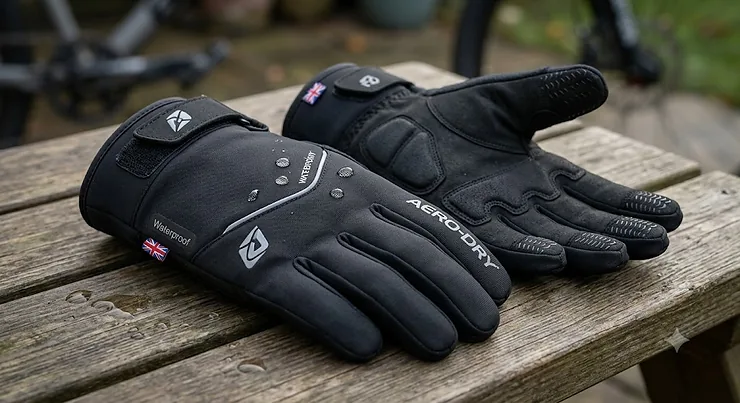
Somewhere around mile four of a January commute, your hands stop being hands and start being two slabs of cold meat clamped uselessly around the bars. You can’t feel the brake lever. You definitely can’t feel your phone through the screen. This is the exact moment most cyclists discover that the “showerproof” gloves they bought in September were never waterproof cycling gloves at all — just water-resistant ones wearing a very convincing costume. Waterproof cycling gloves are gloves built with a genuine sealed membrane, taped seams, and a cuff designed to keep the entire hand dry through sustained rain, not just a light drizzle. That distinction matters more than almost any other spec on the page, because a “resistant” glove that wets through at minute fifteen leaves you colder than no glove at all, thanks to soaked insulation trapping moisture against the skin.
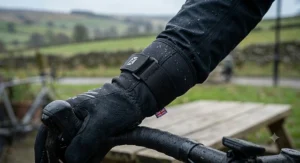
Britain isn’t kind to hands. This winter alone the UK ran roughly 13% above its long-term rainfall average, with some regions recording their wettest winter on record, according to the Met Office’s provisional statistics. If you commute, club-ride, or simply refuse to let a bit of weather dictate your calendar, the gap between a genuinely waterproof glove and a merely water-resistant one is the gap between an enjoyable ride and a miserable one. This guide walks through seven real, currently available gloves — from budget three-layer options through to lobster-style deep-winter gauntlets — with honest analysis of who each pair suits, what the aggregated reviews actually say, and where your money is genuinely well spent.
Quick Comparison Table
Before the deep dive, here’s the shape of the market at a glance. Waterproof rating, where available, is expressed in millimetres of hydrostatic head (the industry-standard test for how much water pressure a fabric resists before leaking).
| Glove | Waterproof Rating | Best For | Price Range |
|---|---|---|---|
| Van Rysel Mid-Season 900 Waterproof | Tested vs 60L/h/m² rain | Budget commuters | Under £35 |
| Endura Deluge | Full membrane, “bucket test” pass | Value all-rounder | £35–£45 range |
| Sealskinz Waterproof All Weather Insulated Glove | 100% waterproof, lifetime guarantee | Everyday reliability | £45–£55 range |
| Madison DTE Waterproof Primaloft Thermal Gloves | TPU membrane, fully taped seams | Deep-winter value | £35–£50 range |
| GripGrab Polaris 2 Waterproof Winter Gloves | 15K hydrostatic head | Torrential downpours | £55–£70 range |
| Castelli Espresso 2 | 10,000mm Polartec NeoShell | Touchscreen dexterity | £90–£100 range |
| Gore Wear Gore-Tex Insulated Trigger Gloves | Gore-Tex ePE laminate | Sub-zero mornings | £85–£100 range |
Looking at this spread, there’s a fairly clean line between “waterproof enough for a wet commute” and “waterproof enough to genuinely ignore the forecast.” The Van Rysel Mid-Season 900 Waterproof and Endura Deluge sit in the first camp — brilliant value, properly sealed, but not chasing extreme hydrostatic-head numbers. The GripGrab Polaris 2 stands apart with its 15K rating, which is roughly the territory of a decent hiking boot, while the Castelli Espresso 2 and Gore Wear Gore-Tex Insulated Trigger Gloves trade a little raw waterproofing for exceptional warmth and, in Castelli’s case, genuinely usable touchscreen fingertips.
💬 Found a pair that suits your ride? Tap through and check today’s availability before the good sizes sell out!😊
Top 7 Waterproof Cycling Gloves: Expert Analysis
Coverage here spans genuine budget picks through to premium deep-winter gear, with British brands well represented — Sealskinz and Madison both design specifically around the UK’s grim, grey wet season, which shows in the detailing.
1. Van Rysel Mid-Season 900 Waterproof — best budget entry into true waterproofing
Decathlon’s in-house road brand doesn’t usually shout about lab testing, so it’s worth noting: the Van Rysel Mid-Season 900 Waterproof was tested against artificial rain at 60 litres per hour per square metre for two hours — roughly the intensity of a heavy thunderstorm — and its three-layer construction with a central membrane held up. That’s a meaningfully tougher test than most gloves at this price point ever face. The palm uses synthetic leather with gel padding, there’s silicone printing across the thumb, index, and middle fingers for grip, and a long cuff with a Velcro strap seals against jacket sleeves. Reviewers of Van Rysel’s wider winter glove range consistently flag the brand’s habit of punching well above its price bracket, though Decathlon does recommend layering a waterproof jacket sleeve over the cuff to stop water tracking down the arm and into the glove — a detail Amazon listings for pricier brands rarely bother mentioning. Based on the spec sheet, this is the pair for anyone who rides three or four times a week and wants genuine wet-weather protection without premium-brand pricing; it’s less suited to all-day epics in near-freezing temperatures, where the insulation is noticeably thinner than the dedicated deep-winter options further down this list. Aggregated customer sentiment across Decathlon’s own listings runs strongly positive, with buyers repeatedly praising the value relative to branded alternatives, though a minority note the touchscreen compatibility across the Van Rysel winter range needs a firmer press than expected.
Pros:
- ✅ Genuinely tested against sustained heavy-rain simulation
- ✅ Exceptional value against branded three-layer alternatives
- ✅ Silicone grip printing across three high-wear fingers
Cons:
- ❌ Touchscreen response can need a firmer, deliberate tap
- ❌ Thinner insulation than dedicated deep-winter gloves
At under £35, the Van Rysel Mid-Season 900 Waterproof is hard to beat pound-for-pound; check current price and stock before heading out on the next grim forecast.

2. Endura Deluge — passed the bucket test on a budget
Endura built its reputation in Scotland, a country that treats “dry spell” as a rumour, and the Endura Deluge reflects that pedigree directly. Independent reviewers have literally submerged the glove-clad hand in a bucket of water and reported nothing got through — a blunt but effective way of proving the fully waterproof membrane sandwiched between the Cordura outer and soft-touch palm actually works, rather than just claiming to. The build pairs that membrane with Thinsulate insulation for warmth that holds up even when damp, a long neoprene cuff with stretch for wrist coverage, and a Velcro strap to lock everything down. At roughly 128g per glove, it’s also lighter and lower-bulk than you’d expect from something this weatherproof, which matters more than it sounds on longer rides where a chunky glove starts to interfere with brake-lever feel. What most buyers overlook about this model is the conductive microfibre palm patch, which makes it touchscreen-usable despite sitting at a genuinely budget price point — a feature still absent from plenty of gloves costing twice as much. Reviewers do flag one recurring niggle: the inner liner can occasionally shift or bunch slightly when pulling the glove on with cold, clumsy fingers, and the palm padding splits opinion between road and off-road riders, with mountain bikers reporting slightly reduced bar feel compared to road testers. For commuters and regular club riders who want proven, tested waterproofing without paying premium-brand prices, this is one of the strongest all-rounders on the market.
Pros:
- ✅ Independently verified fully waterproof in bucket testing
- ✅ Touchscreen-compatible palm at a budget price point
- ✅ Lightweight and low-bulk for the protection offered
Cons:
- ❌ Inner liner can bunch slightly during cold-hand donning
- ❌ Palm padding feels less precise to some off-road riders
Sitting in the £35–£45 range, the Endura Deluge represents some of the most convincingly proven waterproofing available at this price — well worth checking current availability.
3. Sealskinz Waterproof All Weather Insulated Glove — British-made lifetime waterproof guarantee
Sealskinz built its entire identity around one promise, and it’s right there in the name: waterproof, whatever the weather, on hands as much as feet. The Sealskinz Waterproof All Weather Insulated Glove backs that promise with a lifetime waterproof guarantee — an unusually confident claim in an industry full of vague marketing language — and a genuine three-layer floating membrane construction rather than a simple coated fabric. The outer blends polyester, neoprene, and elastane for stretch and durability, the palm is full leather for grip and abrasion resistance, and there’s a fleece panel over the thumb plus a touchscreen-compatible index finger, so you’re not stripping off a soaked glove just to change a playlist. Aggregated reviewer sentiment is unusually consistent for outdoor gear: testers repeatedly describe the glove as tackling “the nastiest weather” without needing a warmer alternative until deep winter proper sets in, and several note the inner lining is engineered specifically not to bunch or pull away from the outer shell during use — a small detail that solves one of the most common annoyances in cheaper insulated gloves. Reviewers who’ve used the gloves for multi-hour commutes report water mostly finds its way in only around the thumb seam in the very worst conditions, and even then it’s described as minor rather than glove-ruining. Here’s what to weigh: at roughly 104g per glove, the All Weather sits closer to a three-season glove in bulk, meaning genuinely sub-zero mornings may call for an extra base layer or one of the heavier options further down this list.
Pros:
- ✅ Lifetime waterproof guarantee from a specialist British brand
- ✅ Genuine three-layer membrane, not a coated fabric
- ✅ Inner lining engineered to resist bunching during use
Cons:
- ❌ Thumb seam area can admit minor moisture in extremes
- ❌ Less warmth than dedicated deep-winter options in this list
Around £45–£55, the Sealskinz Waterproof All Weather Insulated Glove is a strong everyday pick — check current price and colour availability before committing.
4. Madison DTE Waterproof Primaloft Thermal Gloves — best value deep-winter warmth
Madison is one of British cycling’s quieter success stories, distributing serious kit without ever quite matching Castelli or Gore for brand glamour — and the Madison DTE Waterproof Primaloft Thermal Gloves are a case study in why that reputation is undeserved. The construction pairs a TPU waterproof membrane with fully taped internal seams, meaning water has no realistic entry point through stitching, while Primaloft Gold insulation covers both the back of the hand and palm for warmth that reviewers describe as genuinely competitive with pricier deep-winter gloves. The AX suede palm provides secure grip, silicone printing reinforces control on wet bar tape, and a double nose-wipe panel across both thumbs is a small, honest touch that only ever gets added by brands who’ve actually ridden in filthy weather rather than just photographed gloves in a studio. Reviewers consistently single out the value proposition here: one independent test concluded the DTE punches meaningfully above its roughly £50 price point, sitting “just below” bulkier lobster-style deep-winter gloves in warmth while remaining noticeably less cumbersome to actually cycle in. Based on the spec comparison with pricier rivals, the trade-off is a slightly heavier glove than ultralight three-season alternatives, and Madison doesn’t publish an official temperature rating, which makes it harder to know exactly where the comfort ceiling sits compared to gloves with a stated 0°C or -5°C benchmark.
Pros:
- ✅ Fully taped seams eliminate the usual stitching weak point
- ✅ Primaloft Gold insulation rivals pricier deep-winter rivals
- ✅ Double nose-wipe panels on both thumbs
Cons:
- ❌ No official temperature rating published by Madison
- ❌ Noticeably heavier than lightweight three-season gloves
In the £35–£50 range, the Madison DTE Waterproof Primaloft Thermal Gloves are one of the strongest value picks for genuinely cold, wet British winters — worth checking current stock and sizing.
5. GripGrab Polaris 2 Waterproof Winter Gloves — highest waterproof rating on test
Danish brand GripGrab doesn’t do half-measures with the GripGrab Polaris 2 Waterproof Winter Gloves — a 15,000mm hydrostatic head rating puts it firmly among the most waterproof gloves available for cycling, translating in practical terms to dry hands through genuinely torrential downpours rather than merely persistent drizzle. What most buyers overlook about hydrostatic head figures is that breathability is quoted on the same scale, and the Polaris 2 matches its 15K waterproofing with a 15K breathability rating too, meaning the membrane sheds sweat vapour almost as effectively as it blocks rain — a balance that’s genuinely difficult to engineer and one reason this pair costs more than most on this list. Insulation comes from PrimaLoft Gold on the palm, where breathability under compression matters most, and PrimaLoft Gold Active+ on the back of the hand for the best warmth-to-weight ratio in the range. A silicone-gripped, padded palm aids handlebar control, the thumb and index fingertips are touchscreen-compatible via a conductive fabric patch, and 75% of the material is recycled — a genuine sustainability credential rather than a greenwashed footnote. Aggregated reviews are strongly positive on warmth and dryness even close to freezing, though several testers note the price — sitting notably above most rivals here — is the one recurring sticking point, and a few mention the thumb runs slightly long, which can make precise touchscreen taps fiddlier than expected.
Pros:
- ✅ Class-leading 15,000mm waterproof rating for cycling gloves
- ✅ Matching 15K breathability prevents the “sweaty greenhouse” problem
- ✅ Built from 75% genuinely recycled materials
Cons:
- ❌ Priced noticeably higher than most rivals on test
- ❌ Slightly long thumb can hamper precise touchscreen taps
At £55–£70, the GripGrab Polaris 2 Waterproof Winter Gloves are the pick for anyone who refuses to let the wettest days keep them off the bike — check current pricing before the winter rush.
6. Castelli Espresso 2 — best touchscreen dexterity for the price
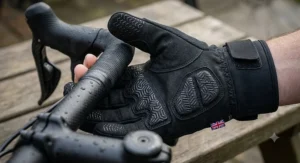
Italian performance brand Castelli approaches the Castelli Espresso 2 less as a waterproof glove and more as a warmth-and-dexterity glove that happens to shrug off plenty of rain, and that framing matters for who it actually suits. The back of the hand uses PFC/PFAS-free Polartec NeoShell, rated to 10,000mm hydrostatic head with roughly 30,000g/m²/24h breathability — genuinely strong figures, if a step below the GripGrab Polaris 2’s outright waterproofing — paired with PrimaLoft insulation tuned for the 3–10°C bracket rather than sub-zero extremes. The standout feature, and the reason serious commuters keep buying it despite the steep price, is touchscreen fingertips reviewers describe as some of the first that “actually work” for genuine typing and map navigation, not just a clumsy prod. A long YKK zip runs across the back of the palm for easy on-and-off with cold hands, and silicone grippers reinforce bar control. Reviewers consistently praise the fit and comfort — one described it as “the Cinderella slipper of winter gloves” for above-freezing riding — but the same reviewers are candid that once genuinely soaked, recovery is slow and cold sets in fast, with finger seams also occasionally snagging on shifter levers depending on hand shape. Here’s what to weigh: this is a glove optimised for damp commutes and cold-but-dry rides where phone and computer control matters, not a glove built to shrug off hour-long deluges.
Pros:
- ✅ Touchscreen fingertips genuinely usable for typing, not just taps
- ✅ Excellent breathability from Polartec NeoShell fabric
- ✅ Long YKK zip makes on/off easy with cold hands
Cons:
- ❌ Lower hydrostatic head than the most waterproof rivals here
- ❌ Finger seams can snag on shifter levers for some hand shapes
Around £90–£100, the Castelli Espresso 2 suits riders who prioritise phone and computer control over absolute deluge-proofing — check current pricing and sizing before you buy.
7. Gore Wear Gore-Tex Insulated Trigger Gloves — warmest lobster-style design tested
When temperatures properly plummet, the Gore Wear Gore-Tex Insulated Trigger Gloves are the pair reviewers consistently reach for first. The lobster-style design groups three fingers into a single warm pouch while keeping the index finger separate as a dedicated “trigger” for braking and shifting precision — a shape that sounds unusual on paper but, based on the spec comparison with five-finger rivals, delivers meaningfully more shared body heat between fingers while sacrificing surprisingly little control. At the core is a Gore-Tex ePE (expanded polyethylene) laminate, now PFAS-free, sandwiched between the outer textile and lining, combined with Polartec PrimaLoft Gold insulation for warmth without excessive bulk. Reviewers who’ve tested a full range of winter gloves side by side repeatedly rank this as the warmest cycling glove they’ve used, ahead even of Gore’s own well-regarded C5 Thermo range, and several specifically praise that the separate trigger finger still allows surprisingly usable touchscreen interaction — a genuine surprise for a glove this heavily insulated. Aggregated feedback does flag one consistent issue worth taking seriously: sizing runs notably small, with multiple reviewers recommending going up a full size or more from your usual glove size, particularly if you plan to wear a thin liner glove underneath on the very coldest mornings.
Pros:
- ✅ Warmest glove of this style reviewers have tested
- ✅ PFAS-free Gore-Tex ePE laminate with taped construction
- ✅ Trigger-finger design still permits usable touchscreen control
Cons:
- ❌ Sizing runs noticeably small — size up when ordering
- ❌ Premium price reflects the flagship positioning
At £85–£100, the Gore Wear Gore-Tex Insulated Trigger Gloves are the pick for genuinely sub-zero commutes — check current sizing charts carefully before ordering.
Practical Usage Guide: Getting the Most from Your Waterproof Cycling Gloves
Buying the right waterproof cycling gloves is only half the job; how you use them in the first thirty days determines whether they perform for years or fail early. Start by sizing deliberately snug rather than roomy — a glove with dead air space around the fingers actually traps less warmth than a close-fitting one, since your body has to heat that extra air pocket rather than relying on the insulation layer directly against skin. On first use, always overlap your jacket sleeve outside the glove cuff, never tucked inside it; every brand covered here, from budget to premium, explicitly notes that water tracking down a sleeve and into an exposed cuff gap is the single most common cause of “waterproof” gloves letting water in. A common early mistake is machine-washing gloves that specify hand-wash only — Sealskinz and GripGrab both explicitly warn against tumble-drying or bleaching, since heat can degrade the membrane’s waterproof coating over repeated cycles. Instead, hand wash in cool water, squeeze out excess moisture without wringing, and dry away from direct heat sources like radiators. For touchscreen-compatible fingertips, a firm, deliberate press rather than a light tap tends to register more reliably, particularly once the conductive patch has picked up a little grime — a quick wipe with a damp cloth restores sensitivity. Finally, break in leather-palmed gloves gradually over a few shorter rides before committing to a long one; leather softens and moulds to your grip within two or three outings, but feels notably stiffer straight out of the packet.
Real-World Scenarios: Which Waterproof Cycling Gloves Suit You?
If you’re a university student cycling four miles to lectures on a fixed budget, spending £90 on gloves makes little sense when the Van Rysel Mid-Season 900 Waterproof or Endura Deluge both deliver genuinely tested waterproofing for under £45 — money better saved for lights, a lock, or the inevitable puncture repair kit. If you’re commuting year-round through a British city, riding regardless of forecast, and frequently checking a phone or bike computer mid-route, the Castelli Espresso 2 or GripGrab Polaris 2 earn their higher price tags through touchscreen usability and breathability that prevents the clammy, sweaty-hands problem that plagues cheaper insulated gloves on faster-paced rides. If you’re a weekend club cyclist logging long miles through proper winter — the kind of rides that start in darkness at 4°C and don’t finish until well after the frost has set — the Gore Wear Gore-Tex Insulated Trigger Gloves justify their premium through warmth that consistently outperforms every rival here, provided you size up as reviewers universally recommend. And if you’re simply someone who suffers badly with cold hands, whether or not you’ve been formally diagnosed with a circulation-related condition, prioritising warmth and a secure, overlapping cuff over ultra-lightweight dexterity will make a bigger practical difference than chasing the highest hydrostatic-head number on the spec sheet.
Problem → Solution: Fixing Common Wet-Weather Glove Issues
Problem: hands stay dry but sweaty. This is almost always a breathability mismatch rather than a waterproofing failure — a heavily insulated glove worn on a fast, high-effort ride traps moisture vapour faster than the membrane can vent it. Solution: choose gloves with matched waterproof-and-breathability ratings, like the GripGrab Polaris 2‘s 15K/15K figures, or drop to a lighter insulated option like the Castelli Espresso 2 for higher-intensity riding.
Problem: water enters at the wrist despite a “waterproof” glove. Nearly always a cuff-overlap issue rather than a membrane fault. Solution: always wear your jacket sleeve over the glove cuff, never underneath, as Decathlon and every other brand covered here explicitly recommends.
Problem: touchscreen fingertips stop working after a few months. Conductive patches lose sensitivity when coated in road grime, chain lube residue, or dried sweat salts. Solution: wipe the patch with a damp cloth before and after rides; if that fails, a firmer, more deliberate press usually still registers.
Problem: gloves feel cold within twenty minutes despite being “insulated.” Often a sizing issue rather than an insulation failure — a glove that’s too tight restricts blood flow to the fingers, which chills hands faster than almost any fabric choice. Solution: size up, especially with the Gore Wear Gore-Tex Insulated Trigger Gloves, which reviewers consistently note run small.
Problem: leather palm stiffens and cracks after a winter of use. Leather that’s repeatedly soaked and dried near direct heat loses its natural oils. Solution: air-dry away from radiators and occasionally treat with a leather conditioner suitable for technical outdoor gear.
How to Choose Waterproof Cycling Gloves
Choosing the right pair comes down to weighing five or six criteria against your actual riding pattern, rather than simply buying whatever scores highest on a single spec.
- Match hydrostatic head to your realistic conditions. A 15K-rated glove like the GripGrab Polaris 2 is genuine overkill for someone who only rides in light drizzle, while a 5,000mm-class glove will wet through fast on a genuinely soaked commute.
- Weigh breathability as heavily as waterproofing. A glove that keeps rain out but traps sweat in leaves you just as cold and clammy — check whether the brand publishes a breathability figure alongside the waterproof rating.
- Consider cuff length and closure separately from the glove body. A long, overlapping cuff with a secure Velcro strap prevents the single most common failure point: water tracking in at the wrist.
- Decide how much you genuinely need touchscreen compatibility. If you navigate by bike computer rather than phone, this feature matters far less than reviewers’ enthusiasm for it might suggest.
- Factor in insulation type for your typical temperature range. PrimaLoft and Thinsulate both retain warmth when damp, but thickness varies hugely between models — check the intended temperature bracket rather than assuming “insulated” means “warm enough.”
- Account for hand size and fit generosity. Several gloves in this guide, notably the Gore Wear range, run small; always check the specific brand’s size guide rather than assuming your usual glove size applies.
- Set a realistic budget band and stick to it. As this guide shows, genuinely waterproof gloves exist from under £35 right through to £100 — more money buys refinement and extreme conditions capability, not a binary switch from “not waterproof” to “waterproof.”
How Waterproof Membrane Gloves Actually Work
The term “waterproof membrane” gets thrown around loosely in marketing copy, so it’s worth being precise about what’s actually happening inside a genuinely waterproof glove. Nearly every pair in this guide uses a three-layer construction: an outer fabric treated with a durable water repellent (DWR) finish to make rain bead and roll off rather than soak in, a middle membrane — usually polyurethane (PU) or, in Gore’s case, expanded polyethylene (ePE) — that’s the actual waterproof barrier, and an inner lining for comfort and moisture-wicking against the skin. The membrane itself works through microscopic pores: as Wikipedia’s overview of waterproof fabric technology explains, these membranes rely on pores small enough to block liquid water droplets while remaining large enough to let water vapour molecules pass through, which is what allows a genuinely waterproof glove to also breathe rather than turning into a sweaty sauna for your hand. Waterproofness itself is measured in hydrostatic head — the height, in millimetres, of a column of water the fabric can resist before leaking — with anything above roughly 5,000mm generally considered properly waterproof for cycling use, and the GripGrab Polaris 2‘s 15,000mm rating sitting well into serious hiking-boot territory. The trade-off buyers rarely appreciate is that waterproofing and breathability pull in slightly opposite directions: a membrane optimised purely for keeping water out often breathes less well, which is why brands publish both figures separately, and why the best gloves — again, GripGrab’s Polaris 2 is the standout example here — invest in matching both ratings rather than maximising one at the expense of the other.
Sealed Cuff Gloves: Why the Cuff Matters as Much as the Membrane
It’s entirely possible to buy a glove with an excellent, genuinely waterproof membrane and still end up with soaked hands, because the cuff — not the palm or fingers — is the weakest point in most designs. A sealed cuff glove uses either a long neoprene extension, as seen on the Endura Deluge, or an adjustable Velcro wrap, as on the GripGrab Polaris 2 and Madison DTE, specifically to stop water tracking down a jacket sleeve and pooling inside the glove at the wrist. Reviewers consistently identify this as the most common real-world failure point across every price bracket, and it’s a mistake even experienced cyclists make: wearing a jacket sleeve tucked inside the glove cuff rather than overlapping outside it, which effectively funnels rainwater directly into the one gap the membrane can’t protect. The best cuff designs extend several centimetres up the forearm, use stretch fabric like neoprene to seal snugly without restricting circulation, and pair that with a secure closure — Velcro rather than simple elastic, which loosens over repeated washing. Reviewers of the Van Rysel Mid-Season 900 Waterproof specifically note Decathlon’s own guidance to wear jacket sleeves outside the cuff, a detail that’s easy to overlook but genuinely changes wet-weather performance more than upgrading to a pricier glove with a shorter cuff ever would.
Touchscreen Cycling Gloves: Which Ones Actually Work
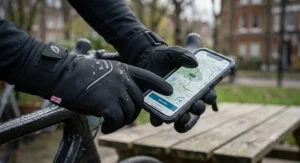
Touchscreen compatibility has become close to a standard feature across the market, but “compatible” covers a wide range of real-world performance, and aggregated reviewer sentiment is refreshingly blunt about which gloves genuinely deliver. The Castelli Espresso 2 stands out specifically because reviewers describe being able to type and navigate maps, not just tap a single button — a meaningfully higher bar than most competitors clear. The GripGrab Polaris 2 and Sealskinz Waterproof All Weather Insulated Glove both use a conductive fabric patch on the thumb and index finger sufficient for answering calls or tapping a bike computer, though GripGrab’s own product documentation is honest that it “is not tactile enough for typing long messages” — a rare moment of manufacturer candour worth taking at face value. The Gore Wear Gore-Tex Insulated Trigger Gloves manage usable touchscreen control despite the unusual lobster-finger design, largely because the separate trigger finger stays free for precise taps even when the rest of the hand is bundled together for warmth. What most buyers overlook is that touchscreen sensitivity degrades over time as the conductive patch picks up road grime, chain lube, or dried sweat residue, which is why several reviewers across different brands independently recommend a quick wipe of the fingertip before relying on it — a five-second habit that solves the majority of “my touchscreen gloves stopped working” complaints.
Dexterity in Wet Weather: What to Expect from Real-World Performance
Specs sheets rarely capture the thing that actually matters most on a genuinely miserable ride: whether you can still feel and operate your brake lever with numb, cold fingers inside a soaked glove. Dexterity in wet weather comes down to three factors working together — palm thickness, finger articulation, and how much the insulation compresses under grip. The Sealskinz Waterproof All Weather Insulated Glove, at roughly 104g per glove, sits closer to a three-season weight and consistently earns praise for close-fitting, precurved fingers that don’t feel like operating controls through oven mitts. By contrast, the Gore Wear Gore-Tex Insulated Trigger Gloves, despite the unconventional lobster shape, are specifically engineered so the separated trigger finger retains full independent movement even as the remaining three fingers share warmth — a clever compromise between raw warmth and functional control. The GripGrab Polaris 2 uses articulated sections on the two middle fingers to aid natural curvature around the bars, a detail that matters more than it sounds once hands are cold and fine motor control starts to suffer. What reviewers consistently note, and what marketing copy rarely admits, is that even the best gloves lose some precision once genuinely soaked through prolonged exposure — cold, wet fingers simply don’t move as fast or feel as accurately as dry ones, regardless of glove quality, which is why choosing a glove rated for conditions genuinely wetter than what you’ll typically ride in provides useful headroom rather than being excessive caution.
Winter Cycling Gloves vs Three-Season Gloves
The distinction between winter cycling gloves and three-season alternatives isn’t just marketing language — it reflects genuinely different construction priorities. Three-season gloves, generally worn from early spring through late autumn, prioritise breathability and light weight, often sacrificing full waterproofing for a DWR-treated shell that handles showers but not sustained rain. Winter cycling gloves, like the seven covered in this guide, invest in a full waterproof membrane, thicker insulation such as PrimaLoft or Thinsulate, and longer sealed cuffs specifically because British winter conditions demand sustained protection rather than occasional shower resistance. The practical difference shows up fastest in temperature: three-season gloves typically perform comfortably from around 10°C upward, while dedicated winter gloves like the Gore Wear Gore-Tex Insulated Trigger Gloves are engineered for conditions at or below freezing. The trade-off runs the other way too — winter gloves sacrifice dexterity and add bulk that feels unnecessary and even uncomfortably warm once temperatures climb back above 12–15°C, which is why most serious cyclists own both rather than trying to make one pair cover the full year. Buyers transitioning between seasons should watch for the crossover point on their own hands rather than the calendar; someone who runs cold might reach for the Sealskinz Waterproof All Weather Insulated Glove in October, while someone who runs warm might stretch three-season gloves comfortably into early December.
Common Mistakes When Buying Waterproof Cycling Gloves
The most expensive mistake buyers make is assuming “waterproof” and “water-resistant” are interchangeable marketing terms — they’re not, and the difference shows up precisely when you need protection most, during sustained heavy rain rather than a passing shower. A second common error is prioritising insulation thickness over cuff design; a beautifully insulated glove with a short, loose cuff will still let water track in at the wrist and soak the insulation from inside, which then holds moisture against the skin far longer than a lighter but better-sealed alternative. Buyers also frequently order their usual glove size without checking brand-specific guidance, which causes real problems with gloves like the Gore Wear Gore-Tex Insulated Trigger Gloves that reviewers consistently flag as running small — an ill-fitting glove restricts blood flow and genuinely performs worse regardless of how good the membrane is. Another overlooked mistake is machine-washing gloves that specify hand-wash only, which can degrade the waterproof coating over just a handful of cycles and quietly turn a genuinely waterproof glove into a merely water-resistant one within a season. Finally, many buyers chase the highest hydrostatic-head number available without considering their actual riding pattern — the GripGrab Polaris 2‘s 15,000mm rating is genuinely excellent, but represents unnecessary spend for someone who mostly rides in light British drizzle rather than sustained torrential downpours.
Long-Term Cost & Maintenance
Cost-per-wear tells a more useful story than the sticker price alone. A £35 pair of Endura Deluge gloves that lasts two full winters of regular commuting works out to roughly 17p per wet ride across a typical 100-ride winter season, assuming reasonable care. A £95 pair of Castelli Espresso 2 gloves needs to survive proportionally longer, or deliver enough additional comfort and touchscreen usability, to justify the premium — and given Castelli’s own reviewers note the liner can feel “curiously independent” of the outer shell over time, that longevity isn’t guaranteed simply by the higher price. Maintenance costs matter more than buyers typically budget for: hand-washing only, as every brand in this guide specifies, takes marginally longer than throwing gloves in with a normal laundry load, but skipping that step and machine-washing anyway is the single most common cause of premature membrane failure, effectively shortening the glove’s usable life and eroding whatever value the purchase price represented. Total cost of ownership also depends on whether you need one pair or two — riders who cycle year-round genuinely benefit from owning both a three-season and a dedicated winter pair, since forcing one glove to cover the full temperature range means either overheating in summer or under-protecting in deep winter, both of which shorten the glove’s comfortable working life through overuse in the wrong conditions.
Safety, Visibility & Cold-Hands Health Guide
Cold hands aren’t just uncomfortable; reduced dexterity from numb fingers genuinely compromises your ability to brake and shift safely, which is one of several reasons Cycling UK’s winter clothing guidance specifically flags extremities as a priority when dressing for cold-weather rides. For a meaningful minority of cyclists, cold-triggered finger pain and colour changes go beyond ordinary discomfort into Raynaud’s phenomenon, a genuinely common condition affecting UK circulation that causes fingers to turn white, then blue, then red as blood flow restricts and returns; the NHS advises that keeping hands consistently warm is one of the most effective self-management steps, which makes glove choice a genuine health consideration rather than pure comfort for affected riders. If cold hands regularly cause pain, numbness, or colour changes beyond what seems reasonable for the conditions, that’s worth raising with a GP rather than simply buying a warmer glove and hoping. On visibility, several gloves covered here — including the Endura Deluge and GripGrab Polaris 2 — include reflective detailing specifically because hand position on the bars puts gloves at a useful height for catching headlights during the low-light conditions that dominate a British winter commute. Reflective gloves won’t replace proper lights or a hi-vis layer, but as a supplementary visibility measure on moving parts of the body, they’re a genuinely useful and often overlooked safety feature worth prioritising alongside waterproofing itself.

Frequently Asked Questions
❓ Are waterproof cycling gloves worth it for occasional riders?
❓ How do I stop my hands sweating inside waterproof gloves?
❓ What waterproof rating do cycling gloves actually need?
❓ Can I machine-wash waterproof cycling gloves?
❓ Do touchscreen cycling gloves actually work in the rain?
Conclusion
There’s no single “best” waterproof cycling glove, because the right choice depends entirely on how wet, how cold, and how often you’re actually riding. For pure value and genuinely tested waterproofing, the Van Rysel Mid-Season 900 Waterproof and Endura Deluge both punch well above their modest price tags. For everyday British commuting with the reassurance of a lifetime guarantee, the Sealskinz Waterproof All Weather Insulated Glove is difficult to fault, while the Madison DTE Waterproof Primaloft Thermal Gloves offer arguably the strongest warmth-per-pound on this entire list. Riders who genuinely can’t let torrential rain dictate their ride should look hardest at the GripGrab Polaris 2, and those who spend serious time checking phones or bike computers mid-ride will get real, tangible value from the Castelli Espresso 2‘s touchscreen performance. And when a proper sub-zero British morning rolls around, the Gore Wear Gore-Tex Insulated Trigger Gloves remain the pair reviewers reach for first, provided you heed the advice to size up. Whichever direction you go, the core lesson from every review, spec sheet, and returned-glove complaint covered in this guide is the same: waterproofing lives or dies at the cuff as much as the palm, hand-washing genuinely extends a glove’s life, and the right pair for someone else’s commute isn’t automatically the right pair for yours.
✨ Don’t Miss These Exclusive Deals!
🔍 Take your winter riding to the next level with these carefully selected, genuinely tested waterproof cycling gloves. Click through on any pair above to check today’s price and availability before the next downpour hits. The right gloves turn a miserable, numb-fingered commute into just another ride!
Recommended for You
- Summer Cycling Gloves 2026: 7 Best Picks Tested & Compared
- Merino Cycling Base Layer: 7 Brilliant Picks for 2026
- 7 Best Summer Cycling Base Layers 2026: Stay Cool, Not Clammy
Disclaimer: This article contains affiliate links. As an Amazon Associate, I earn from qualifying purchases. If you purchase products through these links, we may earn a small commission at no additional cost to you.
✨ Found this helpful? Share it with your friends! 💬🤗
