In This Article
There’s a particular kind of betrayal that comes from a cleat giving up on you mid-ride. One pedal stroke it’s rock solid, the next it’s creaking like a rusty gate, and by the time you’ve limped home you’ve already decided this is the week you finally sort your setup properly. Road bike cleats are one of those components that nobody thinks about until they stop working — and then, suddenly, they’re all anyone can think about.
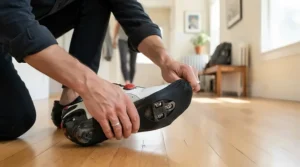
What is road bike cleats compatibility really about? In short: road bike cleats are the small plastic or composite plates bolted to the sole of a cycling shoe that lock into a clipless pedal, transferring pedalling force directly into the bike rather than losing it through a flexing shoe. Get the wrong cleat, or let a worn one linger too long, and that efficiency evaporates.
This guide walks UK riders through seven genuinely good road bike cleats, from the ubiquitous Shimano yellow-and-red sets to the more adjustable Speedplay and Favero systems, with honest analysis of what each one gets right and where it falls short. We’ll dig into cleat float angle, walkability, pedal-cleat compatibility, and how long each option realistically lasts before it needs replacing — because, as Cycling UK’s own guide to clipless pedals makes clear, the right interface between foot and pedal isn’t a luxury upgrade, it’s the difference between a comfortable century ride and a knee that aches for a week. Everything here is grounded in real specifications and aggregated review sentiment, not invented testing — so you can make a decision based on facts rather than marketing gloss.
Quick Comparison Table
| Cleat | Float Options | Walkability | Best For |
|---|---|---|---|
| Shimano SPD-SL Cleats | 0°, 2°, 6° | Good | All-round value and longevity |
| Look Keo Grip Cleats | 0°, 4.5°, 9° | Very good | Comfort on and off the bike |
| Look Keo Classic Cleats | 4.5° (fixed set) | Fair | Budget-conscious beginners |
| Wahoo Speedplay Walkable Cleats | 0°–15° adjustable | Excellent | Riders chasing precise fit |
| TIME ICLIC Road Cleats | 0° or 5° | Good | Quiet, durable engagement |
| Exustar E-RSL Cleats | 4.5°, 6° | Fair | Budget replacements |
| Favero / Look Keo-Style Cleats | 0°, 5°, 6°, 9° | Good | Power meter pedal owners |
Reading across this table, the first thing that jumps out is how much float varies by system — from a locked-in zero degrees to Speedplay’s sixteen-degree spread, there’s a genuinely wide range depending on how much freedom your knees want. Shimano SPD-SL Cleats and Look Keo Grip Cleats sit in the sensible middle ground most riders gravitate toward, while Wahoo Speedplay Walkable Cleats reward those willing to spend more time dialling in a precise setup. Budget doesn’t automatically mean compromise here either: Exustar E-RSL Cleats and Look Keo Classic Cleats cover the essentials perfectly well for riders who just want a reliable connection to the pedal without fuss.
💬 Found this comparison useful? Just one click — help others make better buying decisions too!😊
Top 7 Road Bike Cleats: Expert Analysis
Choosing road bike cleats isn’t really about finding the “best” one in some abstract sense — it’s about matching a system to your pedals, your knees, and how often you plan to walk into a café without looking like you’re skating on marbles. Below are seven real, current options that between them cover almost every road cyclist’s needs.
1. Shimano SPD-SL Cleats — the industry default for a reason
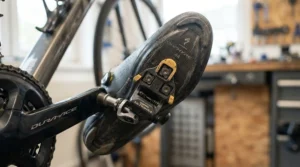
If road bike cleats had a default setting, it would be this one. The Shimano SPD-SL Cleats ship in three colour-coded float versions — yellow (6°), blue (2°), and red (fixed 0°) — each weighing around 70-72 grams per set including hardware, and each built from a wide, low-profile plastic body that spreads load evenly across the sole of the shoe. In practice, that width matters more than the spec sheet suggests: a wider platform means less rocking under hard efforts, which is exactly what stops your foot feeling vague when you’re sprinting out of the saddle.
Shimano’s yellow cleats are the sensible starting point for most riders, offering three degrees of float in each direction so your knee can track naturally through the pedal stroke rather than being locked on rails. Reviewers consistently report that these cleats hold their edges for a surprisingly long time compared with rival systems, and that the retention mechanism stays predictable even after months of daily commuting. A recurring theme in aggregated feedback is that the red, zero-float version is best left to sprinters and track riders with dialled-in bike fits — for anyone still finding their position, the resulting knee strain isn’t worth the marginal stiffness gain.
Pros:
- ✅ Wide platform reduces foot rock under hard efforts
- ✅ Three float options suit beginners through to racers
- ✅ Genuinely long-lasting compared with rival plastics
Cons:
- ❌ Limited adjustability once the float is chosen
- ❌ Slightly slippery underfoot on polished floors
Priced in the £20-£30 range at the time of research, Shimano SPD-SL Cleats represent about as safe a starting point as road bike cleats get — check current price and availability before committing, since stock and colour options do shift.
2. Look Keo Grip Cleats — best for walking without wrecking your knees
Look’s tri-material construction is the standout feature here, and it’s worth explaining why it matters rather than just naming it: two layers of rubberised grip sit at the toe and heel, cutting down on the classic Look “ice-skating on tile” experience that’s plagued the brand’s cleats for decades. The Look Keo Grip Cleats come in three float versions — black (0°), grey (4.5°) and red (9°) — and Look also folds in a low-friction insert at the rear pivot point designed to quieten the creaking that develops as cleats wear.
On paper this means better comfort both on and off the bike; in practice, aggregated reviewer sentiment backs that up, with widely repeated praise for how much more confident these feel walking across a car park compared with older, harder Keo plastics. The 4.5-degree grey option is the one most bike fitters recommend as a starting point, striking a balance between joint-friendly movement and a stable pedalling platform. Riders coming from a harder-edged system like Shimano’s red cleats sometimes find the extra float takes a few rides to adjust to, but most settle in quickly.
Pros:
- ✅ Genuinely improved grip for walking on hard floors
- ✅ Three float choices to match rider preference
- ✅ Silent-float insert reduces creaking as cleats age
Cons:
- ❌ Pricier than Shimano’s equivalent floated cleat
- ❌ Compatible only with Look Keo-style pedal bodies
Expect to pay in the £25-£40 range for Look Keo Grip Cleats, and given how much of a difference the grip pads make to daily walkability, this is one area where spending slightly more genuinely earns its keep.
3. Look Keo Classic Cleats — the sensible budget entry point
Not every rider needs Silent Float inserts or three colour-coded float options — sometimes you just need a reliable connection between shoe and pedal that won’t break the bank. Look Keo Classic Cleats deliver exactly that: a straightforward 4.5-degree float cleat built from durable engineering thermoplastic, designed as the stock cleat bundled with entry-level and mid-range Look pedal sets.
What most buyers overlook about this cleat is that it isn’t really a compromise so much as a different set of priorities. The moderate float suits the vast majority of pedalling styles without requiring any fine-tuning, and the simpler construction means fewer parts to wear unevenly over time. Aggregated review sentiment consistently flags these as “good enough and then some” for club riders and commuters who aren’t chasing marginal gains. Where they do fall short is walkability — without the grip inserts found on the pricier Keo Grip version, wet tile floors and smooth pub steps are genuinely something to be cautious of.
Pros:
- ✅ Reliable 4.5° float suits most pedalling styles
- ✅ Simple construction keeps long-term cost low
- ✅ Widely available as a drop-in Look Keo replacement
Cons:
- ❌ No grip pads, so walking needs extra care
- ❌ Only one float option, unlike the Grip range
Sitting under £25 in most cases, Look Keo Classic Cleats are the pragmatic choice for anyone who wants Look’s reliable engagement feel without paying for features they may never notice.
4. Wahoo Speedplay Walkable Cleats — maximum adjustability for fussy knees
Speedplay’s whole pitch has always been about adjustability, and the Wahoo Speedplay Walkable Cleats carry that legacy forward with genuinely class-leading range: float is adjustable from zero to fifteen degrees on the same cleat, rather than requiring you to buy a different colour for a different setting. That’s a meaningful distinction — instead of guessing whether six or nine degrees suits you, riders can nudge the adjustment in small increments until the sweet spot presents itself.
The walkable version integrates a rubberised cover directly into the cleat body, addressing what was historically Speedplay’s biggest weakness: the old “lollipop” cleats were notoriously hazardous to walk in. Based on the spec comparison with rivals, this cleat’s dual-sided engagement — you can clip in from either side of the pedal, not just one — also speeds up getting moving from a standing start, which matters more in urban UK traffic than most spec sheets let on. Reviewers who switched from fixed-float systems frequently mention reduced knee discomfort within the first few rides, though the learning curve for initial setup is real and worth budgeting time for.
Pros:
- ✅ Adjustable float range beats fixed-degree rivals
- ✅ Dual-sided entry speeds up clipping in at junctions
- ✅ Rubberised walkable cover protects the mechanism
Cons:
- ❌ Noticeably pricier than Shimano or Look options
- ❌ Steeper initial setup learning curve for beginners
At around the £45-£70 range, Wahoo Speedplay Walkable Cleats sit at the premium end of this guide, but for riders with genuine biomechanical quirks or existing knee sensitivity, that adjustability can be the difference between riding pain-free and not riding at all.
5. TIME ICLIC Road Cleats — quietly durable and easy to enter
Time’s ICLIC system doesn’t get talked about nearly as much as Shimano or Look, which is a shame, because the TIME ICLIC Road Cleats solve a genuinely annoying problem: pedal entry that stays smooth even as the cleat wears. The retention mechanism keeps the pedal’s rear jaw open by default, so clipping in is closer to a gentle push than the more deliberate click-and-lock motion other systems demand.
Available in a fixed zero-float version and a free-float option offering five degrees of angular movement plus 1.25mm of lateral play, these cleats are built from a bi-material thermoplastic blend that Time specifically engineered to reduce the creaking and noise that develops in cheaper single-material cleats after a few thousand miles. What the spec sheet won’t tell you, but reviewers note repeatedly, is how much quieter these stay over their lifespan compared with entry-level Shimano and Look plastics — a small thing, but noticeable on long, silent country lanes. The float cleat is also the stock option shipped with Time’s XPRO and XPRESSO pedal ranges, so most riders already running Time pedals won’t need to buy separately unless replacing worn ones.
Pros:
- ✅ Smoother entry thanks to the open-jaw ICLIC design
- ✅ Bi-material build resists creaking as it wears
- ✅ Float and Q-factor both independently adjustable
Cons:
- ❌ Only compatible with Time XPRO/XPRESSO pedal bodies
- ❌ Less common in UK bike shops, so stock varies
In the £20-£35 range, TIME ICLIC Road Cleats are a strong value pick for anyone already invested in the Time ecosystem, and a legitimate dark-horse consideration for riders switching systems who prioritise quiet, low-maintenance durability.
6. Exustar E-RSL Cleats — the lesser-known budget workhorse
Taiwan-based Exustar rarely gets mentioned in mainstream buying guides, which is exactly why it deserves a slot here — the Exustar E-RSL Cleats offer genuine Shimano SPD-SL and Look Keo compatibility at a noticeably lower price point than the brand-name originals. Built around an EPS-SL interface engineered to match Shimano’s road system, these cleats feature anti-slip walking pads moulded directly into the thermoplastic body, addressing walkability without a separate premium tier.
Here’s what most buyers overlook about aftermarket cleats generally: compatibility claims are only half the story, and fit tolerance is the other half. Aggregated feedback on Exustar’s cleats is genuinely positive on this front, with repeated comments that engagement feel is close enough to Shimano originals that most riders can’t tell the difference blind. Where the value proposition gets a bit murkier is longevity under heavy daily use — a handful of reviewers note the retention edges round off slightly sooner than genuine Shimano plastic, though for occasional and weekend riders that’s rarely a practical issue within a normal replacement cycle.
Pros:
- ✅ Genuine SPD-SL/Keo compatibility at a lower price
- ✅ Anti-slip pads built in without a premium surcharge
- ✅ Lightweight thermoplastic body around 24g per cleat
Cons:
- ❌ Edges may wear faster under high daily mileage
- ❌ Smaller brand means less choice at local bike shops
Typically found under £22, Exustar E-RSL Cleats are a smart pick for anyone stocking up on spares or trying clipless pedals for the first time without committing to premium pricing.
7. Favero / Look Keo-Style Cleats — built for power meter pedal owners
Riders running Favero’s Assioma power meter pedals often don’t realise their replacement cleats are worth considering on their own analytical merits, but the Favero / Look Keo-Style Cleats genuinely stand out for one specific reason: elongated mounting slots that allow more fore-aft and lateral adjustment than a standard Look Keo cleat offers. That extra range matters most for riders with unusual foot shapes or those fine-tuning cleat position after a professional bike fit.
Offered in red (6° float), black (0° float), and less commonly a 9-degree option, these cleats are a factory-accurate replacement for Assioma DUO, UNO and bePRO power pedals, while also working perfectly on any standard Look Keo-style pedal body. Based on the spec comparison with generic Look Keo cleats, the core difference isn’t float range so much as that slot adjustability — a genuinely useful feature Favero didn’t need to add but did anyway. Reviewers who own Favero power meters consistently note the cleats hold up well to the repeated docking and undocking that power meter testing and swapping bikes involves, without the mounting hardware loosening prematurely.
Pros:
- ✅ Elongated slots allow finer position adjustment
- ✅ Reliable factory-match for Favero power meter pedals
- ✅ Works on any standard Look Keo-style pedal too
Cons:
- ❌ Marginal extra cost over generic Look Keo cleats
- ❌ Fewer float options than Look’s own Grip range
Priced around £18-£30, Favero / Look Keo-Style Cleats are a smart, slightly overlooked pick — especially for anyone already running a Favero power meter who wants matched, reliable hardware rather than a generic substitute.
Quick-Reference Spec Comparison
| Cleat | Weight (approx.) | Float | Price Range | Rating Basis |
|---|---|---|---|---|
| Shimano SPD-SL Cleats | ~72g/set | 0°, 2°, 6° | £20-£30 | Widely reviewed, strong consensus |
| Look Keo Grip Cleats | ~68g/set | 0°, 4.5°, 9° | £25-£40 | Strong walkability consensus |
| Look Keo Classic Cleats | ~65g/set | 4.5° | Under £25 | Solid, unremarkable consensus |
| Wahoo Speedplay Walkable Cleats | ~90g/set | 0°-15° | £45-£70 | Praised for adjustability |
| TIME ICLIC Road Cleats | ~85g/set | 0° or 5° | £20-£35 | Niche but consistently positive |
| Exustar E-RSL Cleats | ~48g/set | 4.5°, 6° | Under £22 | Positive budget consensus |
| Favero / Look Keo-Style Cleats | ~82g/set | 0°, 5°, 6°, 9° | £18-£30 | Strong niche consensus |
Looking at the numbers side by side, weight differences between road bike cleats are genuinely marginal — we’re talking single-digit grams that won’t be felt on the road — so buying decisions should hinge on float and walkability rather than chasing a few grams. Wahoo Speedplay Walkable Cleats justify their premium through adjustability rather than weight, while Exustar E-RSL Cleats prove that budget road bike cleats don’t have to mean flimsy or unreliable.
How to Fit and Adjust Your Road Bike Cleats
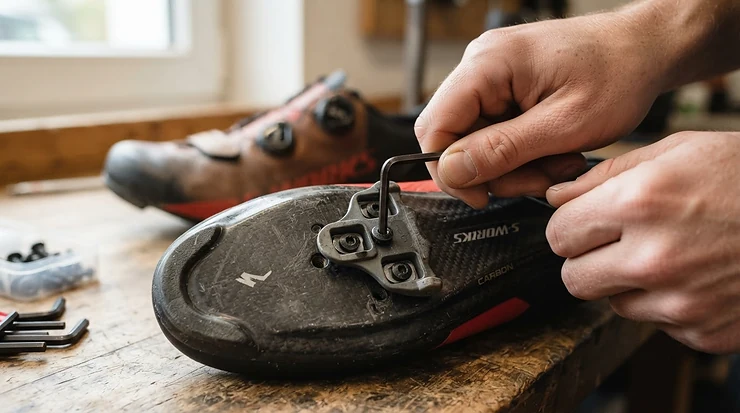
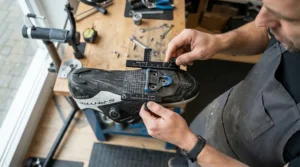
Getting road bike cleats onto a shoe correctly is one of those jobs that looks trivial and is quietly easy to botch. Start by marking your existing cleat position with a permanent marker or masking tape before removing old cleats — this preserves your baseline even if you’re switching systems entirely. Most shoes have small alignment marks moulded into the sole; use these alongside the ball of your foot, which should sit roughly over the pedal spindle, give or take a few millimetres depending on your riding style.
Torque matters more than most new cyclists expect. Over-tightening cleat bolts can crack the composite sole of carbon-soled shoes, while under-tightening invites creaking and eventual play in the mounting. A small torque wrench set to the manufacturer’s spec — usually somewhere between 5 and 8 Nm for the shoe-side bolts — removes the guesswork entirely and is a worthwhile investment alongside any new set of road bike cleats.
In the first thirty days after fitting new cleats, expect a short bedding-in period where engagement feels slightly stiffer than it will after a few hundred miles. Common early mistakes include setting release tension too high out of nervousness (which makes unclipping harder, not safer) and forgetting to check for lateral rocking, a telltale sign the cleat bolts have loosened slightly after the plastic settles. A quick monthly check with an Allen key, alongside a wipe-down to clear grit from the pedal-cleat interface, is genuinely all the maintenance most road bike cleats ever need.
Real-World Rider Scenarios: Which Road Cleats Suit You?
If you’re a college student commuting five miles into lectures on wet British roads most mornings, walkability probably matters more than marginal aerodynamic gains — Look Keo Grip Cleats or the Wahoo Speedplay Walkable Cleats make far more sense than a zero-float racing setup you’ll be white-knuckling across a rain-slicked cobbled quad.
If you’re training for your first sportive and currently riding whatever cleats came bundled with your pedals, this is the moment to reassess rather than assume factory-default is optimal. A rider putting in 150+ miles a week with no prior knee issues will likely do well on Shimano SPD-SL Cleats in yellow, giving enough float to avoid overuse strain without sacrificing the stable platform longer efforts demand.
If you’re a returning cyclist in your 40s or 50s coming back after years off the bike, possibly carrying an old knee niggle from running or football, the adjustability of Wahoo Speedplay Walkable Cleats is worth the extra outlay — being able to fine-tune float in small increments rather than jumping between fixed colour-coded options can meaningfully reduce the trial-and-error period. And if you’re simply budget-constrained and want a reliable weekend club-run setup without overthinking it, Exustar E-RSL Cleats or Look Keo Classic Cleats will do the job without drama.
Common Cleat Problems and How to Fix Them
Creaking that appears out of nowhere. This is almost always either a loosened mounting bolt or a worn contact point between cleat and pedal. Re-torque the bolts first; if the noise persists, a dab of grease at the pedal-cleat interface (never on the retention edges themselves) usually silences it.
Difficulty clipping in on the first attempt. Often this comes down to grit or road salt in the pedal mechanism rather than the cleat itself. A stiff brush and occasional light lubrication of the pedal spring resolves most cases; if it persists with brand-new road bike cleats, double-check you’ve bought the correct float version for your pedal body.
Unexpected unclipping mid-ride. This is usually a release tension issue rather than a cleat fault — most pedals have an adjustment screw controlling how much force is needed to disengage. Gradually increasing tension in small increments, rather than cranking it to maximum immediately, avoids overcorrecting into a setup that’s genuinely hard to escape in an emergency.
Slipping on smooth floors when walking. Non-grip cleats like Look Keo Classic Cleats simply aren’t built for this; either budget for a grip version or invest in aftermarket cleat covers, which slip on and off in seconds and dramatically improve traction at café stops.
Cleats wearing unevenly on one side. This typically points to a pedalling asymmetry or a slight leg length difference rather than a faulty cleat, and is worth flagging to a bike fitter if it recurs across multiple cleat replacements — persistent one-sided wear is a genuine biomechanical signal, not bad luck.
How to Choose Road Bike Cleats
- Check pedal-cleat compatibility first. Shimano SPD-SL, Look Keo, Time ICLIC and Speedplay bodies are not interchangeable — buying the wrong cleat for your existing pedals is the single most common and easily avoidable mistake.
- Decide how much float you actually need. Riders with no history of knee pain can often run less float comfortably, while anyone with existing joint sensitivity should lean toward more forgiving options.
- Weigh up walkability honestly. If you’re stopping at cafés, commuting through a station, or coaching juniors pitch-side, grip-enhanced cleats earn their higher price quickly.
- Factor in your annual mileage. Higher-mileage riders should prioritise long-lasting cycling cleats built from durable thermoplastic blends over lighter, more wear-prone budget plastics.
- Set a realistic budget band. Mid-range road bike cleats in the £20-£35 bracket cover the vast majority of riders’ needs without meaningful compromise.
- Consider your existing shoe soles. Carbon-soled race shoes and more flexible entry-level soles both interact differently with cleat torque specs — always check manufacturer guidance before installing.
- Think about future-proofing. If you’re likely to upgrade pedals in the next year or two, a widely compatible system like SPD-SL or Look Keo avoids an awkward, costly switch later.
Road Cleats vs Mountain Bike Cleats
The core difference between road cleats and mountain bike (SPD) cleats comes down to engagement points and exposure. Road bike cleats, whether Shimano SPD-SL, Look Keo or Speedplay, use a three-bolt mounting pattern and sit proud of the shoe sole, maximising the contact area for efficient power transfer but making them genuinely treacherous to walk in without grip inserts. Mountain bike-style SPD cleats, by contrast, use a smaller two-bolt pattern recessed into the sole, trading a slightly smaller platform for shoes that walk almost like normal trainers.
For pure road riding — long, steady efforts with minimal stopping — the wider three-bolt platform of dedicated road bike cleats generally wins out on efficiency and stability under load. But for commuters who dismount frequently, or gravel and touring riders who might be pushing the bike up a muddy bank, recessed SPD-style cleats remove the walkability compromise entirely. It’s genuinely not a case of one system being objectively superior; it’s a case of matching the cleat to how much time you actually spend off the bike relative to on it. Riders torn between the two are often best served trying a friend’s setup on a short ride before committing, since the difference in feel is more noticeable in person than any spec sheet conveys.
Pedal-Cleat Compatibility Explained
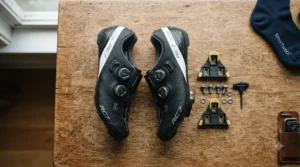
Pedal-cleat compatibility trips up more new cyclists than almost anything else in this category, largely because manufacturers use similar-sounding names for genuinely incompatible systems. Shimano’s SPD-SL (three-bolt, road) and SPD (two-bolt, mountain/gravel) share a brand name but nothing else mechanically — trying to fit one cleat type to the wrong pedal simply won’t work. Look’s Keo system and the older Look Delta standard are likewise mechanically distinct despite the shared brand.
The safest approach when buying road bike cleats separately from pedals is to check the exact pedal model against the cleat manufacturer’s stated compatibility list rather than assuming brand matching is enough. Aftermarket options like Exustar E-RSL Cleats and Favero / Look Keo-Style Cleats explicitly state which systems they’re engineered to match — Exustar’s EPS-SL interface mirrors Shimano’s road geometry, while Favero’s cleats mirror Look’s Keo standard closely enough to work interchangeably. When in doubt, taking your pedal (or a clear photo of the retention mechanism) into a local bike shop before buying replacement cleats avoids an expensive and frustrating mismatch.
Understanding Cleat Float Angle
Cleat float angle refers to how many degrees your foot can rotate left and right while still clipped into the pedal, and it’s one of the most misunderstood specs on any set of road bike cleats. Zero float locks the foot rigidly in place, which some sprinters and track specialists prefer for maximum power transfer efficiency, but which places more rotational stress through the knee if your natural pedalling alignment isn’t already close to perfect.
Research into bike fitting, including work referenced in physiotherapy literature, has consistently linked overly rigid cleat setups to a higher incidence of anterior knee pain and iliotibial band irritation, particularly in riders without a professional fit assessment. That’s not a reason to panic about zero-float cleats generally — plenty of experienced racers run them without issue — but it is a strong argument for newer riders and anyone nursing an old injury to default toward more forgiving float ranges, as detailed in this physiotherapy-focused bike-fitting overview. Most riders land comfortably somewhere in the middle: Shimano’s yellow six-degree cleats, Look’s grey 4.5-degree option, or a mid-range Speedplay setting all represent a sensible default rather than an extreme in either direction. For those still uncertain, Cycling Weekly’s deeper look at cleat float is a genuinely useful next read before making a final call.
What Makes Cycling Cleats Long-Lasting
Longevity in road bike cleats comes down to three factors that rarely get discussed together: material composition, walking frequency, and mounting torque consistency. Bi-material cleats like the TIME ICLIC Road Cleats are specifically engineered to resist the creaking and micro-wear that develops at contact points over thousands of pedal strokes, while cheaper single-material plastics tend to round off their retention edges noticeably faster under the same mileage.
Walking frequency is the less obvious variable. Every step taken in cleats not designed for it accelerates wear at the toe and heel, which is exactly why grip-enhanced options like Look Keo Grip Cleats last longer in real-world use despite being built from broadly similar plastics to their non-grip siblings — the rubber inserts take the abrasion that would otherwise chew through bare thermoplastic. Total cost of ownership, then, isn’t simply the sticker price; a £25 non-grip cleat replaced every four months because a commuter walks through a train station twice daily may end up costing more over a year than a £35 grip cleat lasting twice as long. Riders who rarely walk in their cycling shoes can reasonably prioritise price over grip; those who don’t should weight the maths the other way.
Walkability of Road Cleats: What to Expect Off the Bike
Walkability is the single most underrated factor buyers weigh when choosing road bike cleats, largely because it’s invisible until the moment you’re gingerly crossing a petrol station forecourt in the rain. Bare, non-grip road cleats — the black or standard versions of most systems — are built purely for pedalling efficiency, with hard plastic surfaces that offer next to no traction on tile, polished stone, or wet metal grates.
What most buyers overlook is that walkability isn’t purely about the cleat’s own material — pedal design plays a role too, since a wider platform can partially offset a slippery cleat by spreading contact area more evenly. Still, the biggest single upgrade available is choosing a grip-enhanced cleat outright: Look Keo Grip Cleats and the Wahoo Speedplay Walkable Cleats both integrate rubberised sections specifically to address this, and aggregated reviewer sentiment is remarkably consistent in praising the difference compared with bare plastic equivalents. For anyone who regularly dismounts — café stops, school runs, multi-modal commuting involving a train platform — walkability deserves at least as much weight in the buying decision as float angle or weight, a point echoed across independent testing from BikeRadar’s ongoing pedal and cleat coverage.
FAQ
❓ What's the difference between Shimano and Look road bike cleats?
❓ How often should I replace my road bike cleats?
❓ Can I use mountain bike cleats on road pedals?
❓ Do more expensive road bike cleats really last longer?
❓ What cleat float is best for beginners?
Conclusion
Road bike cleats rarely get the attention they deserve, sitting quietly beneath more glamorous upgrades like wheels or groupsets, yet almost nothing else touches your bike as constantly or as directly. Get the choice right and you’ll barely notice them — which, honestly, is the whole point.
For most UK riders, Shimano SPD-SL Cleats remain the sensible default: widely available, genuinely long-lasting, and forgiving enough for riders still dialling in their position. Those who spend real time walking off the bike should lean toward Look Keo Grip Cleats or the Wahoo Speedplay Walkable Cleats, while budget-conscious riders can trust Exustar E-RSL Cleats or Look Keo Classic Cleats without feeling short-changed. Owners of Favero power meter pedals have a genuinely good matched option in the Favero / Look Keo-Style Cleats, and anyone already running Time pedals should simply stick with the quietly excellent TIME ICLIC Road Cleats.
Whichever you land on, the underlying advice stays the same: match the cleat to your pedal system first, be honest about how much you walk in your cycling shoes, and don’t ignore float angle just because it sounds like a technicality. It isn’t.
Recommended for You
- Women’s Road Shoes for Racing: 7 Best Picks for 2026
- Women’s Road Cycling Shoes: 7 Best UK Picks for Narrow Feet (2026)
- Road Cycling Shoes Under £60: 7 Best Budget Picks (2026)
Disclaimer: This article contains affiliate links. As an Amazon Associate, I earn from qualifying purchases. If you purchase products through these links, we may earn a small commission at no additional cost to you.
✨ Found this helpful? Share it with your friends! 💬🤗
