In This Article
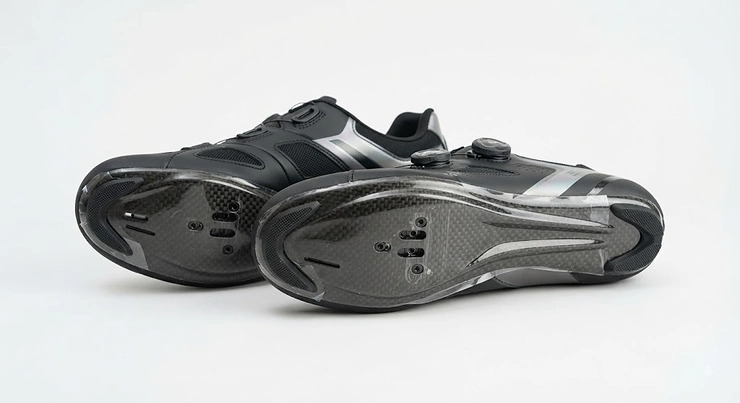
There’s a particular sound every roadie remembers from their first proper ride: the click of a cleat locking into a pedal, followed immediately by the wobbly, heart-in-mouth realisation that your feet are now, for better or worse, part of the bike. Clipless road cycling shoes are the stiff-soled, cleat-compatible footwear that make that click possible — a rigid sole bolted to a cleat that locks into a matching pedal, transferring far more of your effort into forward motion than a trainer ever could. Confusingly, “clipless” actually means you’re clipped in; as Cycling UK’s guide to clipless pedals and cleats explains, the name is a nod to the old leather toe-clip straps this system replaced back in the 1980s.
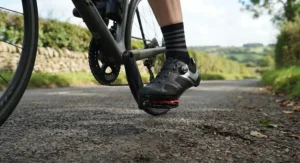
If you’ve been pedalling around on trainers and flat pedals, the upgrade to clipless road shoes is one of the biggest single improvements you can make to how a bike feels underneath you. Suddenly you’re not just pushing down — you’re pulling through the stroke too, and every watt you generate has somewhere useful to go instead of being lost to a soft, flexing sole. This guide walks through seven genuinely good clipless road cycling shoes for 2026, spanning honest budget picks through to full-blown race shoes, alongside the practical stuff nobody tells you: how pedal cleat compatibility actually works, why shoe stack height matters more than most riders assume, and how clipless shoes for beginners road cycling differ from the race-focused end of the market. Whether you’re commuting eight miles each way or chasing a new personal best on Sunday club runs, there’s a sensible pair here for you.
Quick Comparison Table
For readers short on time, here’s how the seven shoes stack up at a glance before we get into the detail.
| Shoe | Closure | Sole | Best For |
|---|---|---|---|
| dhb Dorica Lace Carbon | Laces | Carbon | Budget riders wanting a stiff sole |
| Shimano SH-RC300 | Single Boa | Reinforced nylon | First-time Boa buyers |
| Bontrager Solstice | Velcro | Nylon | Absolute beginners |
| Giro Stylus | Hook & Loop straps | Nylon composite | Wider feet, all-day comfort |
| Fizik Tempo Decos Carbon | Single Boa | Carbon (R2) | Sportive and long-distance riders |
| Shimano SH-RC703 | Dual Boa | Hollow carbon | Keen club riders and racers |
| Specialized S-Works Torch | Dual Boa | Carbon (I-Beam) | Racing and time-poor training |
Looking at this spread, there’s a clear line from entry-level to race-day kit: closures move from Velcro and laces toward twin Boa dials, and soles progress from nylon composites to full carbon. As a rule of thumb, the more bolts, dials and carbon a shoe has, the stiffer and lighter it gets — but also the less forgiving it is if your fit isn’t spot-on. Riders newer to clipless road shoes generally get on better with the simpler closures lower down this table, while experienced cyclists chasing marginal gains will look toward the carbon-soled options at the bottom.
💬 Found a shoe that looks right for you already? Scroll down to see the full breakdown before you decide.🤗
Top 7 Clipless Road Cycling Shoes: Expert Analysis
1. dhb Dorica Lace Carbon — full carbon sole at a genuinely low price
The headline feature here is the sole, and it’s a rare one to see at this end of the market. Dhb has fitted the dhb Dorica Lace Carbon with a 3K woven carbon sole shared with its pricier Aeron range, which is a genuine step up in rigidity over the standard nylon Dorica. Seven lace eyelets run down each side in an “Oxford style” closure, giving fine-grained control over tension along the length of the foot, though laces obviously can’t be adjusted mid-ride the way a Boa dial can. Based on the spec comparison with rivals at a similar price, this is one of very few sub-£100 shoes offering a genuinely stiff carbon platform rather than a carbon-look composite. It’s best suited to riders who’ve already settled on their preferred fit and don’t mind the extra thirty seconds laces take each ride, plus anyone who simply likes the classic look. Reviewers consistently report minimal sole flex even under hard efforts, alongside a generously padded heel cup that keeps things comfortable on longer rides. A recurring theme in owner feedback is that the fixed-position cleat bolts limit fore-aft adjustment compared with shoes offering a sliding cleat plate, and that ventilation runs on the warmer side in summer.
Pros:
- ✅ Full carbon sole rarely seen below £100
- ✅ Laces allow precise, even tension adjustment
- ✅ Padded heel cup reduces slip when out of the saddle
Cons:
- ❌ Fixed cleat bolts limit fore-aft adjustment
- ❌ Limited ventilation for hot-weather riding
Expect this pair in the roughly £70-90 range at the time of research; for the carbon sole alone, it’s hard to argue with the value here — check current price before buying, as retailer promotions shift regularly.
2. Shimano SH-RC300 — best entry point into Boa dial fastening
The standout feature on the Shimano SH-RC300 is its single offset Boa L6 dial, which replaces Velcro straps with a quick, even, one-handed adjustment you can make without stopping pedalling. The wraparound synthetic leather upper is perforated for breathability and pairs with a reinforced glass-fibre nylon sole rather than full carbon, which keeps weight reasonable while holding the price down. What most buyers overlook about this model is that Shimano’s low stack height midsole design — the same philosophy used across its pricier RC-series shoes — means your foot sits closer to the pedal axle than on many rival budget shoes, which can translate to a slightly more direct pedalling feel. This is a strong pick for riders stepping up from Velcro shoes who want to try Boa fastening without committing to carbon-sole pricing. Aggregated Amazon customer feedback consistently highlights good value for money, with several buyers specifically praising the fit for wider feet using Shimano’s standard last. A minority of reviewers note the nylon sole flexes noticeably more than the carbon options further up this list once power output climbs.
Pros:
- ✅ Single Boa L6 dial for quick, even adjustment
- ✅ Low stack height design aids pedalling feel
- ✅ Consistently praised for value for money
Cons:
- ❌ Nylon sole flexes more than carbon rivals under load
- ❌ Cleats sold separately, adding to total cost
Typically found in the £70-100 range at the time of writing, the Shimano SH-RC300 earns its keep as a sensible first upgrade from flat-pedal trainers.
3. Bontrager Solstice — best simple, no-fuss beginner shoe
The Bontrager Solstice leans into simplicity, with Velcro closure straps rather than a dial, and that’s precisely why it suits nervous first-timers so well. Its moderately stiff nylon sole is compatible with both SPD-SL and SPD cleats, meaning newer riders can choose either road-style single-sided pedals or the more forgiving two-bolt mountain-bike-style system without needing a different shoe. Here’s what to weigh: at 227g per shoe in a European size 42, the Solstice is genuinely competitive on weight against far pricier rivals, though the two-bolt cleat adaptor required for SPD compatibility isn’t included in the box and needs buying separately. Based on the spec sheet, this is squarely a shoe for riders newer to clipless road cycling, or for anyone who wants one pair that can flex between road rides and the odd errand where walking normally matters more than outright stiffness. Reviewers consistently frame this as an uncomplicated shoe that “punches above its price,” while noting ventilation can feel a little short of what’s needed on the hottest days.
Pros:
- ✅ Works with both SPD-SL and SPD cleats
- ✅ Competitive weight for a budget nylon-soled shoe
- ✅ Simple Velcro straps are easy for beginners to use
Cons:
- ❌ Two-bolt cleat adaptor not included
- ❌ Ventilation is modest in warm conditions
At around £55-75 depending on retailer stock, the Bontrager Solstice is a sound choice for anyone whose priority is learning to clip in confidently rather than shaving grams.
4. Giro Stylus — best for wider or hard-to-fit feet
Where the Giro Stylus stands out is fit: its Synchwire upper is designed to mould around the foot, and combined with a men’s-specific last, it consistently comes up in buyer feedback as one of the more accommodating shoes in this price bracket for wider forefeet. Three Hook & Loop straps handle closure, offering more incremental adjustment across the top of the foot than a single Velcro strap, while laser-cut ventilation holes keep things breathable on warmer rides. The outsole uses a 3/2 cleat pattern rated at 60 N/mm stiffness and supports both two- and three-bolt cleat setups, so pedal cleat compatibility isn’t a limiting factor here even if you later switch pedal systems. What most buyers overlook about stiffness ratings like this is that 60 N/mm sits solidly in the mid-range — stiffer than most nylon-soled entry shoes, but well short of the carbon options further down this list, which suits riders doing long, steady miles rather than sprint efforts. At 272g per shoe, it’s not the lightest here, but the trade-off is genuine all-day comfort that several long-distance reviewers specifically call out.
Pros:
- ✅ Synchwire upper accommodates wider feet well
- ✅ Compatible with both 2-bolt and 3-bolt cleats
- ✅ Reflective detailing adds visibility for early or late rides
Cons:
- ❌ Heavier than most carbon-soled rivals
- ❌ 60 N/mm stiffness trails full-carbon options for racing
Priced around £90-120 at the time of research, the Giro Stylus is a strong mid-range pick if fit comfort matters more to you than outright sole rigidity.
5. Fizik Tempo Decos Carbon — lightest, stiffest option below race-shoe pricing
The Fizik Tempo Decos Carbon punches well above its position in Fizik’s range thanks to its R2 carbon sole, which the brand rates 10 out of 10 on its own stiffness scale — nominally as stiff as soles found on shoes costing considerably more. A single Li2 Boa dial handles an asymmetrical closure system that curves across the foot from outside to inside, distributing tension more evenly than a straight-laced design. Based on the spec comparison, this shoe sits deliberately between Fizik’s mid-range Tempo Overcurve R4 and its flagship Vento Infinito Carbon 2, borrowing the top-tier carbon sole while keeping the simpler single-dial closure of the cheaper model — a sensible compromise for riders who want race-level stiffness without race-level pricing. Reviewers consistently praise the low weight and how little break-in time the shoe needs, alongside a moveable cleat base that gives more fore-aft adjustment than the fixed-position dhb Dorica further up this list. The main criticism raised in owner feedback is that a single Boa dial offers less independent adjustment across the toe box than the dual-dial shoes below, which matters more for riders with unusual foot shapes.
Pros:
- ✅ Stiffness-10 carbon sole rivals far pricier shoes
- ✅ Minimal break-in time reported by owners
- ✅ Moveable cleat base aids fore-aft fit adjustment
Cons:
- ❌ Single Boa dial limits toe-box adjustment
- ❌ Narrower fit doesn’t suit every foot shape
Given its position between two clearly priced Fizik siblings, expect the Fizik Tempo Decos Carbon to typically sit somewhere in the £200-280 range — always check current pricing, as this can shift with colourway and retailer stock.
6. Shimano SH-RC703 — best dual-Boa carbon shoe for club riders
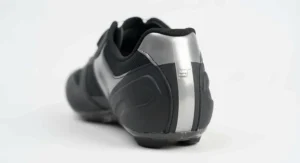
Shimano built the Shimano SH-RC703 to borrow heavily from its flagship S-PHYRE race shoe without the flagship price tag, and it largely succeeds. A hollow carbon midsole combines with dual Boa L6Z dials and a low stack height design to create what Shimano calls a Power Zone lace guide layout, aimed at stabilising the foot through the full pedal stroke. The wraparound synthetic leather and TPU mesh upper is genuinely well ventilated, with perforations running nearly halfway down each side. What most buyers overlook here is that the L6Z dials only micro-tighten — to loosen you pull the dial upward rather than twist it back, a minor but real inconvenience compared with pricier Li2 dials that do both. Based on owner reports after several hundred miles of use, comfort and stiffness are described as very close to Shimano’s considerably pricier S-PHYRE model, making this shoe a sensible landing point for club riders and sportive regulars who want race-shoe performance without race-shoe pricing. Wide and women’s-specific versions are also available, addressing a common complaint about narrower Shimano lasts.
Pros:
- ✅ Hollow carbon midsole rivals Shimano’s flagship shoe
- ✅ Dual Boa L6Z dials give precise, secure fit
- ✅ Available in wide and women’s-specific fits
Cons:
- ❌ L6Z dials only micro-tighten, not micro-loosen
- ❌ Upper needs a few rides to fully break in
Typically priced in the £180-230 range at the time of research, the Shimano SH-RC703 offers a genuinely credible alternative to shoes costing two or three times as much.
7. Specialized S-Works Torch — the race-ready flagship
Sitting at the top of this list, the Specialized S-Works Torch is built around an internal I-Beam carbon structure that Specialized says shaves around 20g off its previous flagship sole while maintaining the same stiffness rating of 15 on the brand’s own scale — among the stiffest ratings in this entire guide. Twin aluminium Boa S3 dials, shifted lower and angled differently to earlier Specialized shoes, are designed to pull the upper around the foot rather than press straight down, reducing pressure across the top of the foot during hard efforts. On paper this means less energy lost to a flexing sole and a more secure platform when sprinting out of the saddle, and reviewers across multiple outlets consistently back this up, describing the fit as “disappearing” on the foot during long rides. Built from data drawn from more than 100,000 foot scans via Specialized’s Rëtul fitting system, both standard and wide base-plate options are available — a genuinely useful bit of transformation-level detail most listings don’t mention. The catch, unsurprisingly, is price: this is a shoe for riders who’ve already decided that marginal stiffness and weight gains are worth paying for, rather than anyone dipping a toe into clipless road cycling shoes for the first time.
Pros:
- ✅ Class-leading stiffness rating of 15
- ✅ Data-driven fit with standard and wide options
- ✅ Twin Boa S3 dials reduce top-of-foot pressure
Cons:
- ❌ Premium price puts it out of reach for beginners
- ❌ Marginal gains over cheaper carbon shoes are hard to feel below race pace
Expect the Specialized S-Works Torch to sit in the £380-450 range at the time of research — a serious investment, and one best reserved for riders who already know exactly what they want from a shoe.
Practical Usage Guide: Setup, Cleat Fitting and Your First 30 Days
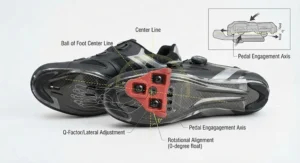
Getting the most from any pair of clipless road cycling shoes starts before you even swing a leg over the saddle. Start by bolting cleats on with the ball of your foot roughly centred over the pedal axle — most cleats have a neutral marking line to help you get this roughly right first time, then fine-tune from there. Set release tension to its lowest setting for your first few rides; you can always tighten it once clipping out becomes second nature, but starting too tight is a classic first-week mistake that leads to unnecessary tip-overs at junctions. Practise clipping in and out while leaning against a wall or on a turbo trainer before you take to the road, and when you do head out, get in the habit of unclipping one foot early, before you actually need to stop, rather than at the last second.
Maintenance-wise, cleats wear down with walking and eventually lose their crisp click; most riders find the front edge starts to round off and needs replacing every 500-1,000 miles depending on how much walking you do off the bike. Keep an eye on the bolts too — a quarter-turn check every few weeks stops cleats working loose on longer rides. A common mistake in the first month is leaving cleats in one position and never revisiting them; if your knees feel odd after a ride, small fore-aft or rotational adjustments to cleat position are usually the fix, not a new saddle.
Real-World Scenarios: Matching Riders to Shoes
Picture three fairly typical riders. First, a university student commuting six miles each way across a city, on a modest budget, who occasionally has to walk their bike through a busy market square — the Bontrager Solstice or dhb Dorica Lace Carbon both make sense here, since neither demands a big spend and both handle short walking stretches without drama. Second, a weekend sportive rider putting in 40-60 miles most Saturdays, wanting genuine stiffness without spending a mortgage payment — the Fizik Tempo Decos Carbon or Shimano SH-RC703 fit that brief well, offering carbon-sole performance at a price that doesn’t require justifying to a partner. Third, a competitive club racer doing structured training five days a week and racing most weekends, for whom even small efficiency gains compound over a season — the Specialized S-Works Torch is built precisely for this rider, where marginal stiffness and fit-data benefits are worth the outlay.
None of these profiles is fixed, of course — plenty of committed racers ride carbon shoes half the price of the Torch and do perfectly well, and plenty of commuters happily spend more because comfort matters most to them. The point of matching a shoe to a scenario isn’t to box you in; it’s to stop you overspending on stiffness you’ll never load hard enough to notice, or underspending on comfort you’ll regret on a three-hour Sunday ride.
Clipless Road Shoes vs Flat Pedal Shoes
The honest case for clipless road shoes over flat pedal shoes comes down to one thing: locking your foot to the pedal lets you apply force through more of the pedal stroke, not just on the downstroke. Because the cleat mechanically fixes your foot in place rather than letting it shift on the pedal, less effort gets wasted and your foot can’t slip mid-stroke the way it can on a flat pedal. That efficiency gain is real, and it’s the reason nearly every serious road cyclist eventually makes the switch.
| Factor | Clipless Road Shoes | Flat Pedal Shoes |
|---|---|---|
| Power transfer | Higher — stiff sole plus locked foot | Lower — foot can shift on pedal |
| Learning curve | Requires practice clipping in/out | None — step on and ride |
| Walking comfort | Limited, especially with carbon soles | Normal, everyday walking |
| Best for | Regular road riders, sportives, racing | Commuting, casual riders, mixed terrain |
The trade-off is walking comfort and the learning curve involved in clipping in and out smoothly — something every beginner worries about and, honestly, every rider has a story about getting wrong at least once. For riders doing genuine mileage on tarmac, that trade-off is usually worth making; for those doing short, stop-start city journeys where you’re constantly putting a foot down, flat pedals and normal trainers can remain the more sensible choice.
How to Choose Clipless Road Cycling Shoes
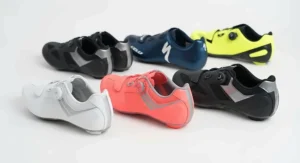
- Decide on your cleat system first. Three-bolt SPD-SL or Look-style cleats suit dedicated road riding and generally aren’t designed for walking; two-bolt SPD cleats are more forgiving off the bike but sacrifice a little stiffness.
- Set a stiffness expectation matched to your riding. Nylon soles suit commuting and steady miles; carbon soles earn their keep once you’re regularly pushing hard efforts or racing.
- Try before committing to closure type. Velcro and Boa dials feel very different underfoot — if you can, try a shop pair on before buying online.
- Check width options, not just length. Several brands here, including Giro and Specialized, now offer wide-fit versions, which matters more to comfort than most riders expect.
- Weigh up cost against how much you’ll actually use them. A £400 race shoe delivering marginal stiffness gains makes little sense for someone riding twice a month.
- Factor in cleat and maintenance costs. Cleats aren’t usually included and need replacing periodically, so build that into your total spend.
- Read aggregated review sentiment, not just star ratings. A shoe with modest scores but consistent, specific praise for fit is often a safer bet than one with high scores and vague five-word reviews.
Pedal Cleat Compatibility Explained
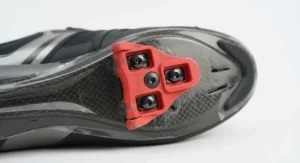
Pedal cleat compatibility trips up more first-time buyers than almost anything else in this category, largely because “clipless” covers several genuinely different systems. As Cyclist’s guide to the best clipless road bike pedals sets out, the majority of road cycling shoes use a three-bolt design pioneered by Look, Speedplay runs a four-bolt connection between cleat and sole, and two-bolt cleats are used on smaller MTB-style setups that are less cumbersome and better suited to walking. Every shoe in this guide uses either a three-bolt or, in Bontrager’s and Giro’s case, a dual-compatible sole that also accepts two-bolt cleats — but the pedals themselves must match, since a three-bolt SPD-SL cleat physically won’t click into a two-bolt SPD pedal, and vice versa.
If you’re buying shoes and pedals together for the first time, the simplest route is choosing one manufacturer’s ecosystem — Shimano SPD-SL shoes with Shimano SPD-SL pedals, for instance — since cleats are sold with the pedals, not the shoes, and mixing brands rarely causes issues but is one more thing to double-check before you order. Road-specific SPD-SL cleats use a wider, triangular, three-bolt design that protrudes from the sole to interact with a single-sided pedal, and both float (the lateral movement allowed once clipped in) and release angle vary by cleat type, so it’s worth checking these details rather than assuming all cleats behave identically.
Shoe Stack Height: What It Means for Your Ride
Shoe stack height refers to the total thickness between your foot and the pedal axle — sole, cleat and pedal body combined — and it matters more than most riders realise when they’re first buying clipless road cycling shoes. A lower stack height moves your foot closer to the pedal axle, which in turn allows your saddle height to drop slightly while keeping the same knee extension angle at the bottom of the pedal stroke. As Cycling Weekly’s deep dive into pedal stack height explains, a lower shoe and pedal stack height effectively works the opposite way to raising saddle height, meaning the saddle can be dropped slightly to maintain the same knee extension angle — a small but genuine efficiency and aerodynamic consideration for riders chasing every marginal gain.
For the vast majority of riders, though, stack height differences between the shoes in this guide amount to a handful of millimetres and won’t be something you consciously feel. Shimano’s RC-series shoes are built around a specifically low-stack midsole design, which is one reason they’ve become a benchmark in this area, but a comfortable, well-fitting shoe with a stack height a few millimetres higher will always beat an uncomfortable “optimal” one. Where stack height genuinely matters is if you’re already dealing with knee discomfort — in which case it’s worth getting a proper bike fit rather than guessing, since saddle height, cleat position and stack height all interact.
Common Mistakes When Buying Clipless Road Cycling Shoes
The single most common mistake is buying on stiffness numbers alone without considering fit — a size-15 stiffness rating means nothing if the shoe pinches your forefoot on every ride. A close second is skipping the cleat cost entirely when budgeting; cleats typically add £20-40 on top of the shoe price and aren’t always included, something several shoes on this list explicitly flag. Beginners also frequently buy carbon-soled race shoes as their first pair, assuming stiffer automatically means better, when a nylon-soled shoe with a comfortable Velcro or single-Boa closure is usually the smarter starting point for clipless shoes for beginners road cycling. Another recurring error is ignoring width — several reviewers across the shoes in this guide specifically call out fit issues that a wide-fit version would have solved. Finally, plenty of buyers assume all cleats are interchangeable between brands; as covered above, pedal cleat compatibility genuinely varies, and getting this wrong means an unusable shoe until the right cleats arrive.
Long-Term Cost & Maintenance
Thinking in cost-per-ride rather than upfront price changes the maths considerably. A £70 pair of Bontrager Solstice shoes ridden twice a week for two years works out to a few pence per ride before cleats and wear are even factored in — genuinely difficult to beat. A £400 pair of S-Works Torch shoes ridden with the same frequency costs more per outing, but for a rider doing structured training and racing, the calculation shifts because performance differences compound over hundreds of hard efforts a season. Carbon soles generally outlast nylon ones and resist the gradual softening that can develop in cheaper composites after a couple of seasons of hard use, which partially offsets the higher upfront cost over a longer ownership period. Whatever you buy, budget for replacement cleats every 500-1,000 miles, occasional Boa dial servicing (most manufacturers sell replacement dial kits rather than requiring a whole new shoe), and a proper clean after wet or gritty rides to stop grit working into the sole bolts and rounding them off over time.
Features That Actually Matter (And Those That Don’t)
Genuinely worth paying for: a stiffness level matched honestly to how hard you actually ride, a closure system you find comfortable over three-plus hours in the saddle, and — for anyone with wider or narrower-than-average feet — a proper width option rather than squeezing into a standard last. Reflective detailing, as seen on the Giro Stylus, is a small but genuinely useful safety feature for early morning or evening rides rather than a gimmick. What matters far less than marketing suggests: headline stiffness index numbers in isolation, since a “10” and a “7” rarely feel meaningfully different below race pace, and dial count for its own sake — a well-designed single Boa dial, as on the Fizik Tempo Decos, can outperform a poorly positioned dual-dial setup. Colour and branding obviously matter not at all to performance, however much marketing copy suggests otherwise.
Safety, Fit and Injury Considerations
Clipless road cycling shoes interact directly with your knees, hips and lower back through cleat position, stack height and shoe stiffness, so getting the fit basics right matters for comfort as much as speed. Peer-reviewed research on knee flexion and cycling biomechanics consistently links a knee flexion range of roughly 25-30 degrees at the bottom of the pedal stroke with better efficiency and lower injury risk, while flexion beyond 40 degrees tends to bring greater discomfort — a reminder that saddle height and cleat position deserve real attention, not just the shoe itself. If you experience persistent knee pain after switching to a new pair of shoes, the most common causes are cleat position moved too far forward or backward, or a saddle height that no longer matches the new shoe’s stack height, both of which are usually fixable with small adjustments rather than a whole new setup. New riders should also budget mental energy, not just money, for the learning curve of clipping in and out smoothly — nearly every experienced cyclist has a story about a slow-speed tip-over at a junction in their first month, and it’s a normal, forgettable part of getting started rather than a sign you’ve bought the wrong shoes.
👟 Not sure which pair fits your riding style? Compare all seven shoes side-by-side above before you decide.🤗
Buyer’s Decision Framework
If you’re brand new to clipped-in riding and mostly commuting, choose a Velcro or basic Boa shoe with dual-cleat compatibility, because forgiving fit and easy walking matter more than sole stiffness at this stage. If you’re riding sportives or club runs most weekends on a moderate budget, choose a mid-range carbon shoe with a single Boa dial, because you’ll feel the stiffness gain without paying race-shoe prices. If you’re training structurally and racing regularly, choose a dual-Boa, high-stiffness carbon race shoe, because marginal efficiency gains genuinely compound across a season of hard efforts. And if you have wider or narrower-than-average feet, prioritise a brand offering dedicated width options over any other single spec on this list, because no amount of stiffness compensates for a shoe that simply doesn’t fit.
Frequently Asked Questions
❓ What are clipless road cycling shoes?
❓ Are clipless shoes hard to learn for beginners?
❓ Can I walk normally in clipless road shoes?
❓ Do more expensive clipless shoes actually make you faster?
❓ How do I know if my cleats are compatible with my pedals?
Conclusion
There’s no single “best” pair of clipless road cycling shoes — only the right pair for how, and how often, you actually ride. Someone commuting a few miles a week and someone training for a season of racing have almost nothing in common in terms of what they need from a shoe, and this guide has hopefully made that distinction clearer rather than muddier. If you’re taking your first steps into clipped-in riding, the Bontrager Solstice or dhb Dorica Lace Carbon offer a genuinely low-risk way in. If you’re somewhere in the middle, putting in real weekly miles without racing, the Fizik Tempo Decos Carbon and Shimano SH-RC703 both deliver carbon-sole performance without asking you to remortgage anything. And if you already know exactly what you’re chasing, the Specialized S-Works Torch remains one of the most data-driven, race-ready shoes available.
Whichever pair you land on, get the fundamentals right first: correct cleat position, sensible release tension while you’re learning, and a width that actually matches your foot. Get those right, and even a modest pair of clipless road shoes will transform how your bike feels beneath you.
Recommended for You
- Top Road Bike Shoes 2026: 7 Best Picks for Every Budget
- Best Neoprene Overshoes 2026: 7 Winter Picks That Actually Work
- Waterproof Cycling Overshoes: 7 Best Picks for Wet UK Rides
Disclaimer: This article contains affiliate links. As an Amazon Associate, I earn from qualifying purchases. If you purchase products through these links, we may earn a small commission at no additional cost to you.
✨ Found this helpful? Share it with your friends! 💬🤗
