In This Article
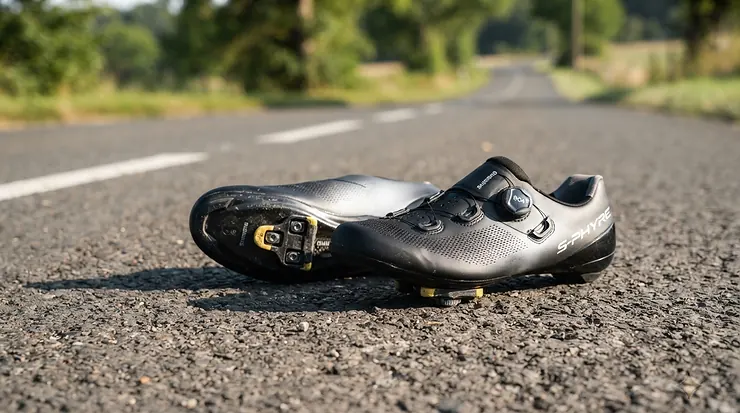
There’s a particular kind of heartbreak that comes from riding in trainers. You mash the pedals, your foot slides forward on the platform, and every ounce of effort you put in seems to leak out somewhere between your ankle and the crank. Clip in with a proper pair of budget road cycling shoes, though, and something clicks — literally and figuratively. Suddenly your pedal stroke feels connected, purposeful, almost mechanical in the best way.

The good news for anyone starting out, or anyone simply fed up with paying silly money for marginal gains, is that the budget end of the market has quietly become excellent. You no longer need to spend £300 to get a stiff sole and a secure closure system. Some of the shoes in this guide borrow design tricks — wrap-around uppers, dial closures, even carbon soles — directly from ranges costing two or three times as much.
We’ve dug through real specifications, genuine aggregated reviewer sentiment, and current UK stock listings to bring you seven road cycling shoes that punch well above their price tag. Whether you’re commuting eight miles each way, training for your first sportive, or simply upgrading from a decade-old pair of Velcro relics, there’s a sensible option here. We’ll also cover fit, cleat compatibility, and — because it comes up constantly — cheap road bike shoes that are genuinely worth buying rather than genuinely worth avoiding.
What Are Budget Road Cycling Shoes?
Budget road cycling shoes are stiff-soled, clipless-pedal-compatible shoes priced typically under £180, designed to transfer pedalling power efficiently without the carbon-heavy construction and premium closures of top-tier race shoes. They trade a little stiffness and weight saving for genuine affordability and everyday durability.
Cycling is widely regarded as excellent, low-impact exercise that’s easy to fit into a daily routine, with benefits that stretch well beyond fitness. That’s worth remembering when you’re agonising over £40 of shoe upgrade — a comfortable, efficient pedalling platform is what keeps most riders on the bike long enough to see those benefits. Read more from Cycling UK’s case for cycling on why the humble commute matters more than people think.
Quick Comparison Table
| Shoe | Sole | Closure | Price Range | Best For |
|---|---|---|---|---|
| Van Rysel RoadR 520 | Glass-fibre reinforced nylon | Velcro straps | around £45-£55 | First-time clip-in buyers |
| Shimano RC1 (SH-RC102) | Fibreglass/nylon | Triple Velcro | around £90-£110 | Wide or swelling feet |
| Boardman Carbon Cycle Shoes | Full carbon fibre | Twin ATOP dials | around £80-£100 | Stiffness on a tight budget |
| Quoc Escape Road Lace | Carbon composite | Laces | around £105-£140 | All-day endurance comfort |
| Fizik Vento Omna | R5 nylon composite | Single BOA Li2 dial | around £150-£170 | Race-ready precision fit |
| Giro Cadet | Carbon-reinforced | Single BOA L6 dial | around £145-£165 | SPD/road cleat flexibility |
| Van Rysel RCR | 100% carbon fibre | Twin rotary dials | around £160-£180 | Narrow-footed sprinters |
Looking across the table, the split isn’t really “cheap versus good” — it’s closure system versus closure system, and sole material versus sole material. If you’re on your very first pair, the Van Rysel RoadR 520 removes almost all the risk; if you’ve already decided you love clipping in and want to feel that decision pay off underfoot, the Boardman Carbon Cycle Shoes deliver a genuinely stiff platform without the genuinely stiff price tag. Buyers chasing a dial closure without crossing the £150 mark will find the sweet spot somewhere around the Quoc Escape Road Lace and Fizik Vento Omna.
💬 Found a shoe that fits your budget? Give this guide a share — it helps other riders avoid an expensive mistake too!
Top 7 Budget Road Cycling Shoes: Expert Analysis
1. Van Rysel RoadR 520 — cheapest genuine entry into clipless riding
Decathlon’s in-house cycling brand has built a reputation for stripping cost out of a product without stripping out the function, and the Van Rysel RoadR 520 is the clearest example in this list. Sitting at the very bottom of Decathlon’s road shoe range, it uses a glass-fibre reinforced nylon sole and a simple two-and-three-bolt-compatible cleat mount, meaning it’ll happily run SPD-SL, Look KEO or two-bolt SPD cleats depending on what pedals you already own — genuinely useful if you’re not sure which system to commit to yet.
The triple Velcro strap closure won’t win any awards for precision, but it does the job it needs to: a secure, adjustable wrap that tightens evenly without hot spots. Reviewers consistently note that for the price, the fit is roomier and more forgiving than pricier race-cut shoes, which suits riders with wider feet or anyone who hasn’t yet dialled in their exact cycling shoe size. This is the shoe we’d point a nervous first-time buyer towards — low financial risk, real functional benefit over trainers.
On the practical side, the sole flexes noticeably more than anything carbon-based here, so if you’re mashing hard up short, steep climbs you may feel some of that effort get absorbed rather than transferred. For steady club-run pace or a daily commute, that flex barely registers. Based on the spec comparison with every other shoe on this list, the RoadR 520 is less a compromise and more a deliberate decision to prioritise accessibility over outright stiffness.
Pros:
- ✅ Lowest price point of any shoe in this list
- ✅ Roomy, forgiving fit for wider feet
- ✅ Compatible with both 2-bolt and 3-bolt cleats
Cons:
- ❌ Noticeably flexible sole under hard efforts
- ❌ Basic Velcro closure lacks micro-adjustment
At around £45-£55, this is about as cheap road bike shoes get without dropping into “unbranded eBay special” territory, and the value verdict is straightforward: buy it, ride it, and upgrade once you know exactly what you want next.
2. Shimano RC1 (SH-RC102) — best wide-fit comfort without the premium badge
Shimano’s entry point into road shoes shares a surprising amount of DNA with its £300-plus S-PHYRE range. The Surround Wrapping upper construction — originally developed to eliminate pressure points on Shimano’s top-tier race shoes — has been carried down into the Shimano RC1, giving it a glove-like fit that’s rare to find this far down a manufacturer’s line-up.
The fibreglass/nylon sole is rated as medium-stiff rather than race-stiff, which in practice means it won’t numb your feet on long, hilly rides the way an unforgivingly rigid carbon sole sometimes can. Aggregated reviewer sentiment is consistently positive on comfort and value, with multiple UK cycling publications naming it among their top overall budget picks; the recurring criticism is that the Velcro closure system won’t last as long or adjust as finely as a Boa dial, and the insole runs a touch narrow for very wide feet.
What most buyers overlook about this model is the wider toe box relative to a “traditional” narrow race last — it’s a deliberate design choice that makes the RC1 genuinely comfortable for riders who’ve struggled with pinched toes in other budget shoes. For anyone doing long, hilly rides where comfort compounds over hours rather than minutes, that detail matters more than an extra point of sole stiffness.
Pros:
- ✅ Pro-level wrap-around fit at an entry-level price
- ✅ Wider toe box than most traditional road shoes
- ✅ Reflective detailing improves visibility on evening rides
Cons:
- ❌ Velcro straps wear out faster than a dial system
- ❌ Insole runs slightly narrow despite the roomy upper
Priced around £90-£110, the Shimano RC1 sits just above true entry-level, and the value verdict here is excellent: you’re paying a small premium over the absolute cheapest options for a fit quality that punches considerably above its price bracket.
3. Boardman Carbon Cycle Shoes — full carbon sole for less than most nylon ones cost
This is the shoe that keeps turning up in “best budget” round-ups for good reason: a genuine full-carbon-fibre sole on a shoe that regularly retails under £100 is still, even in 2026, an unusual find. Most competitors at this price rely on carbon-reinforced nylon or glass fibre, which flexes noticeably more under hard pedalling. The Boardman Carbon Cycle Shoes don’t fully match the outright rigidity of a £300 race shoe, but the difference between “some flex when climbing hard out of the saddle” and “constant flex throughout the pedal stroke” is significant, and this shoe sits much closer to the former.
The twin ATOP dial closure system is arguably the standout feature relative to price. Functionally similar to a Boa dial, ATOP dials ratchet to tighten and release with a quarter-turn, giving genuine on-the-fly micro-adjustment — a feature you’d typically expect on shoes costing 50% more. Reviewers highlight the supple synthetic leather upper and decent ventilation as further evidence that Boardman didn’t cut corners purely to hit a price point.
Here’s what to weigh before buying: sizing runs in a narrower range than some competitors, so if you’re between sizes it’s worth checking a size chart carefully or trying before you buy where possible. The most powerful riders — sprinters and out-of-the-saddle climbers — may still notice some sole flex that a full-carbon race shoe wouldn’t show, but for the vast majority of club and sportive riders, that distinction is academic.
Pros:
- ✅ Full carbon sole rarely seen under £100
- ✅ Twin ATOP dials give precise, tool-free adjustment
- ✅ Supple synthetic leather upper feels premium
Cons:
- ❌ Limited size range compared with some rivals
- ❌ Sole flexes slightly under maximum sprint effort
At around £80-£100, the Boardman Carbon Cycle Shoes represent one of the strongest value propositions in this entire guide — a stiffness upgrade most riders will actually feel, for a price most riders can actually justify.
4. Quoc Escape Road Lace — classic laces, modern carbon composite comfort
Quoc built its reputation on stylish, comfort-first cycling shoes, and the Quoc Escape Road Lace distils that philosophy into an entry-level package. It pairs a soft polyurethane leather upper — constructed from just two panels for a clean, minimal look — with a carbon composite sole that Quoc pitches deliberately as balanced rather than race-stiff.
That’s an honest bit of positioning, and it shows in the reviewer sentiment: testers consistently describe out-of-the-box comfort as a genuine highlight, with the padded heel cup and lace-up fit distributing pressure more evenly across the foot than a strap or dial system sometimes manages. Seven pairs of lace eyelets, with the top three reinforced, allow a level of granular tension adjustment that Velcro simply can’t replicate — you can loosen the forefoot slightly while keeping the ankle locked down, for instance.
The trade-off is speed of adjustment. Laces aren’t something you can tweak mid-ride the way you’d nudge a Boa dial, and racers chasing every last watt may find the carbon composite sole a little short of full-carbon rigidity when sprinting. Reviewers consistently frame this as an endurance-oriented shoe rather than a criterium racer’s tool, which lines up with how Quoc markets it. What most buyers overlook is that this positioning is a strength, not a weakness, for anyone doing long club runs or multi-hour sportives where comfort over distance matters more than raw stiffness.
Pros:
- ✅ Exceptional out-of-the-box comfort for a budget shoe
- ✅ Fine-grained lace adjustment across seven eyelets
- ✅ Understated, premium-looking two-panel upper design
Cons:
- ❌ Laces are slower to adjust mid-ride than a dial
- ❌ Carbon composite sole flexes more than full carbon
Typically priced around £105-£140 depending on the retailer and any current promotions, the Quoc Escape Road Lace is the value pick for riders who’ll spend more time on long weekend rides than on the start line of a race.
5. Fizik Vento Omna — proof a composite sole can still feel like a performance shoe
Fizik’s mid-range road shoe replaced the older R5 Overcurve and, on paper, sits in an interesting middle ground: it borrows the single, unidirectional Boa Li2 dial from the brand’s pricier models but pairs it with an R5 nylon composite outsole rather than full carbon. Fizik itself rates that sole 6 out of 10 on its internal stiffness scale, against a 10/10 for its full-carbon siblings — a useful, honest bit of transparency that helps set expectations correctly.
In practice, that translates to a shoe that feels considerably more “performance” than “budget” underfoot, without the numbing rigidity that some full-carbon race soles bring on longer rides. The polyurethane-laminated upper is well-padded, and reviewers highlight the roomy fit and set-back cleat bolt position — designed to reduce knee compression — as standout details that most competitors at this price don’t bother with. Aggregated feedback is broadly positive, with “comfort,” “looks,” and “value” cropping up repeatedly, while ventilation is flagged as merely average rather than exceptional.
The spec sheet won’t tell you this, but reviewers note the Boa dial placement and pull genuinely rivals what you’d find on shoes costing significantly more, which is arguably the single biggest reason to consider the Fizik Vento Omna over cheaper alternatives on this list. If micro-adjustable fit matters more to you than outright sole stiffness, this is where your budget is best spent.
Pros:
- ✅ Boa Li2 dial rivals systems on far pricier shoes
- ✅ Set-back cleat position reduces knee strain
- ✅ Roomy, well-padded fit suits a range of foot shapes
Cons:
- ❌ Composite sole isn’t as stiff as full carbon
- ❌ Ventilation is only average in hot weather
Expect to pay somewhere in the £150-£170 range, positioning the Fizik Vento Omna as a considered step up rather than an impulse buy — one that reviewers repeatedly suggest closes most of the performance gap to shoes costing £100 more.
6. Giro Cadet — the SPD-friendly all-rounder
Where several shoes in this guide commit fully to three-bolt SPD-SL or Look-style cleats, the Giro Cadet keeps its options open with a universal 2-bolt-and-3-bolt cleat mount. That’s a genuinely useful bit of flexibility if you’re not entirely sure yet whether you’ll stick with pure road cleats or want the option of a recessed, walkable SPD cleat for commuting or café stops.
The carbon-fibre-reinforced outsole gives a noticeably stiffer feel than the nylon-based shoes further down this list, and the single Boa L6 dial — which tightens in precise 1mm increments — is a genuine step up in adjustability from Velcro. Reviewers describe the Synchwire upper as neatly finished and secure, with laser-perforated ventilation that performs well on warmer rides. The recurring criticism, though, is sizing: multiple reviewers note the Cadet runs a little small compared with typical road shoe sizing, so ordering half a size up is a sensible precaution.
Here’s what to weigh: at the upper end of what most people would call “budget,” the Cadet is competing directly with the Fizik Vento Omna on price, and the honest analytical take is that your choice between them should come down to cleat flexibility versus outright fit comfort. If you value the option to run SPD cleats, the Cadet wins that comparison outright.
Pros:
- ✅ Universal 2-bolt and 3-bolt cleat compatibility
- ✅ Precise 1mm-increment Boa L6 dial adjustment
- ✅ Reflective heel tab adds visibility for evening rides
Cons:
- ❌ Sizing runs small — consider going up half a size
- ❌ Among the pricier shoes in this “budget” round-up
At around £145-£165, the Giro Cadet is best thought of as the flexible generalist of this list — not the cheapest, not the stiffest, but arguably the shoe with the widest range of genuine use cases.
7. Van Rysel RCR — the closest thing here to a genuine race shoe
If you’re going to stretch your budget as far as it’ll go, the Van Rysel RCR is where that stretch pays off most obviously. It’s the flagship of Decathlon’s road shoe range, built around a full-carbon-fibre sole that scores a full 12 out of 12 on Decathlon’s stiffness rating — a figure that’s rare at this price and directly comparable to shoes costing considerably more. Twin Habu-branded rotary dials, functionally and physically near-identical to Boa’s premium Li2 dials, handle closure with genuine multidirectional micro-adjustment.
Reviewer sentiment is enthusiastic about how the RCR lives up to its billing: stiff soles, comfortable uppers, and dials that feel properly premium rather than budget-adjacent. The polyurethane and polyester upper is relatively thick, with modest perforation for breathability, and additional venting is built into the sole itself via a large mid-foot cut-out. The one consistent caveat across reviews is fit — the forefoot runs narrow, which won’t suit every foot shape, so this is a shoe worth trying on rather than buying blind if you can.
What the spec sheet won’t tell you is how much of a jump this represents from the rest of the list: you’re not just buying a stiffer sole, you’re buying a genuinely race-capable shoe that happens to sit at the upper edge of a budget-conscious price bracket. Based on the spec comparison, riders training seriously or racing occasionally get disproportionately more performance per pound here than anywhere else on this list — provided the narrow fit works for your feet.
Pros:
- ✅ Full-carbon sole with a rare 12/12 stiffness rating
- ✅ Premium-feeling twin rotary dial closure
- ✅ Genuine race-shoe performance at a relative discount
Cons:
- ❌ Narrow forefoot fit won’t suit everyone
- ❌ Highest price point in this budget-focused round-up
Typically retailing around £160-£180, the Van Rysel RCR is the value verdict for anyone who’s outgrown “budget” thinking but not their budget — genuine performance, at a price still well under most flagship shoes.
Top 7 Products Comparison
| Shoe | Weight (approx.) | Stiffness Feel | Ventilation | Best For |
|---|---|---|---|---|
| Van Rysel RoadR 520 | Moderate | Flexible | Basic | First-time buyers |
| Shimano RC1 | Moderate | Medium | Good | Wide feet, comfort |
| Boardman Carbon Cycle Shoes | Slightly heavier | Stiff | Good | Value-conscious stiffness seekers |
| Quoc Escape Road Lace | Light | Medium | Moderate | Endurance and long rides |
| Fizik Vento Omna | Light | Medium-stiff | Average | Dial precision on a budget |
| Giro Cadet | Light | Stiff | Very good | SPD flexibility, commuting-to-racing crossover |
| Van Rysel RCR | Light | Very stiff | Good | Race days and hard training |
Read across the two tables together and a pattern emerges: stiffness and closure quality both climb steadily with price, but not in a straight line — the Boardman Carbon Cycle Shoes noticeably over-deliver on stiffness for their position, while the Giro Cadet over-delivers on ventilation and versatility rather than outright rigidity. Neither table tells you which shoe is “best”; they tell you which trade-off you’re making, which is a far more useful question to answer honestly before you buy.
✨ Ready to commit?
Check current pricing and stock on any of the shoes above before they sell through your size.
Practical Usage Guide: Getting the Most From Your First Weeks Clipped In
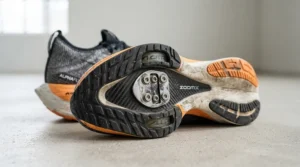
Buying budget road cycling shoes is only step one — setting them up correctly is what actually determines whether you enjoy riding in them. Start with cleat position: for most riders, the cleat should sit so the ball of your foot lines up directly over the pedal axle, with a neutral, natural rotational angle rather than forcibly toed-in or toed-out. Get this wrong and you’ll feel knee discomfort within a handful of rides, not months.
Tension is the next thing to dial in, and it trips up more new riders than anything else. Almost every clipless pedal has an adjustable release tension screw; start on the loosest setting so clipping out becomes second nature before you tighten things up for security. Practising unclipping — repeatedly, in a doorway or on grass, leaning against a wall — before you ever ride in traffic isn’t optional caution, it’s the single most effective way to avoid the embarrassing (and occasionally painful) slow-speed toppling-over that catches almost every new clipless rider at least once.
In terms of maintenance, budget shoes with Velcro or laces need little beyond an occasional wipe-down and a check that straps haven’t started fraying at the edges. Dial-closure shoes benefit from an occasional blast of compressed air around the mechanism to clear grit, since a gritty dial can start skipping teeth over time. Cleats themselves wear down with walking, so check for rounded edges every few months — a worn cleat is a common, overlooked cause of unexpected pedal disengagement mid-ride, and replacements cost a fraction of a new pair of shoes.
Real-World Scenarios: Which Shoe Suits Your Riding Life?
The commuting student, riding 6-8 miles each way across a city. Budget and versatility matter more than outright stiffness here — the Van Rysel RoadR 520 or Shimano RC1 make sense, since both tolerate the occasional walk to a lecture hall or workplace better than a stiffer, race-focused sole, and neither represents a financial disaster if it gets scuffed locking up a bike rack.
The returning cyclist getting back into weekend club runs after years away. Comfort over distance is the priority, and reviewers consistently flag the Quoc Escape Road Lace as excelling here — its even pressure distribution and generous heel cup suit longer, steadier rides better than a race-stiff carbon sole that can start to feel unforgiving after three or four hours.
The improver training seriously for their first sportive or local time trial. This rider benefits most from genuine stiffness and secure closure, making the Boardman Carbon Cycle Shoes or Van Rysel RCR the sensible picks depending on how far the budget stretches — the RCR in particular offers a stiffness-to-price ratio that’s hard to beat once you’ve decided cycling is a genuine hobby rather than a passing phase.
Buyer’s Decision Framework
If you’re buying your very first pair of clipless shoes and aren’t yet sure the whole system will suit you, choose an affordable Velcro shoe like the Van Rysel RoadR 520, because the low financial commitment matches the genuine uncertainty of a first purchase.
If wide or swelling feet have made every other shoe uncomfortable, choose the Shimano RC1, because its wrap-around Surround construction is specifically designed to eliminate the pressure points that cause that discomfort in the first place.
If you want the biggest jump in stiffness for the smallest jump in price, choose the Boardman Carbon Cycle Shoes, because a full carbon sole under £100 remains a genuine outlier in this market.
If comfort across long, multi-hour rides matters more than sprint-day rigidity, choose the Quoc Escape Road Lace, because its balanced composite sole and even lace pressure are built specifically for that use case.
If a precise, on-the-fly adjustable dial matters more to you than an absolute carbon sole, choose the Fizik Vento Omna, because its Boa Li2 dial rivals systems on considerably pricier shoes.
If you want flexibility to run SPD cleats for commuting alongside road cleats for training, choose the Giro Cadet, because its universal cleat mount is the only genuinely dual-purpose option on this list.
If you’ve decided cycling is a proper hobby and want the closest thing here to race-shoe performance, choose the Van Rysel RCR, because its 12/12 stiffness rating and premium dials outperform everything else in this price bracket.
How to Choose Budget Road Cycling Shoes
Choosing well comes down to seven practical checks, each worth a moment’s thought before you commit:
- Confirm your pedal system first. Road cleats (three-bolt, SPD-SL or Look-style) and SPD (two-bolt) systems aren’t interchangeable, so check what your pedals — or intended pedals — actually take before falling for a shoe you can’t use.
- Prioritise fit over stiffness for your first pair. A slightly softer sole you can ride in for three hours comfortably beats a rock-stiff sole that starts hurting after ninety minutes.
- Consider your closure preference honestly. Velcro is cheapest and most forgiving; dials are pricier but adjust more precisely and hold tension better over a ride.
- Check the width, not just the length. Reviewer sentiment repeatedly flags certain models — the Van Rysel RCR among them — as running narrow, so factor foot shape into your shortlist.
- Think about ventilation if you ride in warmer months. Hot, sweaty feet swell, which changes fit mid-ride and can turn a comfortable shoe uncomfortable by the halfway point.
- Match the sole stiffness to your riding style. Sprinters and hard climbers benefit most from carbon; steady-pace commuters and tourers often won’t notice the difference.
- Budget for cleats and fitting separately. Cleats, and ideally a bike shop fitting check, add a modest amount on top of the shoe price — factor that in rather than treating it as a nasty surprise.
For a deeper technical breakdown of soles, closures and cleat styles across every price bracket, BikeRadar’s road cycling shoe buying guide is a genuinely useful companion read alongside this one.
Budget Road Shoes vs Mid-Range Road Shoes
The gap between budget road shoes and mid-range road shoes isn’t as dramatic as marketing sometimes implies, but it is real, and it’s worth understanding rather than assuming. Budget road shoes — think the Van Rysel RoadR 520 or Shimano RC1 — typically use nylon or glass-fibre soles, Velcro closures, and simpler upper construction. Mid-range shoes, like the Fizik Vento Omna or Giro Cadet, introduce composite or carbon-reinforced soles and dial closures, while staying well short of flagship pricing.
The practical difference shows up in three places: stiffness, adjustability, and long-ride comfort. A stiffer sole transfers more of your pedalling force directly into forward motion rather than absorbing it as flex, which matters most during hard efforts — sprints, steep climbs, sustained time-trial-style pushing. A dial closure adjusts more precisely than Velcro and holds that adjustment more reliably over a long ride, particularly as your feet swell slightly with heat and effort. And better-constructed uppers, generally found on mid-range shoes, tend to reduce hot spots and pressure points over multi-hour rides.
For a rider doing three or four short rides a week at a moderate pace, the honest analytical take is that budget shoes deliver 80-90% of the real-world benefit for roughly half the price. For a rider training seriously, racing occasionally, or simply riding long enough that small inefficiencies compound over hours, mid-range shoes start earning their premium back through genuine comfort and performance gains. Neither is objectively “better” — they’re suited to different riding patterns, and buying based on your actual mileage rather than aspirational mileage will save most people money without costing them performance.
Common Mistakes When Buying Cheap Road Bike Shoes
The single most common mistake is buying based on price alone rather than fit — cheap road bike shoes that don’t fit your foot shape are a worse investment than a slightly pricier shoe that does, since discomfort is what actually stops people cycling regularly. Reviewers across every product in this guide flag fit issues far more often than stiffness complaints, which tells you where the real risk lies.
A second common error is ignoring cleat compatibility until after purchase. Buying a beautiful three-bolt race shoe when your pedals only take two-bolt SPD cleats is an easily avoidable, entirely common mistake — always check your pedal system before adding a shoe to your basket. A third mistake is skipping the “try before you buy” step where possible; sizing varies meaningfully between brands, and a shoe that runs true to size from one manufacturer can run a full size small from another, as reviewers repeatedly note with certain models in this guide.
Finally, many buyers underestimate how quickly cheap Velcro straps and basic soles wear compared with dial-closure, carbon-soled alternatives — not a reason to avoid budget shoes outright, but a reason to factor realistic lifespan into your value calculation rather than comparing sticker prices in isolation.
What to Expect: Real-World Performance
Specs on a page rarely translate directly into what you’ll feel on the road, so here’s the honest, practical version. A “medium-stiff” nylon sole, like Shimano rates the RC1, feels noticeably more forgiving underfoot than a full-carbon sole — comfortable on longer rides, but you’ll sense a small amount of energy being absorbed rather than transferred during hard accelerations. A “12/12 stiffness” carbon sole, by contrast, feels almost unyielding; brilliant for sprinting and climbing, but potentially fatiguing on very long, all-day rides if your feet aren’t used to it.
Dial closures feel dramatically different from Velcro in daily use, not just in adjustment precision. A quarter-turn of a Boa or ATOP dial mid-ride, to loosen slightly as your feet warm up and swell, is something you simply can’t replicate with Velcro without stopping and re-fastening entirely. Reviewers consistently note this as one of the most underrated real-world benefits of stepping up from a strap-based budget shoe.
Ventilation differences, meanwhile, matter far more in summer than most buyers anticipate when reading spec sheets in winter. A shoe rated “average” on ventilation, like the Fizik Vento Omna, will feel entirely fine on a cool spring ride and noticeably warm on a 30-degree July climb — worth weighing honestly against how and when you actually plan to ride. If you want to see how these same trade-offs play out across the wider market, road.cc’s road cycling shoe reviews cover everything from sub-£100 options to four-figure race shoes.
Entry-Level Road Cycling Shoes and Gear for Every Rider
Entry-level road cycling shoes exist on a genuine spectrum, not a single fixed tier, and matching the right one to your actual experience level matters more than most buying guides admit. Complete beginners — riders who’ve never clipped into a pedal before — are almost always better served by the most forgiving, lowest-stakes option, which is why the Van Rysel RoadR 520 repeatedly earns its place as a sensible first purchase rather than a compromise.
Riders one step further along, who’ve clipped in before but are still building confidence and mileage, tend to benefit most from a shoe like the Shimano RC1, where the comfort-first fit reduces the chance that discomfort — rather than lack of fitness — becomes the reason a ride gets cut short. For this audience, entry-level road cycling gear more broadly follows the same logic as the shoes themselves: prioritise items that remove friction (padded shorts, a comfortable saddle, a well-fitted helmet) over items that chase marginal performance gains you’re not yet fit enough to notice.
As confidence builds, the natural progression is towards stiffer soles and more precise closures — not because the beginner gear was inadequate, but because a rider’s needs genuinely change as fitness, mileage, and riding intensity increase. Treating entry-level purchases as a starting point rather than a permanent ceiling tends to produce a much happier, longer-lasting relationship with the sport.
Cost-Effective Upgrades: Long-Term Cost & Maintenance
Thinking about total cost of ownership, rather than just the shoe’s price tag, changes the calculation meaningfully. A £45 pair of Velcro shoes replaced every two seasons because the straps have worn out costs roughly the same, over four years, as a single £150 dial-closure pair that lasts the full period — the cheaper option isn’t automatically the more cost-effective one once you factor in replacement cycles.
Cleats are the recurring cost that catches new riders out. Expect to replace them every 3,000-5,000 miles depending on how much walking you do in them, at a modest cost that’s genuinely trivial compared with shoe replacement — but only if you actually check and replace them proactively rather than waiting for them to fail mid-ride. Under the UK’s Cycle to Work scheme, cyclists’ safety equipment loaned to employees as a tax-free benefit doesn’t require prior HMRC approval, which for some employed riders can make upgrading footwear alongside a bike purchase genuinely more cost-effective — worth checking with your employer if cost-effective upgrades are a priority, via the Cycle to Work scheme overview.
Beyond cleats, the most cost-effective single upgrade for most budget-shoe owners isn’t a new pair of shoes at all — it’s a proper insole. A supportive, correctly sized insole can meaningfully improve comfort and support in an otherwise basic shoe for a fraction of the price of upgrading the whole shoe, and it’s a genuinely underrated way to extend the useful life of an entry-level pair.
Value Cycling Footwear: Features That Actually Matter (And Those That Don’t)
Not every spec on a product page translates into a meaningful real-world difference, and knowing which is which is the core of buying genuinely value cycling footwear rather than just cheap cycling footwear. Sole stiffness matters — it’s one of the few specs that translates almost directly into pedalling efficiency, particularly for harder efforts. Closure precision matters too, especially over multi-hour rides where the ability to fine-tune tension as your feet change shape genuinely improves comfort.
What matters far less than marketing suggests is outright weight. A 40-50 gram difference between two shoes — the sort of gap you’ll see between most models in this guide — is essentially imperceptible to anyone who isn’t racing at a genuinely competitive level. Similarly, exotic colourways and branding partnerships add cost without adding function; a shoe in a striking limited colourway performs identically to the same shoe in plain black.
Reviewers consistently note, and it’s worth repeating here, that fit consistently outperforms every other spec in terms of real-world impact on comfort and performance. A shoe with a merely adequate sole that fits your foot shape perfectly will serve you better, day to day, than a shoe with an exceptional sole that pinches your toes or slips at the heel. If you take one piece of expert commentary from this entire guide, let it be that one: buy for fit first, then let the rest of the spec sheet break any ties.
Frequently Asked Questions
❓ Do budget road cycling shoes work with any pedals?
❓ Are cheap road bike shoes actually worth buying?
❓ What's the real difference between budget road shoes and mid-range road shoes?
❓ How long do entry-level road cycling shoes last?
❓ What's the most cost-effective upgrade from cheap cycling shoes?
Conclusion
There’s no single “best” budget road cycling shoe, and honestly, anyone claiming otherwise hasn’t looked closely enough at how differently riders actually use their bikes. What there is, is a genuinely strong crop of options in 2026 that make the old assumption — that budget shoes mean budget performance — increasingly outdated.
If you’re buying your first pair, the Van Rysel RoadR 520 removes financial risk while still delivering the real, tangible benefit of clipping in for the first time. If comfort across wide feet is your priority, the Shimano RC1 earns its reputation. If you want the single biggest stiffness upgrade per pound spent, the Boardman Carbon Cycle Shoes are hard to beat, while the Quoc Escape Road Lace, Fizik Vento Omna, Giro Cadet and Van Rysel RCR each carve out their own sensible niche further up the price bracket.
Whichever you choose, prioritise fit over spec-sheet bragging rights, check your cleat compatibility before you click buy, and remember that the best shoe is ultimately the one that gets you out riding regularly — not the one with the most impressive stiffness rating sitting unused in a cupboard.
✨ Don’t Miss These Exclusive Deals!
🔍 Take your cycling setup to the next level with any of the seven picks above. Click through to check current pricing and availability before your size sells out — the right pair genuinely transforms how every ride feels!
Recommended for You
- Stiff Carbon Sole Road Shoes for Racing: 7 Best Picks (2026)
- Carbon Sole Road Cycling Shoes: 7 Best UK Picks (2026)
- Budget BOA Road Shoes: 7 Brilliant Picks for 2026
Disclaimer: This article contains affiliate links. As an Amazon Associate, I earn from qualifying purchases. If you purchase products through these links, we may earn a small commission at no additional cost to you.
✨ Found this helpful? Share it with your friends! 💬🤗
