In This Article
There’s a particular kind of dread that comes with standing on a start line in shoes that don’t fit right. Your toes are already curling, the BOA dial’s dug a groove into your instep, and the race hasn’t even started. SPD-SL shoes for racing exist to remove that entire problem, freeing you to think about the corner ahead rather than the hot spot under your fifth metatarsal.
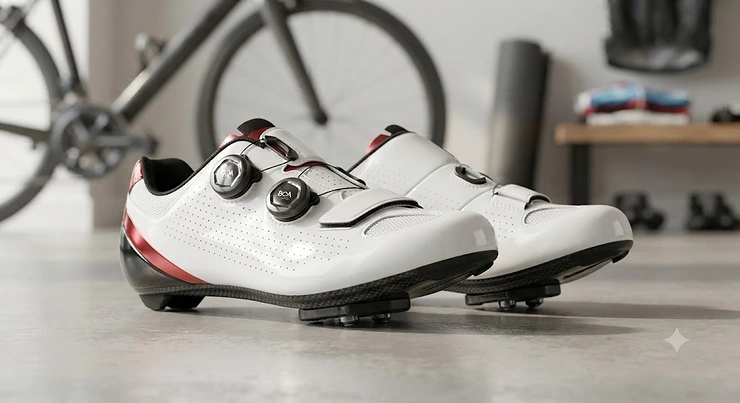
SPD-SL is Shimano’s three-bolt road cleat system, and it’s the dominant standard across the WorldTour peloton for good reason: a wide, stable cleat interface, rigid carbon soles, and closure systems built to stay locked down through an hour of full-gas racing. But “SPD-SL compatible” covers an enormous range of shoes, from £110 carbon-soled bargains to £430 Italian flagships, and the right one for a crit racer chasing sprint points is not necessarily the right one for someone doing their first road race.
This guide breaks down seven genuine, currently available SPD-SL shoes for racing, drawn from real product testing and aggregated review sentiment rather than marketing copy. We’ll cover carbon sole stiffness, aerodynamic shoe design, what to do if you’ve got wide feet, and where the genuinely good value SPD-SL shoes sit against the four-figure flagships. Prices below are shown as ranges rather than fixed figures, since retailer pricing shifts constantly — always check current price before buying.
Quick Comparison Table
Before the deep dive, here’s the short version for anyone short on time before their next race entry closes.
| Shoe | Best For | Price Range | Sole Stiffness |
|---|---|---|---|
| Shimano S-Phyre RC903 | Best overall race shoe | £330-£360 | Very high (12/12) |
| Sidi Shot 2S | Criterium racing, longevity | £400-£430 | Very high (10/10) |
| Fizik Vento Infinito Carbon 2 Wide | Wide feet | £310-£340 | High (10/10) |
| Van Rysel RCR | Best value race-ready shoe | £170-£190 | Very high (12/12) |
| dhb Aeron Carbon Road Shoe Dial | Budget entry point | £110-£130 | Moderate-high |
Looking across this table, the pattern is clear: sole stiffness at the top end has largely plateaued, which means the meaningful differences between a £350 shoe and a £180 shoe increasingly come down to closure precision, upper construction, and fit rather than raw rigidity. That’s genuinely useful news if your race budget is tighter than your training block. Van Rysel RCR and Shimano S-Phyre RC903 both claim maximum stiffness ratings on their respective brand scales, yet sit roughly £170 apart — a gap that mostly buys you lighter materials, replaceable parts, and marginal aerodynamic refinement rather than a harder-hitting pedal stroke.
💬 Already got a favourite? Scroll down to see how it stacks up against the full field below.🤗
Top 7 SPD-SL Shoes for Racing: Expert Analysis
We’ve deliberately spread this list across budget, mid-range and premium tiers, because “best” depends heavily on what you’re racing, how often, and what your feet actually need.
1. Shimano S-Phyre RC903 — best overall race shoe for most riders
The Shimano S-Phyre RC903 sits at the top of Shimano’s road range, and the standout feature is its dual BOA Li2 dial closure paired with an anti-twist heel cup built specifically for hard accelerations. Key specs include a full carbon fibre outsole with a claimed stiffness rating of 12 out of 12 on Shimano’s scale, a widened forefoot compared with the outgoing RC902, and a 3-bolt pattern with 11mm of fore-aft cleat adjustment compatible with SPD-SL, Look, Time and Speedplay road cleats. In practice, that widened toe box addresses the most common complaint about the previous generation, which ran narrow enough to cause discomfort on longer criteriums. Based on the spec comparison with rival flagships, the RC903 earns its place through consistency rather than any single dramatic feature: it’s the shoe you’ll see on the largest share of WorldTour feet, which speaks to reliability under genuine race stress more than any single number on a spec sheet. Reviewers consistently report that the standard width still runs on the narrower side despite the update, so riders between sizes are advised to try the wide-fit version before committing. Aggregated customer sentiment highlights the fit and comfort as strong points, with price being the most polarising factor among owners.
Pros:
- ✅ Dual BOA Li2 dials for precise, on-the-fly micro-adjustment
- ✅ Wider forefoot volume than the outgoing RC902 model
- ✅ Excellent heel retention during hard, out-of-the-saddle efforts
Cons:
- ❌ Standard width still runs narrow for some foot shapes
- ❌ Premium price draws mixed reactions in customer reviews
At around £330-£360, the Shimano S-Phyre RC903 isn’t cheap, but as the shoe most widely raced at the sport’s highest level, it represents a defensible top-tier investment for anyone racing regularly enough to justify it.
2. Sidi Shot 2S — stiffest sole and best built for criterium punishment
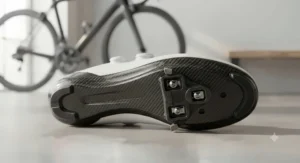
The Sidi Shot 2S leads with its C-Boost SRS carbon sole, an Italian-engineered platform shaped specifically around the metatarsal area to maximise power transfer during hard efforts. Key specs include a sole stiffness rating of 10 on Sidi’s scale, dual Tecno-3 dials mounted on the tongue rather than the sides for a more aerodynamic profile, and a fully replaceable parts system covering the dials, heel unit and sole inserts. What most buyers overlook about this model is that the replaceable-parts philosophy is arguably more valuable long-term than the raw stiffness figure, since it means a shoe costing several hundred pounds can be kept race-ready for years rather than replaced wholesale when a buckle snaps. This is a shoe built for criterium racing specifically: the tongue-mounted dials reduce drag in the sprint position, and the reinforced heel cup resists twist during the repeated hard accelerations a crit demands. Aggregated review sentiment is consistently positive on stiffness and craftsmanship, with the most common criticism being a narrower toe box than competitors at a similar price, meaning riders with wider feet may need to size up or consider Sidi’s wider “Mega” fit heritage models instead.
Pros:
- ✅ Exceptionally stiff C-Boost SRS carbon sole built for hard efforts
- ✅ Replaceable heel, toe and dial parts extend usable lifespan for years
- ✅ Tongue-mounted dial position aids aerodynamics in the sprint position
Cons:
- ❌ Narrower toe box than several rivals at the same price
- ❌ One of the most expensive road shoes currently on the market
Expect to pay in the £400-£430 range, which places the Sidi Shot 2S firmly in flagship territory — justified mainly for riders who race often enough that the repairable parts system pays for itself over several seasons.
3. Shimano RC703 — the RC903’s little sibling and genuine mid-range standout
The Shimano RC703 leads with trickle-down S-Phyre technology at roughly £130 less than the flagship, and that alone makes it one of the shrewdest mid-range picks in this list. Key specs include a carbon-reinforced sole rated 10 out of 12 for stiffness (barely distinguishable from the RC903 in practice, according to independent testers), a single BOA dial plus a Velcro strap closure, and a comprehensive size range that includes a dedicated wide-fit version. On paper, the ten-point gap in stiffness against the RC903 sounds significant, but reviewers who’ve tested both back-to-back describe the real-world difference as negligible for anyone outside a laboratory setting. What the spec sheet won’t tell you is that new pairs can present a pinch point on the tongue’s upper edge until the upper material softens with wear, something several testers experienced during their first few rides before the shoe settled in. Reviewers consistently note that the value proposition here is hard to beat: you’re getting flagship-adjacent stiffness and retention with the option of a proper wide fit, for genuinely mid-range money.
Pros:
- ✅ Stiffness rating close enough to the RC903 to matter little in practice
- ✅ Dedicated wide-fit version available alongside standard sizing
- ✅ Comprehensive size range spanning narrow to wide feet
Cons:
- ❌ New pairs can pinch at the tongue until the upper breaks in
- ❌ Ventilation lags noticeably behind the priciest shoes on this list
At around £200-£230, the Shimano RC703 is arguably the smartest single purchase in this entire guide for riders who want race-day confidence without flagship pricing.
4. Fizik Vento Infinito Carbon 2 Wide — the dedicated pick for wide feet
The Fizik Vento Infinito Carbon 2 Wide leads with something genuinely rare in performance road shoes: a wide last built from the ground up, rather than a standard shoe with a stretchier upper bolted on. Key specs include an R2 unidirectional carbon sole rated 10/10 for stiffness, dual BOA Li2 dials using Fizik’s “Volume Control” system where the lower dial manages forefoot volume independently from the upper dial’s retention, and extra width added through both the forefoot and midfoot while the heel cup stays unchanged. Here’s what to weigh: most brands solve wide feet by simply loosening the upper, which leaves the edges of a wider foot hanging over an unsupportive standard-width plate. Fizik’s approach widens the actual sole plate too, so wider-footed riders get proper structural support rather than just more room. Reviewers consistently praise this as the standout wide-fit option on the market, with the trade-off being a single colourway and a narrower range of sizes than the standard-width model. Aggregated feedback also flags that narrow-footed riders shouldn’t be tempted by the extra room here — the standard Vento Infinito Carbon 2 remains the better fit for them.
Pros:
- ✅ Genuinely wider sole plate, not just a stretched standard upper
- ✅ Independent forefoot and retention dial control via Volume Control system
- ✅ Full carbon R2 sole rated 10/10 for stiffness despite the extra room
Cons:
- ❌ Available in a single colourway compared with three for the standard fit
- ❌ Not the right choice for narrow or low-volume feet
Priced around £310-£340, the Fizik Vento Infinito Carbon 2 Wide is the clearest recommendation in this guide for anyone who has spent years squeezing narrow-last race shoes onto broader feet.
5. Specialized Torch 3.0 — S-Works looks and roominess without S-Works pricing
The Specialized Torch 3.0 leads by borrowing the asymmetric closure layout and overall silhouette of the flagship S-Works Torch at a fraction of the price. Key specs include a unidirectional carbon sole rated 8.5 out of 15 on Specialized’s internal scale, twin Boa dials for closure, and an expansive 36-49 size range across four colourways, though without half sizes. Based on the spec comparison, the stiffness downgrade compared with the S-Works range is real but, according to testers who’ve ridden both, not something you’ll notice mid-effort; what you will notice is the extra comfort the slightly softer sole and roomier last provide over a long crit season. What most buyers overlook is that Specialized’s Body Geometry fit data, gathered from decades of foot scanning, underpins this shoe just as much as the £450 S-Works version — you’re paying less mainly for marginal weight and stiffness, not for a worse-informed design. Reviewers consistently describe the fit as noticeably roomy in the forefoot, making this a sensible option for riders who found the narrower premium shoes in this list uncomfortable but don’t need a dedicated wide model.
Pros:
- ✅ Shares the S-Works Torch’s asymmetric closure and accommodating last
- ✅ Roomy forefoot fit without needing a dedicated wide-fit purchase
- ✅ Wide 36-49 size range across four colourways
Cons:
- ❌ Noticeably heavier than the range-topping S-Works carbon soles
- ❌ No half sizes available, unlike some direct competitors
At roughly £170-£200, the Specialized Torch 3.0 rewards riders chasing genuine comfort across a full race season over the last few grams of sole stiffness.
6. Van Rysel RCR — the best value SPD-SL shoe genuinely raced by pros
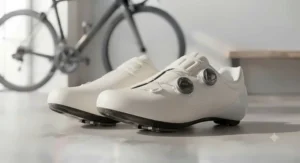
The Van Rysel RCR leads with a full carbon sole rated 12/12 for stiffness on Van Rysel’s own scale, worn in the WorldTour by riders on the Decathlon AG2R La Mondiale team, at a price that undercuts most rivals here by well over £100. Key specs include dual habu Li2-style rotary dials functionally identical to Boa’s system, a claimed weight of around 290-310g per shoe in a size 43, and toe and midfoot ventilation channels. On paper, a stiffness score matching the £350+ flagships sounds almost too good to be true, and testers who’ve compared it directly against pricier carbon soles confirm the gap in real-world stiffness is small enough to barely register during hard efforts. What the spec sheet won’t tell you is that the last runs long and narrow, so riders with average-to-wide feet should try before buying rather than ordering online blind, particularly given Decathlon’s comparatively strict returns policy on footwear. Aggregated reviewer sentiment is emphatically positive on value, with several independent testers naming it their top pick specifically for cost-conscious racers who still want a genuinely race-calibre shoe underfoot.
Pros:
- ✅ Full carbon sole rated 12/12 for stiffness at a disruptive price point
- ✅ Habu Li2-style rotary dials perform on par with premium alternatives
- ✅ Raced at WorldTour level, lending genuine race-floor credibility
Cons:
- ❌ Narrow, long-running last unsuited to wider feet
- ❌ Limited in-store availability makes fit-testing before buying trickier
Around £170-£190, the Van Rysel RCR is the standout answer for anyone searching specifically for value SPD-SL shoes that don’t feel like a compromise on race day.
7. dhb Aeron Carbon Road Shoe Dial — the genuine budget entry point
The dhb Aeron Carbon Road Shoe Dial leads with something almost unheard of at its price bracket: a full carbon fibre sole with a visible 3K weave top layer, on a shoe that typically retails well under £150. Key specs include a single Atop dial closure paired with two Velcro straps, a flat, neutral footbed designed to accept aftermarket insoles easily, and three ventilation ports built into the sole itself. Here’s what to weigh: the carbon sole here isn’t quite as rigid as the flagship shoes above it in this list, but for anyone stepping up from an entry-level nylon-soled shoe, the jump in power transfer is the single biggest upgrade available at this price. Reviewers consistently note that the flat footbed is a genuine strength for riders who use custom orthotics or high-arch inserts, since there’s no moulded arch shape to fight against. Aggregated feedback also flags that sizing runs slightly generous, and that ventilation is the most commonly cited weak point in warmer conditions, alongside a non-replaceable heel bumper that will eventually need the whole shoe replacing rather than a simple part swap.
Pros:
- ✅ Full carbon fibre sole rare at this end of the market
- ✅ Flat, neutral footbed suits riders using custom insoles
- ✅ Simple single-dial closure keeps adjustment straightforward on race day
Cons:
- ❌ Ventilation is limited in hot weather compared with pricier rivals
- ❌ Heel bumper isn’t replaceable once it wears down
At around £110-£130, the dhb Aeron Carbon Road Shoe Dial remains one of the easiest recommendations in this guide for anyone racing on a genuinely tight budget without wanting to give up carbon-soled stiffness entirely.
Top 7 Products: Full Comparison
| Shoe | Price Range | Closure | Sole Stiffness | Wide Fit Available | Best For |
|---|---|---|---|---|---|
| Shimano S-Phyre RC903 | £330-£360 | Dual BOA Li2 | 12/12 | Yes | Best overall race shoe |
| Sidi Shot 2S | £400-£430 | Dual Tecno-3 | 10/10 | No (standard fit) | Criterium racing, longevity |
| Shimano RC703 | £200-£230 | 1 BOA + Velcro | 10/12 | Yes | Mid-range value |
| Fizik Vento Infinito Carbon 2 Wide | £310-£340 | Dual BOA Li2 | 10/10 | Yes (dedicated last) | Wide feet |
| Specialized Torch 3.0 | £170-£200 | Dual Boa | 8.5/15 | Roomy standard fit | Comfort over a race season |
| Van Rysel RCR | £170-£190 | Dual habu Li2 | 12/12 | No (narrow last) | Best value race shoe |
| dhb Aeron Carbon Road Shoe Dial | £110-£130 | Single Atop dial | Moderate-high | Generous standard fit | Budget entry point |
Reading across this table, the most useful takeaway is that stiffness ratings cluster tightly at the top of the market, while price spreads by over £300 across the same performance bracket. Riders on a budget should note that the Van Rysel RCR and dhb Aeron Carbon Road Shoe Dial both deliver genuine carbon-soled performance well below flagship pricing, while anyone with wider feet is better served looking at the Fizik Vento Infinito Carbon 2 Wide or Shimano RC703 than fighting a narrow last from Sidi or Van Rysel.
✨ Ready to Get Race-Day Ready?
🔍 Compare current prices on any of these seven SPD-SL race shoes before your next entry deadline. Whether you’re chasing a criterium podium or just want a shoe that won’t distract you at 40kph, the right pair is the cheapest performance upgrade you’ll make all season.
Practical Usage Guide: Setting Up and Breaking In Your SPD-SL Shoes
Getting a new pair of race shoes on the bike properly takes more than just clipping in and riding off. Start by fitting cleats with the ball of your foot roughly over the pedal spindle, using the fore-aft adjustment range most SPD-SL soles provide (typically 5-20mm depending on the model) to fine-tune this once you’ve ridden a few sessions. Most riders benefit from setting cleats slightly further back than instinct suggests, which reduces calf strain over longer efforts — a common first-30-days mistake is leaving factory-set cleat position unchanged without checking it suits your own pedalling style.
Breaking in stiffer uppers, particularly on shoes like the Sidi Shot 2S or Shimano S-Phyre RC903, is worth doing on shorter rides before race day rather than debuting a brand-new pair in competition. Synthetic microfibre uppers typically soften and mould to your foot shape within two to four rides; leather-free constructions on shoes such as the Shimano RC703 can present pressure points initially that resolve as the material relaxes.
For maintenance, wipe soles after wet rides to prevent grit embedding in cleat bolt recesses, check BOA or Atop dial tension monthly since cables can loosen with race-day vibration, and inspect cleats for wear every few months — a worn cleat increases the chance of an unexpected disengagement mid-sprint, which is exactly the moment you don’t want it. Riders using replaceable-part shoes like the Sidi range should budget for periodic heel and toe insert replacement rather than waiting until they fail completely.
Real-World Scenario: Which Rider Are You?
Consider three different racers. The first is a 24-year-old club rider doing weekly criteriums on a modest budget, racing twice a week through the summer season and needing durability more than marginal watts. For this profile, the Van Rysel RCR or dhb Aeron Carbon Road Shoe Dial make far more sense than a flagship shoe, since the difference in race-day performance is marginal but the price difference easily funds several months of race entries instead.
The second is a Cat 2 racer training 10+ hours weekly and targeting regional podiums, for whom the Shimano S-Phyre RC903 or Sidi Shot 2S represent a defensible investment — the fit precision and proven race pedigree matter more when marginal gains genuinely separate the front group from the rest.
The third rider has a wider forefoot and has struggled with numb toes in every narrow-last shoe they’ve tried. For this rider specifically, the Fizik Vento Infinito Carbon 2 Wide or Shimano RC703 wide-fit option solve a problem that no amount of extra stiffness elsewhere would fix, and they should prioritise fit over any spec-sheet number.
What is SPD-SL?
SPD-SL is Shimano’s three-bolt clipless road cycling pedal and cleat system, designed for maximum power transfer and stability during road racing. It uses a wide plastic cleat that mounts to a stiff-soled shoe, engaging with a single-sided pedal via a spring-loaded rear latch, distinct from Shimano’s smaller two-bolt SPD system used for mountain biking and commuting.
The system launched in 2002 and built its reputation on stability, ease of entry, and a wide base of cleat support, following on from Shimano’s original two-bolt Pedaling Dynamics system released back in 1990 for off-road use. You can read more on the system’s origins on Wikipedia’s overview of Shimano Pedaling Dynamics.
How to Choose SPD-SL Shoes for Racing
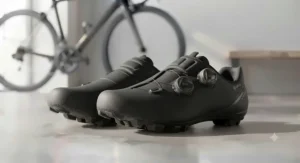
- Establish your foot width first. No amount of stiffness or closure sophistication compensates for a shoe that’s the wrong shape for your foot; try shoes on if at all possible before committing to online-only brands.
- Match stiffness expectations to reality. University research suggests sole stiffness matters less than marketing implies above a moderate threshold, so don’t overspend chasing a stiffness number alone.
- Prioritise closure precision for racing. Dual BOA or equivalent dial systems allow on-the-fly micro-adjustment mid-race, which matters more in a crit than in a sportive.
- Consider replaceable parts for frequent racers. Shoes like the Sidi range let you replace worn dials and heel units rather than the whole shoe, which changes the long-term cost picture.
- Set a realistic budget band. Genuine value SPD-SL shoes exist well below flagship pricing; decide whether you’re racing often enough to justify the jump.
- Check cleat compatibility and adjustment range. Confirm the sole accepts standard 3-bolt SPD-SL cleats and offers enough fore-aft range for your preferred cleat position.
- Factor in ventilation for your climate and race length. Longer, hotter crits reward better airflow; short, cool-weather races make this less of a priority.
Carbon Sole Stiffness Explained: What the Numbers Actually Mean
Every brand publishes its own stiffness rating, and none of these scales are directly comparable between manufacturers, which makes shopping by number alone unreliable. What most buyers overlook is that the picture is more nuanced than “stiffer is always faster.” Researchers at the University of Colorado Boulder measured maximal sprint power output across shoes with soles ranging from soft TPU up to rigid nylon, and their peer-reviewed findings, published in Footwear Science, found that power output only decreased moderately below a sole stiffness of roughly 200 N·m/rad, with maximal one-second crank power dropping just over 3% even at the softest tested stiffness.
That research helps explain why testers comparing mid-range shoes like the Shimano RC703 against the flagship Shimano S-Phyre RC903 consistently report the practical difference as small. The full study, available via the University of Colorado Boulder’s research repository, suggests the biomechanics of pedalling mean the sole barely flexes at the point of power transfer regardless of published stiffness figures, since force applies through the ball of the foot rather than across the whole plate. In practice, this means riders shopping on a budget shouldn’t feel they’re sacrificing meaningful sprint power by choosing the Van Rysel RCR or dhb Aeron Carbon Road Shoe Dial over a four-figure flagship — the closure system anchoring your foot to that stiff point likely matters more than the last few points on a stiffness scale.
Aerodynamic Shoe Design: What Actually Cuts Watts
Shoe aerodynamics gets less attention than helmets or skinsuits, but at racing speeds the feet move through more disturbed air than almost any other part of the body, given how much they move relative to the frame. Several shoes on this list address this differently: the Sidi Shot 2S relocates its closure dials to the tongue specifically to reduce drag in the sprint position, while several dimpled or seamless-upper designs across the market claim golf-ball-style boundary layer benefits, though brands rarely publish independent wind tunnel data to back these claims up.
Based on the spec comparison across this list, the more reliably useful aerodynamic feature is simply a snug, low-volume upper that doesn’t billow or flap at speed — which is one reason the narrower lasts on the Van Rysel RCR and Sidi Shot 2S are popular among criterium racers chasing every possible edge in a fast, technical bunch sprint. Riders with wider feet shouldn’t sacrifice fit for a marginal aero claim; a shoe that doesn’t fit properly costs you more in lost power and comfort than any aerodynamic upper saves.
SPD-SL Shoes for Wide Feet
Wide feet are one of the most common reasons riders end up in the wrong race shoe, since most flagship lasts are built around a narrower “average” foot shape and simply stretched for wide-fit variants. The Fizik Vento Infinito Carbon 2 Wide stands out here because Fizik widened the actual sole plate and midfoot, not just the upper material, giving wider feet proper structural support rather than room without a foundation underneath.
The Shimano RC703 and Shimano S-Phyre RC903 both offer dedicated wide-fit versions across a comprehensive size range, making Shimano a sensible starting point for wide-footed racers who want flagship-adjacent performance without gambling on a single specialist brand. By contrast, the Sidi Shot 2S and Van Rysel RCR both run narrow, and reviewers consistently flag this as their main limitation — wide-footed riders should try before buying rather than assuming a standard fit will stretch comfortably over a season of racing.
Value SPD-SL Shoes: Getting Race Performance Without the Race-Team Price
The gap between “affordable” and “compromised” has narrowed considerably in recent years, largely thanks to direct-to-consumer brands manufacturing their own carbon soles rather than licensing designs from established players. The Van Rysel RCR is the clearest example: a full carbon sole rated at the top of its stiffness scale, genuine WorldTour usage, and a price roughly half that of comparable flagship shoes.
The dhb Aeron Carbon Road Shoe Dial occupies a different value tier again, offering a genuine carbon sole for well under £150 where most competitors at that price point use fibreglass or reinforced nylon instead. Reviewers consistently note that both shoes carry real trade-offs — narrower fit on the Van Rysel, weaker ventilation on the dhb — but neither compromise touches the core job of transferring power efficiently to the pedal, which remains the primary reason to buy a stiff-soled race shoe in the first place.
Criterium Racing Gear: What Matters Beyond the Shoes
Criterium racing places specific demands that longer road races don’t: repeated hard accelerations out of tight corners, sustained high cadence, and races run to a set time rather than distance. Circuit races under British Cycling regulations run for a minimum of 50 minutes and up to 90, meaning your feet spend the entire race under sustained load with almost no coasting recovery. You can check current category and event rules directly via British Cycling’s road categories and classifications guide.
For this specific discipline, closure security matters more than in a long, steady road race — a dial that loosens mid-crit is far harder to fix safely in a tight, fast bunch than on an open road. Shoes with dual dial closures, such as the Sidi Shot 2S, Shimano S-Phyre RC903 and Van Rysel RCR, all suit this demand well. Riders new to criterium racing should also budget for a spare set of cleats, since the constant clipping in and out at race starts wears cleats faster than steady-state road riding.
Common Mistakes When Buying SPD-SL Racing Shoes
The most frequent mistake is buying based on a brand’s stiffness rating alone, without accounting for the fact that these scales aren’t standardised across manufacturers and, per independent research, matter less than marketing suggests once you’re above a moderate stiffness threshold. A second common error is ordering a narrow-lasted premium shoe online without trying it, particularly with brands like Sidi or Van Rysel that run notably narrow — a shoe that pinches will cost you more in discomfort over a race season than the money saved skipping a proper fitting.
A third mistake is ignoring cleat float and fore-aft adjustment range, both of which affect knee tracking and comfort over repeated hard efforts; a shoe with limited adjustment can force an uncomfortable cleat position regardless of how well the shoe otherwise fits. Finally, many riders underestimate ventilation needs, buying a race shoe built for cooler climates and then struggling in summer criteriums — something worth checking against your typical race calendar before purchase.
Long-Term Cost & Maintenance
Total cost of ownership varies significantly across this list. The Sidi Shot 2S‘s replaceable dials, heel unit and sole inserts mean a £400+ purchase can realistically last several race seasons with periodic part replacement rather than a full shoe replacement, which changes its cost-per-year calculation considerably compared with the sticker price alone. By contrast, the dhb Aeron Carbon Road Shoe Dial‘s non-replaceable heel bumper means the whole shoe eventually needs replacing once that component wears through, though at a purchase price low enough that this matters less.
Cleats themselves are a recurring cost across every shoe on this list, typically needing replacement every 3,000-5,000km depending on how often you walk in them off the bike. Riders should also factor in that carbon soles, while extremely durable structurally, can still scuff and wear at contact points; shoes with replaceable heel and toe protection, like the Sidi range, will retain resale value and usability longer than shoes without this feature.
Features That Actually Matter (And Those That Don’t)
Closure system precision matters — the difference between a dial that lets you micro-adjust mid-race and one that only offers coarse steps is genuinely felt during a hard effort. Fit and last shape matter enormously, arguably more than any other single factor on this list, since a shoe that doesn’t suit your foot shape undermines every other feature. Cleat adjustment range matters for anyone with specific biomechanical needs or an established bike fit.
What matters considerably less than marketing suggests: marginal weight differences between top-tier shoes, which rarely exceed 20-30g per shoe and have negligible real-world effect at racing speeds; and stiffness ratings beyond a moderate threshold, per the University of Colorado Boulder research already covered. Aerodynamic upper claims also deserve scepticism absent independent wind tunnel verification, since brands rarely publish comparative data to support them.
Frequently Asked Questions
❓ What's the difference between SPD and SPD-SL shoes?
❓ Do I need stiff carbon soles to race criteriums?
❓ Are wide-fit SPD-SL shoes as stiff as standard-fit models?
❓ How much should I budget for SPD-SL racing shoes?
❓ How often should I replace SPD-SL cleats?
Conclusion
Choosing SPD-SL shoes for racing ultimately comes down to matching real needs to real products, rather than chasing the highest stiffness number on a spec sheet. For most club-level racers, the Shimano RC703 or Van Rysel RCR deliver flagship-adjacent performance at a fraction of the outlay, while riders racing seriously enough to justify the investment will find genuine value in the Shimano S-Phyre RC903 or Sidi Shot 2S‘s proven race pedigree and repairable construction.
Anyone with wider feet should prioritise the Fizik Vento Infinito Carbon 2 Wide or a Shimano wide-fit option over squeezing into a narrower flagship, since fit consistently outweighs marginal stiffness gains in every piece of independent research covered above. And if budget is the primary constraint, the dhb Aeron Carbon Road Shoe Dial proves that a genuine carbon sole doesn’t have to come with a flagship price tag. Whichever you choose, check current prices before buying, since retailer pricing on all seven shoes shifts regularly throughout the season.
Recommended for You
- Best SPD-SL Shoes 2026: 7 Brilliant Road Cleats Rated
- 7 Best Budget Clipless Road Shoes 2026: Ride Further for Less
- Clipless Road Cycling Shoes: 7 Best Picks for 2026 (Ride Faster)
Disclaimer: This article contains affiliate links. As an Amazon Associate, I earn from qualifying purchases. If you purchase products through these links, we may earn a small commission at no additional cost to you.
✨ Found this helpful? Share it with your friends! 💬🤗
