
In This Article
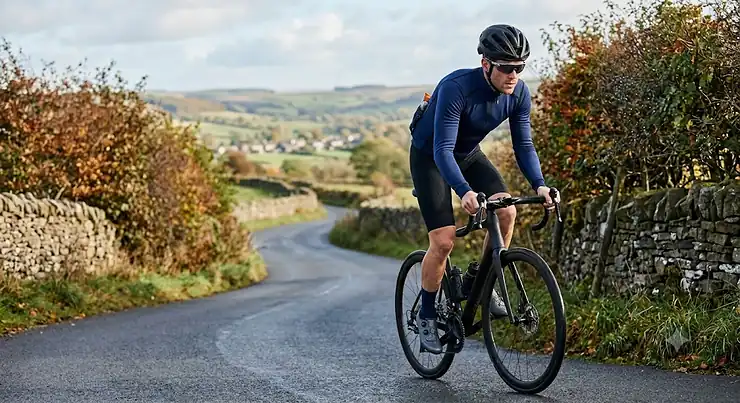
A long sleeve cycling jersey is a fitted, technical top with full-length sleeves, designed to keep a rider warm and dry once the mercury drops below the comfortable shorts-and-short-sleeves zone. Typically made from brushed “Roubaix” fabric or merino blends, it bridges the gap between a summer jersey and a full winter jacket.

If you’ve ever set off on a ride in what felt like reasonable autumn sunshine, only to be shivering by the second climb, you already understand the problem this piece of kit solves. Britain’s weather has a talent for changing its mind mid-ride, and a properly fitted, fleece-backed jersey is often the difference between an enjoyable outing and a miserable slog home. That changeable climate is exactly why the UK’s autumn and shoulder-season riding calendar leans so heavily on this one garment — Met Office data shows just how variable British daytime temperatures can be within a single week, which is precisely the kind of unpredictability a good long sleeve cycling jersey is built to absorb.
This guide cuts through the marketing fluff. We’ve pulled together real product specs, aggregated review sentiment from trusted cycling publications, and honest comparative analysis to help you pick a jersey that actually suits your riding — not just the one with the flashiest branding. Whether you’re commuting through drizzle, chasing three-season versatility, or hunting for a genuinely wind resistant jersey for exposed routes, you’ll find a properly reasoned recommendation below, plus practical guidance on layering, fit, care and long-term value. We’ll also flag where prices sit (in ranges, since they shift constantly) and who each jersey genuinely suits, rather than who the marketing department thinks it suits.
Quick heads-up: some links in this article are Amazon affiliate links, meaning we may earn a small commission if you buy through them, at no extra cost to you. More on that in the disclaimer below.
Quick Comparison Table
For readers short on time, here’s the shape of the long sleeve cycling jersey market at a glance before we dig into the full analysis.
| Jersey | Best For | Warmth Rating | Price Range |
|---|---|---|---|
| dhb Long Sleeve Thermal Jersey | Budget winter commuting | Good | Under £45 |
| dhb Blok Long Sleeve Jersey | Everyday autumn riding | Very Good | £45-£65 |
| Altura Nightvision Long Sleeve Jersey | Low-light visibility | Good | £50-£70 |
| Endura FS260-Pro Roubaix Jersey | Fast club rides | Very Good | £70-£90 |
| Santini Pure Long Sleeve Jersey | Stylish mid-layering | Very Good | £90-£120 range |
| Le Col Hors Catégorie Jersey | Cold-weather performance | Excellent | £110-£140 range |
| Castelli Perfetto ROS Long Sleeve Jacket | Foul-weather protection | Excellent | £170-£210 range |
Looking at the spread above, there’s a clear pattern: warmth and weatherproofing climb steadily with price, but the dhb Blok Long Sleeve Jersey punches well above its price bracket for everyday three-season use. Riders who mostly face drizzle rather than driving rain can comfortably stop in the middle of this table, while anyone tackling genuinely foul, exposed conditions should be looking toward the Castelli Perfetto ROS Long Sleeve Jacket at the top end. Notice, too, that visibility-focused options like the Altura Nightvision Long Sleeve Jersey trade a little warmth for reflective detailing — a sensible swap once the clocks go back.
💬 Found a jersey that jumps out already? Scroll down to see current pricing and grab it before your next ride!😊
Top 7 Long Sleeve Cycling Jerseys: Expert Analysis
We’ve deliberately spread this list across budget, mid-range and premium options, plus a couple of specialist picks, so there’s a genuinely sensible choice here whatever your riding pattern and budget look like.
1. dhb Long Sleeve Thermal Cycling Jersey — best budget winter commuter
The clue is in the name: this is dhb’s entry-level thermal jersey, and it’s built to get you through winter commuting without fuss or ceremony. Constructed from a brushed thermal fabric with a full-length front zip, it’s designed for cold starts and low-intensity spinning rather than hard efforts, where a heavier fabric would leave you overheating.
Based on the spec sheet, the brushed inner face traps warmth effectively at low output, and the raised collar and long rear pockets add genuine everyday practicality that budget garments often skip. This is squarely aimed at the rider who wants one dependable jersey for the daily grind to work, not a race-fit garment for Sunday club runs — if you’re after an aggressive cut or aero performance, look further down this list. Reviewers consistently note that dhb’s thermal range represents strong value for newer cyclists building a winter wardrobe, with the main trade-off being a more relaxed, less technical fit than pricier options. What most buyers overlook is that this relaxed cut is actually an advantage for base-layering underneath on the coldest mornings.
Pros:
- ✅ Genuinely affordable entry point into winter riding
- ✅ Brushed thermal fabric copes well with cold starts
- ✅ Practical pocket layout for commuting essentials
Cons:
- ❌ Relaxed fit lacks a performance-focused silhouette
- ❌ Limited wind resistance compared with technical fabrics
At under £45, this sits at the budget end of the market, and for that outlay it delivers solid, honest performance — a sensible first long sleeve cycling jersey rather than a forever-jersey.

2. dhb Blok Long Sleeve Jersey — warm but never bulky
The Blok jersey uses an Italian micro-Roubaix fabric with a brushed inner lining, and the standout here is how much warmth it delivers without ever feeling like you’re wearing a duvet. That balance is genuinely hard to get right, and dhb has managed it at a price point most rivals can’t match.
On paper, the micro-Roubaix construction means the fabric stays close-fitting and low-bulk, which makes it ideal for slipping under a gilet or softshell on the coldest days without restricting movement. Based on the spec comparison with pricier jerseys, the Blok’s fitted-but-not-painted-on cut sits nicely between the DHB Thermal’s relaxed fit and the racier options further down this list, making it a genuine all-rounder for club riders and commuters alike. Reviewers testing the jersey across a range of autumn and winter temperatures report that it performs comfortably from roughly 6-16°C worn alone, and copes with colder single-figure rides when layered with a base layer and softshell — exactly the kind of three-season versatility most riders actually need.
Pros:
- ✅ Excellent warmth-to-bulk ratio for the price
- ✅ Comfortable, fitted (not restrictive) everyday cut
- ✅ Layers cleanly under a gilet or softshell jacket
Cons:
- ❌ Not fully wind resistant in exposed, gusty conditions
- ❌ Colour range is more limited than premium competitors
Priced in the £45-£65 range, the Blok is arguably the smartest value pick on this whole list, and it’s the jersey we’d point most three-season riders toward first.
3. Altura Nightvision Long Sleeve Jersey — best for low-light visibility
Altura built its Nightvision line around one specific problem: the shrinking daylight hours of a British autumn and winter. The standout feature here is the extensive reflective detailing worked into the fabric and trim, rather than just a single reflective strip tacked on as an afterthought.
Key specs matter here in a very practical sense — the reflective print genuinely catches headlights from multiple angles, which matters enormously once you’re riding home from work in the dark on unlit country lanes. The brushed thermal fabric underneath is competent rather than class-leading, so this is a jersey bought primarily for the visibility story, with warmth as a strong secondary benefit. Based on aggregated review sentiment, commuters consistently rate the reflective performance highly, while noting the cut runs a touch generous compared with race-fit European brands — a plus if you want room for a base layer, a minus if you want a snug aero silhouette.
Pros:
- ✅ Class-leading reflective detailing for dark commutes
- ✅ Roomy fit accommodates base layers comfortably
- ✅ Genuinely UK-focused design for our shorter daylight hours
Cons:
- ❌ Less aerodynamic cut than performance-focused rivals
- ❌ Reflective print can dull slightly with repeated washing
Sitting in the £50-£70 range, this is the obvious pick if your riding regularly overlaps with dawn or dusk, regardless of the season.
4. Endura FS260-Pro Roubaix Long Sleeve Jersey — best for fast club rides
Endura’s FS260-Pro range has long been aimed at riders who want race-fit performance without an Italian price tag, and the long sleeve Roubaix jersey continues that tradition. The standout feature is the close, aerodynamic cut paired with genuinely technical Roubaix fabric rather than a generic thermal blend.
The tighter, more compressive fit reduces flapping fabric at speed, which matters more than it sounds if you’re regularly hitting 25mph+ on club runs or chaingangs. What the spec sheet won’t tell you, but reviewers note, is that the Roubaix fabric’s brushed inner face performs particularly well across a wide temperature band, making it a genuine three-season cycling gear option rather than a single-purpose winter piece. This is a jersey for the rider who already owns a summer race jersey and wants the same fit philosophy extended into cooler months, rather than someone prioritising a relaxed, forgiving cut.
Pros:
- ✅ Race-fit cut minimises flapping at higher speeds
- ✅ Roubaix fabric copes well across a wide temperature range
- ✅ Endura’s sizing is consistently reliable across the range
Cons:
- ❌ Snug fit won’t suit riders wanting a relaxed silhouette
- ❌ Limited standalone wind resistance in driving headwinds
Expect to pay in the £70-£90 range, which represents solid value for a technical, race-cut jersey from an established British brand.
5. Santini Pure Long Sleeve Jersey — best for stylish mid-layering
Santini’s Pure jersey stands out with its close, classic-looking fit and a marled finish across the body, paired with thinner merino-blend sleeves — a deliberately understated design compared with the loud sponsor-print jerseys that dominate this category.
The merino-blend sleeves are the interesting engineering choice here: merino naturally regulates temperature and resists odour, so even after a long ride the sleeves won’t need washing as urgently as a fully synthetic jersey would. Honestly assessed, this is best understood as a winter mid-layer rather than a standalone piece for the coldest days — it’s designed to sit comfortably under a jacket, not replace one. Reviewers consistently describe the fit as close without being restrictive, making it a strong layering for cyclists who want a smart-looking base beneath a shell on proper winter rides, while still being wearable solo on milder autumn afternoons.
Pros:
- ✅ Genuinely classic, understated aesthetic that ages well
- ✅ Merino-blend sleeves manage odour impressively
- ✅ Excellent as a mid-layer beneath a winter jacket
Cons:
- ❌ Not warm enough alone for the coldest UK rides
- ❌ Premium styling comes with a mid-to-premium price tag
In the £90-£120 range, this is a jersey bought as much for its layering versatility and looks as for outright thermal performance.

6. Le Col Hors Catégorie Long Sleeve Jersey — best for genuine cold-weather performance
Le Col’s Hors Catégorie line uses high-quality Italian fabric with a close-knit weave designed specifically to reduce airflow through the jersey face, paired with a gridded fleece inner surface. The standout feature is how effectively that combination traps warm air without adding noticeable bulk.
In practical terms, that gridded fleece interior means the jersey handles noticeably lower temperatures than most rivals on this list before you’d need to reach for a jacket, which is a genuine engineering advantage rather than marketing spin. The close, stretchy fit further helps trap warm air against the skin, and reviewers note the finishing details — a wide reflective stripe on the central pocket, embroidered logos — give it a genuinely premium, considered feel. This is the jersey for riders who push into proper cold-weather territory regularly and want one garment to handle it, rather than layering multiple thinner pieces.
Pros:
- ✅ Handles noticeably colder temperatures than typical LS jerseys
- ✅ Close-knit weave meaningfully reduces airflow through the fabric
- ✅ Genuinely premium finishing and reflective detailing
Cons:
- ❌ Close fit isn’t forgiving for larger frames
- ❌ Premium Italian fabric commands a premium price
Priced in the £110-£140 range, this is a considered investment for anyone who rides seriously through a full British winter.
7. Castelli Perfetto ROS Long Sleeve Jacket — best for foul-weather protection
The Castelli Perfetto ROS blurs the line between jersey and jacket entirely, and that’s precisely its standout feature — it delivers the fit and feel of a long sleeve jersey while offering water resistance closer to a dedicated rain shell.
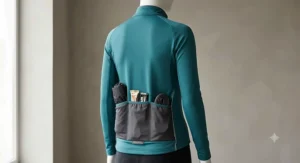
Specification-wise, the fabric combines wind resistance with genuine water repellence, meaning it shrugs off the kind of persistent British drizzle that would soak through a standard Roubaix jersey within twenty minutes. Based on the spec comparison against other items on this list, the Perfetto ROS occupies its own category: it’s less breathable than a pure jersey when the sun comes out, but far more capable than any of the other six options here once the heavens genuinely open. Reviewers consistently rate it as best-in-class for exactly this scenario — wet, blustery, unpredictable rides — while noting the racing-focused cut carries only two rear pockets, deliberately prioritising performance over cargo capacity.
Pros:
- ✅ Genuine water resistance approaching a proper rain jacket
- ✅ Excellent wind resistant jersey performance in exposed conditions
- ✅ Doubles up, reducing the need for a separate shell
Cons:
- ❌ Only two rear pockets limits carrying capacity
- ❌ Overheats quickly if the weather brightens mid-ride
At around £170-210 for the range, this is a premium buy, but for riders who refuse to let weather dictate whether they ride, it’s arguably the most versatile single garment on this entire list.
Practical Usage Guide: Getting the Most From Your Jersey
Buying the right long sleeve cycling jersey is only half the job — how you use and maintain it determines whether it lasts two winters or five. First, size down slightly if you’re between measurements on a European-cut brand like Castelli or Santini, since continental sizing tends to run smaller and tighter than British high street expectations.
On your first few rides, resist the urge to over-layer. A common rookie mistake is stacking a thick base layer under a thermal jersey on a 12°C day, which leads to overheating and a soaked back within thirty minutes — the jersey’s own brushed fabric is often doing more of the insulating work than people expect. For maintenance, always follow the care label rather than assuming all technical fabrics behave the same: brushed Roubaix jerseys generally prefer a cooler wash and no fabric softener, since softener clogs the moisture-wicking fibres over time. Air-dry where possible rather than tumble-drying, as heat degrades the elastane content that gives these jerseys their stretch and recovery.
One optimisation trick worth knowing: rotate two jerseys through a typical autumn week rather than relying on a single garment washed after every ride. This halves the wear-and-tear on any one piece and means you’re never forced into a damp jersey on a cold morning because the other one’s still on the airer.
✨ Ready to build your autumn kit properly? Check today’s prices on the jerseys above before heading out on your next ride!
Real-World Scenarios: Which Jersey Suits Your Riding?
Picture Sarah, a 34-year-old commuter cycling six miles each way through a mid-sized UK city, much of it in the dark by 5pm from October onward, on a modest budget. For her, the Altura Nightvision Long Sleeve Jersey makes obvious sense — the reflective detailing directly addresses her biggest risk factor, and the roomy fit accommodates work clothes layered beneath.
Now consider Tom, a weekend club rider in his late twenties chasing PBs on Saturday chaingangs through autumn and into early winter, riding 40-60 miles at a stretch. The Endura FS260-Pro Roubaix Long Sleeve Jersey fits his priorities far better — the race cut and wide temperature tolerance suit sustained, higher-intensity efforts where a baggier commuter jersey would flap and drag.
Finally, think about Priya, a 45-year-old audax rider who logs long, unpredictable rides across the Pennines regardless of forecast, often eight hours in the saddle through genuinely foul weather. For her, the Castelli Perfetto ROS Long Sleeve Jacket is the rational choice — its blended jersey-jacket performance means she’s not gambling her whole ride on a forecast that could turn within the hour, which matters enormously when help is a long way off.
Problem → Solution: Common Long Sleeve Jersey Frustrations
Riders repeatedly run into the same handful of issues with long sleeve cycling jerseys, and most have a straightforward fix. Overheating on climbs is probably the most common complaint — the solution is a full-length front zip you can vent progressively rather than an all-or-nothing pullover design, which is why five of the seven jerseys above feature one.
Sweaty backs on longer rides usually trace back to fabric choice rather than fitness: a merino-blend option like the Santini Pure Long Sleeve Jersey manages moisture and odour noticeably better than pure synthetic fabrics across a long day in the saddle. Sagging rear pockets under load — a frustration several reviewers flag even on otherwise excellent jerseys — is largely a design trade-off; if you regularly carry a full pump, tools and food, prioritise jerseys with reinforced pocket trim over the very lightest options. Finally, riders often complain that a jersey rated for one temperature band leaves them cold at the very top or bottom of that range; the honest solution isn’t a “warmer” jersey but a proper layering strategy underneath or over the top, which we cover in more detail in the next section.
How to Choose a Long Sleeve Cycling Jersey
Choosing the right long sleeve cycling jersey comes down to matching fabric, fit and features to your specific riding pattern, rather than simply buying the most expensive option available.
- Identify your typical temperature range. Check what conditions you’ll actually ride in most often — a jersey rated for 6-16°C is wasted if you mostly ride at 2°C.
- Decide how much wind and water resistance you need. Exposed routes and unpredictable forecasts justify paying more for a genuinely wind resistant jersey like the Castelli Perfetto ROS.
- Pick your fit philosophy. Race-cut jerseys reduce drag but feel restrictive off the bike; relaxed cuts layer more easily but flap at speed.
- Check pocket configuration against what you actually carry. Commuters need capacity; racers can live with two slim pockets.
- Consider fabric composition for odour and moisture management. Merino blends cost more but need washing less often on multi-day trips.
- Factor in visibility if you ride in low light. Reflective detailing is genuinely life-saving, not a gimmick, once the clocks change.
- Set a realistic budget band and stick to it. As our comparison table shows, meaningful jumps in warmth and weatherproofing correspond fairly closely to price tier.
Common Mistakes When Buying a Long Sleeve Cycling Jersey
The single biggest mistake is buying based on brand reputation from summer racing rather than autumn and winter-specific reviews — a brand’s flagship race jersey says very little about how its thermal range actually performs. A close second is ignoring sizing charts entirely; continental brands like Castelli and Santini run notably tighter than British high street sizing, and returns policies vary between retailers.
Many buyers also underestimate how much fabric weight matters versus wind resistance — a heavier thermal fabric without a windproof front panel can still leave you cold on an exposed descent, while a lighter, genuinely wind resistant jersey may outperform it. Finally, a surprisingly common error is buying a single “do everything” jersey and expecting it to cover a full British autumn through to deep winter; based on the spec comparison across this list, even the best long sleeve cycling jersey has a realistic temperature window, and layering — not one miracle garment — is how experienced riders actually manage a full season.
Long Sleeve Cycling Jersey vs Short Sleeve Jersey and Arm Warmers
A recurring question for anyone building an autumn kit is whether to buy a dedicated long sleeve jersey or simply extend a summer short sleeve jersey with a pair of arm warmers. Both approaches have genuine merit, and the right answer depends on how variable your rides tend to be.
| Approach | Flexibility | Warmth | Best For |
|---|---|---|---|
| Long Sleeve Jersey | Low (fixed warmth level) | Consistent, purpose-built | Stable, predictably cool rides |
| Short Sleeve + Arm Warmers | High (removable mid-ride) | Adjustable on the fly | Rides with big temperature swings |
The layering-for-cyclists case for arm warmers is strong on days where you set off at 4°C and finish at 14°C, since you can simply roll them down and stash them in a pocket without stopping to change. However, a dedicated long sleeve cycling jersey like the dhb Blok Long Sleeve Jersey typically offers a cleaner, more consistent fit with no gap or bunching at the wrist, and one less seam to worry about chafing on a long ride. Most experienced riders end up owning both, treating arm warmers as the flexible option for genuinely unpredictable days and a proper long sleeve jersey as the default for anything settled and cool.
What to Expect: Real-World Performance for Autumn and Three-Season Riding
Specs on a hangtag rarely translate directly into how a jersey feels at mile thirty of an autumn cycling jersey ride, so here’s what actually happens in practice. In the 10-16°C band typical of a mild UK autumn, a mid-weight Roubaix jersey like the dhb Blok Long Sleeve Jersey feels comfortable solo, with the brushed inner managing the light sweat generated on rolling terrain without ever feeling clammy.
Drop into the 5-10°C range common on early morning starts, and the difference between three-season cycling gear and genuine winter kit becomes obvious — jerseys like the Le Col Hors Catégorie Long Sleeve Jersey, built around a gridded fleece inner, keep working here where thinner options start to feel thin. Reviewers consistently note that wind exposure changes this equation dramatically: a dry, still 8°C ride feels entirely different from an 8°C ride into a headwind, which is exactly where a genuinely wind resistant jersey earns its keep over a merely “warm” one. The honest takeaway is that no single jersey covers the full swing from a balmy September afternoon to a frosty December dawn — building a small wardrobe across two or three of the categories above, rather than hunting for one perfect garment, is how real three-season cycling gear actually works in practice.
Wind Resistant Jerseys: Features That Actually Matter (And Those That Don’t)
Marketing copy throws the word “windproof” around fairly loosely, so it’s worth separating genuine engineering from hype. A true wind resistant jersey typically uses a dedicated front panel — often a denser weave or laminated membrane — over the chest and thighs, precisely where wind chill hits hardest, while leaving the rear more breathable to manage heat build-up.
What actually matters: front-panel wind blocking, a snug (not baggy) cuff that stops draughts riding up the sleeve, and a high, close-fitting collar that seals against the neck. What doesn’t matter nearly as much as the marketing suggests: an entire garment claiming “windproof” fabric throughout, since a fully wind-sealed jersey often can’t breathe adequately once you’re working hard on a climb. Based on the spec comparison across this list, the Castelli Perfetto ROS Long Sleeve Jacket demonstrates this balance best, concentrating its wind and water resistance where it’s genuinely needed rather than sealing the whole garment uniformly.
Long-Term Cost & Maintenance
Thinking in cost-per-wear rather than sticker price changes the calculation considerably. A £45 dhb thermal jersey worn for one winter season and replaced offers reasonable value, but a £130 Le Col jersey that lasts five full winters with proper care, at roughly 40 rides per season, works out cheaper per ride than repeatedly replacing budget options that pill, sag or lose elasticity within a year or two.
Total cost of ownership also depends heavily on maintenance discipline. Washing at 30°C, avoiding fabric softener, and air-drying rather than tumble-drying can meaningfully extend a technical jersey’s working life, protecting both the elastane recovery and any water-repellent or wind-blocking coatings. Riders who rotate two jerseys through a typical week, rather than relying on one washed after every single ride, also tend to see noticeably slower fabric degradation over a multi-year ownership period.
✨ Don’t Miss These Exclusive Deals!
🔍 Take your autumn riding to the next level with the carefully researched picks above. Click through to check current pricing and availability, and gear up properly before the temperature drops any further!
Safety, Visibility and Regulations Guide
Safety considerations around a long sleeve cycling jersey extend well beyond warmth. As daylight hours shrink from October onward, visibility becomes a genuine safety issue rather than a nice-to-have — reflective detailing, as seen on the Altura Nightvision Long Sleeve Jersey, is designed specifically to catch vehicle headlights from multiple angles at distance.
It’s worth reviewing the Highway Code’s specific guidance for cyclists, which recommends light-coloured or reflective clothing in poor light or darkness, alongside proper lighting — a jersey is one part of a wider visibility strategy, not a substitute for lights. Staying appropriately warm also has a genuine safety dimension: Cycling UK’s advice on cold-weather riding consistently emphasises layering to avoid both dangerous overheating on climbs and the loss of concentration and dexterity that comes with getting genuinely cold on long descents. Regulation-wise, cycling jerseys themselves aren’t subject to specific UK product certification in the way helmets are, but reputable brands typically test fabrics for genuine breathability and water-column ratings rather than relying on marketing claims alone.
Frequently Asked Questions
❓ What temperature is a long sleeve cycling jersey good for?
❓ Can you wear a long sleeve cycling jersey in summer?
❓ Do I need arm warmers if I have a long sleeve jersey?
❓ Is a long sleeve cycling jersey better than a jacket?
❓ How should a long sleeve cycling jersey fit?
Conclusion
Picking the right long sleeve cycling jersey really comes down to being honest about how, when and where you actually ride. Budget commuters riding predictable, moderate routes are well served by the dhb Long Sleeve Thermal Cycling Jersey or the excellent-value dhb Blok Long Sleeve Jersey, while low-light commuters should prioritise the Altura Nightvision Long Sleeve Jersey above outright warmth.
Club riders chasing performance will get more out of the Endura FS260-Pro Roubaix Long Sleeve Jersey‘s race-focused cut, and anyone building a considered, multi-year kit collection should look seriously at the Santini Pure Long Sleeve Jersey or Le Col Hors Catégorie Long Sleeve Jersey depending on whether style-led layering or outright cold-weather capability matters more. For riders who refuse to let a dodgy forecast dictate whether they ride at all, the Castelli Perfetto ROS Long Sleeve Jacket remains the standout, genuinely versatile choice covered in this guide.
Whichever you choose, remember that price ranges shift constantly, so it’s always worth checking current availability and pricing before you buy, and building your wider three-season wardrobe gradually rather than expecting one jersey to do every job.
Recommended for You
- Short Sleeve Cycling Jersey: 7 Best Picks for UK Riders 2026
- Road Cycling Helmet Under £100: 7 Best MIPS Picks 2026
- Road Cycling Helmet For Women With Ponytail: 7 Real Picks 2026
Disclaimer: This article contains affiliate links. As an Amazon Associate, I earn from qualifying purchases. If you purchase products through these links, we may earn a small commission at no additional cost to you.
✨ Found this helpful? Share it with your friends! 💬🤗
