
In This Article
There’s a particular kind of cold that only cyclists understand — the sort that finds the gap between your gloves and your cuffs at 7am and stays there, smug, until you’re three miles from home. A proper winter cycling jersey is the difference between that ride becoming a grim survival exercise and an actual, enjoyable slice of your day. At its simplest, a winter cycling jersey is a long-sleeved, close-fitting cycling top built from brushed or fleece-backed fabric (commonly roubaix) that traps a layer of warm air against your skin while still letting sweat escape, unlike a summer jersey or a full waterproof jacket. Get the fabric weight and cut wrong, though, and you’ll either be shivering by mile ten or drenched in your own sweat by mile three.
This guide exists because so much of what’s written about winter kit reads like a rewritten catalogue page — a list of grams and deniers with none of the “yes, but what does that actually feel like on the bike” context you actually need. We’ve pulled together real product specs, genuine aggregated review sentiment from UK cycling publications and retailers, and the sort of honest comparative reasoning that should let you buy once and buy properly. Cycling UK’s own winter riding advice sets out the layering logic that underpins everything below: a close-fitting, moisture-wicking base layer, an insulating mid-layer such as a winter jersey, and a wind- or water-resistant outer shell when conditions demand it.
Whether you’re commuting through a grey British January, chasing club miles on frosty Sunday mornings, or simply trying to stretch your riding season a little further into the year, there’s a jersey here that fits your riding, your budget and your tolerance for faff. Let’s get into it.
Quick Comparison Table
| Jersey | Fabric Type | Best Temperature Range | Price Range | Best For |
|---|---|---|---|---|
| FDX Thermodream Roubaix | Italian Super Roubaix fleece | 2-10°C | Under £50 | Budget commuters |
| dhb Aeron Thermal | Brushed Italian Roubaix | 5-17°C | £70-£90 range | Best all-round value |
| Endura FS260 Roubaix | Thick grid-flocked Roubaix | 0-8°C | £90-£110 range | Coldest, harshest mornings |
| Santini Pure | Merino-blend marl | 10-15°C | £90-£120 range | Classic mid-layer styling |
| Castelli Espresso Thermal | Fleece-lined stretch (Air_O type) | 6-15°C | £125-£145 range | Do-it-all daily driver |
| Velocio Luxe Merino | Merino wool blend | 5-16°C | £160-£190 range | Odour-resistant long days |
| Rapha Brevet Windstopper | Gore Windstopper membrane | Minus 2-8°C | £180-£220 range | Genuine sub-zero riding |
Looking at the spread above, there’s a clear pattern: the cheaper the jersey, the narrower and colder its comfortable temperature window tends to be, while the pricier options either widen that range or add genuine wind protection on top of warmth. The Endura FS260 Roubaix and Rapha Brevet Windstopper sit at the sub-zero end of the scale, while the Santini Pure and Castelli Espresso Thermal are happiest in that tricky 6-15°C shoulder-season zone most UK riders actually face most mornings. If your commute rarely dips below freezing, you genuinely don’t need to spend on the jerseys built for minus temperatures — that’s money better spent on decent overshoes.
💬 Bookmark this table now — you’ll want to scroll back to it once you’ve read the full breakdown below!
Top 7 Winter Cycling Jerseys: Expert Analysis
1. FDX Thermodream Roubaix — warmest jersey under £50
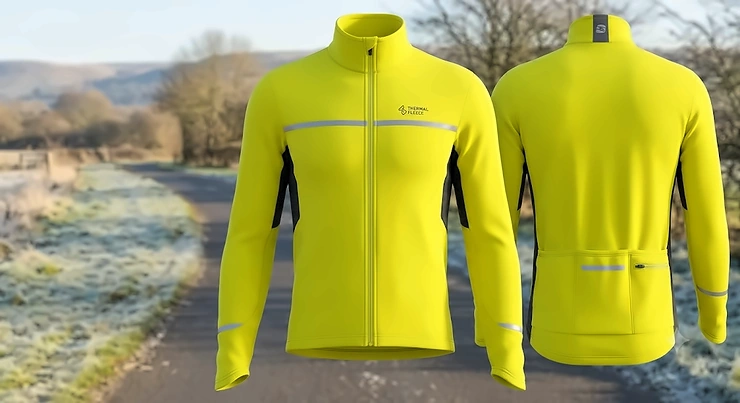
The standout here is simple: proper Italian-milled roubaix fleece at a price that usually buys you a thin polyester long-sleeve elsewhere. Built from an 80% polyamide/20% elastane Thermodream fabric with reinforced shoulder panels, the FDX Thermodream is genuinely warm rather than merely “long-sleeved and hopeful” — on paper this means a snugger thermal barrier than most jerseys costing twice as much, though the trade-off is a simpler, less tailored cut than the Italian and British performance brands further down this list. It’s a slim-fit, water-resistant design with a full-length front zip, a zip garage to stop the pull rubbing your chin, and rear storage pockets, which is a sensible spec sheet for the money. Based on the spec comparison with pricier roubaix jerseys, the main thing you’re sacrificing isn’t warmth — it’s refinement of fit and colour range. Reviewers of FDX’s budget thermal ranges consistently note strong value for winter commuting and lower-frequency riders who don’t want to spend big on a jersey that’ll spend half its life on a radiator rather than a bike. What most buyers overlook about this tier of jersey is that the fabric itself often outperforms the branding suggests, simply because Roubaix fleece technology has become commoditised across manufacturers.
Pros:
- ✅ Genuine Italian Roubaix fleece at a budget price point
- ✅ Reflective logo and shoulder detailing for night visibility
- ✅ Zip garage prevents chin chafing on long rides
Cons:
- ❌ Limited colourway and sizing options compared to premium brands
- ❌ Less refined tailoring than higher-tier race-cut jerseys
At under £50, the FDX Thermodream represents excellent value for anyone testing the winter-cycling waters before committing to premium kit — check current price before buying, as fabric blends can shift between production runs.
2. dhb Aeron Thermal — best British-brand value pick
What stands out on the dhb Aeron Thermal is how directly it undercuts jerseys costing considerably more while using genuinely comparable Italian Roubaix fabric. Cycling Weekly’s own testing found the Aeron Thermal wearable unzipped in temperatures up to around 17°C, running comfortably down to about 5°C, which is a wide enough band to cover most of a British autumn and winter without swapping jerseys weekly. The fabric is a 100% polyester Bluesign-approved material, meaning the manufacturing process meets recognised environmental standards even if it isn’t the merino blend you’ll find further up this list. Here’s what to weigh: reviewers found the Aeron Thermal a clear step down in price from Rapha’s pricier long-sleeve jersey while only slightly behind it on warmth and weight, which is precisely the kind of value proposition British cyclists have come to expect from the brand. Aggregated reviewer sentiment consistently praises the wrist grippers and waist elastic for staying put without digging in, though the styling itself has been described as a little safe compared to bolder competitors.
Pros:
- ✅ Wide, genuinely tested temperature range (5-17°C)
- ✅ Bluesign-approved fabric for lower environmental impact
- ✅ Excellent grippers that stop sleeves riding up
Cons:
- ❌ Styling seen by some reviewers as understated to a fault
- ❌ 100% polyester construction lacks merino’s odour resistance
Sitting in the mid-£70s to low-£90s range, the Aeron Thermal is arguably the smartest first winter jersey purchase for anyone building a cold-weather wardrobe from scratch.
3. Endura FS260 Roubaix — thickest, warmest jersey for harsh mornings
This is the jersey that “feels more like a jacket than a jersey,” according to Cyclist magazine’s testing, and that’s precisely its standout feature. The Endura FS260 Roubaix uses a thick, grid-flocked front-facing panel construction that tips the scales at around 392g in a size medium, putting it firmly at the heaviest end of the long-sleeved jersey category. In practice this means genuinely trapped warmth on the coldest days rather than the thin insulation layer you’ll find on lighter roubaix jerseys. The dense grid-flocked panels are specifically engineered to hold a layer of body-warmed air against the chest and shoulders, which is where most riders feel cold first on a bike. Based on the spec comparison, this extra bulk is exactly why reviewers note it doesn’t layer as neatly underneath a shell jacket on the very coldest days — there simply isn’t as much room left for a base layer plus outer shell as with a slimmer jersey. Reviewers consistently flag this as the jersey to reach for when the forecast reads single figures and you plan to wear it largely on its own, rather than as one piece in a three-layer system.
Pros:
- ✅ Genuinely substantial warmth for near-freezing rides
- ✅ Close, tailored fit that traps air effectively at the chest
- ✅ British brand with strong UK stockist network
Cons:
- ❌ Bulk makes layering a shell jacket over the top tricky
- ❌ Heavier weight (392g) than most direct competitors
Priced in the £90-£110 range, the FS260 Roubaix earns its keep on the days you’d otherwise be tempted to leave the bike at home.
4. Santini Pure — best classic mid-layer styling
The Santini Pure stands out for its marled merino-blend fabric and genuinely classic silhouette, which sets it apart from the more overtly “technical” look of most jerseys on this list. Cyclist’s testing found a close fit through the body with thinner merino-blend sleeves, giving the jersey a lighter feel that’s ideal worn as a mid-layer under a winter jacket rather than as a standalone piece. On paper, that thinner sleeve construction means less bulk under a shell, but it also means the jersey itself runs a little chilly below around 15°C when worn alone, limiting its use as a standalone shoulder-season jersey. Here’s what most buyers overlook: a jersey designed primarily as a mid-layer piece needs judging against that use case, not against jerseys built to be worn solo down to near-zero. The merino blend does bring genuine odour-management benefits over multi-day trips, and aggregated review sentiment consistently praises the tasteful, understated aesthetic over the loud graphics found on some competing Italian brands. For riders who layer deliberately rather than relying on one jersey to do everything, that thinner build is a feature, not a flaw.
Pros:
- ✅ Classic, understated marled styling that ages well
- ✅ Merino-blend sleeves reduce odour build-up on long days
- ✅ Slim cut layers cleanly under a winter jacket
Cons:
- ❌ Too thin to be a standalone jersey below roughly 15°C
- ❌ Narrower size range than some mainstream competitors
At £90-£120, the Pure rewards riders who already own a good winter jacket and want a stylish, breathable mid-layer to go underneath it.
5. Castelli Espresso Thermal Jersey — best do-it-all daily driver
Castelli’s own positioning of the Espresso range as covering “90% of riding contexts” is marketing, obviously, but the standout feature here is that independent testing broadly backs it up. Cycling Weekly’s reviewer found the fleece-lined, powerstretch-type fabric kept them warm and comfortable from around 6°C to 15°C, a noticeably cooler range than Castelli’s own suggested usage window, which is exactly the kind of honest, real-world verification worth paying attention to over brand copy. In practice this means the jersey has more flex in its comfort range than the spec sheet alone suggests, especially when paired with a vest for colder starts. The single-fabric construction (a lightly wind-resistant, fleece-backed powerstretch material) keeps things simple, and the four-pocket rear layout — three open, one zipped for valuables — is genuinely useful rather than decorative. What most buyers overlook about the Espresso is that its £125-£145 price sits at the upper-mid tier rather than true flagship pricing, positioning it as a considered investment rather than an impulse buy. Reviewer sentiment is consistently strong on fit and breathability, with the most common criticism being a missing zip-guard tab at the base rather than anything about warmth or comfort.
Pros:
- ✅ Wider real-world temperature range than Castelli’s own claims
- ✅ Four rear pockets including a zipped valuables pocket
- ✅ Durable YKK Vislon zip that operates smoothly with gloves
Cons:
- ❌ Premium pricing relative to similarly performing rivals
- ❌ No zip-guard tab at the base of the front zipper
Sitting in the £125-£145 range, the Espresso Thermal earns its place as the jersey most reviewers reach for by default across an entire British autumn and winter.
6. Velocio Luxe Merino — best odour-resistant premium merino
The headline feature of the Velocio Luxe Merino is its use of a genuine merino wool blend rather than the synthetic roubaix fleece found in most of this list, which changes the entire character of the jersey. Merino fibres naturally regulate temperature and resist bacterial odour build-up far better than polyester, meaning this is the jersey you can wear two or three days running on a multi-day tour without your riding companions objecting. Based on the spec comparison with pure-synthetic jerseys, merino blends breathe more predictably across a range of efforts, running warm at rest but venting more readily once you’re working hard on a climb — the natural fibre structure manages moisture rather than simply wicking it outward. What the spec sheet won’t tell you, but reviewers of Velocio’s merino range consistently note, is that the fabric takes noticeably longer to dry than pure synthetics after a soaking, so it isn’t the jersey to reach for if heavy rain rather than cold is your main enemy. The trade-off for that natural-fibre comfort is a genuinely premium price tag, positioning this firmly as a jersey for riders who value long-day comfort over ultimate value for money.
Pros:
- ✅ Natural odour resistance ideal for multi-day trips
- ✅ Excellent temperature regulation across varying effort levels
- ✅ Soft merino handle feels noticeably nicer against skin
Cons:
- ❌ Slower drying time than synthetic-only alternatives
- ❌ Premium pricing puts it out of reach for casual riders
At £160-£190, the Luxe Merino suits audax riders, tourers and anyone who values comfort over multiple consecutive days more than outright value per pound spent.
7. Rapha Brevet Windstopper Long Sleeve Jersey — best for genuine sub-zero riding
The standout feature on the Rapha Brevet Windstopper is exactly what the name promises: a genuine Gore Windstopper membrane integrated into the jersey construction, rather than a simple brushed fleece backing. This is a meaningfully different proposition from every other jersey on this list, because a windproof membrane blocks wind chill directly rather than just adding insulating bulk. On paper this means real protection on exposed, fast descents where wind chill does most of the damage, not just static cold. In practice, testers note there’s very little stretch to the Gore-Tex-based fabric, so getting sizing right matters more here than with the stretchier roubaix jerseys elsewhere in this guide — reviewers found the shoulders could feel a little restrictive if the size chosen ran on the small side. What most buyers overlook is that a genuinely windproof jersey trades some breathability for that wind-blocking performance, so it’s a jersey best suited to genuinely cold, exposed riding rather than efforts where you’re working hard enough to overheat. Aggregated reviewer sentiment is consistently positive on its performance in properly cold, blustery conditions, with the main criticism centred on the price and the more structured, less stretchy fit.
Pros:
- ✅ Genuine wind-blocking Gore Windstopper membrane
- ✅ Exceptional performance in exposed, fast, cold descents
- ✅ Reflective detailing suited to shorter winter daylight hours
Cons:
- ❌ Minimal fabric stretch demands careful, accurate sizing
- ❌ Flagship price puts it at the very top of this list
At £180-£220, the Brevet Windstopper is the jersey for riders who genuinely ride through proper sub-zero mornings rather than merely a “bit nippy” autumn.
Winter Cycling Jersey Review: What Seven Models Taught Us
Running these seven jerseys through the same lens throws up a genuinely useful pattern for anyone reading a winter cycling jersey review for the first time: price correlates far more closely with temperature range and construction complexity than it does with basic warmth. A £45 roubaix jersey and a £140 fleece-lined jersey can feel similarly warm sitting still in a shop — the difference shows up an hour into a ride, in breathability, fit retention and how the fabric behaves once you’re sweating into a headwind.
| Jersey | Weight (approx.) | Weatherproofing | Rated Warmth (1-5) | Best For |
|---|---|---|---|---|
| FDX Thermodream Roubaix | Lightweight | Water-resistant | 3.5 | Budget commuting |
| dhb Aeron Thermal | Mid-weight | Showerproof | 3.5 | All-round value |
| Endura FS260 Roubaix | Heavy (392g) | Water-resistant | 5 | Coldest mornings |
| Santini Pure | Light-mid | Minimal | 3 | Mid-layer use |
| Castelli Espresso Thermal | Mid-weight | Light wind resistance | 4 | Daily driver |
| Velocio Luxe Merino | Mid-weight | Minimal | 4 | Multi-day comfort |
| Rapha Brevet Windstopper | Mid-heavy | Genuinely windproof | 5 | Sub-zero riding |
The clearest takeaway from this comparison is that only two jerseys here — the Endura FS260 Roubaix and the Rapha Brevet Windstopper — are built specifically for temperatures nudging towards freezing, and they achieve that through completely different routes: raw fabric bulk versus a genuine wind-blocking membrane. Everyone else on this list occupies the much more common 5-17°C British “miserable but not dangerous” zone, and for most riders, that’s exactly where the value sits.
✨ Ready to build your winter wardrobe? Check current pricing on your favourite pick above before the cold snap hits!
Roubaix Fabric Explained: The Science Behind Winter Warmth
If there’s one term that appears on almost every jersey in this guide, it’s roubaix. Named after the fabric’s association with the cobbled classics of northern France, roubaix is a knitted polyester (sometimes polyester-elastane) fabric with a smooth outer face and a brushed, fleece-like inner face. As road.cc’s buyer’s guide explains, brush-backed roubaix polyesters come in a range of thicknesses to suit different warmth levels, and while they breathe well and let sweat escape efficiently, they’re not inherently windproof. That last point matters more than most buyers realise: a thick roubaix jersey can feel toasty in a shop and still let a headwind cut straight through it on an exposed ride.
What most buyers overlook about roubaix fabric is that the brushing process — mechanically raising fibres on the inner face — is what actually creates the insulating air pockets, not the density of the fabric itself. That’s why two jerseys with similar fabric weights can feel noticeably different in temperature performance depending on how aggressively they’ve been brushed. Manufacturers frequently add a DWR (durable water repellent) finish over the outer face to help rain bead off rather than soak straight through; as Wikipedia’s overview of durable water repellents notes, this coating wears off with washing and use over time, which is why several reviewers in this guide mention re-treating older jerseys with a wash-in DWR product to restore their shower resistance. Pair a roubaix jersey with a wind-resistant gilet on genuinely blustery days, and you get most of the benefit of a much pricier windproof jersey for a fraction of the outlay.
What Is a Winter Cycling Jersey?
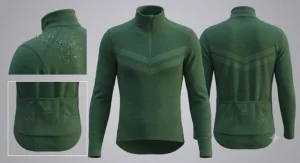
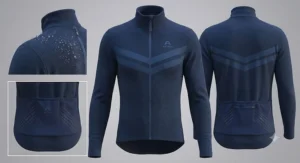
A winter cycling jersey is a long-sleeved, close-fitting cycling top made from thermal, typically brushed-back fabric such as roubaix or merino-blend material, designed to insulate the rider without a full jacket’s bulk. It sits between a summer short-sleeve jersey and a dedicated winter cycling jacket in both warmth and weight, making it the natural mid-layer — or, in milder conditions, the outer layer — for a winter cycling wardrobe.
Unlike a jacket, a winter jersey rarely offers full wind or waterproofing on its own; it’s designed to work as part of a layering system alongside a base layer and, when needed, a gilet or shell. That distinction is worth holding onto as you read the rest of this guide, because it explains why the same jersey can feel perfect for one rider and inadequate for another riding in identical conditions — layering choices matter as much as the jersey itself.
How to Choose a Winter Cycling Jersey
- Start with your typical riding temperature, not the coldest day you’ll ever ride. Buying for the extreme outlier means overheating on the far more common milder days.
- Decide whether you need genuine wind resistance or simply warmth. A Windstopper-style jersey suits exposed, fast riding; a plain roubaix fleece suits sheltered commutes and steadier efforts.
- Check the fabric blend for your priorities. Merino blends favour multi-day odour control and temperature regulation; pure synthetics dry faster and cost less.
- Try the jersey with your typical base layer underneath. Fit that feels perfect bare-chested can feel restrictive with even a thin base layer added.
- Weigh up pocket configuration for your riding style. Commuters often want a zipped valuables pocket; racers may prioritise low weight and aerodynamics instead.
- Consider reflective detailing given shorter winter daylight. Higher-vis logos and reflective tabs genuinely matter when most winter rides include some low-light riding.
- Match your budget to your riding frequency. A jersey ridden five times a week justifies a bigger spend than one worn for the occasional weekend outing.
Thermal Cycling Jersey vs Standard Long-Sleeve Jersey
It’s easy to assume “long-sleeved” and “thermal” are interchangeable, but they’re genuinely different garments built for different jobs. A standard long-sleeve jersey is typically made from lightweight polyester — essentially a summer jersey fabric with longer arms — designed to bridge the gap between short-sleeve summer riding and the first properly cold mornings of autumn. A thermal cycling jersey, by contrast, uses a brushed, fleece-backed or merino-blend fabric specifically engineered to trap warm air, and it’s built to be worn confidently down into single-digit temperatures rather than merely taking the edge off a cool morning.
The practical difference shows up in weight and versatility. A standard long-sleeve jersey rarely weighs more than a summer jersey plus a few grams of extra fabric, so it packs down small and suits changeable spring or autumn days where temperatures might swing ten degrees between the outward and return legs of a ride. A thermal jersey, in contrast, is a committed piece of kit — bulkier, warmer, and genuinely uncomfortable if you overestimate how cold it actually is outside. For UK riders, the sensible approach is owning one of each: a standard long-sleeve jersey for those in-between shoulder-season days, and a genuine thermal jersey (like the Castelli Espresso Thermal or Endura FS260 Roubaix covered above) for the properly cold months.
| Feature | Standard Long-Sleeve Jersey | Thermal Cycling Jersey |
|---|---|---|
| Typical Fabric | Lightweight polyester | Brushed roubaix or merino blend |
| Comfortable Range | 12-20°C | 0-15°C |
| Packability | Excellent | Poor to fair |
| Best Use Case | Shoulder-season, changeable days | Committed cold-weather riding |
This comparison makes the buying decision fairly clear-cut: if you’re only supplementing a summer wardrobe for the odd cool morning, a standard long-sleeve does the job at a lower price point. If you’re planning to ride consistently through a British winter, investing in a genuine thermal jersey such as the dhb Aeron Thermal or Rapha Brevet Windstopper pays off far faster than layering a thin long-sleeve under increasingly desperate combinations of extra tops.
Men’s Cycling Jersey Fit and Sizing for Winter Riding
Sizing a men’s cycling jersey for winter riding is genuinely trickier than sizing a summer jersey, largely because you need to account for what’s going underneath. A race-cut jersey sized perfectly for bare skin in summer can feel uncomfortably tight the moment you add a base layer, and in cold weather you’ll almost always want at least a thin thermal base layer beneath your jersey.
Based on the spec comparison across the seven jerseys in this guide, the more technical, race-oriented jerseys — think the Rapha Brevet Windstopper and Castelli Espresso Thermal — run closer to the body with minimal excess fabric, meaning many riders find themselves comfortably sizing up from their summer jersey size for winter use. Looser-cut options such as the FDX Thermodream Roubaix tend to have more built-in room, making standard sizing more reliable. What most buyers overlook is that low-stretch fabrics such as the Windstopper membrane used in the Brevet punish an incorrect size choice far more harshly than a stretchy roubaix fleece, which will forgive a slightly tight fit thanks to its give. If you’re between sizes and choosing a jersey with limited stretch, sizing up is almost always the safer call for winter riding, where a slightly looser fit also traps a helpful extra layer of warm air.
Building Your Cold Weather Cycling Gear System
A winter jersey is only as good as the system it sits within, and this is where a surprising number of riders undermine an otherwise excellent jersey purchase by neglecting everything around it. Cold weather cycling gear works best as a deliberate three-part system: a moisture-wicking base layer against the skin, an insulating mid-layer (your jersey), and — when conditions demand it — a wind- or water-resistant outer shell.
Setting up for your first cold season: start by testing your jersey-plus-base-layer combination on a short, familiar loop before committing to it for a longer ride; the mistake most new winter riders make is layering up for how cold it feels standing still at the door, then overheating twenty minutes into the ride. Keep a lightweight, packable gilet in your jersey’s zipped pocket at all times through fully committed winter months — it weighs almost nothing and transforms a roubaix jersey’s performance the moment a headwind picks up.
Maintenance that actually extends jersey life: wash thermal and merino jerseys on a cool, gentle cycle using a technical-fabric detergent rather than standard washing powder, which clogs the brushed fibres that create the insulating air pockets in the first place. Air-dry rather than tumble-dry wherever possible; the heat from a dryer degrades both elastane stretch and any DWR coating far faster than air-drying. If you notice rain no longer beading on the jersey’s outer face the way it did when new, that’s your cue to apply a wash-in DWR reproofing treatment rather than assuming the jersey itself has failed.
Common first-30-days mistakes to avoid: overdressing for the first ten minutes of a ride (you’ll warm up faster than you expect once moving), neglecting extremities while investing heavily in the jersey itself (cold hands and feet ruin a ride faster than a slightly cool torso), and machine-washing merino blends on a standard hot cycle, which shrinks and felts the fibres irreversibly.
Real-World Scenarios: Matching Riders to the Right Jersey
The daily commuter, 6 miles each way, mixed weather: Someone commuting five days a week through a typical British winter doesn’t need flagship kit — they need durability, easy washing, and genuine warmth without breaking the bank. The dhb Aeron Thermal or FDX Thermodream Roubaix suit this rider well, offering a wide comfortable temperature range for a modest outlay, with reflective detailing that matters given how much winter commuting happens in the dark.
The weekend club rider chasing consistent Sunday miles: This rider rides less frequently but for longer, harder efforts, and values a jersey that performs across a wide range of effort levels rather than one built purely for sitting still at a bus stop. The Castelli Espresso Thermal fits this profile neatly — its breathability across a broad temperature window matches the variable effort of a typical club run, from a steady warm-up through to a genuinely hard chaingang effort.
The committed year-round audax or touring cyclist: Riders logging serious mileage through the depths of winter, sometimes across multiple consecutive days, benefit most from either the raw warmth of the Endura FS260 Roubaix for the coldest stretches or the odour-resistant comfort of the Velocio Luxe Merino for multi-day tours where washing kit isn’t always practical. For genuinely exposed, fast winter riding — think early alpine-adjacent club training camps or committed time-trialists riding through frost — the Rapha Brevet Windstopper justifies its price through the sheer wind protection it offers where other jerseys simply let the chill through.
Common Mistakes When Buying a Winter Cycling Jersey
The single most common mistake is buying for the coldest day of the year rather than your average riding temperature, resulting in a jersey that’s overheating you on the vast majority of rides you actually take. A closely related error is ignoring layering entirely and expecting one jersey to cover everything from 15°C down to freezing — no single jersey genuinely does both jobs well, and trying to make one do so usually means compromising on both ends.
Buyers also frequently underestimate how much fit changes with a base layer added, ordering their usual summer jersey size and then finding it uncomfortably tight once winter layers go on underneath. On the fabric side, a common misconception is assuming any “thermal” branding guarantees wind resistance — as covered above, plain roubaix fleece breathes well but isn’t windproof, and only genuinely membrane-based jerseys like the Rapha Brevet Windstopper deliver real wind-blocking performance. Finally, riders often neglect reflective detailing entirely, forgetting that the Met Office’s guide to cycling in icy conditions, produced with Cycling UK, specifically recommends dressing appropriately with attention to visibility, alongside reconsidering routes or timing altogether when conditions turn genuinely icy — a jersey with decent reflective elements is a genuine safety feature, not a styling afterthought, during winter’s shorter daylight hours.
Long-Term Cost & Maintenance: Getting the Most from Thermal Kit
Thinking purely in terms of upfront price misses most of the real cost picture with winter cycling jerseys. A £45 budget jersey that needs replacing every single season because the fabric pills, the DWR fails completely, or the elastane loses its stretch can easily cost more over three years than a £120 jersey built to last five seasons with proper care.
| Jersey Tier | Typical Price Range | Expected Lifespan (with proper care) | Cost-Per-Season (approx.) |
|---|---|---|---|
| Budget (e.g. FDX Thermodream Roubaix) | Under £50 | 1-2 seasons | £25-£50 |
| Mid-range (e.g. dhb Aeron Thermal, Santini Pure) | £70-£120 | 3-4 seasons | £20-£35 |
| Premium (e.g. Castelli Espresso Thermal, Rapha Brevet Windstopper) | £125-£220 range | 5+ seasons | £25-£40 |
Interestingly, mid-range and premium jerseys often work out roughly comparable on a cost-per-season basis once you factor in longevity, even though the upfront outlay looks wildly different. The genuinely poor value tier is the very cheapest, unbranded roubaix jerseys, which frequently need replacing after a single hard-riding season. Maintenance costs matter too: merino jerseys need occasional technical-fabric detergent (typically £8-£12 a bottle, lasting many washes) and benefit from periodic DWR reproofing (£10-£15 per treatment) roughly once a season for regularly worn pieces — a small ongoing cost that meaningfully extends the jersey’s useful life and delays the far larger cost of full replacement.
Buyer’s Decision Framework
Use this simple framework if you’re still torn between the seven jerseys covered above:
- If you ride fewer than twice a week in winter, choose a budget roubaix jersey like the FDX Thermodream Roubaix, because the low mileage doesn’t justify premium spend on durability you won’t test.
- If you commute daily regardless of weather, choose the dhb Aeron Thermal or Endura FS260 Roubaix, because durability and a wide temperature range matter more than ultimate refinement.
- If you ride hard efforts across variable temperatures, choose the Castelli Espresso Thermal, because its breathability across effort levels outperforms simpler fleece jerseys.
- If you tour or ride multiple consecutive days, choose the Velocio Luxe Merino, because odour resistance solves a real practical problem synthetic fabrics don’t.
- If you regularly ride fast, exposed routes in near-freezing conditions, choose the Rapha Brevet Windstopper, because genuine wind-blocking performance becomes essential rather than a nice-to-have at that point.
Safety, Visibility and Cold-Weather Riding Compliance
Winter riding introduces risks that go beyond simply feeling cold, and your choice of jersey plays a real role in managing them. Shorter daylight hours mean a significant proportion of winter miles happen in low light, which is precisely why every jersey covered in this guide includes at least some reflective detailing — it’s a genuine safety consideration, not decoration. The Met Office, working alongside Cycling UK, has highlighted that ice becomes just as significant a hazard for cyclists as low winter sun, and dressing appropriately is only one part of a wider winter safety approach that should also include adjusted riding speed and sensible route planning on genuinely icy mornings.
Beyond visibility, genuine cold exposure carries real physiological risk that’s worth taking seriously, particularly on longer rides or if you’re caught out by a mechanical failure far from shelter. According to official guidance on hypothermia, mild hypothermia symptoms typically appear once body temperature falls between 32°C and 35°C, and if it drops further a person may stop shivering entirely and could lose consciousness — a warning sign that requires immediate action rather than simply pushing on. Carrying a lightweight emergency layer, even alongside a well-chosen thermal jersey, is sensible practice for longer or more remote winter routes, and it’s exactly the kind of precaution that costs little but matters enormously if a ride goes wrong.
Frequently Asked Questions
❓ What temperature is a winter cycling jersey good for?
❓ Can you wear a winter cycling jersey without a base layer?
❓ Is roubaix fabric waterproof?
❓ How do I wash a thermal cycling jersey without ruining it?
❓ Do I need a different jersey for men's and women's fit?
Conclusion
Choosing a winter cycling jersey isn’t really about finding the single “best” one — it’s about matching fabric, cut and temperature range to how, where and how often you actually ride. A committed daily commuter and an occasional weekend club rider have genuinely different needs, and the good news is there’s a well-reasoned option at every price point in this guide, from the budget-friendly warmth of the FDX Thermodream Roubaix through to the genuinely windproof performance of the Rapha Brevet Windstopper.
What ties every recommendation here together is the underlying layering logic: a good jersey works best as part of a considered system, not as a single miracle garment expected to handle everything from a mild 15°C autumn morning down to a genuine winter frost. Get your base layer, jersey and outer shell working together, size for the layers you’ll actually wear, and you’ll find winter riding becomes something to look forward to rather than something to endure. Whichever of the seven jerseys above matches your riding pattern, the right choice will quietly do its job and let you focus on the ride itself, rather than the cold.
✨ Ready to gear up for the season? Browse today’s picks and find the winter cycling jersey that matches your ride! 🚴♂️
Recommended for You
- Long Sleeve Cycling Jersey: 7 Best Picks for Autumn 2026 (Ranked)
- Short Sleeve Cycling Jersey: 7 Best Picks for UK Riders 2026
- Road Cycling Helmet Under £100: 7 Best MIPS Picks 2026
Disclaimer: This article contains affiliate links. As an Amazon Associate, I earn from qualifying purchases. If you purchase products through these links, we may earn a small commission at no additional cost to you.
✨ Found this helpful? Share it with your friends! 💬🤗
