In This Article
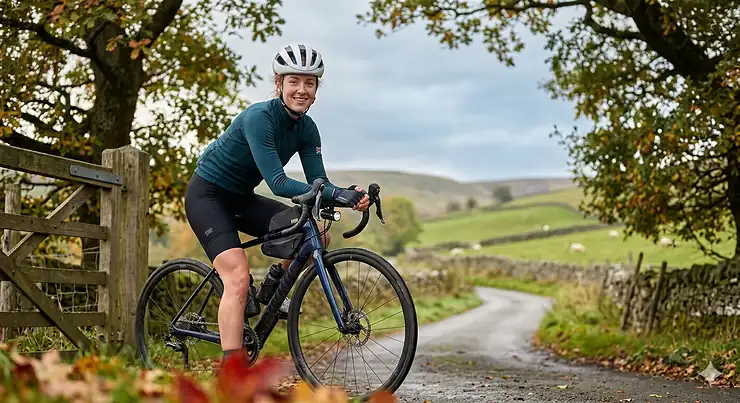
Here’s a thought. You’ve probably spent more time researching your tyres, your groupset, and possibly your water bottle cage than the single piece of kit that sits between your skull and the tarmac. British roads — riddled with potholes that no government seems particularly eager to fix, flanked by hedgerows that channel crosswinds like tunnels — deserve a helmet that’s actually up to the task.
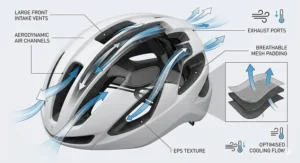
A lightweight road cycling helmet, at its best, is a masterpiece of engineering: a shell light enough that you almost forget it’s there, yet strong enough to absorb forces that would otherwise introduce your brain to some very unpleasant physics. The sweet spot is generally considered to be below 260g for a size medium — anything above that and you’re carrying unnecessary weight on your climbs, while anything recklessly light without proper safety tech is just a fancy hat.
This guide reviews seven lightweight road cycling helmets currently available on Amazon.co.uk, covering everything from a cracking budget option for the Sunday club rider to gram-weenie lids that professional peloton mechanics would nod approvingly at. We’ve looked at weight, ventilation, safety credentials, fit systems, and — critically for British riders — how they perform on damp winter rides when the temperature drops to somewhere between “bracing” and “absolutely miserable.”
Whether you’re grinding up the Yorkshire Dales, spinning through Richmond Park at 6am, or tackling a sportive in the Brecon Beacons, this is the guide that helps you make the right call. All seven helmets reviewed here are available now on Amazon.co.uk, with most Prime-eligible for next-day delivery.
What exactly is a lightweight road cycling helmet? Simply put, it’s a helmet designed specifically for road cycling, typically weighing under 260g in a medium size, featuring multiple ventilation ports, an aerodynamic in-mould shell, and a precision fit system — balancing low weight against certified impact protection to EN1078 or equivalent safety standards.
Quick Comparison: Lightweight Road Cycling Helmets at a Glance
| Helmet | Weight (M) | Key Safety Tech | Best For | Price Range |
|---|---|---|---|---|
| Lazer Tonic KinetiCore | ~270g | KinetiCore rotational | Budget/recreational | Under £70 |
| MET Trenta MIPS | ~285g | MIPS-C2 | Peloton riders | £150–£200 |
| ABUS AirBreaker | ~229g | Multi Speed design | Climbing/ventilation | £150–£200 |
| KASK Protone Icon WG11 | ~232g | WG11 rotational | Aero + comfort balance | £165–£220 |
| Giro Aries Spherical | ~265g | Spherical MIPS | All-round performance | £200–£280 |
| Lazer Z1 KinetiCore | ~220g | KinetiCore integrated | Ultralight climbers | £180–£230 |
| POC Ventral Lite | <200g | EN1078 minimalist | Gram-weenie racers | £200–£260 |
What this table immediately tells you is that “lightweight” isn’t simply a number on a spec sheet — it’s a trade-off. The POC Ventral Lite is the lightest on paper, but it achieves that by stripping out some of the protective tech that heavier competitors carry. Meanwhile, the Giro Aries Spherical sits heavier on the scales but packs the most comprehensive safety system of the lot. For most riders on British roads — where conditions are unpredictable and commutes might follow a 4am alarm — the middle of this table arguably offers the best value-for-safety proposition.
✨ Don’t Miss These Exclusive Deals!
🔍 Take your road cycling to the next level with these carefully selected helmets. Click on any highlighted item to check current pricing and availability on Amazon.co.uk. These picks will help you find exactly the right lid for your riding style!
💬 Just one click — help others make better buying decisions too! 😊
Top 7 Lightweight Road Cycling Helmets: Expert Analysis
1. Lazer Tonic KinetiCore — The Smart Budget Pick
The Lazer Tonic KinetiCore is what happens when a Belgian helmet brand decides that rotational impact protection shouldn’t be a luxury reserved for riders spending £200-plus on a lid. It earned a 4-star rating from Virginia Tech — the same independent institution that tests helmets worn by Tour de France professionals — and it costs less than a decent pair of cycling bib shorts.
KinetiCore is Lazer’s proprietary integrated crumple-zone system, built directly into the EPS foam rather than added as a separate layer. In plain English, this means the protection is structurally part of the helmet itself, which keeps weight down. The 18 vents create solid airflow for warm summer rides, and the Advanced TurnSys fit dial allows one-handed adjustment — genuinely useful when you’re 70km into a ride and your head seems to have mysteriously swollen. At roughly 270g in a medium, it’s not the lightest lid in this comparison, but at its price point it’s extraordinary.
For UK buyers, one feature stands out: eyewear dock slots that actually work, which matters enormously when you’re wrestling with sunglasses in variable British light. The helmet also accepts Lazer’s Universal LED rear light accessory — a sensible addition given the number of months British cyclists spend riding in grey murk.
UK buyers note: available via Amazon.co.uk in multiple colourways, typically Prime-eligible for next-day delivery.
✅ Pros:
- Virginia Tech 4-star rated at a budget price
- Integrated KinetiCore without MIPS added bulk
- Works with Lazer LED rear light accessory
❌ Cons:
- Not the lightest in class
- Fit system less refined than premium options
Price range: under £70 — outstanding value for a safety-certified, rotational-impact-protected road helmet.
2. MET Trenta MIPS — The Peloton Veteran
MET has been making helmets for the world’s best cyclists since before half the current peloton were born, and the Trenta MIPS reflects three decades of refined thinking. It weighs around 285g in a large — marginally above the “lightweight” threshold some purists would set — but what you gain in return is a helmet that excels specifically when riding in a group, which is what most British club cyclists actually do on a Saturday morning.
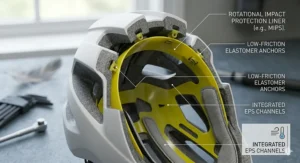
The tube-shaped rear section and internal air channelling deliver what MET claims is a 7% drag reduction versus a traditional road helmet construction — a meaningful figure when you’re sitting third wheel in a chain gang and your job is to hold the wheel without blowing up. The MIPS-C2 brain protection system handles rotational forces in the event of an angled impact, while the NACA vent (borrowed from aerospace, that acronym) positioned at the front creates cooling airflow that the spec sheet describes and your overheating skull will appreciate somewhere around kilometre 80.
The Safe-T Orbital fit system gives you 360° adjustment plus vertical and occipital positioning — which sounds excessive until you’ve spent three hours with a helmet that keeps creeping backwards. British reviewers consistently praise its fit particularly for longer, narrower head shapes common in the UK market. Available now on Amazon.co.uk.
✅ Pros:
- Aero-optimised for group riding — 7% drag reduction
- MIPS-C2 safety system
- Superb adjustability via Safe-T Orbital
❌ Cons:
- Heavier than most rivals at this price
- Older model may lack the latest impact tech
Price range: £150–£200 — solid value for a time-tested performance design with MIPS protection.
3. ABUS AirBreaker — The German-Engineered Climber’s Companion
The Germans make excellent things. Cars, classical music, and — as it turns out — road cycling helmets. The ABUS AirBreaker has carved out a loyal following among weight-conscious riders in the UK cycling community, and at around 229g for a medium, it’s not difficult to understand why. It sits in that peculiar sweet spot between “genuinely light” and “actually affordable for a non-sponsored human being.”
What ABUS calls its Multi Speed design is essentially a perforated panel structure that manages airflow without entirely sacrificing structural integrity. The result is a helmet that ventilates impressively well on climbs — where you’re generating maximum heat at minimum speed — while remaining aerodynamically sensible on the descents that follow. The fit system uses ABUS’s ActiFit dial, which provides clean, precise micro-adjustment.
One caveat worth noting for safety-conscious UK buyers: the original AirBreaker lacks MIPS or equivalent rotational impact technology, which some riders and safety researchers regard as a meaningful omission at this price point. ABUS has since released the newer AirBreaker 2.0 MIPS, which addresses this, though availability on Amazon.co.uk may vary. The original model is, however, one of the cleanest-looking road helmets on the market — low-profile, compact, and unlikely to attract the “cycling mushroom” criticism that plagues oversized ventilated lids. Currently available on Amazon.co.uk.
✅ Pros:
- Genuinely lightweight at ~229g
- Superb ventilation for climbing
- Compact, low-profile aesthetic
❌ Cons:
- Original model lacks MIPS/rotational protection
- Premium price for what’s essentially a safety trade-off
Price range: £150–£200 — excellent aerodynamics and ventilation, though safety-first riders should consider the MIPS upgrade.
4. KASK Protone Icon WG11 — The Italian Stallion of Road Helmets
KASK is an Italian brand that supplies helmets to some of cycling’s biggest teams, and the Protone Icon WG11 is their attempt to take everything the legendary original Protone stood for and make it better in every measurable way. At roughly 232g, it passes the lightweight test comfortably. More importantly, it passed KASK’s own WG11 rotational impact protocol — a test that the brand argues is more rigorous than standard EN1078 certification and closer to what a real-world crash actually puts a helmet through.
The OCTOFIT+ adjustment system is where this helmet earns its premium price in everyday use. The rubberised micro-dial provides 360° adjustment plus vertical positioning via a stabiliser bar across the nape of the neck, which sounds technical but in practice simply means the helmet stays where you put it, regardless of whether you’re sprinting, descending at 70km/h (43mph), or standing on the pedals attacking a steep pitch on a Welsh hillside. The CoolMax inner padding is removable and washable — a detail that matters more than you might expect after six months of British winter commuting.
Twenty ventilation holes keep air moving nicely, and the seamless shell construction (joining upper and lower sections without visible joins) gives the Protone Icon a visual elegance that justifies the price for riders who care about such things. One-touch eyewear docking is standard. Available now on Amazon.co.uk, typically Prime-eligible.
✅ Pros:
- WG11 rotational impact certification exceeds standard safety norms
- OCTOFIT+ system is genuinely superb for fit precision
- Washable CoolMax padding — practical for year-round UK riding
❌ Cons:
- Premium price that may sting without careful budgeting
- 20 vents is respectable but not class-leading for pure ventilation
Price range: £165–£220 — a serious helmet for serious riders who want certified rotational protection with Italian craftsmanship.
5. Giro Aries Spherical — Virginia Tech’s Number One
Virginia Tech’s Helmet Lab is to cycling safety what Michelin is to restaurant dining: independent, rigorous, and rather difficult to argue with. The Giro Aries Spherical has earned the coveted 5-star Virginia Tech rating — the highest achievable — making it not merely a fashionable choice but a scientifically validated one. It weighs around 265g in a medium, which is right at the boundary of “lightweight” by technical definition but feels substantially lighter on your head than that number suggests.
Spherical Technology is Giro’s implementation of MIPS, but with a crucial refinement: rather than placing the slip-plane against your head (the original MIPS approach), Giro sandwiches it between two layers of EPS foam, using a ball-and-socket design. The practical upshot is that you get rotational impact protection without any sensation of a loose inner liner moving against your skull — it’s more comfortable, and by Virginia Tech’s assessment, more protective. The AURA II Reinforcement Arch allows those massive vents to exist without compromising structural integrity; it’s genuinely impressive engineering.
For UK climbers specifically, the Aries is worth scrutinising closely. Its compact form reduces frontal area compared to Giro’s Aether, which translates to approximately 4% less aerodynamic drag — a figure that compounds meaningfully over a 20% gradient when you’re at 12km/h and suffering in the West Country somewhere. Currently available on Amazon.co.uk in multiple colourways and sizes.
✅ Pros:
- Virginia Tech 5-star safety rating — class-leading
- Spherical MIPS is more comfortable than standard MIPS
- Excellent aero-to-ventilation balance for all-round riding
❌ Cons:
- Among the pricier options in this comparison
- 265g is at the heavier end of “lightweight” definition
Price range: £200–£280 — premium pricing, but the safety data justifies every penny for riders who take head protection seriously.
6. Lazer Z1 KinetiCore — The Ultralight Climber’s Secret Weapon
The Lazer Z1 is something of a cycling legend — a helmet so associated with lightweight performance that the Belgian brand’s decision to upgrade it with KinetiCore technology rather than simply slapping a new colourway on it is genuinely admirable restraint. At 220g in a medium, the Z1 KinetiCore is among the lightest helmets available on Amazon.co.uk with modern rotational impact protection.
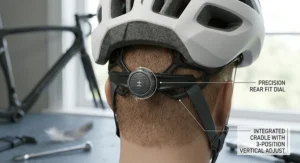
Fifteen per cent lighter than the outgoing Z1 MIPS and using 40g less plastic in its construction, the KinetiCore version is also demonstrably more sustainable — which matters to a growing number of UK cyclists making purchasing decisions on environmental grounds. The ScrollSys fit system cradles the skull with intuitive one-handed adjustment, while the floating headband design keeps the internal contact points ventilated. For riders who wear their hair in a ponytail, the vertical adjustment of the fit system accommodates this gracefully — a small detail that its competitors frequently overlook.
Practically speaking, the Z1 KinetiCore is the choice for UK sportive riders tackling serious climbing routes: the South Downs Way, the Fred Whitton Challenge, the Dragon Ride. Shaving 45-60g from your head compared to heavier rivals sounds trivial until you’re three hours into a steep Lakeland climb and your neck is making quietly resentful noises. Compatible with Lazer’s Universal LED rear light and available on Amazon.co.uk, typically Prime-eligible.
✅ Pros:
- 220g — among the lightest genuinely safety-certified options
- KinetiCore integrated protection without MIPS bulk
- Ponytail-friendly fit system with vertical adjustment
❌ Cons:
- Aerodynamic performance prioritises ventilation over pure speed
- Not the best choice if aero is your primary concern
Price range: £180–£230 — worth every gram saved for climbing-focused UK riders.
7. POC Ventral Lite — When Every Gram Is a Negotiation
Swedish brand POC occupies a peculiar space in cycling: technically impeccable, visually distinctive, and seemingly designed by engineers who view unnecessary weight the way most people view bad weather — as something to be eliminated. The POC Ventral Lite achieves something that sounds impossible when you first read the specification: it weighs under 200g in a medium, certified to EN1078 safety standard. To put that in context, a medium banana weighs roughly 120g. This helmet is approximately one and a half bananas on your head.
The Unibody Shell construction — a fully wrapped ultra-light PC shell — maintains structural integrity while allowing precision-placed ventilation ports and internal channels to force air through the helmet rather than around it. POC claims best-in-class ventilation, and while “best-in-class” is the kind of phrase marketing departments use without always earning it, independent testers have largely concurred: the Ventral Lite keeps heads notably cooler than its weight would suggest possible.
The honest caveat is this: the Ventral Lite achieves its featherweight status partly by eschewing MIPS or equivalent rotational impact technology. For context, the EN1078 standard covers linear impacts, but does not specifically address rotational forces. Whether this matters to you depends on your risk tolerance and riding context. For a time-trial specialist or a gram-obsessed climber who understands the trade-off, this is a legitimate choice. For a daily UK commuter navigating lorries on the A-road into Bristol, something with rotational impact tech might be the wiser long-term investment. Currently available directly on Amazon.co.uk.
✅ Pros:
- Under 200g — genuinely extraordinary for a certified road helmet
- Best-in-class ventilation for the weight
- EN1078 certified, clean minimalist construction
❌ Cons:
- No rotational impact protection (no MIPS or equivalent)
- Exposed EPS foam sections can dent with routine handling
Price range: £200–£260 — the definitive choice for weight-obsessed racers who understand and accept the safety trade-off.
Which Lightweight Road Cycling Helmet Are You, Actually? A UK Rider’s Decision Framework
This is where most buying guides go wrong: they tell you what’s objectively best, when what you actually need is what’s best for you. British cycling is wonderfully varied — from the criterium circuits of Manchester Velodrome regulars to the muddy sportive participant in Somerset wondering if their helmet will survive six hours of drizzle. Let’s work through it properly.
If you’re a budget-conscious weekend rider getting into road cycling and not yet prepared to spend north of £100 on a helmet — the Lazer Tonic KinetiCore is a genuinely sensible choice that won’t embarrass you safety-wise. The Virginia Tech 4-star rating means you’re not simply buying cheap; you’re buying independently validated protection at a price that leaves money for a decent pair of bibs.
If you ride primarily in a group or club setting — the MET Trenta MIPS is specifically engineered for peloton conditions. Its 7% drag reduction in group riding is real, its MIPS-C2 system is credible, and its fit system accommodates the wide range of British head shapes that show up on a Saturday morning club ride.
If climbing is your primary obsession — the Lazer Z1 KinetiCore is your lid. The 220g weight is meaningful over a multi-hour mountain day. The Fred Whitton, the Etape Caledonia, the Dragon Ride: events where every gram on your head translates to a slightly less terrible experience on the final climb.
If you want the best safety data available and price is secondary — the Giro Aries Spherical with its 5-star Virginia Tech rating is the objective answer. Buy it and stop thinking about it.
If you’re a gram-weenie who has fully weighed the rotational impact trade-off — the POC Ventral Lite exists for exactly you.
How to Choose the Right Lightweight Road Cycling Helmet in the UK: 7 Key Criteria
Buying a road helmet isn’t like buying a jersey. Getting it wrong is considerably more consequential. Here’s what actually matters, in priority order:
1. Safety certification — and then some. EN1078 is the minimum European standard, required for sale in the UK. But the real differentiator in 2026 is Virginia Tech’s 5-star rating system, which tests real-world impact scenarios the standard EN1078 doesn’t address. A helmet can be EN1078 certified and still perform poorly in Virginia Tech testing. Check both.
2. Rotational impact protection. MIPS, KinetiCore, WG11 — these are all approaches to the same problem: most real cycling crashes involve an oblique, rotational impact, not a straight-down vertical blow. Standard helmet testing doesn’t always capture this. For UK road cyclists sharing space with motor traffic, rotational protection is worth prioritising.
3. Ventilation versus aerodynamics. In British conditions, you’re rarely riding in temperatures that demand maximum ventilation, but you’re also rarely aerodynamic enough to justify sacrificing cooling for a pure aero lid. Most riders in the UK are better served by a ventilated helmet like the Giro Aries or Lazer Z1 than a full aero shell — unless you’re actually racing time trials.
4. Fit system quality. A helmet that fits poorly is a helmet that moves in a crash. KASK’s OCTOFIT+, Giro’s Roc Loc 5+, Lazer’s RollSys — these are not marketing features. A dial fit system that lets you micro-adjust on the move, particularly in cold conditions when you’re wearing an under-helmet skull cap, is practically useful. Test it properly before buying.
5. Weight in context. Below 260g, the real-world difference between, say, 220g and 265g is approximately 45g. On a long climb at threshold, that’s noticeable but not transformative. If a heavier helmet has significantly better safety credentials, that’s usually the better trade-off for non-elite riders.
6. UK climate practicality. If you’re riding year-round in Britain — and if you’re serious about it, you probably are — consider whether the helmet accommodates a thin skull cap underneath, whether the padding is washable (because six months of wet commuting will demand this), and whether eyewear integration works with clear lenses as well as dark.
7. Amazon.co.uk availability and warranty. Post-Brexit, some EU-manufactured cycling products carry import adjustments in UK pricing. All seven helmets in this guide are sold directly on Amazon.co.uk with UK consumer protection rights under the Consumer Rights Act 2015, including a 14-day cooling-off period for online purchases.
Maintaining Your Lightweight Road Cycling Helmet in British Conditions
A lightweight road cycling helmet is, in a sense, a single-use safety product in slow motion — it’s absorbing minor knocks and UV degradation gradually until it can no longer reliably absorb a major one. Here’s how to extend its useful life in the typically damp, UV-inconsistent British climate:
Wash the pads regularly. Most quality helmets (Giro, KASK, MET) feature removable, hand-washable pads. British summer riding involves less sweat than Spain but more intermittent downpours — damp pads that sit unwashed eventually degrade the EPS foam beneath. Remove and hand-wash pads every 6–8 weeks during active riding seasons.
Store away from UV and heat. The boot of your car in summer can reach temperatures that begin to soften EPS foam — problematic for a material whose energy-absorption properties depend on its molecular structure remaining intact. Use a soft helmet bag (MET includes one; others can be purchased inexpensively) for storage and transport.
The five-year rule. Most manufacturers recommend replacing road helmets every five years regardless of apparent condition, as EPS foam degrades with UV exposure even without visible damage. In British light conditions, five years is a reasonable guideline.
After any crash: replace immediately. An EPS liner that has absorbed crash energy may look undamaged but is structurally compromised. This isn’t manufacturer caution — it’s physics. The UK government’s cycling safety guidance consistently emphasises that a crashed helmet must be replaced, not inspected and reused.
Damp storage caution. Storing helmets in a damp garden shed over winter accelerates foam degradation. A dry cupboard indoors — challenging, admittedly, in the average British terraced house where storage is a premium — is significantly better.
Common Mistakes UK Buyers Make When Choosing a Road Cycling Helmet
The lightweight road cycling helmet category is rife with purchasing mistakes. Here’s what separates an informed buyer from someone who’ll be returning their lid within a fortnight:
Confusing “lightweight” with “unsafe.” The POC Ventral Lite weighs under 200g and is EN1078 certified. The KASK Protone Icon weighs 232g and carries WG11 rotational impact approval. Neither is inherently safer or more dangerous for being lighter; what matters is which safety standard the helmet meets, not simply how heavy it is. Dismiss the “heavier means safer” myth.
Buying on aesthetics before checking fit. Road helmets are sold online in abundance, which is convenient, but road helmet fit is deeply personal. A helmet that looks perfect on a Cyclingnews review photo may sit entirely wrongly on your particular head shape. Use the 30-day Amazon return window to test fit properly during actual rides before committing.
Ignoring the rotational impact question. Too many UK buyers remain unaware that standard EN1078 certification doesn’t test for rotational impact — the kind that’s most likely in a road cycling crash involving glancing contact with a car or a fall at speed. MIPS, KinetiCore, and WG11 all address this gap. It’s worth understanding what your chosen helmet does and doesn’t protect against.
Dismissing budget options entirely. The Lazer Tonic KinetiCore costs under £70 and has a Virginia Tech 4-star rating. A helmet that costs three times as much and has only a 3-star rating is, in safety terms, the inferior product. Price and protection do not correlate as neatly as the cycling industry might prefer you to believe.
Forgetting about replacement cycle. UK consumers often wear their cycling helmets beyond the recommended five-year replacement period, partly because premium helmets are expensive and partly because a helmet without visible damage looks “fine.” It isn’t necessarily fine. Factor the total cost of ownership — including eventual replacement — when choosing your initial price point.
Lightweight Road Cycling Helmet Weight Comparison: What the Grams Actually Mean
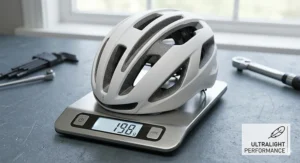
According to research from Cyclist magazine, anything below 260g for a size medium is considered lightweight in road cycling terms. Here’s what those numbers mean in the real world, on real British roads:
| Weight Category | Example | Practical Impact |
|---|---|---|
| Under 200g (ultralight) | POC Ventral Lite | Noticeable on long climbs; minimal on flat |
| 200–230g (lightweight) | Lazer Z1, ABUS AirBreaker | Marginal difference for most amateur riders |
| 230–260g (standard light) | KASK Protone, Giro Aries | Indistinguishable from lighter options for most |
| 260–300g (touring/commuter) | MET Trenta MIPS | Slightly heavier on extended climbs |
The honest truth is that weight differences below 60g are broadly imperceptible to most amateur cyclists below threshold efforts. What you feel on a 15% gradient after three hours isn’t usually your helmet — it’s your legs. Spend weight-savings budget on your wheels before your helmet, unless you’re genuinely racing at a level where marginal gains are meaningful.
❓ FAQ: Lightweight Road Cycling Helmets UK
❓ What is considered lightweight for a road cycling helmet in the UK?
❓ Do lightweight road cycling helmets meet UK safety standards?
❓ Is MIPS worth it on a lightweight road cycling helmet?
❓ Can I get a lightweight road cycling helmet delivered next day from Amazon.co.uk?
❓ How often should I replace my lightweight road cycling helmet in the UK?
Final Verdict: Which Lightweight Road Cycling Helmet Should You Buy?
Right then. Seven helmets, one head, and a tarmac that isn’t getting any smoother. Here’s the honest summary.
For most UK road cyclists seeking the best all-round lightweight road cycling helmet available on Amazon.co.uk right now, the Giro Aries Spherical is the recommendation this guide keeps returning to. The Virginia Tech 5-star rating is not marketing — it’s independent science. The Spherical MIPS system is genuinely comfortable. And while 265g isn’t the lightest on this list, it’s light enough that the difference between it and the 220g Lazer Z1 is roughly half a chocolate digestive biscuit, which you’ve probably earned on any ride long enough to make helmet weight relevant.
If budget is your primary constraint, the Lazer Tonic KinetiCore does something remarkable: it makes certified rotational impact protection and a Virginia Tech 4-star rating accessible for under £70. That’s a legitimately good deal in 2026.
If you climb — seriously, obsessively, the kind of climbing where you’ve already removed every unnecessary gram from your bike — the Lazer Z1 KinetiCore at 220g is your answer. And if you want the lightest helmet that still passes a recognised safety standard and money is genuinely no object, the POC Ventral Lite exists precisely for you, with the understanding that you’re accepting a rotational impact trade-off that other helmets on this list don’t ask you to make.
Whatever you choose, check the current price and availability on Amazon.co.uk before buying — pricing fluctuates, Prime eligibility varies by seller, and the cycling market moves quickly in 2026.
✨ Don’t Miss These Exclusive Deals!
🔍 Click any highlighted helmet in this guide to check current pricing and availability on Amazon.co.uk. Prime members enjoy free next-day delivery on most of these picks — your new lid could be on your head before your next ride.
Recommended for You 🚴♂️
- Best MIPS Road Cycling Helmet UK 2026: 7 Top Picks Rated
- Road Bike Helmet Buying Guide: 7 Best Picks UK 2026
- Best Road Cycling Helmet UK 2026: 7 Expert-Tested Picks
Disclaimer: This article contains affiliate links. As an Amazon Associate, I earn from qualifying purchases. If you purchase products through these links, we may earn a small commission at no additional cost to you.
✨ Found this helpful? Share it with your mates! 💬🤗
