
In This Article
Cleats are the smallest, cheapest part of a clipless setup. They also decide whether you glide away from the traffic lights or topple sideways into a hedge. Choosing the best SPD cleats isn’t about chasing a badge. It’s about matching a release style, an amount of float and a walking profile to how you actually ride. Get it right and your feet feel bolted on. Get it wrong and you’ll be reading knee-pain forums at midnight.
A quick note on how this guide was built. Everything here comes from published specifications, manufacturer and retailer data, and aggregated reviewer sentiment gathered in 2026. I haven’t tested these cleats myself and won’t pretend otherwise. What I can do is read the spec sheets closely and explain what the numbers mean on a wet Tuesday commute or a boggy gravel lane.
What Are SPD Cleats?
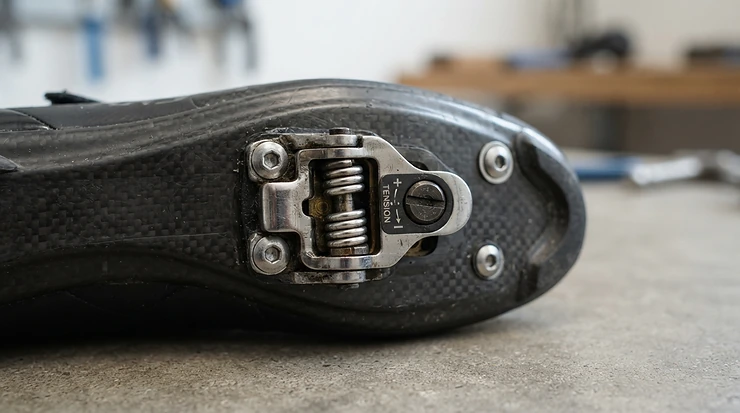
SPD cleats are small, two-bolt metal plates that screw into a cycling shoe’s sole and lock into a matching SPD-style pedal. Because they sit recessed inside a lugged sole, you can walk almost normally off the bike. That’s why they dominate mountain biking, gravel, touring and commuting. The name comes from Shimano Pedaling Dynamics, and the Wikipedia entry on Shimano Pedaling Dynamics is a handy primer on how the system evolved.
Below you’ll find seven real options, including the cleats behind the SPD cleats vs SPD-SL cleats debate. Then comes a plain-English guide to multi-release and single-release designs, a walkability reality check, and setup advice that might just save your knees.
Quick Comparison: The Best SPD Cleats at a Glance
| Product | Release Type | Entry | Float | Best For |
|---|---|---|---|---|
| Shimano SM-SH51 | Single | Front-first | 4° | Confident riders wanting a secure, everyday hold |
| Shimano SM-SH56 | Multi | Front-first | 4° | Nervous beginners and stop-start commuters |
| Shimano CL-MT001 | Single | Multi-entry | 4° | Technical trails and frequent re-clipping |
| Look X-Track | Single | Front-first | 6° | Riders who want extra float on SPD pedals |
| Look X-Track Easy | Multi | Front-first | 6° | Knee-sensitive riders who also want easy exits |
| Crankbrothers Standard Release | Single (15° angle) | Crankbrothers pedals only | 6° | Mud-heavy off-road riding |
| Time ATAC Easy 10° | Easy (10° angle) | ATAC pedals only | ±5° | Gravel and commuting with a knee-friendly feel |
Reading the table, the three Shimano cleats and the two Look cleats are the true SPD-compatible options, so they suit anyone with standard SPD pedals. The Crankbrothers Standard Release and Time ATAC Easy 10° are excellent but only work with their own pedals, so treat them as a system decision rather than a cleat swap. If you’re unsure where to start, the Shimano SM-SH51 is the safe default and the Shimano SM-SH56 is the gentler on-ramp.
💬 Just one click — help others make better buying decisions too!😊
Top 7 Best SPD Cleats for UK Riders: Expert Analysis
Each pick below covers what the specs mean in practice and what reviewers commonly report. Prices are ranges only, so check current pricing before you buy.
1. Shimano SM-SH51 — the dependable single-release standard
The Shimano SM-SH51 ships in the box with most of Shimano’s off-road pedals, so plenty of riders own a pair without realising. It offers 4° of float and releases only with a deliberate sideways heel twist. That sounds restrictive, but it’s exactly what keeps your foot planted when you’re sprinting out of a corner or hauling on the pedals. Based on the spec comparison, the “hard to release” reputation means fewer accidental pop-outs.
The learning curve is short, and you can back off the pedal’s spring tension to soften it. Heavier and more aggressive riders tend to favour it because it resists unwanted release under load. Reviewers consistently describe it as consistent and long-lived, and the recurring newcomer complaint is fear of unclipping. BikeRadar’s guidance is that lowering release tension usually fixes that better than switching cleat.
The catch is front-first entry only, so a fumbled re-clip on a steep climb costs you a beat.
Pros:
- ✅ Secure hold that resists accidental release
- ✅ Ships with most Shimano off-road pedals
- ✅ Reputation for consistency and long life
Cons:
- ❌ Front-first entry only
- ❌ Unclipping feels daunting for some beginners
Expect roughly £10-£18 a pair at the time of research. Given its track record, it’s the best-value cleat in this round-up.
2. Shimano SM-SH56 — the confidence-builder for clipless beginners
The Shimano SM-SH56 is the silver cleat with an “M” embossed on the rear tab. It shares the SH51‘s 4° float and front-first entry but adds multi-directional release. You can twist your heel out, pull up, or roll the shoe off the pedal. That extra freedom matters most when you’re braking for a junction and your brain hasn’t finished the “twist your heel” instruction. It’s bundled with Shimano’s easy-release and hybrid pedals, which tells you who it’s aimed at. The trade-off is that a cleat which lets go easily can also let go unexpectedly. Some riders report unintended release if they lift the foot or curl up a relaxed ankle. Reviewer sentiment splits neatly: beginners and stop-start commuters praise the reassurance, while technical trail riders often go back to the SH51. Wear from heavy walking on hard pavement is another common comment, so treat it as a consumable.
Pros:
- ✅ Multiple release directions reduce the “stuck” fear
- ✅ Familiar SPD feel with 4° of float
- ✅ Ideal for traffic lights and stop-start riding
Cons:
- ❌ Easier to release accidentally under load
- ❌ Less suited to jumps or rough technical terrain
Budget for around £10-£18. It’s great value if it gets you riding clipped in with confidence.
3. Shimano CL-MT001 — the multi-entry upgrade for messy re-clips
The Shimano CL-MT001 is the newest of Shimano’s off-road cleats. Its party trick is multi-entry: you can clip in front-first, rear-first, or simply stomp straight down. Release still works like the classic SH51, twisting out on a single plane, so it isn’t a multi-release cleat. The tapered, thinner profile is also said to make walking quieter. In practice, this means fewer “pedal-dance” moments after a foot dab on a rutted climb, which is when you most want to be back on the power. Shimano’s own product page shows a perfect score, but from only a small pool of reviews, so hold that loosely. Retailer feedback is mixed. Some riders say they click in faster, while at least one says it felt barely different from the SH51. Another found it harder to exit than the SH56. That’s expected, because release behaviour matches the SH51.
Pros:
- ✅ Clip in from front, rear or straight down
- ✅ Same secure single-release behaviour as SH51
- ✅ Thinner, tapered profile for quieter walking
Cons:
- ❌ Small review pool so far
- ❌ Some riders notice little difference from SH51
Expect around £15-£25 a pair. It’s worth the premium on technical terrain, but marginal if you ride smooth gravel and commute.
4. Look X-Track — extra float for SPD-compatible pedals
The Look X-Track cleat is SPD-compatible, and Look’s support pages confirm it. It offers 6° of float and a 13° release angle with single-direction release. Look says the cleat itself determines the float, so it can add extra wiggle room to Shimano pedals. That matters if your knees dislike being locked into a fixed foot angle.
Reviewers of the X-Track system describe the added float as something you get used to within one ride. One tester noted a stair-riding wobble where the increased angle caught him out, which is a reminder that more float means less positional certainty. The X-Track is otherwise close to the SH51 in shape and feel.
Retailer listings suggest it suits performance riding both off-road and on pavement. It’s a smart swap for riders who find standard 4° float a touch restrictive. Just check your pedal tension afterwards, since the X-Track engagement can feel different on worn pedals.
Pros:
- ✅ 6° of float for knee-friendly freedom
- ✅ Works with standard SPD pedals
- ✅ Familiar single-release behaviour
Cons:
- ❌ Extra float can feel vague when sprinting
- ❌ Fewer long-term reviews than Shimano’s cleats
Around £12-£22 is typical. It’s good value if float, rather than price, is your priority.
5. Look X-Track Easy — multi-release for sensitive knees and nerves
The Look X-Track Easy is Look’s answer to the SH56. It has the same 6° float and 13° release angle as the standard X-Track, but adds multi-directional release. BikeRadar treats it as the direct equivalent of the SH56. Retailers pitch it at beginners and at riders with knee or ankle concerns, or with small feet and less leverage.
That last point is worth pausing on. Leverage matters when you’re twisting out of a spring-loaded pedal. It combines the two most common comfort fixes: extra float and an easy exit. The downside mirrors the SH56: an easy release can turn into an unwanted one on rough ground or with a heavy pedal stroke.
Reviewer commentary on Look’s system is generally positive, but expect a smaller pool of user feedback than for Shimano. If you’re recovering from a knee niggle and want the least stressful setup, this is a thoughtful shortlist entry.
Pros:
- ✅ Multi-release plus generous 6° float
- ✅ Suits knee- or ankle-sensitive riders
- ✅ Works on standard SPD-style pedals
Cons:
- ❌ Can release unintentionally on rough terrain
- ❌ Smaller pool of user reviews
Budget around £12-£22. It’s a fair price for a genuinely comfort-first cleat.

6. Crankbrothers Standard Release — the mud-shedding alternative
The Crankbrothers Standard Release is not SPD-compatible. It only works with Crankbrothers pedals such as Eggbeater, Candy and Mallet. It still uses a two-hole shoe pattern, so it fits the same shoes. It offers 6° of float and a 15° release angle, and a 0° float version exists for a locked-in feel. There’s also an Easy Release variant with a 10° angle.
The cleat is brass, so the cleat wears rather than the more expensive pedal. That’s a sensible design choice, and it also means replacing cleats regularly. Crankbrothers’ own product page shows a very high rating, around 4.9 from 60 reviews, with users praising ease of entry and consistent release. That’s a manufacturer’s page, so treat it as a positive signal rather than a verdict.
The Standard Release commits you to a different pedal ecosystem, which is a bigger decision than a cleat swap. The reward is excellent mud clearance and a distinctive four-sided entry.
Pros:
- ✅ Generous 6° float with a clear 0° alternative
- ✅ Brass wear protects the pedal body
- ✅ Highly rated on the manufacturer’s site
Cons:
- ❌ Only fits Crankbrothers pedals, not SPD
- ❌ Brass cleats wear and need replacing
Expect around £15-£25. It’s good value if you’re already in the Crankbrothers camp.
7. Time ATAC Easy 10° — the knee-friendly ATAC option
The Time ATAC Easy 10° is the cleat for Time’s ATAC pedals, not SPD. It offers a 10° release angle with roughly ±5° of float and weighs around 45g a pair in brass. The “Easy” name is slightly misleading. Time positions it as the option for performance riders who want a shorter release angle than the standard 13° or 17° cleats. Cycling Weekly’s reviewer says the 10° option suits gravel and commuting, especially if you’re less experienced clipped in and stop-start a lot. The same reviewer notes that brass cleats seem to wear faster than Shimano’s steel ones. Another downside is that few people ride ATAC, which makes swapping bikes with friends awkward. Reviewer feedback praises the knee-friendly feel and the clean engagement. If you value that character and don’t mind a slightly niche system, it’s a serious contender.
Pros:
- ✅ Short 10° release angle for quick exits
- ✅ Knee-friendly float and feel
- ✅ Lightweight, around 45g per pair
Cons:
- ❌ Brass wears faster than steel SPD cleats
- ❌ Only works with Time ATAC pedals
Expect roughly £15-£25 a pair. It offers solid value for ATAC riders, though a niche system limits swapping.
Head-to-Head Spec Comparison
| Product | Works With | Release | Float | Price Range | Review Signal | Best For |
|---|---|---|---|---|---|---|
| Shimano SM-SH51 | SPD pedals | Single | 4° | £10-£18 | Long-lived, consistent | Everyday secure riding |
| Shimano SM-SH56 | SPD pedals | Multi | 4° | £10-£18 | Beginner-friendly, can release early | New clipless riders |
| Shimano CL-MT001 | SPD pedals | Single (multi-entry) | 4° | £15-£25 | Small pool, mixed on benefit | Technical terrain |
| Look X-Track | SPD pedals | Single (13°) | 6° | £12-£22 | Positive, extra float noted | Float seekers |
| Look X-Track Easy | SPD pedals | Multi (13°) | 6° | £12-£22 | Limited but positive | Sensitive knees |
| Crankbrothers Standard Release | Crankbrothers only | Single (15°) | 6° or 0° | £15-£25 | About 4.9 from 60 on brand site | Muddy off-road |
| Time ATAC Easy 10° | ATAC only | 10° | ±5° | £15-£25 | Knee-friendly, wears faster | Gravel and commuting |
Looking at the comparison above, the Shimano SM-SH51 and Shimano SM-SH56 deliver the best value if you want a cleat that fits any SPD pedal, and the price gap between them is negligible. If you need more float, the Look X-Track and Look X-Track Easy add 2° on paper without switching pedals. Buyers of the Crankbrothers Standard Release and Time ATAC Easy 10° should remember that the real purchase is the pedal system, not the cleat.
SPD Cleats vs SPD-SL Cleats: Which System Is Right for You?
The SPD cleats vs SPD-SL cleats debate boils down to one question: how much will you walk, stop and start? SPD cleats are small, metal and two-bolt, while SPD-SL cleats are larger, plastic and three-bolt. BikeRadar’s SPD vs SPD-SL guide explains that SPD is Shimano’s off-road and everyday system and SPD-SL is aimed at road performance. SPD launched in 1990, and SPD-SL arrived later, reaching its current form around the 2003 model year.
The practical consequences are big. SPD pedals are usually double-sided, so you can clip in from either face without a fumble. SPD-SL pedals are single-sided and tend to hang at an awkward angle, so clipping in takes practice. The large SPD-SL cleat protrudes from the sole, which makes walking clumsy and slippery, and it wears faster. On the plus side, SPD-SL gives a bigger platform for sprinting and is typically a little lighter, by roughly 50g-100g a pair at similar prices.
| Feature | SPD (two-bolt) | SPD-SL (three-bolt) | Best For |
|---|---|---|---|
| Cleat material | Metal | Plastic | SPD for durability |
| Entry | Double-sided | Single-sided | SPD for commuters |
| Walking | Recessed and easy | Awkward and slippery | SPD for touring |
| Platform | Smaller | Larger | SPD-SL for sprinting |
| Mud handling | Sheds well | Clogs more easily | SPD for wet UK winters |
The table makes the trade-off plain: SPD wins on everyday practicality and SPD-SL wins on pure road performance. If your bike lives outdoors, your commute involves stairs, or your rides stop at cafes, SPD cleats are the sensible choice. Race-focused road riders who rarely put a foot down are the natural SPD-SL crowd.
Multi-Release vs Single-Release Cleats: What the Difference Actually Feels Like
Multi-release vs single-release cleats is the choice that trips up most newcomers. Single-release cleats like the Shimano SM-SH51 and Shimano CL-MT001 let go only when you twist your heel outward in a flat plane. Multi-release SPD cleats like the Shimano SM-SH56 and Look X-Track Easy also let go if you pull up or roll the shoe off the pedal. BikeRadar’s comparison of the SH51, SH56 and MT001 lays this out clearly.
The gentle logic is that multi-release is more forgiving when panic strikes, which is why Shimano bundles it with its easy-release and hybrid pedals. The counter-logic is that an easier release is also an easier accidental release. That’s why Shimano’s off-road range ships with the SH51 and MT001 rather than the SH56. Some riders with a pulling pedal stroke are prone to unwanted unclipping on multi-release cleats.
Here’s the advice I’d give based on the evidence. Start with single-release cleats and lower the pedal’s release tension. BikeRadar’s writers suggest this often helps as much as multi-directional release. If you still feel trapped after a few weeks, move to multi-release. Riders with knee or ankle issues, small feet, or heavy stop-start commutes can reasonably begin with multi-release. Technical trail riders and anyone who jumps or sprints hard should think twice, because a cleat that pops out mid-stroke is a bigger hazard than one that takes a moment to twist off.
How to Choose the Best SPD Cleats
Here are six steps to choosing the best SPD cleats for your situation.
- Confirm your pedal system first. Check whether your pedals are SPD-compatible, Crankbrothers or ATAC. A cleat that doesn’t match the pedal simply won’t work, so this rules out half the market in seconds.
- Check your shoe’s bolt pattern. SPD cleats need a two-hole shoe. Three-bolt road shoes need a different system entirely.
- Pick a release style. Single-release suits confident riders and rough terrain. Multi-release suits beginners, commuters and those with mobility concerns.
- Decide how much float you need. Standard Shimano cleats give 4°, while Look X-Track offers 6°. More float is kinder to twisty knees but feels less locked-in during sprints.
- Consider entry needs. If you re-clip constantly on technical trails, the multi-entry Shimano CL-MT001 may justify its premium.
- Set a budget and buy spares. Cleats are cheap, so buying a spare pair is sensible insurance. Prices in this guide are ranges, so check current prices.
Recessed Cleat Walkability: What Really Matters Off the Bike
Recessed cleat walkability is the quiet superpower of SPD cleats. The cleat sits inside a moulded cavity in the sole, so most of your weight lands on tread rather than metal. BikeRadar highlights this as a key advantage over SPD-SL, where you end up waddling on a protruding cleat.
Not all recessed cleats are equal, though. Shimano describes the CL-MT001 as thinner and tapered for quieter walking, though one retailer reviewer said they noticed no walkability gain. Treat that as a marketing claim worth testing rather than a guarantee. The bigger factors are the shoe’s tread depth and how worn the cleat is. A worn cleat that sits proud of the sole will slip on smooth floors regardless of brand.
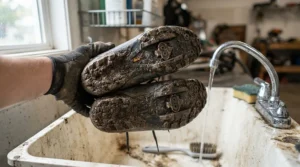
For UK riders who stop at cafes, climb stairs at the office, or push through boggy fields, three habits help. Choose shoes with a proper lugged outsole, replace cleats before they’re heavily worn, and consider cleat covers if you walk a lot on hard surfaces. Reviewers commonly note that heavy pavement walking wears SPD cleats faster, so covers or a spare pair are cheap insurance. If your rides involve more walking than pedalling, recessed cleats aren’t a luxury; they’re the whole point.
The Two-Bolt Cleat System Explained: What Fits What
The two-bolt cleat system is simple in principle and slightly confusing in practice. Every cleat here mounts to a shoe using two bolts, but that doesn’t mean they’re interchangeable. BikeRadar notes that Shimano’s two-bolt patents have expired, which opened the door to SPD-compatible pedals from other brands including Look.
The rule of thumb runs like this:
- Shimano SPD, Look X-Track: cross-compatible, so Shimano SM-SH51, Shimano SM-SH56, Shimano CL-MT001, Look X-Track and Look X-Track Easy all work with standard SPD pedals.
- Crankbrothers and Time ATAC: two-bolt but incompatible with SPD, so Crankbrothers Standard Release and Time ATAC Easy 10° need their own pedals.
- Three-bolt road systems: entirely different shoes and cleats.
Mounting is forgiving. The bolt holes allow some fore-aft and side-to-side positioning, and BikeRadar says Shimano’s cleats are left/right interchangeable with an arrow marking the front. Before buying, check the pedal name, the cleat name and your shoe’s sole. Ten seconds of checking beats a week of returns.
Setup Guide: Fitting Cleats and Surviving Your First 30 Days
Good cleat setup is the cheapest upgrade in cycling. Here’s a practical routine that goes beyond what a listing tells you.
Fitting day. Position the cleat roughly beneath the ball of your foot, with the front arrow pointing forwards. Keep the cleats symmetrical to start, then snug the bolts so you can still nudge them. Sit on the bike and clip in with a wall or sturdy support beside you.
Set the tension low. Turn the release hex on the pedal anticlockwise to reduce tension. Practise clipping out repeatedly before you leave the driveway. Do the same for each side of the pedal, since they’re adjusted independently.
The first 30 days. Ride quiet lanes or a park loop for your first outings. Practise unclipping one foot early, well before junctions. If a knee complains, revisit cleat position and float rather than pushing through. Cycling Weekly’s guide to cleat float is a helpful read on why float matters for joint comfort. Check bolts after your first ride, since they can settle.
Maintenance. Keep the cleat area clear of grit, wipe pedals after muddy rides, and swap cleats when engagement feels sloppy. BikeRadar notes that wear on the binding surfaces after a few years can make engagement less secure, and that replacements are cheap. Don’t wait for a failure before replacing them.
✨ Don’t Miss These Exclusive Deals!
🔍 Take your riding to the next level with these carefully selected cleats. Click on any highlighted item to check current pricing and availability. These small upgrades will help you create a secure, comfortable clip-in setup you’ll trust on every ride!

Which Cleats for Which Rider? Three Real-World Scenarios
Three example profiles show how the choices play out. These are illustrative scenarios built from the specs and reviewer themes, not personal anecdotes.
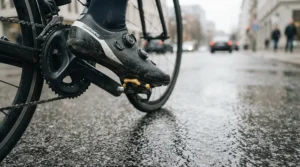
The commuter with eight miles each way. You stop at a dozen lights, lock up in a bike shed and clatter into the office. Recessed cleat walkability and easy exits matter most. The Shimano SM-SH56 fits well, with the Look X-Track Easy as a roomier-float alternative. Budget around £10-£22 and carry a spare pair. If your pedals have a flat side for trainers, even better.
The weekend gravel rider in wet British lanes. You spend Saturdays in mud, roots and the odd fall-off. Secure retention and easy re-clips beat everything. The Shimano SM-SH51 is the safe pick. The Shimano CL-MT001 earns its premium if you dab and re-clip constantly. Prefer a Crankbrothers pedal for mud clearance? The Crankbrothers Standard Release suits that ecosystem.
The returning rider with a fussy knee. You want float and a forgiving exit. The Look X-Track Easy offers 6° of float and multi-release, while the Time ATAC Easy 10° suits riders happy to move to ATAC pedals. In both cases, set the tension low and revisit cleat position if discomfort lingers.
Problem → Solution: Fixing Common SPD Cleat Headaches
Most cleat problems have simple fixes.
- “I can’t unclip in time.” Lower the pedal’s release tension first. If it’s still stressful, switch to the Shimano SM-SH56 or Look X-Track Easy.
- “I keep popping out.” Increase tension and consider the Shimano SM-SH51, since multi-release designs are more prone to unintended release.
- “My knees ache.” Revisit cleat position and try more float, such as the Look X-Track at 6°. If it persists, see a bike fitter or your GP.
- “My feet get hot spots.” BikeRadar notes SPD’s smaller contact area can cause hotspots. Thin shims between the cleat and shoe can help.
- “I slip when walking.” Check for a worn cleat or sole, replace it, or add cleat covers.
Common Mistakes When Buying SPD Cleats
The first mistake is buying on brand name alone. A cleat that doesn’t match your pedal system is a dead purchase, so confirm compatibility before adding to basket. The second is assuming multi-release is automatically safer. It reduces the “stuck” risk but increases the accidental-release risk, which matters on rough ground.
Third, riders chase float without understanding it. More float isn’t always better, since 6° can feel vaguer than 4° when you’re sprinting. Fourth is ignoring pedal tension. Many “difficult cleats” are really over-tight pedals. Fifth is leaving worn cleats on far too long, which quietly ruins engagement and walkability.
Finally, some buyers assume a premium cleat cures a poor fit. If your shoe is the wrong size or your cleat position is off, no cleat will rescue it. Spend an hour on setup before spending money on upgrades.
Long-Term Cost & Maintenance: What Cleats Really Cost You
Cleats are among the cheapest consumables in cycling, so total cost of ownership is mostly about replacement frequency and what it saves you elsewhere. Steel Shimano cleats have a reputation for lasting longer than brass, while brass cleats like the Time ATAC Easy 10° and Crankbrothers Standard Release wear faster by design, protecting the pedal. That’s a fair trade if you keep spares.
| Product | Price Range | Wear Notes | Value Verdict | Best For |
|---|---|---|---|---|
| Shimano SM-SH51 | £10-£18 | Long-lived | Best all-round value | Everyday riders |
| Shimano SM-SH56 | £10-£18 | Wears with heavy walking | Great for beginners | New riders |
| Shimano CL-MT001 | £15-£25 | Forged steel, small track record | Worth it on technical terrain | Trail riders |
| Look X-Track | £12-£22 | Limited long-term data | Good for float seekers | Sensitive knees |
| Look X-Track Easy | £12-£22 | Limited long-term data | Comfort-first choice | Cautious riders |
| Crankbrothers Standard Release | £15-£25 | Brass wears by design | Good within its ecosystem | Mud riders |
| Time ATAC Easy 10° | £15-£25 | Brass wears faster | Good within ATAC | Gravel and commute |
The takeaway is that price differences are small, so choose on riding style rather than the pound in your pocket. The Shimano SM-SH51 and Shimano SM-SH56 are the cheapest to keep in a spare parts drawer. The brass cleats need more frequent replacement, so budget for a spare pair. Prices vary, so check current pricing and availability.
FAQ
❓ Do SPD cleats fit any SPD pedals?
❓ How long do SPD cleats last?
❓ Can I use SPD cleats on a Peloton bike?
❓ How much float do I need in SPD cleats?
❓ Are left and right SPD cleats different?
Conclusion: Which of the Best SPD Cleats Should You Buy?
The best SPD cleats are the ones that match how you ride. For most people that means the Shimano SM-SH51, a secure, proven single-release cleat. If you’re new to clipless pedals or ride in constant stop-start traffic, the Shimano SM-SH56 or Look X-Track Easy are gentler starting points. Technical trail riders should look at the multi-entry Shimano CL-MT001, and riders who want extra float should consider the Look X-Track. If you’re already committed to another pedal ecosystem, the Crankbrothers Standard Release and Time ATAC Easy 10° are strong in their own right.
Remember the core trade-offs. Multi-release is friendlier but easier to trigger by accident. More float is kinder to knees but feels vaguer under power. And whatever you choose, lower your pedal tension, practise clipping out early and keep a spare pair in the drawer. Cleats are cheap, so a small amount of care goes a long way.
✨ Ready to clip in with confidence? 🚴♂️ Click on any highlighted product to check current pricing and availability, then pick the cleat that fits your riding and get out there!
Recommended for You
- Cleats For Knee Pain Cycling: 7 Best Picks To Stop The Ache (2026)
- Road Bike Cleats: 7 Best Picks for Comfort & Power (2026)
- Women’s Road Shoes for Racing: 7 Best Picks for 2026
Disclaimer: This article contains affiliate links. As an Amazon Associate, I earn from qualifying purchases. If you purchase products through these links, we may earn a small commission at no additional cost to you.
✨ Found this helpful? Share it with your friends! 💬🤗
