In This Article
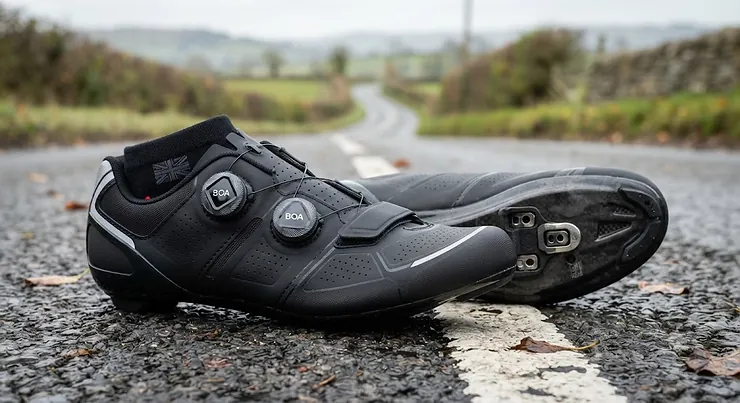
Somewhere between your first proper club run and the moment you realise your toes have gone numb on a three-hour sportive, you start paying attention to how your shoes actually close. BOA dial road cycling shoes solve a problem that Velcro straps and laces have quietly tolerated for decades: uneven pressure. A dial-and-cable system distributes tension across the whole foot rather than clamping down at a single strap, and once you’ve ridden in one, going back feels a bit like swapping a good bike fit for a hand-me-down.
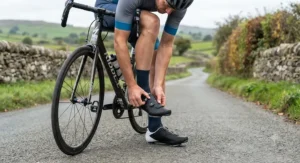
So, what is a BOA dial road cycling shoe? In short, it’s a road shoe fastened by a small rotating dial connected to a thin steel cable and lace guides, rather than laces or hook-and-loop straps, giving riders precise, on-the-fly tension adjustment without stopping to retie anything.
This guide is built from real product research rather than marketing copy, and it leans heavily on genuine reviewer testing, including insight from physiotherapy guidance on foot pain that develops over thousands of pedal strokes on a ride. We’ve picked seven actual shoes on the market, spanning budget, mid-range and premium territory, and we’ll walk through single BOA vs double BOA road shoes, BOA vs Velcro road cycling shoes, and how shoe fit precision changes depending on which micro-adjustable closure system you choose. No invented reviews, no fictional products — just honest analysis you can actually use before you spend your money.
Quick Comparison Table
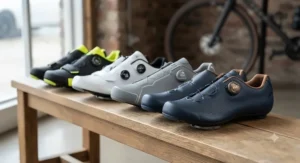
Before we get into the detail, here’s the lay of the land. These seven BOA dial road cycling shoes span roughly £90 to £360, and no two use quite the same closure configuration.
| Shoe | BOA Configuration | Price Range | Best For |
|---|---|---|---|
| Scott Road Comp Boa | Single BOA L6 + Velcro strap | around £90-110 | Beginners on a budget |
| Specialized Torch 2.0 | Single BOA dial | around £150-165 | Mid-range value seekers |
| Van Rysel RCR | Double Habu (BOA-made) dials | around £170-180 | Racers wanting pro-level stiffness cheap |
| Specialized Torch 3.0 | Dual BOA Li2 (S2-SV Snap) dials | around £200-220 | All-round performance riders |
| Scott Road Vertec Vent Boa | Twin BOA L6 dials | around £225-235 | Hot-weather and summer racing |
| Shimano S-Phyre RC903 | Dual BOA Li2 dials | around £300-330 | Aggressive racers, wide-fit needs |
| Rapha Pro Team | Twin BOA Li2 dials | around £340-360 | Long-distance comfort seekers |
Looking at this spread, the jump from single to double BOA tends to track with price, though the Van Rysel RCR proves that isn’t a hard rule — it undercuts several dual-dial rivals while still delivering a genuinely stiff carbon sole. If your budget caps out under £150, a single-dial shoe like the Scott Road Comp Boa or Specialized Torch 2.0 will still transform your fit compared with Velcro, while riders chasing marginal gains will lean toward the dual-dial options further down the table.
💬 Found a shoe that fits your riding style already? Jump straight to the full breakdown below!🤗
Top 7 BOA Dial Road Cycling Shoes: Expert Analysis
1. Scott Road Comp Boa — best value single-dial entry point
The standout here is simple: a genuine BOA dial at a price point where most rivals still fob you off with basic Velcro. Scott pairs a single BOA L6 dial with a supporting Velcro toe strap on a nylon and glass-fibre sole rated 6 out of 10 for stiffness, which translates to a shoe that flexes noticeably more than a carbon-soled model but never feels genuinely soft underfoot. At roughly 295g per shoe, it’s not a lightweight, and the ErgoLogic insole with its metatarsal button adds a welcome bit of arch support most budget shoes skip entirely.
Based on the spec sheet, this is a shoe built for comfort-first riders rather than racers — the roomier last and single dial suit beginners, commuters upgrading to clipless, and anyone whose priority is getting through a three-hour ride without foot pain rather than shaving watts. Reviewers at Cyclist noted the shoe runs around 50g heavier than comparable entry-level rivals, but found little else to fault, praising the comfortable, easily adjustable fit and clear cleat-alignment markings that make first-time setup painless.
Pros:
- ✅ Genuine BOA dial at a genuinely budget price
- ✅ Roomy, comfortable last suits wider feet
- ✅ Clear cleat markings speed up first setup
Cons:
- ❌ Noticeably heavier than similarly priced rivals
- ❌ Nylon sole flexes more under hard efforts
At around £90-110, the Scott Road Comp Boa represents strong value for anyone dipping a toe into dial-closure shoes without wanting to commit serious money.
2. Specialized Torch 2.0 — best carbon sole under £170
What most buyers overlook about mid-range shoes is that the sole matters more than the dial count, and the Torch 2.0 nails that priority. A single BOA dial handles closure, but the real story is the full carbon sole rated 7 out of 10 for stiffness — a genuine step up from the nylon composites found on cheaper shoes — wrapped in a mesh and TPU upper that keeps weight down to roughly 249g per shoe.
On paper, this means you’re getting flagship-adjacent power transfer without flagship pricing, and the single-dial layout keeps things simple for riders who find twin dials fiddly. It’s a genuinely good fit for club riders and sportive regulars who want carbon stiffness but don’t need race-day levels of micro-adjustment. Reviewers at RoadCyclingUK rated it among the best mid-range shoes available, highlighting the impressively low weight for the price bracket alongside strong ventilation, though that same ventilation makes the shoe better suited to milder UK conditions than deep winter.
Pros:
- ✅ Full carbon sole rarely seen under £170
- ✅ Genuinely light for a mid-range shoe
- ✅ Excellent ventilation for warm-weather riding
Cons:
- ❌ Single dial gives less granular tension spread than twin-dial rivals
- ❌ Mesh-heavy upper struggles in cold or wet UK winters
Priced around £150-165, the Specialized Torch 2.0 is arguably the sweet spot for riders stepping up from their first pair of clipless shoes.
3. Van Rysel RCR — best pro-level stiffness for the money
Here’s what the spec sheet won’t tell you outright: this shoe uses a full carbon sole rated 12 out of 12 on Van Rysel’s stiffness scale — the same rating claimed by shoes costing twice as much — while undercutting most rivals by roughly half. The double dials are branded Habu rather than BOA, but they’re developed in partnership with BOA and function identically, right down to the pull-to-release mechanism.
Based on the spec comparison, this shoe earns its place among serious club racers and sportive riders who want race-day stiffness without a race-day invoice. Decathlon-AG2R La Mondiale riders have used these in competition, which says something about the underlying engineering even before you factor in the price. Reviewers at Cycling Weekly and BikeRadar independently found the stiffness genuinely comparable to shoes costing considerably more, though several noted the forefoot runs on the narrow side, so it’s worth trying before committing if you have wider feet.
Pros:
- ✅ Race-level 12/12 sole stiffness at a mid-tier price
- ✅ BOA-engineered Habu dials, not a cheap imitation
- ✅ Wipe-clean upper copes well with British weather
Cons:
- ❌ Narrow forefoot fit won’t suit everyone
- ❌ Basic stock insole may need upgrading for arch support
At around £170-180, the Van Rysel RCR is arguably the biggest value disruptor in this entire list.
4. Specialized Torch 3.0 — best all-rounder for everyday performance
The dual BOA Li2 dials here — branded S2-SV Snap — are the headline feature, and they matter more than the number suggests: two independent dials mean tension across the instep and the mid-foot can be tuned separately, so a foot that’s wide at the toes but narrow at the heel doesn’t end up in a compromised, one-size-fits-none fit. Sitting on a FACT carbon sole rated 8.5, the Torch 3.0 borrows heavily from the pricier S-Works Torch without borrowing its price tag.
What most buyers overlook is that this shoe is designed to disappear underfoot rather than announce itself, and reviewers consistently note exactly that. Cyclist found it hard to see how performance could meaningfully be improved at this price, while Cycling Weekly commented that comfort levels punched well above the £200 asking price. It’s a genuinely strong fit for riders who do everything from club chaingangs to the odd sportive and don’t want a shoe that specialises too narrowly.
Pros:
- ✅ Twin-dial adjustment evens out pressure across the whole foot
- ✅ Carbon sole stiffness close to genuine race shoes
- ✅ Comfortable straight out of the box, minimal break-in
Cons:
- ❌ Plastic dials feel less premium than metal alternatives higher up the range
- ❌ Costs meaningfully more than the single-dial Torch 2.0
Expect to pay around £200-220 for the Specialized Torch 3.0, making it a genuinely sensible upgrade point.
5. Scott Road Vertec Vent Boa — best for hot-weather and summer training
The standout feature is right there in the name: this is a warm-weather shoe first and foremost, built around twin BOA L6 rotary dials and a heavily perforated upper designed to move air across the foot rather than trap heat. The carbon fibre and nylon composite sole keeps things stiff without tipping into race-shoe rigidity, and the twin dials mean you can fine-tune fit as your feet inevitably swell over a long, hot ride.
Reviewers consistently note that the last runs roomier than Scott’s more performance-focused lines, particularly through the toe box, which means the front dials often need doing up more firmly than expected to stop the foot lifting inside the shoe. BikeRadar’s testing found the shoes sat competitively on weight against rivals like the Torch 3.0 and Van Rysel RCR, making this a sensible pick for anyone training through a British heatwave or planning a summer cycling trip abroad, though the extra ventilation is a genuine drawback once fog and drizzle set in.
Pros:
- ✅ Genuinely excellent ventilation for hot conditions
- ✅ Twin-dial fit adjusts well as feet swell on long rides
- ✅ Competitive weight against similarly priced rivals
Cons:
- ❌ Roomy last may need firmer dial tension than expected
- ❌ Poor match for cold, wet UK winter riding
At around £225-235, the Scott Road Vertec Vent Boa earns its keep specifically for warm-weather miles.
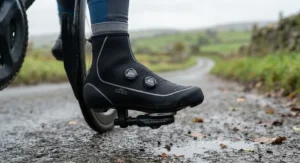
6. Shimano S-Phyre RC903 — best for aggressive racing and wide feet
Dual BOA Li2 dials with Shimano’s proprietary Powerzone routing sit at the heart of this shoe, and the routing detail actually matters: Shimano’s engineers used pedalling-pressure data gathered via bikefitting.com to map exactly where tension should concentrate through the stroke, rather than simply spreading it evenly. Paired with a carbon sole rated 12 for stiffness and a sturdy external heel cup lined with a grippy fabric, this is unmistakably a shoe built for hard, competitive efforts.
The spec sheet won’t tell you this, but Shimano’s own aggregated customer data — drawn from 54 verified reviews — shows an overall rating of 4.57 out of 5, with fit and comfort the most frequently praised attributes and price the most commonly debated one. Reviewers consistently note the wide-fit version genuinely broadens who this shoe suits, correcting a narrower fit that frustrated some riders on the previous generation. If you’re racing, doing structured intervals, or simply putting out serious wattage in a sprint, this is a shoe built to keep your foot exactly where you put it.
Pros:
- ✅ Race-proven stiffness with genuinely secure lockdown
- ✅ Powerzone dial routing targets pressure intelligently
- ✅ Wide-fit option widens who the shoe actually suits
Cons:
- ❌ Premium price puts it out of reach for casual riders
- ❌ Standard last still runs narrow at the toes for some feet
Sitting in the £300-330 range at the time of research, the Shimano S-Phyre RC903 is a genuine race shoe, priced like one.
7. Rapha Pro Team — best for long-distance comfort without pressure points
Twin BOA Li2 dials secure a distinctive 3D-woven Powerweave upper here, and the standout advantage is how evenly that upper distributes load — reviewers repeatedly mention an absence of the hot spots and pinch points that plague lesser woven uppers. The carbon sole is genuinely one of the stiffest tested by several UK reviewers, and the hydrophobic treatment on the Powerweave material means surface spray beads off rather than soaking straight through.
Here’s what the spec comparison reveals: at roughly 292g per shoe, this isn’t the lightest option on this list, but reviewers consistently rank comfort as the standout trait, ahead of outright stiffness. Road.cc’s testing found the dials tighten and loosen evenly with no noticeable stretch developing in the upper over extended use, and the heel cap is replaceable — a small but genuinely useful detail for shoes intended to last several seasons. The catch, and it’s a fair one to flag honestly, is that recent pricing has climbed by roughly 35% from the previous generation’s £260, which makes the value case noticeably harder to argue than it once was.
Pros:
- ✅ Genuinely exceptional comfort with no reported pressure points
- ✅ Durable Powerweave upper holds its shape over time
- ✅ Replaceable heel cap extends usable lifespan
Cons:
- ❌ Recent price rise makes the value argument tougher
- ❌ Not fully waterproof in sustained heavy rain
Expect to pay around £340-360 for the Rapha Pro Team, positioning it as a considered, long-term investment rather than an impulse buy.
Practical Usage Guide: Setting Up Your BOA Dial Road Shoes Properly
Getting the most from any of these seven shoes starts before you even clip in. On first wear, tighten the dials in stages rather than cranking straight to full tension — start at the bottom dial (if there are two), get that snug, then move to the upper dial for the instep. This two-stage approach avoids the classic beginner mistake of over-tightening the top of the foot while leaving the heel loose, which is one of the most common causes of heel lift on climbs.
During the first 30 days, expect the upper material to settle slightly, particularly on TPU and mesh shoes like the Specialized Torch range — recheck tension after your first few rides rather than assuming the initial fit is final. For maintenance, BOA and Habu-style dials tolerate rain and grit reasonably well, but a quick rinse under a tap after muddy rides prevents grit working into the cable guides. If a dial ever feels gritty or sticks when turning, most manufacturers, including BOA itself, offer replacement dial kits rather than requiring a whole new shoe — a genuinely underrated point when weighing long-term value. One common early mistake: fully releasing the dial every single time you take the shoes off, rather than simply loosening it, which adds unnecessary wear to the mechanism over a full season of riding.
👇 Ready to try a proper dial-closure fit for yourself? Compare today’s options before you commit.🤗
Real-World Scenarios: Which BOA Road Shoe Actually Suits You?
Picture three riders. First, a university student commuting six miles each way and doing the occasional weekend club run on a tight budget — the Scott Road Comp Boa makes sense here, since the roomy fit tolerates thicker winter socks and the price leaves room for a decent lock and lights. Second, a 40-something returning to cycling after a break, doing a sportive most months and wanting genuine performance without overspending — the Specialized Torch 3.0 or Van Rysel RCR both fit that brief, offering carbon stiffness and twin-dial precision at a price that doesn’t require justifying to a partner.
Third, a competitive club racer doing structured training three times a week plus weekend races, where marginal gains in stiffness and lockdown genuinely translate to results — the Shimano S-Phyre RC903 earns its price here, particularly for riders with wider feet who’ve struggled with narrower race lasts previously. None of these are hard rules; a low-mileage rider with genuinely wide feet might still prefer the S-Phyre’s wide-fit option over a narrower budget shoe, regardless of how often they ride. Match the shoe to your actual riding pattern and foot shape first, and let the badge on the side come second.
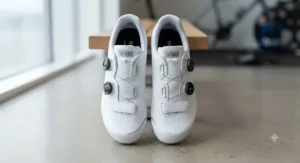
How to Choose BOA Dial Road Cycling Shoes
Picking between seven genuinely different shoes gets easier with a structured approach. Here’s what to weigh, in order of importance:
- Foot shape first. A narrow shoe on a wide foot will never feel right, regardless of how good the dial system is — check reviewer notes on last width before anything else.
- Single vs double dial. One dial is simpler and cheaper; two dials distribute pressure more precisely across the whole foot, which matters more on rides over two hours.
- Sole stiffness for your riding. Racers benefit from a genuinely stiff carbon sole; commuters and social riders rarely notice the difference beyond a certain point.
- Ventilation vs weatherproofing. UK riders training through winter should weight this more heavily than reviews written for sunnier climates suggest.
- Weight, realistically. A 50g difference per shoe won’t be felt on the bike; don’t let marginal-gains marketing override genuine fit.
- Budget headroom for cleats and insoles. Factor in that many stock insoles are basic, and a proper metatarsal-support insole can transform comfort on longer rides.
- Warranty and dial-replacement policy. Cheaper replacement parts extend the effective life of an otherwise pricier shoe considerably.
BOA vs Velcro Road Cycling Shoes
This is one of the most persistent debates in road cycling kit, and it’s worth resolving properly rather than dismissing Velcro out of hand. Velcro straps are simpler, cheaper to manufacture, and genuinely more tolerant of grit and mud working into the mechanism — there’s less to go wrong. What they can’t do is distribute pressure evenly; a strap concentrates tension along its own width, which is precisely why riders with sensitive metatarsal areas tend to develop hot spots faster in strap-only shoes.
| Feature | BOA Dial | Velcro Strap |
|---|---|---|
| Fit precision | Micro-adjustable, even pressure | Fixed increments, uneven pressure |
| On-the-fly adjustment | Yes, one hand, mid-ride | Difficult while riding |
| Durability | Very good; dials replaceable | Straps wear and lose grip over years |
| Weather tolerance | Good; occasional rinse needed | Excellent; almost nothing to clog |
| Typical price premium | Adds £20-60 to a comparable shoe | None |
The table makes the trade-off fairly explicit: Velcro wins on simplicity and price, while BOA wins decisively on fit precision and mid-ride adjustability. For anyone riding regularly beyond an hour, the ability to loosen a dial slightly on a long climb and retighten on the descent is a genuinely practical advantage that straps simply can’t replicate, which is largely why every shoe on this list — bar the entry-level Scott’s supporting strap — leans on dial closure for its primary fastening.
Single BOA vs Double BOA Road Shoes
The jump from one dial to two isn’t just about cost — it changes how the shoe actually behaves on your foot. A single dial, as fitted to the Scott Road Comp Boa and Specialized Torch 2.0, routes one cable across the whole upper, meaning tension gets distributed broadly but not independently. Tighten it enough to secure the heel, and the instep can end up more compressed than intended; loosen it for instep comfort, and heel lift can creep in on hard efforts.
A double-dial setup, found on the Van Rysel RCR, Specialized Torch 3.0, Scott Road Vertec Vent Boa, Shimano S-Phyre RC903 and Rapha Pro Team, splits that job into two independently controlled zones — typically a lower dial managing the mid-foot and forefoot, and an upper dial handling the instep and ankle collar. Reviewers consistently note this results in a noticeably more secure, evenly pressured fit, particularly for riders with unusual foot volume distribution.
| Factor | Single BOA | Double BOA |
|---|---|---|
| Fit precision | Good, whole-foot | Excellent, zone-specific |
| Typical price impact | Lower | Higher |
| Best for | Casual riders, beginners | Racers, long-distance riders |
| Weight | Marginally lighter | Marginally heavier |
Based on the spec comparison, double BOA genuinely earns its premium for riders doing serious mileage or racing, while a single dial remains entirely sufficient — and noticeably cheaper — for commuting and social riding where absolute fit precision matters less.
Micro-Adjustable Closure Systems and Cycling Shoe Fastening Technology
It’s worth understanding what’s actually happening inside these dials, because the underlying cycling shoe fastening technology explains why BOA-style systems have become the dominant closure across performance footwear generally, not just cycling. The mechanism traces back to guide-wire systems originally developed for angioplasty procedures, later adapted by its inventor into a dial-and-cable closure first used commercially on snowboard boots. Each system, regardless of brand name, shares three core components: a compact dial, a thin high-strength cable, and low-friction guides that route that cable across specific pressure points.
What most buyers overlook is that not all dials are equal even within the BOA family — the L6 dials fitted to the Scott shoes on this list are simpler, single-direction-release units, while the Li2 dials on the Specialized, Shimano and Rapha shoes allow finer two-way micro-adjustment and a quick-pop full release. Van Rysel’s Habu dials, built in partnership with BOA, function almost identically to genuine Li2 units despite the different branding. For everyday riding, the practical difference between dial tiers is smaller than marketing suggests; the meaningful gap is between any dial system and traditional laces or straps, not between one dial generation and the next.
Shoe Fit Precision: Why It Matters More Than Stiffness
Riders obsess over sole stiffness numbers, but physiotherapists who’ve worked with elite teams point out that much of the discomfort riders experience — burning, numbness, hot sensations in the sole — actually originates from nerves running between the metatarsal heads being compressed, not from any lack of sole rigidity. This is precisely where shoe fit precision earns its keep: a dial system that distributes tension evenly reduces exactly that kind of localised compression, whereas a poorly fitted strap can concentrate pressure directly over the nerve-dense forefoot.
Reviewers consistently note that riders who switch from Velcro to a well-fitted double-BOA shoe report fewer hot spots on rides beyond two hours, even when sole stiffness is comparable between the two shoes being compared. If you’ve previously blamed a stiff sole for foot pain, it’s genuinely worth considering that the closure system, and how evenly it spreads load, may be the bigger factor. Getting cleat position right alongside a well-tuned dial closure typically resolves more foot discomfort than upgrading to a stiffer sole alone ever will.
Common Mistakes When Buying BOA Dial Road Cycling Shoes
Even experienced riders trip up here. The first mistake is buying based on stiffness rating alone, ignoring last shape entirely — a size 43 from one brand can fit completely differently from a size 43 in another, regardless of how many BOA dials it carries. The second is assuming more dials always means better; a single-dial shoe that genuinely fits your foot shape will outperform a poorly fitted double-dial rival every time.
A third common error is skipping the insole entirely when budgeting, then wondering why a genuinely well-reviewed shoe still causes discomfort on longer rides — several shoes on this list, including the Scott Road Comp Boa and Van Rysel RCR, ship with fairly basic stock insoles that benefit from an upgrade. Finally, riders regularly underestimate how much weather matters for UK conditions specifically; a heavily ventilated shoe like the Scott Road Vertec Vent Boa that reads brilliantly in a summer review can feel genuinely miserable on a wet November commute, so cross-reference any review’s testing conditions against your actual riding calendar before buying.
Long-Term Cost & Maintenance
Sole cost isn’t the whole picture with any of these shoes. Dial-based closures generally outlast Velcro over a multi-year lifespan, since straps lose grip and fray with repeated use while dials, being mechanical rather than adhesive, tend to fail more gracefully — and when they do fail, most manufacturers sell replacement dial kits rather than forcing a full shoe replacement, which meaningfully extends usable life on a pricier shoe like the Rapha Pro Team or Shimano S-Phyre RC903.
Factor cleats into your total cost of ownership too, since three-bolt road cleats wear faster than most riders expect and typically need replacing every 3,000-5,000 miles depending on how often you walk in them. For anyone commuting regularly, it’s worth knowing that cycling equipment, including certain footwear, can sometimes be purchased through workplace schemes; the government’s guidance on tax and reporting rules for employers lending or hiring bicycles to employees is worth checking with your HR department, as it can meaningfully soften the cost of a premium pair of shoes bought alongside a new bike. Over a three-to-five-year ownership window, a well-maintained £200 dual-BOA shoe with periodic dial servicing will often work out cheaper per ride than repeatedly replacing a £90 Velcro shoe every eighteen months.
FAQ
❓ What's the difference between BOA dial road cycling shoes and Velcro?
❓ Are single BOA dial road shoes good enough for regular riding?
❓ How long do BOA dials last on cycling shoes?
❓ Can I replace a broken BOA dial myself?
❓ Do double BOA dial road shoes fit better than single dial ones?
Conclusion
Choosing between these seven BOA dial road cycling shoes really comes down to matching closure precision, sole stiffness and budget to how you actually ride, not to which shoe looks fastest in a photo. The Scott Road Comp Boa and Specialized Torch 2.0 prove that a single dial and a modest budget can still deliver a genuinely comfortable, adjustable fit for beginners and commuters. The Van Rysel RCR remains the standout value pick for riders wanting race-level stiffness without a race-level invoice, while the Specialized Torch 3.0 and Scott Road Vertec Vent Boa sit comfortably in the middle, offering twin-dial precision for everyday performance riding.
At the top end, the Shimano S-Phyre RC903 and Rapha Pro Team both justify their price for riders who genuinely need race-day lockdown or long-distance comfort respectively, though neither is a casual purchase. Whichever you land on, remember that shoe fit precision and honest attention to your own foot shape will do more for your comfort than any single spec on a marketing page. Try before you buy where you can, and let real aggregated reviews, not glossy photography, guide the final call.
✨ Don’t Miss These Exclusive Deals!
🔍 Take your search for the perfect road shoe further with these carefully selected picks. Click through to check current pricing and availability, and find the fit that actually works for your rides.
Recommended for You
- 7 Best SPD-SL Shoes for Racing in 2026: Stiff, Fast, Proven
- Best SPD-SL Shoes 2026: 7 Brilliant Road Cleats Rated
- 7 Best Budget Clipless Road Shoes 2026: Ride Further for Less
Disclaimer: This article contains affiliate links. As an Amazon Associate, I earn from qualifying purchases. If you purchase products through these links, we may earn a small commission at no additional cost to you.
✨ Found this helpful? Share it with your friends! 💬🤗
