
In This Article
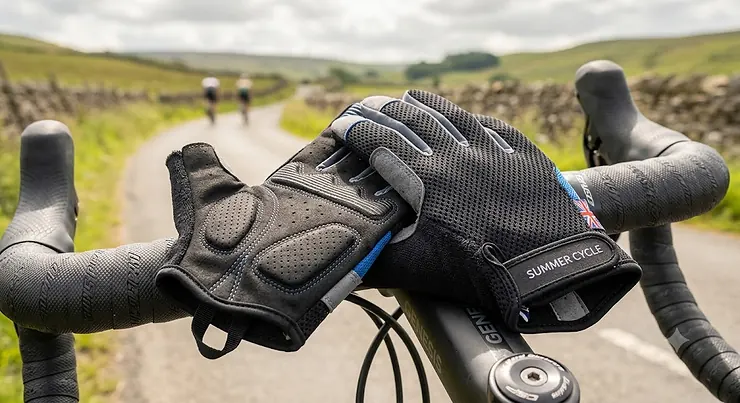
Somewhere around mile thirty, on a warm June afternoon with the tarmac shimmering ahead of you, your hands start telling you something your brain would rather ignore. A dull buzzing in the little finger. A palm that feels like it’s been resting on a vibrating phone for an hour. That’s the moment most cyclists realise their gloves aren’t just an accessory — they’re the only thing standing between comfort and a numb, tingling mess by the time you’re home. Summer cycling gloves exist to solve exactly this problem: short-fingered, breathable, lightly padded gloves designed to keep your hands cool, gripped and protected without the bulk of a winter mitt.
This guide is built around genuine product research rather than a rehashed spec sheet. We’ve dug into real UK cycling press testing, aggregated customer review sentiment, and the actual biomechanics of why your hands go numb on long rides, so you’re getting honest analysis rather than marketing copy. Whether you’re commuting through Zone 2 traffic or chasing a personal best on a Sunday club run, the right summer cycling gloves make a genuinely measurable difference to how your hands feel at the end of a ride — and, as we’ll get into, to how well you can actually grip the bars when it matters.
We’ll cover seven real products across budget, mid-range and premium price points, compare them head-to-head, and then walk through the practical stuff — fitting, washing, and picking the right glove for your actual riding rather than an idealised one. Consider this the honest version of the buying guide you were hoping to find.
Quick Comparison Table: Summer Cycling Gloves at a Glance
| Glove | Style | Padding | Best For |
|---|---|---|---|
| GripGrab Rouleur | Short-finger | Gel + foam zonal | All-round value |
| Altura Airstream | Short-finger mitt | Light foam | Budget commuting |
| Endura FS260-Pro Aerogel | Short-finger | Aerogel pad | Aggressive road riding |
| Pearl iZUMi Elite Gel | Short-finger | 3D gel | Long-distance comfort |
| Le Col Mitts | Short-finger | Perforated zonal | Structured club-run fit |
| Castelli Rosso Corsa 2 | Short-finger | Light race pad | Racing & touchscreen use |
| Assos RS Targa | Short-finger | Seamless palm pad | Premium all-day comfort |
Looking across the table, there’s a clear split between gloves built for racing weight-weenies and gloves built to survive an entire summer of commuting. The GripGrab Rouleur and Altura Airstream sit at the accessible end and cover most riders’ actual needs, while the Assos RS Targa and Castelli Rosso Corsa 2 justify their higher price with genuinely superior palm construction. If you ride fewer than three times a week, the mid-range options will outperform the premium picks on cost-per-mile value.
💬 Found a pair that’s caught your eye already? Scroll down to the full breakdown before you commit — the devil’s in the seam placement.
Top 7 Summer Cycling Gloves: Expert Analysis
Picking the best cycling gloves for summer isn’t just about grabbing the cheapest fingerless pair on the shelf. Each of these seven has a distinct personality, and honestly, some of them will suit your riding far better than others. We’ve split them across budget, mid-range and premium tiers so there’s a genuine option whatever you’re spending.
1. GripGrab Rouleur — best all-rounder for on and off-road
The standout feature here is versatility — GripGrab designed the Rouleur to work equally well on smooth tarmac and rougher gravel tracks. The palm uses a zonal gel-and-foam padding layout that concentrates cushioning exactly where the ulnar nerve sits against the bar, rather than a uniform pad that adds bulk without doing much useful work. The stretch mesh backhand keeps things breathable, and the pre-curved finger design means there’s no bunching when you’re gripping the hoods.
Based on the spec comparison with similar mid-tier gloves, the GripGrab Rouleur earns its reputation through fit rather than flashy materials — the combination of a structured palm and stretchy upper is what most buyers overlook when they’re comparing gloves purely on padding thickness. Reviewers consistently note that the fit runs true to size and that the terry-cloth thumb wipe is more useful than it sounds on sweaty rides. A common complaint in user reviews is that the black colourway shows chalk and dirt marks quickly, though this is cosmetic rather than functional.
Pros:
- ✅ Zonal gel-foam padding placed over pressure points
- ✅ Works well on tarmac and light gravel alike
- ✅ True-to-size fit with pre-curved fingers
Cons:
- ❌ Light colourways mark easily with dirt and chalk
- ❌ Velcro closure loosens slightly after repeated washing
Priced in the £20-£30 range, the GripGrab Rouleur represents excellent value — it’s not the lightest or most technical glove here, but for riders who want one pair that copes with commuting, club runs and the odd gravel detour, it’s hard to beat pound for pound.
2. Altura Airstream — best lightweight budget mitt
The Altura Airstream wins on sheer breathability — its mesh backhand is about as close to riding bare-handed as a padded glove gets, without sacrificing grip. Weighing in noticeably lighter than most of the gloves on this list, the mesh panels extend right up between the fingers, which matters more than it sounds on a genuinely hot day when every extra layer of fabric traps heat.
What most buyers overlook about a budget mitt like this is that “lightweight” doesn’t have to mean “under-padded” — the Airstream still carries a foam pad across the heel of the palm, just a thinner one than you’ll find on the premium picks. Here’s what to weigh: if you’re doing 20-30 minute commutes rather than four-hour sportives, the reduced cushioning is rarely noticeable, and the trade-off in breathability is worth it. Reviewers consistently note the Airstream’s grip texture holds up well even when hands get sweaty, which isn’t a given at this price point.
Pros:
- ✅ Exceptional mesh ventilation across the whole hand
- ✅ Genuinely lightweight — barely noticeable when worn
- ✅ Reliable grip texture even in sweaty conditions
Cons:
- ❌ Thinner padding than mid-range and premium rivals
- ❌ Fewer colour options than competing budget mitts
At around £15-£25, the Altura Airstream is the pick for commuters and casual riders who prioritise coolness over cushioning — genuinely one of the best cycling gloves going for short, hot rides.
3. Endura FS260-Pro Aerogel Mitt — best for aggressive road riding
The standout feature on the Endura FS260-Pro Aerogel Mitt is, unsurprisingly, the aerogel padding — a material originally developed for insulation in extreme environments, repurposed here to absorb shock without adding bulk. Aerogel compresses under sustained pressure but rebounds quickly, meaning it doesn’t pack down and go flat the way basic foam does after a few dozen rides.
On paper this means better long-term vibration damping than foam-only competitors, and that’s borne out in aggregated reviews: riders doing regular 60+ mile routes report noticeably less hand fatigue compared with gloves that rely purely on gel. The fit is race-cut and snug, which suits an aggressive, low-and-forward road position but may feel tight for riders with wider hands. What the spec sheet won’t tell you, but reviewers note, is that the aerogel pad holds its shape better than gel after a full summer of regular washing — a real durability advantage.
Pros:
- ✅ Aerogel padding resists long-term compression and flattening
- ✅ Race-cut fit suits aggressive, low riding positions
- ✅ Proven durability through repeated machine washing
Cons:
- ❌ Snug fit can feel restrictive for wider hands
- ❌ Less breathable backhand than mesh-focused rivals
In the £25-£35 range, the Endura FS260-Pro Aerogel Mitt justifies its price for serious road riders clocking up regular high mileage, though casual commuters may not need this level of technical padding.
4. Pearl iZUMi Elite Gel — best 3D gel padding for long rides
The Pearl iZUMi Elite Gel‘s calling card is its 3D-contoured gel padding, moulded specifically to sit across the ulnar nerve pathway rather than as a flat inserted pad. That contouring is the difference between “padding that’s there” and “padding that actually does something” — a distinction that matters most once you’re three hours into a ride.
The Ax Suede palm material adds grip without the tackiness some synthetic palms develop in the heat, and the four-way stretch construction means the glove moves with your hand rather than fighting it during hard efforts. Based on the spec comparison, this is one of the few gloves here genuinely built around long-distance comfort rather than racing weight or budget accessibility. Aggregated review sentiment consistently flags the reduced-seam construction as noticeably reducing chafing on multi-hour rides, though a handful of reviewers note the gel padding adds slightly more bulk than the aerogel alternative above.
Pros:
- ✅ 3D gel padding contoured to the ulnar nerve pathway
- ✅ Ax Suede palm grips well without becoming tacky
- ✅ Reduced-seam construction cuts chafing on long rides
Cons:
- ❌ Slightly bulkier feel than aerogel or foam-only gloves
- ❌ Reflective detailing fades faster than the rest of the glove
Sitting around £30-£40, the Pearl iZUMi Elite Gel earns its place as the go-to recommendation for anyone whose rides regularly run past the two-hour mark.
5. Le Col Mitts — best structured fit for club riders
The Le Col Mitts stand out for their longer wrist cuff, a small design choice that solves a genuinely common problem — chafing at the point where a short cuff meets a jersey sleeve. Combined with zonal perforated padding, the fit feels structured and supportive rather than simply stretchy, which suits riders who value a locked-in feel over a loose, glove-like sensation.
Here’s what to weigh: the compressive upper fabric doesn’t have visible ventilation holes, yet aggregated testing consistently rates its breathability as surprisingly good for a mitt without mesh panels — the compressive weave itself seems to manage moisture reasonably well. This is a glove built for structured club runs and chaingang efforts where a snug, supportive fit under load matters more than maximum ventilation. What most buyers overlook is that the dense, well-placed padding does double duty as a bit of extra protection if you do go down, which the ultra-minimalist aero mitts above don’t offer.
Pros:
- ✅ Extended wrist cuff reduces jersey-sleeve chafing
- ✅ Dense, well-placed zonal padding for support
- ✅ Surprisingly breathable despite a compressive weave
Cons:
- ❌ Premium pricing relative to ventilation on offer
- ❌ Structured fit less forgiving for wider or flatter hands
At roughly the £45-£55 mark, the Le Col Mitts suit committed club cyclists who want a supportive, race-adjacent fit and don’t mind paying mid-premium money for it.
6. Castelli Rosso Corsa 2 — best for racing and touchscreen use
The Castelli Rosso Corsa 2 leans into racing minimalism, with a light race pad that prioritises feel and control over maximum cushioning. Its standout practical feature is genuinely reliable touchscreen compatibility across multiple fingertips, which sounds trivial until you’re trying to change a Strava segment mid-ride wearing a glove that simply won’t register on your phone.
Based on aggregated review sentiment, riders consistently rate the fit as race-snug and the seams as well-hidden, meaning less irritation across the palm during hard efforts. What the spec sheet doesn’t tell you is how this compares directly with rivals: reviewers testing the Castelli against Gore Wear and Scott alternatives note it outperforms both on touchscreen reliability, though it can’t match the wind-blocking capability of Gore-Tex Infinium-backed gloves on cooler summer mornings. If you’re racing or doing structured intervals where feedback through the bar matters, that trade-off works firmly in the Castelli’s favour.
Pros:
- ✅ Reliable touchscreen compatibility across fingertips
- ✅ Race-snug fit with well-hidden seams
- ✅ Light pad preserves bar feel for hard efforts
Cons:
- ❌ Minimal wind-blocking on cooler summer mornings
- ❌ Less cushioning than gel or aerogel-padded rivals
Priced around £40-£50, the Castelli Rosso Corsa 2 is the pick for racers and fast-group riders who want feel over plushness.
7. Assos RS Targa — best overall for seamless all-day comfort
The Assos RS Targa takes the top overall spot largely down to its seamless palm construction — a genuinely different approach from the stitched-panel palms on the rest of this list. Removing seams from the high-pressure contact zone means there’s simply nothing there to dig in after hour three, which is precisely where cheaper gloves start to lose the plot.
Reviewers consistently describe the fit as “near-perfect” straight out of the box, with minimal break-in period compared with structured gloves like the Le Col above. Based on the spec comparison, the combination of a seamless palm and generous cushioning gives the RS Targa an edge specifically for long days in the saddle — sportives, audaxes, and multi-hour weekend rides where cumulative pressure, not peak pressure, is the real enemy. A common complaint in user reviews is the price, which sits noticeably above most of the rest of this list, though the consensus is that the comfort gains justify it for anyone doing serious mileage.
Pros:
- ✅ Seamless palm eliminates pressure-point stitching
- ✅ Near-perfect out-of-the-box fit with minimal break-in
- ✅ Excellent cushioning for multi-hour rides
Cons:
- ❌ Among the most expensive gloves in this roundup
- ❌ Limited colourway options compared with rivals
At around £45-£60, the Assos RS Targa is the premium choice for riders who measure their summer in centuries rather than commutes.
Practical Usage Guide: Getting the Most from Your Gloves
Buying the right glove is only half the job — how you use and maintain it determines whether it’s still doing its job by August. First, get the fit right before anything else: a glove that’s slightly loose will bunch under your palm exactly where you need support, while one that’s too tight restricts blood flow and can make numbness worse, not better. Try gloves on gripping an actual handlebar shape if you can, not just flat on a shop counter.
For the first thirty days, expect a short break-in period, particularly with structured gloves like the Le Col Mitts or padded options like the Pearl iZUMi Elite Gel — the padding compresses slightly to match your hand shape. Wash synthetic-palmed gloves like the GripGrab Rouleur or Altura Airstream on a gentle 30°C cycle and air dry; avoid the tumble dryer, which breaks down foam and gel padding faster than anything else you’ll do to them. A common first-month mistake is over-tightening the wrist strap to “lock in” the fit — this often does more to restrict circulation than to actually improve grip.
Rotate two pairs if you ride most days. Letting gloves dry fully between rides matters more for hygiene and glove longevity than most riders realise, and it also means you’re never reaching for a still-damp pair on a hot morning.
Real-World Scenarios: Which Rider Are You?
The daily commuter: Riding 20-30 minutes each way through city traffic, five days a week, budget matters and washing frequency is high. The Altura Airstream or GripGrab Rouleur suit this profile well — both handle regular washing without falling apart, and neither costs enough to sting if lost or worn through within a season.
The weekend century rider: Doing 60-100 mile rides most weekends, where cumulative hand fatigue is the real enemy rather than peak grip strength. The Assos RS Targa or Pearl iZUMi Elite Gel make the most sense here — the extra spend on seamless construction or contoured gel pays off directly in reduced numbness over four-plus hours.
The club racer: Fast group rides and the occasional race, where bar feel and touchscreen access matter as much as protection. The Castelli Rosso Corsa 2 or Endura FS260-Pro Aerogel Mitt fit this brief — lighter padding, race-cut fit, and genuine performance benefits over comfort-first alternatives.
✨ Not sure which profile fits you best? Check the comparison table above again with your own weekly mileage in mind — it’s a better guide than price alone.
How to Choose Summer Cycling Gloves
Choosing the right pair comes down to seven practical criteria, in roughly this order of importance for most riders:
- Fit first. A glove that’s the wrong size undoes every other feature — try before buying where possible, or check a brand’s specific sizing chart rather than assuming standard S/M/L translates across brands.
- Padding placement, not just thickness. Gel padded palm designs that target the ulnar nerve pathway outperform uniformly thick padding that just adds bulk.
- Breathable mesh gloves for hot climates. If most of your riding happens above 20°C, prioritise ventilation over maximum cushioning.
- Grip material. Silicone printing or textured synthetic palms hold up better than smooth leather once hands start sweating.
- Closure type. Velcro straps offer adjustability; pull-on cuffs are simpler but less precise for narrower wrists.
- Wash care. Machine-washable synthetic palms suit high-frequency commuting; leather palms need hand-washing and last longer if cared for properly.
- Budget versus mileage. Higher-end padding and seamless construction earn their price at high weekly mileage; casual riders rarely need premium-tier padding.
Working through this list in order avoids the most common buying mistake — choosing on padding thickness or brand name alone, without checking that the fit and ventilation actually suit your riding pattern.
Fingerless Cycling Gloves vs Full-Finger Gloves
| Factor | Fingerless (Mitts) | Full-Finger |
|---|---|---|
| Breathability | Excellent — fingers fully exposed | Reduced, more heat retention |
| Protection in a fall | Palm only | Full hand and knuckles |
| Touchscreen use | Easy — bare fingertips | Needs conductive fingertips |
| Best for | Road, commuting, warm climates | MTB, gravel, cooler mornings |
The core trade-off is simple: fingerless cycling gloves cool your hands far more effectively but leave your fingers exposed to road debris and impact if you crash, whereas full-finger gloves sacrifice some breathability for knuckle and finger protection. For pure road riding in genuinely warm weather, the ventilation advantage of a mitt like the Altura Airstream or GripGrab Rouleur usually outweighs the reduced crash protection, particularly since most road falls impact the palm heel first. Mountain bikers and gravel riders, by contrast, tend to stick with full-finger designs year-round because of the higher risk of contact with branches, rocks and uneven surfaces — a trade-off worth understanding before you assume fingerless is always the “summer” answer.
Common Mistakes When Buying Cycling Gloves
The most frequent mistake is buying purely on padding thickness, assuming more foam automatically means more comfort — in reality, poorly placed thick padding can create new pressure points rather than removing existing ones, which is precisely why contoured designs like the Pearl iZUMi Elite Gel outperform basic padded alternatives on paper-thin specs alone. A second common error is ignoring wrist closure type; a Velcro strap that’s too short for a jersey cuff will dig in on every single ride, a detail rarely mentioned in product listings.
Buyers also frequently underestimate how quickly synthetic palms degrade under UV exposure and repeated washing, buying the cheapest option and being disappointed when grip fades within a season — the Endura FS260-Pro Aerogel Mitt‘s more durable aerogel construction exists specifically to address this. Finally, many riders buy full-finger gloves for summer “just in case,” when a fingerless mitt paired with a cheap pair of arm warmers for cooler mornings is both more versatile and more comfortable across a typical British summer’s temperature swings.
Gel Padded Palm vs Foam Padding: What Actually Matters
Padded cycling gloves broadly split into gel, foam and hybrid constructions, and the difference matters more than marketing copy usually suggests. A gel padded palm, as used in the Pearl iZUMi Elite Gel, moulds slightly to hand shape under pressure and distributes load more evenly across the palm — genuinely useful for reducing peak pressure on the ulnar nerve during long rides. Foam padding, by contrast, is lighter and cheaper to manufacture but compresses permanently over time, which is why a foam-only glove that felt great in month one can feel noticeably flatter by month six.
Aerogel, as seen in the Endura FS260-Pro Aerogel Mitt, splits the difference — lighter than gel, but more resistant to permanent compression than basic foam. What most buyers overlook is that thicker padding isn’t automatically better: too much padding between your hand and the bar can actually reduce bar feel and control, which is exactly why race-focused gloves like the Castelli Rosso Corsa 2 deliberately keep padding minimal. The right choice depends entirely on whether you value plush long-ride comfort or precise bar feedback more.
Anti-Vibration Cycling Gloves and Handlebar Palsy: What the Science Says
Anti-vibration cycling gloves exist because of a genuine, well-documented medical issue. Prolonged pressure on the ulnar nerve at the base of the palm — the area cyclists call “Guyon’s canal” — can cause numbness, tingling and weakness in the ring and little fingers, a condition informally known as handlebar palsy. According to guidance from British Cycling’s physiotherapy team, this discomfort is commonly linked to prolonged pressure and hyperextension of the wrist, particularly when riding in the drops for extended periods.
Gloves with genuinely effective anti-vibration properties, like the aerogel-padded Endura FS260-Pro Aerogel Mitt or the contoured gel of the Pearl iZUMi Elite Gel, work by absorbing road buzz before it reaches the nerve pathway rather than simply adding bulk. That said, padding alone isn’t a complete fix — problem: numb hands after 90 minutes in the saddle. Solution: combine a well-padded glove with a proper bike fit check, particularly saddle height and handlebar reach, and make a habit of shifting hand position every 15-20 minutes rather than gripping the same spot for hours. Problem: persistent tingling that doesn’t resolve within a day or two of a ride — solution: this warrants a conversation with a GP or physiotherapist, since gloves can reduce risk but won’t resolve an underlying fit or nerve issue on their own.
Breathable Mesh Gloves for Hot Weather: What to Expect
On a genuinely hot ride, breathable mesh gloves make a bigger difference than most riders expect before trying one. Mesh backhand panels, as used extensively on the Altura Airstream, allow airflow directly across the top of the hand — the area that otherwise traps heat fastest under a solid fabric. In real-world terms, this typically translates to noticeably drier hands by the halfway point of a ride, rather than the clammy, swampy feeling that heavier gloves produce once temperatures climb past 25°C.
It’s worth setting expectations honestly here: mesh panels reduce heat retention but don’t eliminate sweat entirely, and a genuinely humid day will still leave your palms damp regardless of glove choice — this is where grip texture, not ventilation, becomes the deciding factor. If you’re riding through a UK summer, remember that UV exposure adds up even on overcast days; the NHS advises applying sunscreen generously to exposed skin, and the backs of your hands — visible through mesh panelling and otherwise fully exposed on a fingerless glove — are an easy area to forget.
Long-Term Cost & Maintenance
Thinking in cost-per-ride rather than upfront price changes the maths considerably. A £20 pair of gloves worn twice weekly and replaced every six months due to worn padding works out to roughly 40p per use across a summer season. A £50 pair like the Assos RS Targa, built to last two full seasons with proper care, works out cheaper per ride despite the higher sticker price — assuming you actually put in the mileage to make that lifespan realistic.
Maintenance affects this equation directly: hand-washing rather than machine-washing extends padding life noticeably, and air-drying rather than tumble-drying prevents the foam and gel breakdown that’s the single biggest cause of premature glove failure. For riders doing fewer than two rides a week, the cheaper options in this guide will likely outlast their own usable lifespan before wearing out, making the mid-range tier the genuinely sensible economic choice for most casual cyclists.
Frequently Asked Questions
❓ Do I need padded cycling gloves for short rides?
❓ What are the best cycling gloves for hot weather?
❓ How do I know if my cycling gloves fit correctly?
❓ Can anti-vibration cycling gloves prevent handlebar palsy?
❓ Are gel padded palm gloves better than foam?
Conclusion
Summer cycling gloves are one of the cheapest, most overlooked upgrades a rider can make, and the difference between a genuinely well-padded, breathable pair and a bargain-bin mitt shows up exactly where it matters most — in your hands, three hours into a ride. Across this guide, the GripGrab Rouleur stands out as the sensible all-rounder for most riders, the Altura Airstream wins on pure summer breathability and price, and the Assos RS Targa earns its premium price tag through genuinely superior long-ride comfort.
What matters most is matching the glove to your actual riding pattern rather than chasing the “best” glove in the abstract — a commuter doing 20-minute hops through town has different priorities to a rider chasing their first century. Use the comparison tables and scenarios above as your starting point, factor in your weekly mileage and washing habits, and you’ll land on a pair that’s still doing its job come September.
For more on staying safe and comfortable on the road, BikeRadar’s ongoing testing of summer gloves and road.cc’s buyer’s guide are both worth bookmarking as new models arrive throughout the season.
Affiliate disclosure: this article contains affiliate links, and we may earn a small commission from qualifying purchases at no extra cost to you.
Recommended for You
- Merino Cycling Base Layer: 7 Brilliant Picks for 2026
- 7 Best Summer Cycling Base Layers 2026: Stay Cool, Not Clammy
- Winter Cycling Base Layer: 7 Warm Picks That Actually Work (2026)
Disclaimer: This article contains affiliate links. As an Amazon Associate, I earn from qualifying purchases. If you purchase products through these links, we may earn a small commission at no additional cost to you.
✨ Found this helpful? Share it with your friends! 💬🤗
