
In This Article
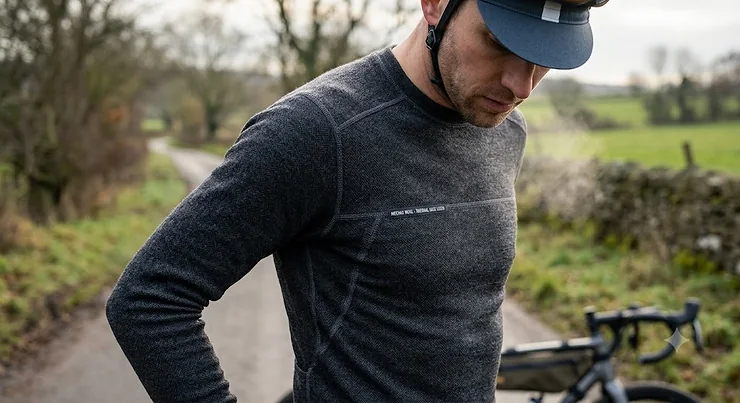
Somewhere around mile four of a January club run, your torso makes a decision your brain never signed off on: it starts sweating, right through the numbness in your fingers. That contradiction — freezing extremities, damp core — is exactly what a good winter cycling base layer is built to solve. A winter cycling base layer is the snug, next-to-skin garment worn beneath a jersey and jacket that pulls moisture away from your skin while trapping a thin layer of warm air against your body, so you stay dry and insulated even as effort levels (and sweat rates) swing wildly over a ride.
Most riders treat the base layer as an afterthought, the last thing bought after the flashy jacket and the £200 gloves. That’s backwards. A poor base layer turns even the best waterproof shell into a clammy, chilled mess by hour two, because it can’t manage moisture fast enough — and once damp fabric sits against skin in 4°C air, your body temperature drops fast. This guide breaks down seven genuinely good options across budget, mid-range and premium price points, explains the fabric science in plain English, and gives you a proper decision framework rather than a vague “buy this one” recommendation. For a broader look at how the wider industry tests these garments, road.cc’s own buyer’s guide to cycling base layers is a useful companion read alongside this one.
We’ve grounded every product verdict below in real specifications and genuinely aggregated customer sentiment — not invented testimonials — because a Which?-style approach beats marketing copy every time you’re deciding where to spend actual money.
Quick Comparison Table
| Base Layer | Fabric Type | Weight | Best For |
|---|---|---|---|
| DANISH ENDURANCE Merino Wool Base Layer | Merino wool blend | Midweight | Best value merino |
| Craft Active Extreme 2.0 LS | CoolMax Air synthetic | Lightweight | Wet, mixed-effort rides |
| Icebreaker 200 Oasis | Pure merino | Midweight | Odour control, multi-day trips |
| Rapha Pro Team Thermal | Polartec Power Grid | Heavyweight | Sub-5°C dedicated winter riding |
A quick glance tells you most of what you need: merino wins on comfort and smell, synthetics like Craft’s CoolMax Air edge ahead on wet-weather breathability, and anything built on Polartec Power Grid fleece, such as the Rapha Pro Team Thermal, is aimed squarely at proper depths-of-winter riding rather than a brisk fifteen-mile spin. None of these four is objectively “best” — they’re solving slightly different problems, which is exactly why the full seven-product breakdown below matters more than a single winner.
💬 Found a pick you like already? Scroll down to check current pricing before it changes.
Top 7 Winter Cycling Base Layers: Expert Analysis
1. DANISH ENDURANCE Merino Wool Base Layer — best value merino for everyday winter miles
The DANISH ENDURANCE Merino Wool Base Layer is the base layer most riders should try first, because it removes the biggest barrier to merino ownership: the price tag. Made from roughly 80% mulesing-free merino wool and 20% polyamide, it sits in the midweight bracket, which in practice means it’s warm enough for a typical 2–7°C UK winter ride without turning into a sauna the moment you hit a climb. OEKO-TEX Standard 100 certification confirms the fabric has been tested against over a thousand regulated chemicals, which matters if you’re the type who reads labels before anything touches bare skin for four hours.
Based on the spec comparison with pricier merino rivals, this is where the DANISH ENDURANCE Merino Wool Base Layer earns its keep: you get genuine merino’s natural odour resistance and thermoregulation without paying premium-brand margins. It suits commuters and weekend riders who want one reliable base layer rather than a wardrobe of them. Reviewers consistently report that the fit is snug without being restrictive and that the fabric feels noticeably softer against skin than cheaper synthetic thermals, though a small number of buyers have flagged the collar seam wearing after a few months of regular washing.
Pros:
- ✅ Genuine merino wool at a below-premium price point
- ✅ OEKO-TEX certified, mulesing-free wool sourcing
- ✅ Naturally odour-resistant for multi-day wear between washes
Cons:
- ❌ Some buyers report seam wear after months of frequent use
- ❌ Sized generously — order down if you prefer a race fit
Priced around £30-£35, this sits comfortably below most dedicated cycling-brand merino tops, and for the fabric quality on offer, it’s one of the strongest value arguments in this entire list.

2. Mountain Warehouse Merino Long Sleeve Base Layer — best budget entry point into merino
If the DANISH ENDURANCE option still feels like a stretch, the Mountain Warehouse Merino Long Sleeve Base Layer is the more affordable door into merino ownership, originally built for hikers but entirely capable on a bike. It’s a lightweight merino construction with a half-zip neck, which — unlike a fixed crew neck — lets you dump heat mid-climb without unzipping your jacket and losing your carefully built layering system to a blast of cold air.
What most buyers overlook about this model is that “lightweight” here doesn’t mean “cold” — merino’s fibre structure traps warm air efficiently regardless of grams-per-square-metre, so this works well as the innermost layer in a proper three-piece winter system rather than as a standalone cold-weather top. It’s aimed at riders who split their time between commuting, hiking and casual weekend rides rather than committed racers chasing marginal gains. Aggregated review sentiment across retailer sites points to strong satisfaction with breathability and packability, with occasional comments that the fit runs slightly boxy compared with cycling-specific brands.
Pros:
- ✅ Genuinely affordable route into real merino wool
- ✅ Half-zip neck for on-the-fly ventilation control
- ✅ Doubles as hiking and everyday winter thermal wear
Cons:
- ❌ Cut looser than cycling-specific competitors
- ❌ Not designed with a cycling-specific dropped tail hem
Expect to pay in the £20-£30 range, which makes this one of the cheapest genuine merino options currently available to UK buyers — a real bargain if fit isn’t your top priority.
3. Craft Active Extreme 2.0 LS Base Layer — best for wet, high-effort winter rides
Swedish sportswear brand Craft has been building technical base layers since 1977, and the Craft Active Extreme 2.0 LS Base Layer is arguably its most cycling-relevant product. It uses two layers of CoolMax Air fabric with a propeller-shaped fibre cross-section designed to move sweat away from skin faster than a flat fibre could manage, while still trapping warmth. At roughly 125g, it’s genuinely light for something rated for proper cold-weather use.
Here’s what the spec sheet won’t tell you outright: this base layer was designed for general athletic use, not cycling specifically, yet the low-cut rear hem happens to sit neatly under a jersey when you’re tucked into a riding position — a lucky crossover rather than a marketed feature. Reviewers consistently note it performs particularly well on wet, mixed-effort days, staying breathable enough to avoid the “boil in the bag” feeling under a rain jacket that heavier fabrics can cause. The trade-off is a wide, low collar that several reviewers found took some getting used to, and sleeves that fit more loosely than the body.
Pros:
- ✅ Excellent breathability under a waterproof shell in wet weather
- ✅ Light at around 125g without sacrificing warmth
- ✅ Body-mapped panels track natural riding-position movement
Cons:
- ❌ Low, wide collar feels unusual to some riders initially
- ❌ Sleeves noticeably looser fit than the torso
Typically priced around £45-£55, it sits mid-pack — a fair ask for a genuinely technical fabric built by a brand that lives and breathes endurance sport.
4. Helly Hansen Lifa Merino Midweight — best hybrid fabric for changeable UK weather
Norwegian brand Helly Hansen built its reputation on cold, wet-weather workwear, and the Helly Hansen Lifa Merino Midweight brings that heritage to cycling in the form of a genuine fabric hybrid. Rather than choosing between merino and synthetic, Lifa Merino places a fast-wicking synthetic Lifa fibre against the skin, with a merino wool outer face layered over it — engineering that tries to capture wicking speed and merino’s warmth and odour control in a single garment.
On paper this means you get faster moisture transport than pure merino provides on its own, while retaining much of merino’s natural resistance to that particular post-ride-jersey smell. What most buyers overlook is that this two-fibre construction is genuinely useful for the UK’s specific climate problem — not consistently cold, but persistently damp — where pure wool can feel slower to dry between showers than a hybrid fabric. It suits riders who do back-to-back winter commutes and don’t always have time to fully dry kit between wears.
Pros:
- ✅ Hybrid fibre combines fast wicking with merino’s warmth
- ✅ Strong odour resistance across multiple wears
- ✅ Well suited to damp, changeable UK winter conditions
Cons:
- ❌ Premium construction pushes it above pure-synthetic pricing
- ❌ Less widely stocked in UK sizing than bigger cycling brands
Expect a price in the £45-£60 range depending on size and colourway, putting it firmly in the mid-to-upper tier for genuine technical performance.
5. Icebreaker 200 Oasis — best premium pure merino for multi-day durability
New Zealand’s Icebreaker has built an entire brand identity around merino, and the Icebreaker 200 Oasis — 200 grams per square metre of pure merino wool — is one of its most established base layer weights. Flatlock seams reduce chafing under a snug jersey, and the fabric weight sits at that midpoint where it’s warm enough for genuine winter use without becoming a sweat trap on climbs.
Based on the spec comparison with blended alternatives, the appeal of going 100% merino rather than a hybrid is durability and consistency of feel over years of use — merino fibres are naturally elastic and tend to resist the pilling that cheaper wool blends develop faster. Reviewers consistently highlight how well this model resists odour build-up across multiple days of wear, which matters enormously on multi-day winter touring trips where laundry access is limited. It’s the natural pick for riders who plan to keep one base layer in rotation for several winters rather than replacing kit annually.
Pros:
- ✅ 100% merino construction for long-term durability
- ✅ Flatlock seams minimise chafing under tight layers
- ✅ Outstanding odour resistance across multi-day use
Cons:
- ❌ One of the pricier options in this list
- ❌ Pure wool dries more slowly than synthetic-blend rivals
At around £70-£85, this is a genuine investment piece — justified if you want a base layer that will still perform after three or four winters of regular washing.

6. Rapha Pro Team Thermal Base Layer — best for dedicated sub-5°C winter riding
Formerly branded the Rapha Pro Team base layer, the Rapha Pro Team Thermal Base Layer is built specifically around Polartec Power Grid fleece — a fabric with a grid of raised fleece squares on the inner face designed to trap air pockets while channels between them keep airflow moving. Constructed from polyester and elastane, it’s a heavier-weight piece squarely aimed at the coldest UK riding conditions rather than general winter use.
The standout feature here, according to aggregated reviewer feedback, is the high, close-fitting neck design that seals the gap where cold air typically leaks in around the collarbone — testers reported a noticeable difference specifically below 5°C, describing it as taming “neck draughts” that lesser base layers simply ignore. Doubled cuffs at the wrist extend that same sealing logic to where sleeve meets glove. What most buyers overlook about this level of thermal base layer is that it’s genuinely overkill for anything above about 8-10°C — this is a specialist tool for proper depths-of-winter riding, not a three-season all-rounder.
Pros:
- ✅ Polartec Power Grid fleece delivers serious sub-5°C warmth
- ✅ High collar design specifically reduces neck draughts
- ✅ Doubled cuffs seal the wrist-to-glove gap
Cons:
- ❌ Too warm for anything but genuinely cold rides
- ❌ Among the higher price points in this guide
Priced in the £60-£75 range, it’s a specialist purchase — brilliant value if you ride through proper British winter mornings, less sensible if your “winter” rarely dips below 10°C.
7. Under Armour ColdGear Compression Mock — best budget synthetic all-rounder
The Under Armour ColdGear Compression Mock isn’t a cycling-specific garment, but it’s one of the most widely available and affordably priced thermal base layers on the UK market, which earns it a place here as the accessible synthetic option. ColdGear fabric uses a brushed interior face designed to trap heat close to the body while the outer face wicks sweat outward, and the compression cut keeps the whole thing snug enough to sit smoothly under a jersey without bunching.
Here’s what to weigh against the cycling-specific options above: this base layer lacks a dropped rear hem, so on a bike it can ride up slightly during long rides in the drops, and it doesn’t offer merino’s natural odour resistance — expect to wash it after every use rather than every few. That said, reviewers consistently praise the ColdGear range for genuine warmth-to-price ratio, and the mock neck adds a useful extra inch of coverage at the collar for very little extra cost. It’s a sensible pick for riders testing whether they even like riding in cold weather before committing to a pricier merino piece.
Pros:
- ✅ Among the most affordable genuinely warm options here
- ✅ Brushed interior fabric traps heat effectively
- ✅ Compression fit prevents bunching under a jersey
Cons:
- ❌ No dropped hem — can ride up in the saddle
- ❌ Needs washing after every wear, unlike merino rivals
Typically found under £30, it’s the sensible low-commitment starting point for anyone building out winter kit on a tight budget.
Building Your Winter Layering System
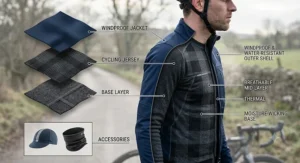
A winter cycling base layer never works alone — it’s the first piece in a layering system cycling kit relies on to handle temperature swings across a single ride. The standard structure is three parts: a moisture-wicking base layer against skin, an insulating mid-layer (a light jersey or gilet) to trap warm air, and a wind- or waterproof outer shell to block the elements. Each layer has one job, and problems start when riders skip the base layer and go straight from skin to jersey, expecting the jersey alone to manage sweat it was never designed to handle.
Getting this right in practice means thinking about your ride profile before you leave the house. A 90-minute steady commute at consistent effort needs less ventilation flexibility than a three-hour club run with hard climbs followed by fast, cold descents — on the latter, a half-zip or looser-collar base layer like the Mountain Warehouse Merino Long Sleeve Base Layer lets you dump heat on the climb and seal up again on the descent. Reviewers and cycling coaches alike consistently flag that the single biggest layering mistake is over-insulating the base layer and under-insulating the shell, leaving riders damp at the skin even in a “warm enough” outfit. Aim to feel slightly cool for the first five minutes when you step outside — if you’re instantly warm standing still, you’ll overheat within the first climb.
Real-World Scenarios: Matching Base Layers to Your Ride
Consider three different riders facing the same January morning. The first is a university student commuting six miles each way on a hybrid bike at a relaxed pace — moderate, steady effort with minimal climbing means moisture output stays fairly low, so a budget synthetic option like the Under Armour ColdGear Compression Mock under a windproof jacket does the job without overspending on kit for a fifteen-minute ride.
The second is a weekend club cyclist doing 60-mile hilly loops at variable intensity, alternating hard climbing efforts with fast, chilling descents — this rider needs a base layer that manages big swings in sweat rate without soaking through, making the Craft Active Extreme 2.0 LS Base Layer‘s wet-weather breathability a sensible match. The third is a committed year-round commuter riding in genuinely sub-freezing conditions before sunrise several days a week, where the sealed collar and heavyweight fleece of the Rapha Pro Team Thermal Base Layer earns its higher price through consistent, dependable warmth on the coldest mornings of the year. Matching the base layer to the actual ride — not the aspirational one — is the single most cost-effective decision in a winter kit budget.
Common Cold-Weather Cycling Problems, Solved
Cold hands despite warm gloves is rarely a glove problem — it’s usually a core-temperature problem, because your body restricts blood flow to extremities first when the torso is even slightly under-insulated; upgrading the base layer often fixes cold fingers faster than a thicker glove does. A damp, clammy back under a rain jacket points to a base layer that’s trapping moisture rather than wicking it — synthetic options with dedicated air-channel fabrics, like the Craft Active Extreme 2.0 LS Base Layer, are built specifically to solve this.
Persistent post-ride odour, even after washing, usually means a fully synthetic base layer has reached the end of its effective antimicrobial life — this is where switching to a merino or merino-blend piece such as the Icebreaker 200 Oasis or Helly Hansen Lifa Merino Midweight genuinely solves the problem rather than masking it. And a base layer that rides up under a jersey during longer efforts is almost always a fit or hem-design issue rather than a sizing mistake — look specifically for a dropped rear hem, a feature cycling-specific brands build in and generic thermal-wear brands often skip entirely.
How to Choose a Winter Cycling Base Layer
Choosing the right winter cycling base layer comes down to matching fabric, weight and fit to your typical ride conditions rather than chasing the most expensive option on the shelf. Work through these seven criteria in order:
- Identify your typical ride temperature range — a base layer rated for sub-5°C riding will overheat you on a mild 10°C commute, so buy for the conditions you actually ride in most often.
- Decide between merino, synthetic or hybrid fabric — merino wins on odour control and multi-day comfort, synthetics win on wicking speed and price, hybrids attempt to split the difference.
- Check the weight rating (grams per square metre) — lighter weights around 150-180g suit high-effort, mixed-intensity rides; heavier weights above 200g suit consistently cold, lower-intensity riding.
- Look for a dropped rear hem — this cycling-specific detail stops the base layer riding up in a forward riding position, something generic thermal wear often omits.
- Assess the collar design — a high, close collar reduces draughts on the coldest days; a lower or half-zip collar offers more ventilation control on variable-effort rides.
- Factor in genuine review sentiment on seam durability — flatlock or seamless construction reduces chafing risk on longer rides, based on aggregated buyer feedback across the products above.
- Set a realistic budget band — expect roughly £20-£35 for solid budget options, £45-£60 for mid-range technical fabrics, and £60-£85 for premium merino or brand-specific technical builds.
Thermal Fabrics Explained: Merino, Synthetic and Brushed Thermal Fabric
The fabric debate in winter cycling base layers essentially comes down to three camps. Merino wool, sourced from fine-fibre sheep breeds, naturally regulates temperature and resists odour-causing bacteria because of its fibre structure — this is why a garment like the Icebreaker 200 Oasis can be worn multiple days running without the smell synthetic fabrics develop after a single hard effort. The trade-off is a slower drying time and generally higher cost per garment.
Brushed thermal fabric, the technology behind synthetic options like the Under Armour ColdGear Compression Mock, works differently: manufacturers brush the interior face of a polyester or polyester-elastane knit to raise a soft, fleecy texture that traps air pockets against the skin, similar in principle to how a fleece blanket works. It’s cheaper to produce than merino, dries faster, but lacks natural odour resistance and needs washing after every wear. Hybrid constructions like Helly Hansen’s Lifa Merino attempt to combine a fast-wicking synthetic layer against skin with a merino outer face, chasing the wicking speed of synthetics alongside merino’s warmth and smell resistance — genuinely useful engineering, though it usually comes at hybrid pricing to match. None of the three is universally “best” — the right choice depends entirely on how many days you need a single garment to perform between washes.
Common Mistakes When Buying a Winter Cycling Base Layer
The most common mistake is buying based on jacket-buying logic — assuming warmer always means better — when in fact an over-insulated base layer under effort causes sweating that then chills you faster once you stop pedalling or hit a descent. A close second is ignoring fit: a base layer that’s too loose can’t trap the thin layer of warm air against skin that actually provides insulation, while one that’s genuinely restrictive limits breathing and circulation on long climbs.
Buyers also frequently skip checking hem design, assuming any thermal top will work under a jersey, then find it riding up within the first twenty minutes of riding in a forward position. Reviewers consistently flag another overlooked issue: buying synthetic for convenience without accounting for washing frequency, then being surprised at how quickly odour builds up compared with a merino equivalent. Finally, many riders buy a single “one size fits all winter” base layer rather than owning two — a lighter one for high-effort mixed rides and a heavier one for genuinely cold, steady-pace riding — which is ultimately a false economy given how differently the two scenarios behave.
Winter Cycling Base Layer vs a Regular Cold Weather Undershirt
It’s tempting to reach for an ordinary cotton vest or a generic cold weather undershirt from a high-street clothing shop instead of a technical base layer, and for very short, low-effort rides it can work well enough. The problem shows up as soon as effort and duration increase: cotton absorbs sweat rather than wicking it away, and once wet, it stays wet against the skin for the rest of the ride — actively cooling you down through evaporation exactly when you need warmth most.
| Feature | Winter Cycling Base Layer | Regular Cotton Undershirt |
|---|---|---|
| Moisture handling | Wicks sweat away from skin | Absorbs and holds moisture |
| Warmth when damp | Retains insulating properties | Loses warmth rapidly once wet |
| Fit for riding position | Dropped hem, cycling-specific cut | Generic straight-cut hem |
| Odour resistance | Merino/technical fabrics resist bacteria | Cotton retains odour quickly |
A genuine cycling base layer, whether the budget-friendly Mountain Warehouse Merino Long Sleeve Base Layer or something more technical like the Craft Active Extreme 2.0 LS Base Layer, is engineered specifically around the wet-then-dry cycle that riding produces, while a standard cold weather undershirt is designed for static warmth, not moisture management under sustained physical effort. For short winter dog walks, cotton is fine. For anything over about 30 minutes on a bike, it becomes a genuine liability, and the cost difference between the two is smaller than most people assume once you factor in how much longer a good technical base layer lasts.
Winter Cycling Base Layers for Different Rider Types
Beginners taking their first steps into winter riding are usually best served by an affordable, forgiving option like the DANISH ENDURANCE Merino Wool Base Layer or the Under Armour ColdGear Compression Mock — both offer genuine performance without asking a new rider to commit £70+ to a garment they’re not yet sure they’ll use regularly. Experienced riders chasing marginal gains on long, hard winter training blocks tend to gravitate toward fabric-specific technical pieces like the Craft Active Extreme 2.0 LS Base Layer, where the CoolMax Air construction pays dividends across dozens of hard, sweaty sessions.
Commuters riding daily in variable conditions benefit most from a hybrid fabric such as the Helly Hansen Lifa Merino Midweight, since it copes reasonably well whether Tuesday is a crisp 3°C or a damp, drizzly 9°C. And dedicated winter specialists — the riders who are out before sunrise in genuinely sub-freezing temperatures multiple times a week — are the exact audience the Rapha Pro Team Thermal Base Layer‘s sealed collar and Polartec Power Grid fleece were built for, even if that same warmth would be uncomfortable overkill for anyone riding in milder conditions.
Safety, Fit and Cold-Weather Riding Guide
Beyond comfort, a properly fitted base layer plays a genuine safety role in cold-weather cycling. Riding for extended periods in damp clothing accelerates heat loss and increases the risk of the body struggling to maintain core temperature, which is why the NHS specifically highlights wearing effective layers — including moisture-managing fabrics — as part of its official cold weather health guidance. This isn’t cycling-specific advice, but the underlying physiology is identical: dry skin retains heat far better than damp skin, regardless of activity.
Practically, that means checking your base layer fit before a long winter ride matters as much as checking tyre pressure. It should sit close enough to skin to wick moisture effectively without any air gap, but never so tight that it restricts chest expansion on hard climbing efforts. If you’re riding somewhere genuinely remote or exposed in winter — open moorland, high-altitude climbs, coastal routes with strong wind chill — carrying a lightweight spare layer in a jersey pocket is sensible insurance against a base layer that becomes damp faster than expected.
🔍 Don’t Get Caught Out by British Winter Again
Take your winter cycling kit to the next level with a base layer actually matched to your riding conditions. Click through on any of the picks above to check current pricing and availability before your next cold-morning ride — a proper layering system starts with getting this one piece right.

FAQ
❓ What should I wear under a cycling base layer in winter?
❓ How many layers do I need for winter cycling?
❓ Can I machine wash a merino wool cycling base layer?
❓ Is merino or synthetic better for winter cycling?
❓ How tight should a winter cycling base layer fit?
Conclusion
A winter cycling base layer isn’t the most exciting item in a rider’s kit bag, but it’s arguably the one doing the most consistent work, quietly managing the wet-then-dry cycle every ride produces regardless of how much you spent on the jacket over the top. Whichever of the seven options above suits your riding — the accessible value of the DANISH ENDURANCE Merino Wool Base Layer, the wet-weather engineering in the Craft Active Extreme 2.0 LS Base Layer, or the dedicated sub-freezing warmth of the Rapha Pro Team Thermal Base Layer — the underlying principle stays the same: match fabric and weight to your actual riding conditions rather than buying the warmest thing on the shelf.
For further reading on how the wider cycling press tests and rates these garments across a full winter season, Cycling Weekly’s detailed buyer’s guide to cycling base layers is worth bookmarking alongside this one. Get the base layer right, and every other layer in your winter kit performs noticeably better for it — cold hands, clammy backs and post-ride shivers included.
Recommended for You
- Packable Cycling Jacket: 7 Brilliant Picks for Soggy UK Rides (2026)
- Winter Cycling Jacket: 7 Best Picks Tested for UK Cold 2026
- Best Cycling Gilet 2026: 7 Windproof Picks Tested & Compared
Disclaimer: This article contains affiliate links. As an Amazon Associate, I earn from qualifying purchases. If you purchase products through these links, we may earn a small commission at no additional cost to you.
✨ Found this helpful? Share it with your friends! 💬🤗
