
In This Article
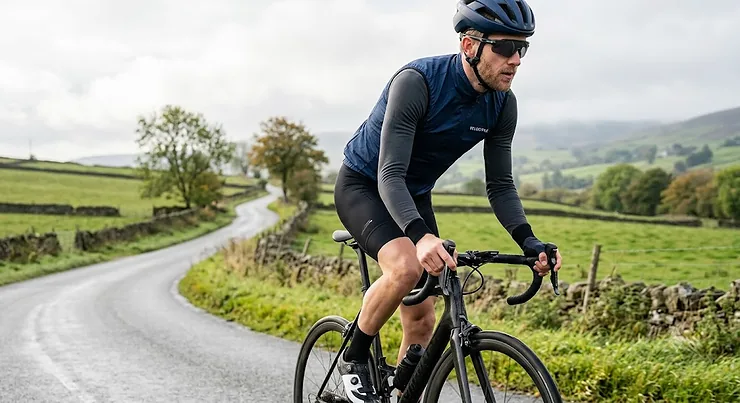
There’s a particular kind of cold that only exists on a bike. It’s not the same cold as standing at a bus stop — it’s the cold that finds the one unzipped inch at your collar and pours straight down your spine at 20mph. A cycling gilet exists to solve exactly that problem: it’s a sleeveless, wind-blocking layer worn over a jersey to protect your chest and core while leaving your arms free to breathe. Riders reach for one on crisp autumn mornings, unpredictable spring rides, and any day the forecast can’t quite make up its mind.

Choosing the best cycling gilet isn’t really about finding “the warmest one” — it’s about matching fabric, fit and pack size to how and where you actually ride. A racing snake doing chaingang laps needs something different from a commuter grinding through wet Tuesday traffic, and a sportive rider tucking one into a jersey pocket for a fast descent needs something different again. Riding in cold, wet and windy conditions raises the risk of losing body heat faster than it can be produced, which is precisely the gap a good gilet is designed to close.
Wind speed dramatically amplifies how quickly a body loses heat compared with still air at the same temperature — the physics behind the wind chill effect — which is precisely why a gilet designed to block wind at the chest does so much more for comfort than its light weight suggests.
This guide breaks down seven genuinely available gilets — spanning budget, mid-range and premium — with honest analysis of the specs, aggregated review sentiment, and exactly who each one suits. You’ll also get comparison tables, real buying criteria, and practical advice on getting the most out of whichever one you choose. No fluff, no invented reviews — just a proper look at what’s actually on the market for a best cycling gilet search in 2026.
What Is a Cycling Gilet? (Quick Definition)
A cycling gilet is a lightweight, sleeveless cycling vest with a windproof or wind-resistant front panel, a more breathable mesh or stretch back panel, and a close, aerodynamic fit. It’s designed to be worn over a jersey during the first hour of a ride, then stuffed into a jersey pocket once temperatures rise — making it one of the most versatile pieces of kit a cyclist can own.
Quick Comparison Table
| Gilet | Best For | Weight | Price Range |
|---|---|---|---|
| Van Rysel Windproof Gilet RCR | Tightest budget | Light | Under £40 |
| Altura Airstream Men’s Windproof Gilet | Changeable weather, all-rounder | Mid | £40-£60 range |
| GORE WEAR Ambient WINDSTOPPER Vest | Lightest, most packable | Ultra-light | £60-£90 range |
| Castelli Unlimited Puffy Vest | Cold mornings, insulation | Mid-heavy | £90-£120 range |
| Albion Wind Gilet | All-round build quality | Mid | £70-£100 range |
| Cafe du Cycliste Maya Gilet | Long, cold rides, insulated packable | Mid | £100-£140 range |
| Rapha Pro Team Shadow Gilet | Premium race-fit protection | Light-mid | £140-£180 range |
Looking at the spread above, there’s a genuine budget-to-premium ladder here rather than seven versions of the same product. The Van Rysel Windproof Gilet RCR anchors the value end and will do 80% of what riders need for a fraction of the outlay, while the Rapha Pro Team Shadow Gilet and Cafe du Cycliste Maya Gilet justify their higher price ranges through more sophisticated fabric construction and insulation. If pack size in a jersey pocket is your priority, the GORE WEAR Ambient WINDSTOPPER Vest stands out as the lightest option on this list at the time of research.
💬 Just one click — help others make better buying decisions too!😊
Top 7 Best Cycling Gilets: Expert Analysis
Picking a winner in this category really depends on what “cold” means where you live and how far you ride, so rather than crown a single best cycling gilet, here’s an honest breakdown of seven real options, what the spec sheets actually mean in practice, and who each one is genuinely built for.
1. Van Rysel Windproof Gilet RCR — best budget-friendly performance fit
The standout here is that a genuinely race-oriented cut has made it into a gilet priced well under most rivals on this list. Decathlon’s performance cycling brand builds the RCR with a windproof front panel and a more breathable rear, following the now-familiar gilet formula, but the fitted cut avoids the baggy, flapping feel that budget vests sometimes suffer from at speed. In practice, that fitted silhouette matters more than it sounds: a loose gilet catches air like a parachute on a fast descent, undoing a lot of the wind-blocking benefit you paid for.
Based on the spec comparison with pricier options, this is the gilet for anyone who wants genuine wind protection without paying for premium fabric branding. It suits club riders, commuters and anyone building a first “proper” cycling wardrobe on a budget. Reviewers consistently note that budget Decathlon cycling kit tends to overperform its price point on core functionality, even if finishing details like zip pulls and pocket linings feel a notch below big-name brands.
Pros:
- ✅ Genuinely windproof front for the price bracket
- ✅ Race-fit cut avoids flapping at speed
- ✅ Easy entry point for new cyclists building a kit collection
Cons:
- ❌ Fewer premium finishing touches than rivals
- ❌ Limited colourways compared with specialist brands
At under £40, the Van Rysel Windproof Gilet RCR is hard to argue with as a first gilet, and it remains a sensible spare even once you’ve traded up.
2. Altura Airstream Men’s Windproof Gilet — best all-rounder for unpredictable weather
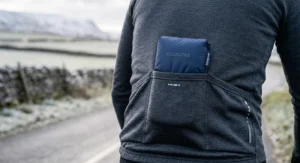
What stands out about the Airstream is its “semi-fitted” cut, which leaves enough room to layer a base layer or light jersey underneath without feeling restrictive. That’s a genuinely useful design choice: a gilet cut too close to the body becomes useless the moment you need to add warmth rather than just block wind. Reviewer testing has found the front panel properly windproof and coated to shrug off light showers, while the lightweight mesh rear panel means it’s deliberately not chasing full waterproofing.
Here’s what to weigh: this is a gilet built for genuinely changeable conditions rather than sustained downpours or deep cold, which makes it one of the more versatile picks on this list. Gently elasticated armholes and a deep hem with a silicone gripper strip keep everything in place — small details that stop the classic gilet problem of the hem riding up over a saddle bag or when leaning forward into a drop-bar position. Reviewers have consistently rated the men’s and women’s versions favourably for exactly this changeable-weather versatility, and the price point is often highlighted as a strong point relative to what’s delivered.
Pros:
- ✅ Semi-fitted cut allows layering underneath
- ✅ DWR front coating copes well with light showers
- ✅ Deep-drop tail with silicone gripper stays put
Cons:
- ❌ Not designed for sustained heavy rain
- ❌ Mesh back offers less warmth on very cold days
Sitting in the £40-£60 range, the Altura Airstream Men’s Windproof Gilet earns its “all-rounder” reputation through sensible design choices rather than flashy fabric names.
3. GORE WEAR Ambient WINDSTOPPER Vest — lightest and most packable on test
The headline figure here is weight: independent testing has weighed a size Medium at just 64g, making it the lightest of ten gilets compared in one recent group test. Gore builds the front and side panels from its own Windstopper fabric, while the rear relies on a lightweight open mesh, together keeping total bulk remarkably low. In practice, that means this gilet disappears into a jersey pocket so completely you’ll forget it’s there until you need it — genuinely useful on long sportives where conditions might flip twice in one ride.
The Windstopper fabric itself is engineered to block wind almost entirely while staying highly breathable and resisting light moisture, which on paper means fewer overheating problems than gilets that lean on fully sealed membranes. What most buyers overlook about this model is the trade-off for that low weight: there’s no pocket of its own, so anything you’re carrying needs to live in your jersey and be accessed by pulling up the rear hem. It’s a sensible compromise for racers and fast group riders, less so for anyone wanting to stash a phone in the gilet itself.
Pros:
- ✅ Genuinely one of the lightest gilets available, around 64g
- ✅ Windstopper front stays windproof yet breathable
- ✅ Packs down small enough to disappear in a pocket
Cons:
- ❌ No pockets of its own
- ❌ Limited warmth compared with insulated rivals
Priced in the £60-£90 range at the time of research, the GORE WEAR Ambient WINDSTOPPER Vest rewards riders who value pack size and breathability above all else.
4. Castelli Unlimited Puffy Vest — best for genuine cold-morning insulation
Where most gilets on this list prioritise wind-blocking over warmth, the Unlimited Puffy Vest flips that emphasis. Independent reviewers have specifically highlighted its warm, lightweight construction as a standout among current insulated options, which matters because puffer-style insulation traps still air rather than simply deflecting wind — a genuinely different mechanism for keeping your core temperature stable on a freezing start.
Based on how insulated vests of this type are typically built, expect a synthetic-fill front panel paired with a more breathable back — the classic construction for stop-start winter riding where you need warmth at the traffic lights but can’t afford to overheat once the pace lifts. What the spec sheet won’t tell you, but reviewer sentiment consistently suggests, is that puffer-style gilets like this one suit riders who do a lot of genuinely cold, still-air riding — commuters and early winter club runs — more than they suit riders chasing all-day versatility across a whole season.
Pros:
- ✅ Genuine insulation for properly cold starts
- ✅ Lightweight despite the added warmth
- ✅ Well suited to stop-start winter commuting
Cons:
- ❌ Can run warm once the pace and effort increase
- ❌ Less packable than thinner windproof-only gilets
Sitting in the £90-£120 range, the Castelli Unlimited Puffy Vest is the pick on this list for anyone whose main complaint about gilets has always been “still too cold.”
5. Albion Wind Gilet — best all-round build quality
Albion’s Wind Gilet earned its “best all-rounder” tag from reviewers through several well-thought-out features rather than any single headline spec — the kind of gilet that quietly gets everything right without shouting about one flagship technology. That balance matters in this category because a gilet is a garment you’ll wear in a dozen different conditions across a season, and a jack-of-all-trades design often ages better in your wardrobe than a highly specialised one.
Here’s what to weigh: expect a windproof front panel, a more breathable rear, and thoughtful details around the collar and hem that reviewers have called out specifically, rather than an afterthought bolted onto a generic template. Based on where it sits in the market, this is the gilet for riders who’ve already owned a cheaper option and know exactly which small annoyances — a flapping hem, a scratchy collar, an over-tight armhole — they’re now willing to pay to eliminate.
Pros:
- ✅ Considered design details throughout, not just the front panel
- ✅ Balanced fit suited to varied riding styles
- ✅ Strong reputation for all-round dependability
Cons:
- ❌ Less specialised than dedicated ultra-light or insulated options
- ❌ Mid-tier pricing sits above the true budget bracket
At around £70-£100, the Albion Wind Gilet rewards riders who want fewer compromises rather than one standout party trick.
6. Cafe du Cycliste Maya Unisex Insulated Packable Gilet — best insulated packable option
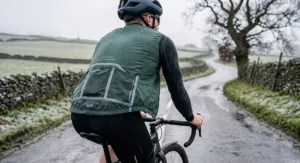
The Maya is aimed squarely at long-distance riders who need warmth that survives an entire day of temperature swings, not just a cold first hour. It combines a snug fit with insulated baffles of ethically sourced down across the chest and back, while stretch side panels keep the overall silhouette streamlined rather than puffy. In practice, down insulation like this traps far more warmth per gram than synthetic fill, which is exactly why it suits night rides and early starts where temperatures might sit close to freezing.
What most buyers overlook about down-insulated cycling gilets is the packability trade-off usually associated with warmth — the Maya avoids it, compressing down small enough for a saddle bag or even a jersey pocket, meaning you don’t have to choose between warm enough for the descent and small enough to carry once the sun’s out. Soft fabric around the collar keeps the zip pull away from direct skin contact — a detail that sounds minor until you’ve spent three hours with a cold zip rubbing your neck.
Pros:
- ✅ Down insulation delivers genuine warmth-to-weight
- ✅ Packs into a saddle bag or jersey pocket despite the insulation
- ✅ Collar detailing avoids zip-on-skin irritation
Cons:
- ❌ Premium price for a gilet, not a full jacket
- ❌ Down performance depends on staying dry
In the £100-£140 range, the Cafe du Cycliste Maya Unisex Insulated Packable Gilet is the strongest pick here for anyone whose rides genuinely start in the cold and finish in the sun.
7. Rapha Pro Team Shadow Gilet — best premium race-fit protection
Reviewers have specifically praised the Shadow Gilet for offering top-level protection while remaining more usable across seasons than some race-focused rivals — a fairly rare combination, since gilets built for a tight race fit often sacrifice the breathability needed for anything but a short, hard effort. That dual purpose is the standout feature here: a genuinely aggressive, aerodynamic cut that doesn’t punish you on a longer, more varied ride.
Based on where Rapha positions its team-level kit, expect premium wind-blocking fabric at the front, a considered rear panel for heat dump during hard efforts, and construction details aimed at racers and fast sportive riders rather than casual commuters. What the spec sheet won’t tell you, but the “usable across seasons” reviewer sentiment suggests, is that this is the gilet for someone who already owns a budget option and wants a genuine step up in fit and fabric quality for racing, chaingangs, or fast club rides — not necessarily for winter commuting.
Pros:
- ✅ Aggressive, race-proven aerodynamic fit
- ✅ Genuinely versatile across more of the season than typical race gilets
- ✅ Premium fabric construction throughout
Cons:
- ❌ Highest price range on this list
- ❌ Race fit runs closer than casual riders may prefer
At £140-£180, the Rapha Pro Team Shadow Gilet sits at the top of this list for riders who want race-level performance and are willing to pay for it.
How to Choose the Best Cycling Gilet
- Decide what problem you’re solving first. A gilet bought purely for wind-blocking (like the GORE WEAR Ambient WINDSTOPPER Vest) behaves very differently from one bought for genuine cold insulation (like the Castelli Unlimited Puffy Vest) — pick the category before you pick the brand.
- Check the fit philosophy, not just the size chart. Race-fit gilets such as the Rapha Pro Team Shadow Gilet are cut close and won’t layer well; semi-fitted designs like the Altura Airstream Men’s Windproof Gilet leave room for a base layer underneath.
- Weigh pack size against your ride length. If you’re stuffing it into a pocket for six hours, the weight and compressibility of something like the GORE WEAR Ambient WINDSTOPPER Vest or Cafe du Cycliste Maya Gilet matters more than it does for a 40-minute commute.
- Look at the rear panel, not just the front. Every gilet on this list is windproof at the front; the difference between a comfortable ride and an overheated one usually comes down to how breathable the back panel is.
- Budget for the whole season, not one ride. A £35 gilet and a £160 gilet can both be “the best cycling gilet” depending on how many days a year you’ll actually wear it.
- Read aggregated reviewer sentiment, not star ratings alone. Two 4-star gilets can mean very different things — one might be marked down for fit, another for durability, and only one of those issues might matter to you.
- Factor in visibility and safety features. Reflective detailing is a genuine bonus on any gilet worn in low light, and it’s worth checking before you buy rather than adding separately afterwards.
Windproof Cycling Layer vs Cycling Vest: What’s the Difference?
Here’s a bit of terminology that trips people up: “windproof cycling layer,” “cycling vest” and “cycling gilet” are mostly describing the same garment, but the phrasing hints at slightly different priorities. In UK cycling shops, “gilet” is the standard term and usually implies a close, cycling-specific cut with a windproof front and mesh or stretch rear — exactly the seven products reviewed above. “Cycling vest,” more common in US usage, describes the same shape but sometimes stretches to include heavier insulated options that lean closer to a sleeveless jacket than a true wind-blocking layer.
A generic “windproof cycling layer,” meanwhile, could technically mean a gilet, an arm-warmer-and-vest combo, or even a full jacket with the sleeves rolled up — it’s a functional description rather than a specific garment. The practical difference that actually matters when buying: a true gilet is designed to be worn and removed constantly through a ride, packed into a pocket the moment you warm up, while heavier “vest” style insulated pieces such as the Castelli Unlimited Puffy Vest are built more for sustained cold rather than quick on-off flexibility. If you’re searching for genuine versatility, prioritise gilets with a mesh or open-weave rear panel — that’s usually the giveaway that a garment is built for the classic on-off gilet use case rather than as a standalone cold-weather vest.
Core Temperature Regulation: How Gilets Keep You Riding Comfortably
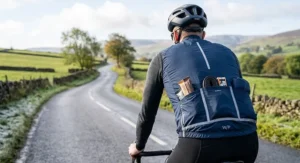
The whole point of a cycling gilet comes down to a fairly simple bit of physiology: your body needs to balance the heat it produces against the heat it loses, and getting that balance wrong in either direction causes problems. Lose heat faster than you can produce it and core temperature drops toward dangerous territory; produce heat too fast through hard effort and the resulting sweat then accelerates cooling once you ease off or start descending. A gilet’s entire design brief is to help you sit in the comfortable middle of that balance for longer.
This is exactly why the windproof-front, breathable-back construction shows up on every single product in this list — it isn’t a marketing gimmick, it’s solving that heat-balance problem directly. The front panel blocks the wind-chill effect that strips heat from your core at speed, while the mesh or stretch rear lets sweat vapour escape rather than build up and later chill you on a descent. NHS-affiliated cold weather guidance also points out how much heat is lost through the head and neck specifically, which is why pairing a gilet with a decent skull cap or buff on genuinely cold days does more for comfort than most riders expect. Get the core covered with the right gilet, keep your extremities in mind too, and you’ve solved most of what makes cold-weather riding miserable.
Packable Gilet: Why Pack Size Matters More Than You Think
It’s easy to focus entirely on warmth and windproofing when shopping for a gilet and forget the third variable that quietly decides whether you’ll actually use one: pack size. A gilet that can’t compress down small enough to disappear into a jersey pocket becomes a gilet you leave at home on marginal days — precisely the days you’re most likely to need it.
This is where products like the GORE WEAR Ambient WINDSTOPPER Vest earn their keep, packing down to a genuinely pocket-friendly size thanks to a lack of bulky insulation or hardware. Insulated options such as the Cafe du Cycliste Maya Unisex Insulated Packable Gilet show that packability and warmth aren’t mutually exclusive either, provided the insulation type is chosen carefully — down compresses far better than most synthetic fills for a given warmth level. Before buying, it’s worth checking whether a gilet has been specifically reviewed as “packable” rather than assuming — some heavier insulated vests, including options similar to the Castelli Unlimited Puffy Vest, prioritise warmth over compressibility and will take up noticeably more pocket space.
Common Mistakes When Buying a Cycling Gilet
One of the most frequent mistakes is buying based on brand reputation from jackets or jerseys and assuming the gilet fit will match — cycling brands often cut their gilets differently to their full jackets, and a size that fits perfectly in one won’t necessarily suit the other. Another common error is prioritising warmth above all else; an overly insulated gilet on a moderate day leaves you sweating within twenty minutes, which then makes you colder later once that moisture starts evaporating.
Buyers also regularly overlook the rear panel entirely, focusing all their attention on the windproof front fabric. Since the back panel governs how well the gilet actually breathes, this is arguably the more important spec to interpret correctly. A further mistake is ignoring pocket access — some gilets, like the GORE WEAR Ambient WINDSTOPPER Vest, deliberately skip pockets to save weight, which is a genuine dealbreaker for riders who rely on gilet storage rather than jersey pockets. Finally, many riders buy a single gilet expecting it to cover the entire season, when the honest answer, based on the spread of products above, is that a windproof-only gilet and an insulated one solve genuinely different problems.
Practical Usage Guide: Getting the Most From Your Gilet
Getting a gilet right isn’t just about the purchase — how you use it on the bike matters just as much. On your first few rides, treat the gilet as a “first hour” garment: put it on before you leave, then unzip it fully (rather than removing it) once your body temperature climbs, before packing it away entirely once you’re genuinely warm. This staged approach avoids the classic mistake of overheating fifteen minutes in and then stopping to strip a layer mid-ride.
For maintenance, most gilets on this list use a DWR (durable water repellent) front coating, which degrades gradually with washing and UV exposure. A wash every few rides with a technical sportswear detergent — never fabric softener, which strips the coating — keeps windproofing performance closer to new for longer. Reapplying a DWR spray roughly once a season is worth doing on any gilet you rely on through winter. When packing a gilet into a jersey pocket, roll rather than scrunch it; this reduces long-term creasing of the membrane and helps it return to shape faster once unpacked. A common first-30-days mistake is leaving a damp gilet balled up in a bag after a ride — always let it air dry fully before storing it, since trapped moisture can affect both the DWR coating and any insulation fill over time.
Real-World Scenarios: Which Gilet Suits Your Riding?
Consider three genuinely different riders. First, a year-round commuter doing eight miles each way through a UK city, in traffic, dealing with both dry cold snaps and sudden showers. For this rider, the practical priority is the Altura Airstream Men’s Windproof Gilet — its DWR-coated front and layering-friendly semi-fitted cut suit stop-start urban riding better than a race-fit garment ever would.
Second, a weekend club rider doing 60-mile winter sportives with a genuinely early, cold start that warms up considerably by midday. Here, a packable insulated option like the Cafe du Cycliste Maya Unisex Insulated Packable Gilet solves the actual problem — enough warmth for the 7am start, small enough to vanish into a saddle bag by 11am. Third, a fast club chaingang rider prioritising aerodynamics and short, hard efforts over all-day versatility; for that profile, the Rapha Pro Team Shadow Gilet‘s race-proven cut earns its higher price range, since the riding style genuinely benefits from the tighter fit that would frustrate a casual rider.
Cycling Gilets for Different Riders: Commuters, Racers and Sportive Cyclists
Commuters generally benefit most from a semi-fitted, DWR-treated gilet with decent pocket access, since visibility and everyday practicality outweigh marginal aerodynamic gains on a daily ride to work — the Altura Airstream Men’s Windproof Gilet or budget-friendly Van Rysel Windproof Gilet RCR both fit this brief well. Racers and fast group riders, by contrast, are better served by a closer, more aerodynamic cut, since a flapping gilet at 25mph-plus genuinely costs watts — this is where the Rapha Pro Team Shadow Gilet and the ultra-light GORE WEAR Ambient WINDSTOPPER Vest earn their keep.
Sportive and endurance riders sit somewhere in between: they need enough warmth to survive a genuinely cold start, without a gilet so bulky it becomes a burden by the halfway point of a six-hour ride. That’s precisely the gap filled by insulated-but-packable options like the Cafe du Cycliste Maya Unisex Insulated Packable Gilet, and to a lesser extent the Castelli Unlimited Puffy Vest on shorter, colder rides where all-day packability matters less than warmth at the start.
Long-Term Cost & Maintenance: Getting Years Out of Your Gilet
A useful way to think about gilet pricing is cost-per-wear rather than sticker price alone. A £35 budget gilet worn twice a week through one UK winter works out to roughly £1 a wear across a season — genuinely excellent value even before accounting for resale or continued use in future years. A £160 premium gilet, by contrast, needs to survive several winters of similarly frequent use before it reaches the same cost-per-wear efficiency, which only really happens if the fabric and DWR coating hold up over that time.
This is where build quality genuinely earns its premium price range: better zips, more durable DWR coatings, and more robust stitching around high-stress areas like the armholes tend to extend a gilet’s usable life considerably compared with entry-level construction. Based on the spec differences across this list, the Albion Wind Gilet and Rapha Pro Team Shadow Gilet are built with the kind of reinforced detailing that should outlast a like-for-like budget option by several seasons, which meaningfully changes the total cost of ownership even at a higher upfront price. Whatever tier you buy into, proper maintenance (see the Practical Usage Guide above) does more for long-term value than the initial price tag alone.
Safety and Visibility: Regulations Worth Knowing
Cycling gilets aren’t just about warmth — worn correctly, they’re also a genuine visibility tool, and UK guidance is specific about why that matters. The official rules for cyclists in the Highway Code note that light-coloured or fluorescent clothing helps other road users spot cyclists in daylight and poor light, while reflective clothing or accessories improve visibility further after dark. None of the seven gilets reviewed here are safety-certified hi-vis garments, but several — including the GORE WEAR Ambient WINDSTOPPER Vest — include reflective detailing on the rear panel that adds a genuine, if modest, visibility benefit on darker rides.
It’s worth being clear-eyed here: a gilet is not a substitute for proper lights or dedicated hi-vis kit if you’re riding in low light or genuinely poor conditions, and the wider guidance on helmets, lights and road positioning covers considerably more than clothing alone. Treat any reflective trim on a gilet as a welcome bonus rather than your primary safety strategy, and check current front and rear lights are fitted and working before any ride that might run into dusk.
Benefits vs Traditional Alternatives
| Layer Type | Wind Protection | Packability | Breathability |
|---|---|---|---|
| Cycling Gilet (all 7 above) | High | High | High |
| Arm Warmers Only | Low | Very High | Very High |
| Full Winter Jacket | Very High | Low | Low-Medium |
| Base Layer Alone | Very Low | Very High | High |
Compared with the traditional alternatives above, a gilet occupies a genuinely useful middle ground: it delivers most of the wind protection of a full jacket without the packability penalty, and far more core protection than arm warmers alone can offer. Riders often reach for a gilet specifically because a full winter jacket overheats the moment effort increases, while arm warmers alone leave the chest — where core temperature regulation matters most — completely exposed. For most of the year in the UK, layering a gilet over arm warmers and a light jersey covers a far wider temperature range than committing to one heavier single garment.
Features That Actually Matter (And Those That Don’t)
Genuinely important: a windproof front panel with a real DWR coating, a breathable rear panel (mesh or open-weave stretch fabric), an elasticated or gripper hem that stays put while riding, and honest, verifiable reviewer sentiment about long-term durability. These four things determine whether a gilet actually solves the wind-and-temperature problem it’s designed for, season after season.
Less important, despite how they’re often marketed: exact denier counts quoted without context, an extensive colourway range, and marginal weight claims measured in single-digit grams once you’re already under 100g. A 68g gilet and a 74g gilet will feel identical on the bike; the difference between a gilet with a genuinely breathable rear panel and one without will not. Be similarly sceptical of “aero” claims on anything but genuinely race-fit, close-cut gilets like the Rapha Pro Team Shadow Gilet — a looser, more forgiving cut simply isn’t built to deliver a meaningful aerodynamic advantage, regardless of what the fabric itself is capable of.
Frequently Asked Questions
❓ What is the best cycling gilet for winter?
❓ Are cycling gilets waterproof?
❓ Can you wear a cycling gilet over a jacket?
❓ How should a cycling gilet fit?
❓ Do cycling gilets work for running as well as cycling?
Conclusion
There’s no single best cycling gilet — only the right gilet for how, where and how often you actually ride. For pure value, the Van Rysel Windproof Gilet RCR and Altura Airstream Men’s Windproof Gilet cover the vast majority of UK riding conditions without a premium price tag. For riders chasing minimal pack size, the GORE WEAR Ambient WINDSTOPPER Vest is genuinely hard to beat, while the Castelli Unlimited Puffy Vest and Cafe du Cycliste Maya Unisex Insulated Packable Gilet solve the real problem of properly cold starts without sacrificing packability. At the top end, the Albion Wind Gilet and Rapha Pro Team Shadow Gilet reward riders willing to pay for refined fit and long-term durability.
Whichever you choose, remember that a gilet’s job is to help your body manage heat, not just block wind — checking the forecast for temperature, wind and moisture before heading out remains one of the simplest ways to stay safe and comfortable in cold-weather exercise. For further reading and ongoing updates on this category, road.cc’s cycling gilet buyer’s guide is a useful source to bookmark. Check current prices before buying, since availability and pricing shift regularly, and pick the option that actually matches your riding rather than the one with the flashiest spec sheet.
✨ Don’t Miss These Exclusive Deals!
🔍 Take your cold-weather riding to the next level with the gilets covered above. Click through to check current pricing and availability, and find the layer that keeps you comfortable, visible and riding through every UK season. 🚴♂️💨
Recommended for You
- Waterproof Cycling Jacket 2026: 7 Tested Picks That Actually Work
- Padded Cycling Shorts: 7 Comfortable Picks Tested for 2026
- Cycling Bib Tights: 7 Best Winter Picks Reviewed for 2026
Disclaimer: This article contains affiliate links. As an Amazon Associate, I earn from qualifying purchases. If you purchase products through these links, we may earn a small commission at no additional cost to you.
✨ Found this helpful? Share it with your friends! 💬🤗
