In This Article
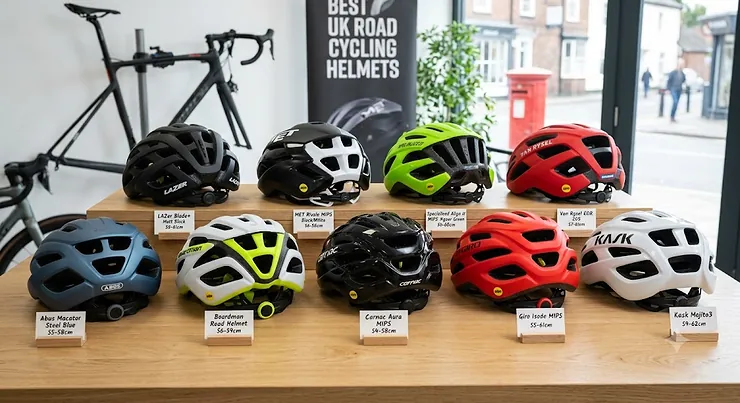
Here’s the uncomfortable truth nobody at the bike shop tells you: the £250 helmet on the top shelf isn’t necessarily protecting your skull any better than the one sitting quietly at £75. What a road cycling helmet under £100 gives up, in most cases, isn’t safety — it’s a few grams of weight and some aerodynamic polish that only matters if you’re chasing a podium. A road cycling helmet under £100 is a lid built specifically for tarmac riding — lighter and better ventilated than a commuter helmet, certified to EN1078, and increasingly fitted with rotational-impact tech like MIPS even at entry-level prices. That last part is the genuinely exciting bit. Five years ago, MIPS was a premium feature reserved for £150+ helmets. Now it’s turning up on lids costing less than a decent bike pump. So if you’ve been putting off replacing that battered old helmet because you assumed “proper” protection meant “proper” spending, you’re working from outdated information. This guide digs into seven real, currently available road cycling helmets, all priced under £100, and gives you the honest analysis — vents, retention systems, aggregated review sentiment, and where each one genuinely shines or falls short — so you can buy with confidence rather than guesswork.
Top Cycling Helmets Under 100 Pounds: Quick Comparison
Before the deep-dive reviews, here’s a snapshot of where these seven helmets sit relative to each other. Weights are for a size medium unless stated, and price ranges reflect typical UK retail at the time of writing rather than a fixed figure, since Amazon pricing fluctuates.
| Helmet | Rotational Protection | Approx. Weight | Vents | Price Range | Best For |
|---|---|---|---|---|---|
| Giro Agilis MIPS | MIPS | 250-270g | 32 | around £95-£100 | Hot-weather ventilation |
| Lazer Tempo KinetiCore | KinetiCore | ~250g | 22 | £75-£85 | Lightest all-rounder |
| Van Rysel RCR MIPS | MIPS | ~260g | 22 | under £100 | Best price-to-performance |
| Giant Relay MIPS | MIPS | ~350g | 17 | £65-£80 | Safety-first on a budget |
| Specialized Echelon II MIPS | MIPS | ~300g | 22 | £70-£90 | Fiddly-fit heads |
| Bontrager Starvos MIPS | MIPS | ~290g | 22 | £75-£90 | All-day comfort |
| Bell Avenue MIPS | MIPS | ~300g | 18 | around £80 | Total beginners |
Looking at that table, the pattern that jumps out is how thoroughly MIPS has trickled down the price ladder — six of the seven come with it as standard, and KinetiCore on the Lazer achieves a similar rotational-protection goal through a different mechanical route. Weight differences between the cheapest and priciest options here are modest, rarely more than 100g, which tells you the real differentiator at this price point is fit system and ventilation rather than raw mass. If hot climbs are your priority, the Agilis and its 32 vents deserve a closer look; if you want the simplest possible buying decision, the Van Rysel earns its reputation as the value benchmark the others get measured against.
💬 Found a helmet you like the look of already? Scroll down to see it in full — one click gets you current pricing and availability.
Top 7 Road Cycling Helmets Under £100: Expert Analysis
Coverage here spans genuine budget buys, comfortable mid-rangers, and the very best a sub-£100 budget can stretch to, along with a couple of less shouted-about alternatives worth your attention.
1. Giro Agilis MIPS — best ventilation this close to £100
The standout feature of the Agilis is straightforward: 32 vents on a helmet that typically retails just under £100, which is more airflow than plenty of helmets costing twice as much. Giro’s Roc Loc 5.5 retention system gives a genuinely adjustable, deep-fit cradle rather than the flimsy dial you sometimes find on cheaper lids, and the Coolfit antimicrobial padding does a decent job of managing sweat on long summer rides. Based on the spec comparison, this is the helmet to pick if you regularly climb in warm weather or simply run hot — the trade-off is that all that venting means less material overall, so wind noise can be more noticeable at speed on exposed roads. Reviewers consistently note that the fit feels secure and “wrap-around” despite the low weight, and that the ventilation genuinely reduces the need to remove the helmet on long ascents, though a small number mention wanting a thin skull cap in cooler months to offset the airflow. Pros: three strong points below reflect that mix of ventilation, fit, and value; Cons: the honest trade-offs of an open, vented shell.
Pros:
- ✅ 32 vents deliver genuinely exceptional airflow
- ✅ Roc Loc 5.5 gives a secure, adjustable deep fit
- ✅ MIPS included despite the sub-£100 price point
Cons:
- ❌ Limited insulation in colder, wetter conditions
- ❌ Wind noise more noticeable at higher speeds
At around £95-£100, the Agilis sits right at the ceiling of this guide’s budget, and the value verdict is simple: if ventilation is your number-one priority, few helmets at any price beat it pound for pound. Check current price and availability before you commit, since retailers do adjust stock levels for popular sizes.

2. Lazer Tempo KinetiCore — lightest all-rounder in this lineup
What stands out immediately about the Tempo is its weight — around 250g, making it one of the lightest helmets under £100 you’ll find, road-specific or otherwise. KinetiCore is Lazer’s alternative to a traditional MIPS liner: rather than adding a slip-plane layer, the foam structure itself is engineered with crumple zones designed to absorb and redirect rotational force, which means no extra weight penalty from a liner. The Rollsys dial system sits at the crown of the helmet rather than the back, spreading pressure more evenly across the head — what most buyers overlook about this design is that it reduces the “hot spot” feeling some dial systems create at the base of the skull. Reviewers consistently praise the Tempo’s all-day comfort and describe the retention system as “precise,” though a handful note the colour range is more limited than rival brands offer. This is a genuinely strong pick for anyone who wants premium-feeling ergonomics without the premium price tag attached.
Pros:
- ✅ Genuinely one of the lightest lids under £100
- ✅ KinetiCore protection with no added liner weight
- ✅ Rollsys dial spreads pressure evenly and precisely
Cons:
- ❌ Smaller colour range than some competitors
- ❌ Ventilation is good but not class-leading
Priced in the £75-£85 range typically, the Tempo represents strong value for riders prioritising comfort and low weight over maximum ventilation — a genuinely sensible upgrade from an ageing, heavier helmet.
3. Van Rysel RCR MIPS — best price-to-performance in the whole test
Decathlon’s in-house road brand has built a reputation for punching above its price bracket, and the RCR MIPS is the clearest example of that in this guide — a helmet whose retention system, ventilation, and finish genuinely resemble far pricier options. Based on the spec comparison, the shell design borrows directly from Decathlon’s WorldTour-proven aero helmets, which explains why the airflow and comfort feel more sophisticated than the price suggests. The MIPS liner is fully integrated rather than feeling bolted on as an afterthought, and the overall build quality — stitching, strap hardware, buckle action — holds up well against scrutiny. Reviewers consistently describe it as excellent value, with several noting they struggled to find genuine faults given the price, beyond wishing for a slightly wider range of size options. This is exactly the kind of “quiet achiever” product that Amazon listings alone would never adequately explain — the value only becomes obvious once you’ve compared it directly against pricier alternatives.
Pros:
- ✅ Performance and finish well above its price bracket
- ✅ MIPS liner integrated cleanly, not an afterthought
- ✅ Proven design lineage from WorldTour-level helmets
Cons:
- ❌ Sizing runs slightly narrow for some head shapes
- ❌ Fewer colourways than more established road brands
At consistently under £100, and often meaningfully under it, the RCR MIPS earns its reputation as the helmet other budget options get compared against. If you only read one section of this guide before buying, make it this one.
4. Giant Relay MIPS — best independently-verified safety score on a budget
The Relay’s standout advantage is a five-star rating in the independent Virginia Tech bicycle helmet safety assessment — a genuinely rare achievement at this price point, and one that matters more than marketing copy ever could. The 17 vents are fewer than some rivals here, but they’re positioned intelligently along common hot-spot channels, so airflow feels more effective in practice than the raw vent count suggests. Anti-odour padding helps manage the inevitable sweat build-up on longer rides, and the roughly 350g weight, while heavier than some competitors on this list, isn’t something reviewers report noticing once actually riding. What most buyers overlook about safety-rated helmets is that the star rating reflects rotational and linear impact performance specifically, not general build quality — so the Relay’s genuine selling point is peace of mind backed by data, not flashy features. Reviewers consistently note the adjustment dial works effectively, if a little “clunky” compared with smoother systems on pricier helmets, and several mention this as their top pick specifically for nervous or safety-conscious riders.
Pros:
- ✅ Five-star independent Virginia Tech safety rating
- ✅ Anti-odour padding manages sweat well
- ✅ Intelligent vent placement despite lower vent count
Cons:
- ❌ Heavier than most rivals in this guide
- ❌ Adjustment dial feels slightly clunky in use
Typically priced in the £65-£80 range, the Relay is the pick for riders who want objective, third-party safety validation rather than taking a brand’s word for it — a genuinely reassuring purchase for new or returning cyclists.
5. Specialized Echelon II MIPS — best fit-adjustment system for tricky head shapes
The Echelon II’s calling card is its micro-adjustable fit system, which allows far finer tuning than the notched dials found on many competitors — genuinely useful if you’ve struggled to get a secure fit from off-the-shelf helmets before. Large vents keep airflow strong without compromising the shell’s structural integrity, and internal reinforcement means the ventilation doesn’t come at the cost of stability, something cheaper vented helmets sometimes sacrifice. Here’s what the spec sheet won’t tell you, but reviewers note: the sleek looks and micro-adjustability make this a popular choice among riders transitioning from budget helmets who’ve previously experienced pressure points or an unstable fit. On the flip side, some reviewers mention the retention system, while precise, takes slightly longer to dial in than a simple ratchet, which may frustrate riders who want to grab-and-go.
Pros:
- ✅ Micro-adjustable fit system suits difficult head shapes
- ✅ Large vents with genuinely strong airflow
- ✅ Internal reinforcement keeps the shell stable
Cons:
- ❌ Fit system takes longer to dial in initially
- ❌ Sits toward the upper end of this guide’s price range
Usually found in the £70-£90 bracket, the Echelon II is worth the slight premium if you’ve previously struggled with helmet fit — the adjustability alone can be the difference between wearing your helmet properly and leaving it too loose out of discomfort.
6. Bontrager Starvos MIPS — best all-day comfort and adjustability
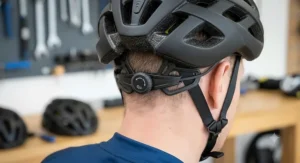
Bontrager’s cheapest road-specific helmet to include MIPS, the Starvos stands out for its Boa closure system — a dial-driven mechanism borrowed from performance cycling shoes that allows genuinely precise, on-the-fly tightening mid-ride. Internal recessed channels direct airflow more efficiently across the scalp than surface vents alone, working alongside 22 external vents for solid overall ventilation. Based on the spec comparison, the combination of Boa precision and channelled airflow makes the Starvos a strong pick for long sportives or all-day rides where comfort matters more than outright weight savings. Reviewers consistently highlight the Boa dial as a standout feature at this price, noting it stays secure over rough surfaces where cheaper dial systems can loosen, though a few mention the helmet runs slightly warm compared with more aggressively vented rivals like the Agilis.
Pros:
- ✅ Boa dial gives precise, secure on-the-fly adjustment
- ✅ Recessed internal channels aid genuine airflow
- ✅ MIPS included at Bontrager’s most accessible price point
Cons:
- ❌ Runs warmer than the most heavily vented rivals
- ❌ Boa dial adds slight cost versus basic ratchets
Generally priced between £75-£90, the Starvos suits riders who value a locked-in, secure fit above maximum ventilation — ideal for longer distances where a helmet shifting mid-ride becomes a genuine annoyance.
7. Bell Avenue MIPS — best budget all-rounder for beginners
The Bell Avenue’s standout feature is simply how much genuine capability it packs into what’s consistently one of the cheapest MIPS-equipped helmets in this guide. Eighteen large vents provide solid airflow for the price, and a dedicated sweat-management pad across the forehead helps stop perspiration running into your eyes or glasses — a small detail that makes a real difference on hot, hard efforts. Reviewers consistently describe the fit as easy to adjust, even while wearing gloves, and the overall build as reassuringly solid for newer riders who aren’t yet ready to commit serious money to cycling kit. What most buyers overlook here is that “budget” doesn’t mean “basic” in this case — MIPS is included as standard rather than reserved for a pricier variant, which isn’t always true of rival entry-level helmets. The trade-off is a slightly plainer aesthetic and fewer standout technical flourishes compared with the Echelon II or Starvos.
Pros:
- ✅ MIPS included as standard at a genuinely low price
- ✅ Sweat-management pad genuinely reduces eye irritation
- ✅ Easy to adjust even while wearing gloves
Cons:
- ❌ Fewer standout features than pricier rivals here
- ❌ Styling is plainer than some competitors
At around £80 or often less, the Avenue is the sensible starting point for anyone newly committing to road cycling who wants proven safety tech without overspending before they know how seriously they’ll take the hobby.
Practical Usage Guide: Getting the Right Fit From Day One
Buying the right helmet is only half the job — fitting it correctly is what actually determines how much protection you get. Start by measuring your head circumference roughly 2cm above your eyebrows, wrapping the tape measure around the widest point at the back of your skull, then match that figure to the brand’s specific size chart rather than assuming sizes are universal across manufacturers. Once it’s on, the helmet should sit level, roughly two finger-widths above your eyebrows — pushed back too far and it stops protecting your forehead; pulled too low and it obstructs your vision. Tighten the retention dial until the helmet feels snug without pinching, then adjust the side straps so they form a “V” shape just below each ear, and finally tighten the chin strap until you can fit no more than one or two fingers between it and your chin. A common first-30-days mistake is treating the initial fit as permanent — hair growth, weather, and even hairstyle changes (hello, ponytails) mean it’s worth re-checking the fit every few weeks initially. For maintenance, rinse the padding with mild soap and water every few weeks if you ride regularly, avoid leaving the helmet in direct sunlight or a hot car for extended periods since UV and heat degrade the EPS foam over time, and inspect the shell for cracks after any fall, however minor it seemed.
Real-World Scenarios: Which Helmet Actually Suits You?
Picture three very different riders. First, a 24-year-old grad student commuting six miles each way to a lab job on mixed urban roads, budget capped at £85, wanting something light enough to forget she’s wearing it — the Lazer Tempo KinetiCore or Bell Avenue MIPS both fit that brief, with the Tempo edging it on comfort and the Avenue on price. Second, a 52-year-old returning cyclist doing weekend club runs of 40-60 miles through hilly countryside, prioritising safety data and all-day comfort over aesthetics — the Giant Relay MIPS, with its five-star Virginia Tech score, or the Bontrager Starvos, with its secure Boa fit, both answer that brief directly. Third, a keen racer on a tight budget training four to five times weekly, chasing genuine performance without a premium price tag — here the Van Rysel RCR MIPS is the obvious call, given its WorldTour-derived design and near-unbeatable value. What connects all three scenarios is that fit and use-case, not price alone, should drive the decision — a £99 helmet that doesn’t suit your head shape protects you less effectively than an £80 one that fits perfectly.
Sub £100 Road Helmet With MIPS: What You’re Actually Paying For
It’s worth being precise about what MIPS actually does, since the term gets thrown around loosely in product listings. MIPS — Multi-directional Impact Protection System — is a thin, low-friction layer fitted between the foam and the padding, allowing roughly 10-15mm of independent rotational movement during an angled impact. On paper this means the outer shell can slide slightly relative to your head during a crash, reducing the rotational force transmitted to your brain — and rotational forces, not straight-on impacts, are responsible for the majority of serious cycling head injuries, since most falls happen at an angle rather than dead-on. Standard EN1078 certification, which every helmet sold in the UK must carry, only tests direct linear impact, meaning two helmets that both pass EN1078 can still differ meaningfully in rotational protection. As the Highway Code’s guidance for cyclists notes, wearing a correctly fitted helmet that conforms to current regulations meaningfully reduces head-injury risk, though wearing one remains a recommendation rather than a legal requirement for adult cyclists in the UK. The genuinely good news for anyone shopping under £100 is that MIPS no longer commands the premium it once did — six of the seven helmets in this guide include it as standard, meaning you’re rarely required to trade rotational protection for budget at this price point anymore.
Road Helmet Price vs Performance: Where Does the Extra Money Actually Go?
Here’s a finding that surprises most first-time buyers: independent testing has repeatedly found no reliable link between a helmet’s price and how well it actually protects your head. Recent Imperial College London research on cycle helmet safety tested thirty of the UK’s most popular helmets and found no correlation between price and protective performance, with one of the best-performing helmets in the study retailing at a modest £50. So if outright protection doesn’t scale with price, what does your extra £50-£150 actually buy once you move beyond this guide’s £100 ceiling? Mostly it buys marginal weight savings, more sophisticated retention systems, wind-tunnel-tuned aerodynamics that shave single-digit watts at race pace, premium finishing details, and broader colourways. For the vast majority of riders — commuters, sportive participants, weekend club riders — none of that marginal gain meaningfully changes the experience of riding, whereas a correctly fitted, MIPS-equipped helmet under £100 delivers close to the full safety benefit available at any price. Where spending more does make sense is if you’re racing competitively and aerodynamic drag genuinely affects your results, or if you simply value the lighter weight over many hours in the saddle.
Value Road Helmet Under £100: Best Buy Shortlist
If you want the short version of this entire guide, here it is. For pure value-for-money, the Van Rysel RCR MIPS is the standout, delivering performance that regularly gets compared favourably against helmets costing considerably more. For safety-conscious buyers who want independently verified data rather than marketing claims, the Giant Relay MIPS’s five-star Virginia Tech rating makes the decision straightforward. For anyone prioritising comfort across long rides, the Bontrager Starvos MIPS and its Boa dial system consistently earn praise from reviewers for staying secure without pressure points. And for total beginners who simply want proven safety tech without overthinking the purchase, the Bell Avenue MIPS remains a sensible, low-risk starting point. Value, in other words, isn’t a single helmet — it’s whichever of these matches your specific riding pattern and budget ceiling.
Mid-Range Road Helmet Best Buy: Stepping Up Without Overspending
Not every rider wants the absolute cheapest option, and that’s a reasonable position — a slightly higher budget within this £100 ceiling buys real, tangible improvements. The Specialized Echelon II MIPS and its micro-adjustable fit system suit riders who’ve previously struggled with off-the-shelf sizing, while the Giro Agilis MIPS, sitting right at the top of this price bracket, delivers genuinely premium-feeling ventilation that few true mid-range helmets can match. What differentiates these from the true budget picks isn’t safety — remember, price and protection don’t reliably correlate — but refinement: smoother retention dials, better-finished padding, and marginally more sophisticated shell construction. If you’re upgrading from a first helmet bought years ago and want a noticeable step up in day-to-day comfort without breaking into three-figure territory beyond £100, these two are the sensible mid-range picks in this guide.
£100 Cycling Helmet Performance: What to Expect on the Road
Specs on a listing page rarely translate cleanly into lived experience, so here’s what actually changes once you’re riding one of these helmets rather than reading about it. Ventilation differences become most noticeable on sustained climbs — the Giro Agilis’s 32 vents will feel dramatically cooler than the Giant Relay’s 17 during a 20-minute uphill effort in summer, even though both protect your head equally well. Weight differences of 50-100g between the lightest and heaviest options here rarely register consciously after the first ten minutes of a ride, according to reviewer feedback, though they can matter more on multi-hour rides where cumulative neck fatigue becomes relevant. Retention system quality is where cheaper generic helmets often disappoint compared with these seven — a well-engineered dial, like Bontrager’s Boa or Lazer’s Rollsys, holds position reliably over rough surfaces where basic ratchets can loosen and require mid-ride readjustment. Expect all seven of these helmets to perform reliably in genuine UK weather conditions too, from light rain to warm summer rides, though none are designed as dedicated winter helmets — riders doing significant cold-weather mileage may want a thin skull cap underneath for insulation regardless of which model they choose.
How to Choose a Road Bike Helmet £100 or Less: 6-Step Framework
What is the best way to choose a road bike helmet £100 or less? Follow a short, structured checklist: measure your head accurately, prioritise fit over features, confirm rotational protection is included, check independent safety ratings where available, match ventilation to your typical riding conditions, and only then compare price and styling.
- Measure your head properly first. Use a soft tape measure around the widest point of your skull, roughly 2cm above your eyebrows, and check it against each brand’s specific size chart before ordering.
- Prioritise fit over every other feature. A helmet that doesn’t sit correctly protects you less than a cheaper one that fits — no amount of ventilation or styling compensates for a poor fit.
- Confirm MIPS or an equivalent rotational system is included. As covered above, most serious head injuries involve rotational force, and this technology is now common even under £100.
- Check for independent safety data where it exists. A Virginia Tech star rating, like the Giant Relay’s, gives you objective evidence rather than relying on brand marketing.
- Match ventilation to your actual riding conditions. Hot-weather climbers should lean toward heavily vented options like the Agilis; year-round commuters may prefer the balance the Starvos or Avenue strike.
- Only then weigh price, colourway, and styling. Once safety and fit are confirmed, these final factors are genuinely just personal preference.
Common Mistakes When Buying a Road Cycling Helmet Under £100
The most frequent mistake is buying based on brand reputation alone without checking the specific model’s fit — a brand you trust for shoes or bikes won’t automatically produce a helmet shaped for your particular head. A second common error is assuming a higher price guarantees better protection, when independent research has repeatedly shown no reliable correlation between the two within regulated markets. Third, many buyers skip re-checking their fit after the first few rides, not accounting for hair changes, weather, or simply the padding compressing slightly with use. Fourth, some riders prioritise looks over ventilation, ending up with a stylish but overheating helmet on long summer rides — genuinely miserable on a hot climb. Finally, a surprising number of people continue using a helmet well past a crash or significant impact, not realising that the EPS foam is designed to compress and absorb energy exactly once — after any meaningful impact, the helmet’s protective capacity is compromised even if the shell looks intact.
Benefits vs Traditional Alternatives
| Factor | Modern sub-£100 MIPS road helmet | Older non-MIPS or generic helmet |
|---|---|---|
| Rotational protection | Standard on 6 of 7 models tested | Rarely included |
| Weight | 250-350g typical | Often 350g+ |
| Ventilation | 17-32 vents, engineered channels | Basic, fewer vents |
| Retention system | Precision dials (Boa, Rollsys, Roc Loc) | Basic ratchet or none |
| Safety data available | Several independently rated | Rarely tested independently |
The comparison above makes the case for upgrading fairly bluntly: a modern sub-£100 helmet with MIPS delivers meaningfully better rotational protection, ventilation engineering, and retention precision than the generic or ageing helmets many riders are still using. If your current helmet predates 2018 or so, before MIPS became widely available at accessible prices, this table alone is a strong argument for retiring it, regardless of how intact it still looks on the shelf.
💬 Ready to upgrade? Compare current prices on the helmet that matched your riding style above — it only takes a click.
Safety, Regulations and Compliance Guide
Every helmet sold legally in the UK must carry EN1078 certification, the minimum safety standard covering construction, field of vision, impact absorption, and strap strength — look for the CE mark confirming this on the helmet itself. Wearing a helmet is not a legal requirement for adult cyclists in the UK, but the government’s own cycling guidance recommends it, and the Highway Code’s rules for cyclists specifically state that a correctly fitted, regulation-conforming helmet reduces the risk of head injury in certain circumstances. Independent testing bodies go further than the pass/fail EN1078 standard — the Virginia Tech Helmet Lab’s bicycle ratings run 24 separate impact tests per helmet, assessing both linear and rotational forces, and recommend consumers choose helmets rated four or five stars where that data is available. It’s worth noting that helmets should be replaced roughly every three to five years even without a crash, since UV exposure and general ageing degrade the EPS foam’s protective properties over time, and always after any impact regardless of visible damage. None of the seven helmets featured here are marketed for anything beyond road and general fitness cycling, so mountain biking, BMX, or downhill use would need a differently certified helmet entirely.
Features That Actually Matter (And Those That Don’t)
Rotational impact protection, whether MIPS or an equivalent like KinetiCore, genuinely matters and is worth prioritising given how many serious injuries involve angled impacts rather than straight-on hits. A well-engineered retention dial genuinely matters too, since a helmet that shifts mid-ride offers compromised protection exactly when you might need it most. Ventilation matters, but mainly for comfort rather than safety — more vents won’t make a crash less severe, though they’ll make a summer climb considerably less miserable. On the other hand, marketing terms like “aero-optimised” at this price point matter far less than brands imply — genuine aerodynamic gains from helmet shape are marginal below racing speeds and largely irrelevant for commuting or club-run pace. Colour range and styling, while understandably a factor in your final decision, have zero bearing on protective performance, so don’t let a limited colourway rule out an otherwise excellent helmet like the Lazer Tempo. Built-in visors and clip-on lights sound useful but add weight and cost without meaningfully improving core head protection, so treat them as a nice-to-have rather than a deciding factor.
Frequently Asked Questions
❓
Is a road cycling helmet under £100 as safe as a premium one?
❓ Do I legally have to wear a cycling helmet in the UK?
❓ How often should I replace a road bike helmet?
❓ What does MIPS actually do in a cycling helmet?
❓ Which sub-£100 helmet has the best independent safety rating?
Conclusion
If there’s one thing worth taking away from this guide, it’s that a road cycling helmet under £100 no longer means compromising on the technology that actually keeps you safer. MIPS, once a premium reserve, now sits standard on six of the seven helmets reviewed here, and independent testing consistently shows that price and protection simply don’t move in lockstep the way marketing might suggest. Your decision should hinge on fit first, ventilation second, and specific features — a Boa dial here, a five-star safety rating there — third. Whether you’re a nervous returning rider drawn to the Giant Relay’s verified safety score, a budget-focused racer eyeing the Van Rysel RCR MIPS, or someone who simply overheats on every climb and needs the Giro Agilis’s 32 vents, there’s a genuinely well-specced option here that won’t stretch past three figures. Take the time to measure your head properly, try before you buy where possible, and remember that the perfect helmet is the one that fits you correctly and that you’ll actually want to wear on every single ride.
✨ Don’t Miss These Exclusive Deals!
🔍 Ready to gear up? Click through on any of the seven helmets above to check current pricing and availability on Amazon, and start enjoying safer, cooler, more comfortable rides this season!
Recommended for You
- Road Cycling Helmet For Women With Ponytail: 7 Real Picks 2026
- Women’s Road Cycling Helmet: 7 Best MIPS Picks for 2026
- Road Cycling Helmet for Commuting: 7 Best Picks for UK Riders 2026
Disclaimer: This article contains affiliate links. As an Amazon Associate, I earn from qualifying purchases. If you purchase products through these links, we may earn a small commission at no additional cost to you.
✨ Found this helpful? Share it with your friends! 💬🤗
