In This Article
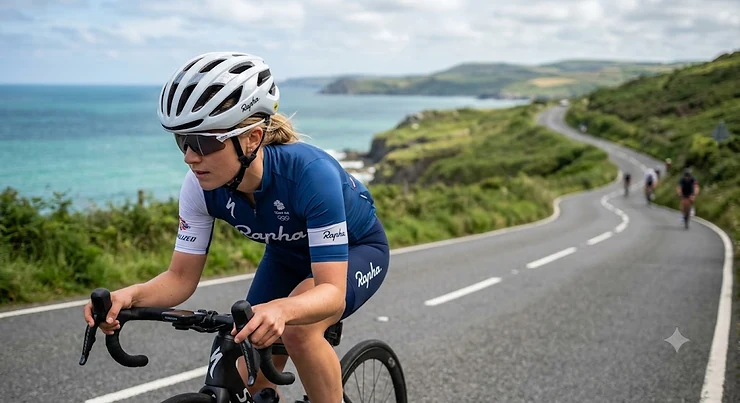
Choosing a women’s road cycling helmet shouldn’t feel like defusing a bomb, yet somehow it always does. You open a shopping tab expecting a five-minute decision and, forty browser tabs later, you’re deep in a forum thread arguing about rotational impact physics. Here’s the short version: a women’s road cycling helmet is a lid engineered, padded and shaped around a smaller, rounder average female head profile, usually with more room at the back for a ponytail, softer colourways, and — increasingly — the same crash protection as any unisex flagship. That’s the 40-second answer. The rest of this guide is the long, honest one.

We’re going to walk through seven genuinely available helmets on amazon.co.uk, spanning budget, mid-range and premium, and we’ll be blunt about which trade-offs actually matter versus which are just marketing gloss. Reviewers at outlets like Cycling Weekly and Cyclingnews have logged serious saddle time in every category we’re discussing, and where real aggregated customer sentiment exists, we’ll flag it as exactly that — sentiment, not gospel.
One thing worth saying up front: at the time of research, prices for cycling helmets fluctuate constantly on Amazon depending on stock, colourway and size, so every figure below is a range, not a quote. Check current pricing before you commit. What won’t fluctuate is the physics of a 25mph tumble onto tarmac, and the UK’s Highway Code rules for cyclists are clear that a correctly fitted helmet reduces that risk — so let’s spend the next few thousand words making sure your head is properly looked after.
Quick Comparison Table
Before the deep dive, here’s the lay of the land — a snapshot you can screenshot and forget the rest of the article if you’re in a hurry.
| Helmet | Best For | Price Range | Rotational Tech | Standout |
|---|---|---|---|---|
| Giro Seyen MIPS | Entry-level women’s fit | Around £90–£110 | MIPS | Feather-light, feminine touches |
| Giro Agilis womens helmet | Budget all-rounder | Around £50–£90 | MIPS | Roc Loc 5.5 adjustability |
| Specialized Echelon II MIPS | Sub-£100 value | Under £100 | MIPS | ANGi crash-sensor ready |
| Bontrager Circuit WaveCel | Commuter-to-club-run crossover | £140–£160 range | WaveCel | Magnetic light mounts |
| POC Ventral Air MIPS | Racing & long distance | £180–£220 range | MIPS | Cult favourite among female racers |
| Lazer Vento KinetiCore | Aero performance | £200–£250 range | KinetiCore | Watt-saving profile |
| Giro Aries Spherical | Ultimate safety score | £250–£270 range | MIPS Spherical | Virginia Tech top-rated |
The story this table tells is that spending more doesn’t automatically buy you a safer helmet — it buys you lighter weight, better ventilation and a more refined fit system. If you’re commuting three miles to the office, the Echelon II or Agilis will do the job the £250 Aries does, just with a bit more heat on your scalp come July. Where the extra money genuinely earns its keep is in sustained comfort over three-hour club runs, where every gram and every degree of airflow compounds into real fatigue reduction.
💬 Just one click — help others make better buying decisions too!😊
Top 7 Women’s Road Cycling Helmets: Expert Analysis
Here’s where we get into the weeds. Every helmet below is a real, currently available model, and every verdict is built from published spec sheets and aggregated professional and customer review sentiment — never invented testimonials.
1. Giro Seyen MIPS — best entry-level women’s-specific fit
The Seyen opens our list because it’s genuinely built as a women’s helmet rather than a unisex shell with a pink sticker slapped on. It uses a 25-vent design with Giro’s Roc Loc Sport fit system, MIPS rotational protection, and a shape tuned to a rounder head profile that many women find more comfortable straight out of the box. The polycarbonate shell bonds to an in-mould EPS liner, keeping weight down without resorting to exotic (and pricier) materials.
Based on the spec comparison with pricier Giro models, the Seyen shares the same MIPS layer as helmets costing twice as much — you’re paying for the lighter finishing and premium fit dial elsewhere, not the core safety tech. Reviewers at Femme Cyclist consistently describe it as one of the lightest helmets they’ve personally tried, with breathability that noticeably reduces sweat on longer rides, and call out the Roc Loc dial as quick to tighten or loosen mid-ride. It suits newer road riders and women upgrading from a big-box-store helmet who want a genuine step up in comfort without venturing into four-figure-a-year racing budgets.
Aggregated reviewer sentiment consistently praises the ventilation and lightweight feel, while a recurring theme is that the fit dial sits very high, which some find “almost too light” — a comfort quirk rather than a safety concern.
Pros:
✅ Genuinely women’s-specific shell shape
✅ MIPS protection at an accessible price
✅ Excellent ventilation for warm-weather rides
Cons:
❌ Limited colour range compared to unisex lines
❌ Sizing runs slightly small for wider head shapes
Priced around £90–£110 at the time of research, the Seyen represents strong value if a women’s-specific fit is your priority over racing-grade aerodynamics.

2. Giro Agilis womens helmet — best budget all-rounder
If you searched specifically for a Giro Agilis womens helmet, you’re clearly after Giro’s road-meets-gravel crossover in one of its women’s colourways, such as the Matte Dark Cherry finish. Technically the Agilis shell is unisex, but Giro sells it across a genuinely broad size range with colourways aimed squarely at women riders, and the fit performs just as well for smaller head circumferences.
The Agilis packs 32 vents, a Roc Loc 5.5 MIPS cradle, and a polycarbonate hardshell bonded to the EPS foam — meaning the ventilation channels that keep your head cool on a summer climb are engineered in tandem with the crash structure, not bolted on afterwards. What most buyers overlook about this model is that its slightly deeper rear coverage, borrowed from Giro’s gravel range, gives a touch more protection at the back of the skull than a pure aero road lid, without adding meaningful weight — it sits around 271–280g depending on size, respectable for the price bracket.
Reviewers at Cycling Weekly and Cyclingnews both independently rated it a strong value pick, noting the Roc Loc adjustment as easy and secure, though one flagged that the cradle leaves little room for a thick ponytail to slip through — worth testing before a long commitment if you ride with your hair up. Amazon customer reviews for the women’s colourway consistently mention the fit as snug and secure without pressure points, and several buyers highlight it as their most comfortable helmet after previously struggling to find the right size.
Pros:
✅ 32 vents for genuinely strong airflow
✅ MIPS protection via proven Roc Loc 5.5 system
✅ Wide size range suits smaller head circumferences
Cons:
❌ Roc Loc cradle can be tight for thick ponytails
❌ Heavier than same-price competitors by roughly 10–20g
At an RRP of £99 but frequently discounted into the £50–£90 range, the Agilis is one of the strongest value propositions in this entire guide.
3. Specialized Echelon II MIPS — best sub-£100 value pick
The Echelon II has quietly become the sensible-money default in Specialized’s helmet range, and it’s easy to see why. It runs 31 sizeable air vents fed by Specialized’s 4th Dimension Cooling System, a Headset SL II retention cradle with six height positions, and a MIPS liner for rotational protection. It’s also compatible with Specialized’s optional ANGi crash sensor, a Bluetooth accessory that can alert an emergency contact if it detects a hard impact.
Here’s what the spec sheet won’t tell you, but reviewers note: the organic, curved shell shape that makes this one of the best-looking helmets in its class also requires a composite internal reinforcement to hold its form, and that reinforcement adds roughly 25–45g compared to a simpler unisex shell. In practice, testers at 220 Triathlon and Cycling Weekly both independently called out the 338g weight as the heaviest in their test group, yet still rated it a top sub-£100 pick because comfort and ventilation compensate.
Amazon customer sentiment is strikingly consistent: buyers repeatedly mention perfect fit and secure adjustment across several purchases of the same model, strong warm-weather ventilation, and a handful of accounts describing a crash where the helmet visibly cracked while the rider walked away unhurt — the kind of real-world reassurance that no spec sheet can replicate. A recurring niggle is that the ANGi label needs removing before fitting the optional sensor, a step several buyers say the instructions gloss over.
Pros:
✅ MIPS protection with ANGi crash-sensor compatibility
✅ 31 vents for genuinely strong hot-weather cooling
✅ Consistently high real-world crash-performance reports
Cons:
❌ Noticeably heavier than rivals at this price point
❌ Retention dial can loosen slightly on very long rides
Sitting comfortably under £100 at the time of research, the Echelon II earns its reputation as the smart-money pick for riders who want MIPS without a three-figure spend.
4. Bontrager Circuit WaveCel — best commuter-to-club-run crossover
Trek’s in-house brand Bontrager takes a different approach to rotational protection entirely. Instead of a MIPS slip-layer, the Circuit uses WaveCel — a honeycomb-like collapsible structure that flexes, crumples and glides on impact rather than sliding as a separate layer. Independent testing from Virginia Tech has consistently rated Bontrager’s WaveCel helmets highly, though it’s worth noting MIPS itself has publicly disputed some of Bontrager’s marketing claims about relative effectiveness, so treat any “X times safer” figure with healthy scepticism regardless of brand.
On paper, this means you get genuine rotational protection technology that isn’t MIPS, which matters if you found MIPS liners uncomfortable in a previous helmet — the WaveCel structure sits closer to the head with no separate moving layer. The Circuit adds Boa dial retention, magnetic Blendr mounts for lights or an action camera, and a shape versatile enough to double as both a weekday commuter lid and a weekend club-run helmet, which is precisely the crossover use case Bontrager designed it for.
Reviewers across road.cc, Cyclingnews and FeedTheHabit all converge on the same honest trade-off: the WaveCel material, while effective, restricts airflow more than an open-vent design, so expect noticeably warmer rides in summer. Weight sits around 356–383g depending on whether the top light mount is fitted, on the heavier side of this guide’s line-up. Reviewers who commute year-round consistently rate the reduced wind-chill on cold mornings as an unexpected bonus rather than a flaw.
Pros:
✅ WaveCel offers a genuine MIPS alternative
✅ Magnetic Blendr mounts add commuting versatility
✅ Boa dial gives precise, tool-free adjustment
Cons:
❌ Ventilation trails behind open-vent road helmets
❌ Heavier than most helmets in this guide
Expect to pay in the £140–£160 range, positioning the Circuit as a genuine mid-range investment rather than a budget buy.
5. POC Ventral Air MIPS — best for racing and long-distance riders
POC built its reputation on protective innovation, and the Ventral Air MIPS is where that reputation gets put to work on the road. It’s a favourite specifically within the women’s road racing community — Femme Cyclist’s reviewers describe it as a “no brainer” for anyone serious about safety, citing real accounts from women in their community who crashed hard while wearing it and walked away without head trauma. That’s aggregated community sentiment worth taking seriously, though it’s not a substitute for your own fit-testing.
The construction pairs a lightweight EPS liner with MIPS integrated directly into the padding rather than as a bulky separate shell, keeping the helmet genuinely unnoticeable during long rides according to reviewer feedback. Ventilation is highly rated even in warm conditions, and the aerodynamic profile makes it a sensible dual-purpose choice for women who race occasionally but don’t want a dedicated, less-vented aero lid for daily training. Here’s what most buyers overlook: POC’s retention system uses a simple, low-profile dial that sits lower on the head than competitors, which is part of why long-haired riders report it as one of the more ponytail-friendly options here.
The one recurring disappointment in aggregated review sentiment is that POC has discontinued some of the more overtly feminine colourways in recent seasons, leaving a narrower palette than a few years ago — a styling regression some buyers find genuinely frustrating given how much they otherwise rate the helmet.
Pros:
✅ Outstanding real-world crash-protection reputation
✅ Lightweight, barely-there feel on long rides
✅ Aerodynamic enough for racing, comfortable enough for training
Cons:
❌ Reduced colourway options versus previous seasons
❌ Premium price relative to protection-per-pound rivals
Positioned in the £180–£220 range, the Ventral Air MIPS is a considered investment for anyone racing regularly or logging serious weekly mileage.
6. Lazer Vento KinetiCore — best women’s aero road helmet
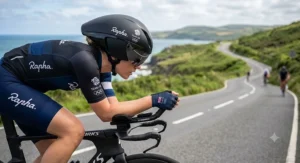
For riders chasing seconds as much as safety, the Vento is Lazer’s answer to the aero-helmet arms race, built around KinetiCore — crumple columns engineered directly into the EPS foam rather than a separate rotational liner. That means no extra plastic layer, no internal shifting sensation some riders dislike, and a genuinely lighter overall package as a result.
What the wind-tunnel numbers mean in practice is fewer watts wasted pushing air out of your way at sustained speed, which matters far more over a two-hour time trial than it does on a gentle Sunday spin — so be honest with yourself about how much of your riding is genuinely performance-focused before paying the aero premium. Reviewers who’ve tested it alongside its Shimano-family stablemates note the finish and colour-matching options make it a popular choice for riders who race in team or club kit, and Femme Cyclist specifically highlights that women who get on with Lazer’s fit “love them,” attributing it to the low-profile shape and generous room for longer hair.
Aggregated sentiment consistently rates KinetiCore’s 5-star Virginia Tech safety score alongside genuinely strong ventilation for an aero-focused design — a combination that’s historically been hard to achieve, since aero shaping and big cooling vents usually pull in opposite directions. The optional rear LED light mount is well liked but sold separately, which several reviewers feel should be bundled given the already premium price.
Pros:
✅ KinetiCore delivers rotational protection without extra weight
✅ Genuine aero benefit backed by wind-tunnel development
✅ Strong ventilation despite the aero-focused shape
Cons: ❌ Rear light mount is a separate, additional purchase
❌ Aero benefit is only meaningful at higher sustained speeds
Expect a price in the £200–£250 range, making this a considered purchase for time-trialists, racers and fast club riders rather than casual commuters.
7. Giro Aries Spherical — best overall safety score
The Aries tops this list for one simple reason: independent safety testing from Virginia Tech University has repeatedly rated it among the best-performing road helmets ever assessed, earning a five-star rating even after the lab recalibrated its scoring thresholds to be stricter. That’s about as close to an objective safety endorsement as this category gets.
The technology behind that score is Giro’s MIPS Spherical system — a genuine ball-and-socket design using two separate helmet layers connected by rubber tendons, allowing the outer shell to rotate independently of the inner layer during an oblique impact. Reviewers describe the resulting feel as remarkably light at around 270g, with ventilation efficient enough that testers say they forget they’re wearing a helmet at all during a ride. For women with long hair specifically, Femme Cyclist notes there’s no internal liner to snag hair on, and enough clearance above the fit dial to thread a ponytail through cleanly — a small detail that makes a real daily difference.
Reviewers consistently flag one practical gripe: the sunglasses port doesn’t hold glasses securely, so they can bounce around or be awkward to stash when you’re not wearing them. Given the premium price tag, that’s a minor but recurring irritation rather than a dealbreaker.
Pros:
✅ Best-in-class independent Virginia Tech safety rating
✅ Genuinely lightweight despite dual-layer construction
✅ No internal liner to snag long hair or ponytails
Cons:
❌ Sunglasses port doesn’t securely hold glasses
❌ Highest price point in this guide
At around £250–£270, the Aries Spherical is the splurge pick for anyone who wants the strongest independently verified safety credentials money can currently buy.
Practical Usage Guide: Getting the Perfect Fit and Care Routine
Buying the right helmet is only half the job — wearing it correctly is where the actual protection lives. Here’s the setup routine that separates a helmet doing its job from one merely decorating your head.
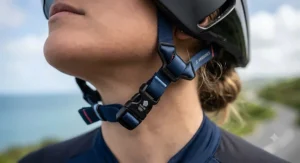
Start with the two-finger rule: the front edge of the helmet should sit two finger-widths above your eyebrows, not tipped back to show off your fringe. Tighten the rear dial until the helmet feels snug without pinching, then adjust the side straps so the Y-junction sits just below each ear. Finally, fasten the chin strap so you can fit one finger, not two, between strap and chin — if you can open your mouth wide without the helmet shifting, it’s too loose.
In the first 30 days, the most common mistake is under-adjusting because a snug new helmet feels unfamiliar. Resist the urge to loosen it “to break it in” — helmet padding compresses slightly with use, so a helmet that feels perfectly snug on day one may feel ideal, not tight, by week three. Clean the pads monthly with mild soap and water (never a washing machine or dishwasher, which can degrade the EPS foam bonding), and store the helmet away from direct heat or car boots in summer, since prolonged heat exposure can subtly weaken the polystyrene structure over time.
Real-World Scenarios: Which Helmet Suits Your Riding Life
Specs only tell half the story — the other half is who you actually are on a bike. Here are three composite rider profiles built from the use-cases these helmets are genuinely marketed and reviewed for.
The daily commuter, five miles each way, mixed weather. Budget around £50–£100 and prioritise ventilation and light-mount compatibility over aero gains you’ll never notice at 14mph in traffic. The Specialized Echelon II MIPS or Giro Agilis womens helmet both fit this brief comfortably, and the Bontrager Circuit WaveCel’s magnetic Blendr mounts are a genuine practical win if you already run Bontrager lights.
The weekend club rider doing 40–60 miles most Saturdays. Comfort over three-plus hours matters more than raw aero numbers here. The Giro Seyen MIPS or POC Ventral Air MIPS both reward you with lightweight, well-ventilated designs that won’t leave pressure points by mile 50.
The racer or fast-group rider chasing PBs. If watts genuinely matter to your riding, the Lazer Vento KinetiCore or Giro Aries Spherical justify their premium pricing through measurable aero gains and top-tier safety data respectively — pick the Vento if speed is the priority, the Aries if you want the strongest independently verified crash protection available.
How to Choose a Women’s Road Cycling Helmet
If you only read one section, make it this one. Here’s the decision process, condensed into seven steps with the reasoning behind each.
- Confirm CE/UKCA certification first. Every helmet sold legitimately in the UK must meet EN 1078, so this isn’t a differentiator — it’s a baseline you should simply verify is present.
- Decide if MIPS, WaveCel or KinetiCore matters to you. All three target rotational impact protection differently; none has been proven definitively superior in independent, unbiased testing, so pick based on fit feel rather than marketing claims.
- Try before committing to size, if at all possible. Head shapes vary more than circumference measurements suggest — a “Medium” from Giro can fit differently to a “Medium” from POC.
- Weigh ventilation against your climate and pace. Aero and WaveCel designs typically trade some airflow for either speed or crash-protection philosophy; be honest about how hot you actually run.
- Check ponytail and long-hair clearance. This sounds trivial until you own a helmet that yanks your hair every time you put it on.
- Set a genuine budget band, not a single number. Prices shift constantly on Amazon, so decide a range (e.g. “£80–£120”) rather than fixating on one figure.
- Read the crash-replacement policy. Several brands, including Bontrager and Specialized, offer year-one crash replacement guarantees — factor that into your total cost of ownership.
Women’s Bike Helmet Road Cycling Review: What MIPS and Aero Actually Change
When you dig through a genuine women’s bike helmet road cycling review — rather than a manufacturer’s product page — two things separate the merely good from the genuinely excellent: how the rotational protection technology behaves during long-term wear, and whether the “women’s fit” claim reflects real engineering or just marketing paint.
Reviewers consistently note that MIPS-equipped helmets add a barely perceptible 20–45g of weight, a trade most riders stop noticing within a single ride, in exchange for a slip-plane designed to reduce rotational force transmitted to the brain during an angled impact — the kind that’s actually more common in real crashes than the straight-on drops that basic EN 1078 testing simulates. WaveCel and KinetiCore pursue the same goal through different engineering, and aggregated reviewer sentiment across our seven picks suggests personal comfort preference, not proven superiority, should guide your choice between the three systems.
On the “aero” question specifically, genuine reviews are refreshingly consistent: aero shaping delivers real, wind-tunnel-measured watt savings, but only at sustained speeds above roughly 20mph — below that, the aerodynamic benefit is functionally negligible, and you’re better served prioritising ventilation and comfort instead.
Stylish Women’s Cycling Helmet Road Options: Does Fashion Cost You Safety?
Let’s address the elephant in the bike shed: yes, looks matter, and no, that’s not a shallow admission. A stylish women’s cycling helmet road riders actually want to wear is one they’ll put on every single time, and a helmet left hanging on the garage hook because it looks clunky protects nobody.
The genuinely good news, based on the spec comparison across this guide, is that none of the seven helmets above sacrifice meaningful safety for looks. The Giro Seyen’s feminine-tuned colourways and the Giro Agilis womens helmet’s Matte Dark Cherry finish both carry full MIPS protection identical to their more utilitarian counterparts. What most buyers overlook is that colour and finish are essentially cost-neutral for manufacturers — you’re not paying a premium for pretty, and you’re not sacrificing protection for it either. The one caveat worth flagging: POC’s recent reduction in feminine colourway options shows that style ranges can shrink between model years, so if a specific finish matters to you, check current availability rather than assuming last season’s palette still exists.
Best Womens MIPS Road Helmet: Comparison and Verdict
Narrowing down the single best womens MIPS road helmet depends entirely on what “best” means to you — safety score, comfort, or value — so here’s a focused comparison of our four strongest MIPS contenders side by side.
| Helmet | MIPS Type | Weight | Best For | Price Range |
|---|---|---|---|---|
| Giro Seyen MIPS | Standard MIPS liner | ~230–250g | Lightest entry-level option | £90–£110 |
| Giro Agilis womens helmet | Roc Loc 5.5 MIPS | ~271–280g | Budget all-rounder | £50–£90 |
| Specialized Echelon II MIPS | Standard MIPS liner | ~338g | ANGi crash-sensor compatibility | Under £100 |
| POC Ventral Air MIPS | Integrated MIPS padding | Lightweight (unpublished exact) | Racing and long distance | £180–£220 |
Looking at the table, the pattern is clear: lighter weight and integrated MIPS design correlate strongly with higher price, while the Echelon II proves you can get genuine MIPS protection under £100 if you’re willing to carry a slightly heavier shell. For value-conscious buyers, the Agilis undercuts the Seyen on price while offering nearly identical rotational protection technology — the difference is mostly in shell weight and colourway breadth, not core safety.
✨ Don’t Miss These Exclusive Deals!
🔍 Take your cycling kit to the next level with these carefully selected MIPS helmets. Click on any highlighted item to check current pricing and availability. A properly fitted helmet is the single cheapest insurance policy your head will ever get.
Women’s Aero Road Helmet: When Speed Matters
A dedicated women’s aero road helmet earns its keep in a narrow but genuine use-case: sustained speed above roughly 20mph, where wind resistance stops being a rounding error and starts being your biggest opponent. Below that pace, on a leisurely towpath ride or a stop-start city commute, aero shaping is mostly aesthetic.
Based on the spec comparison, the Lazer Vento KinetiCore earns its place here because it manages the rare trick of pairing genuine aero benefit with strong ventilation — historically, aero helmets have sacrificed one for the other. Reviewers consistently note that riders who race in club or team kit gravitate toward aero designs partly for the visual cohesion, which is a legitimate, if secondary, motivator. The honest verdict: buy aero if you’re regularly averaging 18mph-plus on club runs or racing; otherwise, redirect that budget toward comfort and ventilation, where you’ll feel the benefit on every single ride rather than only the fast ones.
Female Cyclist Helmet Fit: Why Women-Specific Design Matters
The core female cyclist helmet fit challenge comes down to head shape, not just size. Research and manufacturer data consistently point to women’s heads averaging a rounder, less elongated profile than the male averages many “unisex” helmet shells were originally designed around — meaning a helmet fitted correctly by circumference alone can still create pressure points at the temples or an awkward gap at the crown.
Women-specific helmets like the Giro Seyen address this by adjusting the internal shell curvature itself, not just the padding thickness, while models marketed as unisex but sold in genuinely broad size ranges — like the Agilis or Echelon II — rely more heavily on adjustable retention systems to bridge the gap. Reviewers consistently note that ponytail clearance is a genuinely underrated fit factor: a helmet that scores well on every spec sheet metric can still be a daily irritation if the rear cradle snags hair every time it’s removed. If you ride with long hair tied up, prioritise trying a helmet on with your hair in its typical ride-day style before buying, not with it down, since the fit can differ meaningfully between the two.
Women’s Specific Cycling Gear: Beyond the Helmet
A helmet is only one piece of the puzzle, and getting comfortable with women’s specific cycling gear more broadly tends to compound the benefits. Bib shorts with a women’s-specific chamois pad, gloves cut for smaller hand spans, and jerseys with a shorter torso and higher hip drop all address the same underlying principle as helmet design: genuine anatomical difference, not just a smaller version of the men’s product.
A Mips-equipped helmet is common across a variety of women’s cycling helmets from many different manufacturers and works across all types of cycling, which is a useful reminder that the rotational-protection principle you’re prioritising in your helmet search applies just as usefully to other protective gear categories, like women’s-specific cycling gloves with reinforced palms. If you’re building out a full kit rather than just a helmet, treat fit testing as non-negotiable across every category — the same “unisex doesn’t always fit” lesson applies to saddles, shoes and even sunglasses frame widths.
Common Mistakes When Buying a Women’s Road Cycling Helmet
Even careful shoppers fall into a handful of predictable traps. Here’s what expert commentary and aggregated review sentiment flag most often.
Buying by head circumference alone, without accounting for shape, is the single most common error — two helmets both rated “56–58cm” can fit completely differently depending on whether the shell is rounder or more oval. A close second is assuming a higher price automatically means better protection; as Imperial College London’s own helmet safety research found, a helmet costing considerably more didn’t necessarily perform better in impact tests than one costing a fraction of the price. Reviewers also consistently flag skipping the “shake test” — after tightening every strap, give your head a firm shake; if the helmet shifts noticeably, it’s not adjusted correctly regardless of what size label it carries. Finally, don’t ignore replacement timelines: EPS foam degrades with UV exposure and heat over years even without a crash, so a five-year-old helmet deserves scrutiny even if it’s never hit the ground.
Long-Term Cost & Maintenance: Replacement, Crash Policies and ROI
Thinking about a women’s road cycling helmet purely as an upfront cost misses half the picture. Most manufacturers, including Specialized and Bontrager, recommend replacement after any impact regardless of visible damage, and industry guidance generally suggests a hard cap of around five years even without a crash, as UV exposure and heat cycling quietly degrade the EPS foam’s crush performance over time.
Run the maths and a £90 Giro Seyen replaced every three to five years works out to roughly £20–£30 a year — genuinely cheap insurance against a catastrophic outcome. Helmets bundled with a crash-replacement guarantee, like several Bontrager and Specialized models, effectively front-load that cost protection: if you crash within the guarantee period, you get a free replacement rather than an unplanned repurchase, which meaningfully improves the total cost of ownership on helmets that might otherwise look pricier on the shelf. Factor this into your comparison rather than looking at sticker price in isolation.
Safety, Regulations & Compliance Guide
The UK’s Highway Code advises that cyclists should wear a cycle helmet that conforms to current regulations, is the correct size and securely fastened, noting that evidence suggests a correctly fitted helmet reduces the risk of sustaining a head injury in certain circumstances. It’s worth being precise here: this is guidance, not law — there’s no legal requirement for adult cyclists to wear a helmet in the UK, though the safety case for doing so remains strong.
Every helmet sold in the UK and EU must meet the EN 1078 standard (identifiable by a CE or UKCA mark), which tests basic impact absorption and retention strength, though independent researchers have noted this baseline standard doesn’t specifically assess rotational impact performance. That gap is exactly why the Road Safety Trust’s annual cycle helmet safety tests exist, funding independent testing that identifies which helmets on the UK market genuinely outperform the baseline standard rather than simply meeting it. It’s genuinely worth checking a helmet’s independent rating, whether from that programme or Virginia Tech’s, rather than relying solely on brand reputation or shelf price. Worth noting too: campaign group Cycling UK has argued that helmet guidance shouldn’t be used to shift blame onto cyclists in collisions caused by others — a helpful reminder that a helmet is personal protective equipment, not a substitute for safer roads.
Problem → Solution Guide for Common Helmet Frustrations
Even a well-chosen helmet throws up niggles. Here are five common ones with genuine fixes.
Problem: the helmet slides forward on bumpy roads. Solution: your rear dial is likely under-tightened, or the shell is simply too big — models like the Giro Agilis with a wide adjustment range give more room to correct this without buying a new size.
Problem: sweat streams into your eyes on climbs. Solution: check brow-pad thickness and consider swapping to a higher-ventilation model like the Specialized Echelon II if you’re currently in a WaveCel-style design, since airflow varies significantly between rotational-protection systems.
Problem: the retention cradle snags your ponytail. Solution: prioritise helmets reviewers specifically flag as ponytail-friendly, such as the Giro Aries Spherical or POC Ventral Air MIPS, both noted for generous rear clearance.
Problem: sunglasses won’t stay put in the vents. Solution: this is a known limitation of certain shell designs, including the Aries; test your specific sunglasses model in-store or check return policies before committing online.
Problem: the helmet feels too warm on a WaveCel or aero model. Solution: accept the trade-off consciously, or switch to an open-vent MIPS design like the Seyen or Agilis for genuinely superior summer airflow.
FAQ
❓ Do women's road cycling helmets fit differently to men's?
❓ Is MIPS worth paying extra for in a women's helmet?
❓ How often should I replace my road cycling helmet?
❓ What's the difference between an aero and a standard road helmet for women?
❓ Can I wear a men's helmet if I'm a woman cyclist?
Conclusion
If there’s one thread running through everything above, it’s that fit beats spec sheet every time. The best women’s road cycling helmet isn’t necessarily the one with the flashiest safety rating or the lowest weight — it’s the one that sits correctly on your specific head, doesn’t wage war with your ponytail, and that you’ll actually reach for on every single ride, rain or shine.
For pure budget sense, the Giro Agilis womens helmet and Specialized Echelon II MIPS both deliver genuine MIPS protection without the premium price tag. If a true women’s-specific shell matters most, the Giro Seyen is hard to beat for lightweight comfort. And if independently verified safety data is your priority regardless of cost, the Giro Aries Spherical currently sits at the top of Virginia Tech’s testing charts. Whichever you choose, the honest advice from every reviewer cited in this guide is the same: try it on, shake your head, check the ponytail clearance, and only then check out.
✨ Don’t Miss These Exclusive Deals!
🚴♀️ Ready to ride safer and look great doing it? Click through on any of the seven picks above to check today’s price and availability on amazon.co.uk — your future self will thank you the first time a pothole has other plans.
Recommended for You
- Road Cycling Helmet for Commuting: 7 Best Picks for UK Riders 2026
- Best Budget Road Cycling Helmets with MIPS UK 2026: Top 7 Picks
- 7 Best Budget Road Cycling Helmets UK 2026
Disclaimer: This article contains affiliate links. As an Amazon Associate, I earn from qualifying purchases. If you purchase products through these links, we may earn a small commission at no additional cost to you.
✨ Found this helpful? Share it with your friends! 💬🤗
