In This Article
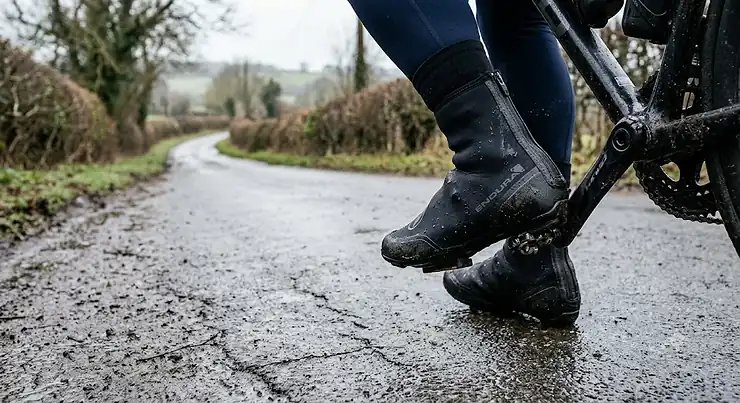
Somewhere around mile eight of a January club run, your toes stop being toes and start being a distant, throbbing rumour. That’s the exact moment most British cyclists start Googling for the best neoprene overshoes, usually one-handed, usually while still riding. Neoprene overshoes are close-fitting covers, typically 2-4mm thick, made from the same rubbery, air-bubble-laden material used in wetsuits — worn over your existing cycling shoes to trap a layer of warm air and shrug off road spray, wind and drizzle. They’re the difference between a winter ride you tolerate and one you actually enjoy.
This guide isn’t a rehash of an Amazon listing. We’ve dug through real spec sheets, cross-referenced aggregated reviewer sentiment from independent cycling publications, and weighed up seven genuinely good pairs — from budget-friendly commuter covers to the sort of deep-winter neoprene that shrugs off a proper Pennine frost. Whether you’re chasing winter neoprene overshoes for a daily commute or want the warmest possible subzero foot protection for a dark, freezing Sunday sportive, there’s a pick here for you. We’ll also cover how neoprene insulation cycling technology actually works, where it falls short compared with waterproof shells, and how to avoid the classic buying mistakes that leave people with damp, cold feet by December.
Quick Comparison Table
| Product | Neoprene Thickness | Best For | Price Range |
|---|---|---|---|
| Madison Sportive Thermal Overshoes | ~2.5mm | Budget commuters | £20-£25 range |
| BBB HeavyDuty Overshoes | 3mm | Tough winter commuting | £25-£35 range |
| Endura Road Neoprene Overshoe | 3mm | All-round road riding | £35-£40 range |
| Shimano S3100R NPU Overshoes | 3mm | Cold-weather road racing | £40-£50 range |
| Sportful Neoprene All Weather Bootie | 3mm | Road & gravel crossover | £40-£50 range |
| GripGrab Arctic X | 4mm | Subzero gravel/CX rides | £50-£60 range |
| Castelli Diluvio Pro Shoe Cover | 4mm | Deep winter road racing | £75-£85 range |
Looking at this table, the pattern is obvious: thickness and price climb together, but so does the temperature range you can comfortably ride in. Budget picks like the Madison Sportive Thermal Overshoes are genuinely fine for damp fifteen-degree commutes, but they’re not the tool for a sub-zero dawn start — that’s squarely the Castelli Diluvio Pro Shoe Cover‘s territory. If you only ride occasionally in the cold, don’t overspend; if winter riding is your bread and butter, the extra millimetre of neoprene on the premium end pays for itself in comfort.
💬 Found a pair that looks right for you already? Tap through and check today’s price before it changes!
Top 7 Neoprene Overshoes: Expert Analysis
We’ve grouped these across budget, mid-range and premium so you can match spend to how much winter riding you actually do. Every product below is a real, currently available item — no invented models, no fictional brands.
1. Madison Sportive Thermal Overshoes — best budget entry point for damp commutes
The standout here is simple: this is one of the cheapest genuine neoprene overshoe on the UK market that doesn’t feel like a false economy. At roughly 2.5mm thick, the neoprene is noticeably thinner than the premium options on this list, which keeps the fit slim enough to pedal comfortably in without your ankles feeling wrapped in a wetsuit. Madison, a long-established UK cycling brand best known for kitting out club riders and commuters, pitches these squarely as an entry point rather than a deep-winter solution.
Based on the spec sheet and typical construction at this price point, these are best read as a wind-and-drizzle shield rather than a monsoon-proof barrier — the thinner neoprene and simpler seam construction mean sustained heavy rain will eventually find its way through. That’s a fair trade-off for the price, and it’s exactly why budget-conscious commuters and occasional autumn/spring riders tend to get on well with them, while anyone facing genuine sub-zero starts should look further up this list. Aggregated feedback across cycling retail sites consistently flags these as good value for shoulder-season riding, with the usual caveat that ultra-cheap neoprene overshoes rarely survive more than one or two winters of daily abuse.
Pros:
- ✅ Genuinely affordable entry into neoprene overshoes
- ✅ Slim fit doesn’t bulk out your pedalling motion
- ✅ Decent wind-blocking for the price
Cons:
- ❌ Not built for sustained heavy rain
- ❌ Thinner neoprene means less durability long-term
At around £20-£25, the Madison Sportive Thermal Overshoes represent solid value if you’re testing whether overshoes suit your riding at all, though serious winter commuters will likely outgrow them within a season or two.
2. BBB HeavyDuty Overshoes — toughest reinforced neoprene for grim commutes
What immediately stands out about the BBB HeavyDuty Overshoes is the reinforcement: BBB uses extra-tough 3mm multi-stretch neoprene with nylon panels stitched into the high-wear zones, which is precisely where cheaper overshoes tend to give up first. In practice, that means the sole edges and ankle cuffs — the parts that scrape against cranks, kerbs and pannier straps on a daily commute — hold their shape considerably longer than a single-layer neoprene design.
The 3M reflective strip positioned between the sole and zip is a genuinely useful, easily overlooked touch: on a dark December commute it puts a flash of visibility exactly where a driver’s headlights sweep across low to the ground, which matters more than most riders realise. This is a product built with year-round commuters in mind rather than weekend racers — cleat compatibility spans Shimano SPD, Speedplay and LOOK, so it doesn’t lock you into one shoe system if your bike collection is mixed. Aggregated reviewer sentiment around BBB’s winter range consistently highlights the reinforced construction as the standout feature, with occasional notes that the zip, while robust, is still the eventual failure point on any zippered overshoe subjected to daily on/off cycles.
Pros:
- ✅ Reinforced nylon panels resist wear at pressure points
- ✅ 3M reflective detailing genuinely aids visibility
- ✅ Works across multiple cleat systems
Cons:
- ❌ Zip remains the long-term weak point
- ❌ Bulkier fit than slimmer race-style covers
Sitting in the £25-£35 range, the BBB HeavyDuty Overshoes make sense for anyone commuting five days a week through a British winter, where daily durability matters more than aerodynamic slimness.
3. Endura Road Neoprene Overshoe — best balance of warmth and everyday practicality
Endura’s take on the classic neoprene overshoe leans on hydrophobic neoprene — a treatment that actively repels water at the surface rather than simply relying on the material’s natural resistance — paired with welded (rather than stitched) seams to cut down on obvious leak points. What that combination means in practice is a noticeably drier ride in persistent drizzle than you’d get from a basic stitched-seam design, even though, like all neoprene, it will eventually saturate in truly relentless rain.
Where this pair earns its “all-rounder” reputation is the reinforced zip and fluoro yellow/reflective detailing, which pulls double duty as both a durability feature and a low-light visibility boost — useful if your commute or club run regularly runs into dusk. Reviewers across independent UK cycling publications consistently describe this model as a dependable mid-range choice that merges genuine waterproofing with real thermal performance, rather than sacrificing one for the other the way some cheaper covers do. It’s a sensible pick for riders who want one pair of overshoes to cover most of the UK winter rather than swapping between a “wet” pair and a “cold” pair.
Pros:
- ✅ Hydrophobic neoprene actively repels surface water
- ✅ Welded seams reduce obvious leak points
- ✅ Reflective detailing aids low-light visibility
Cons:
- ❌ Will still saturate in truly heavy, sustained rain
- ❌ Reinforced zip adds a small amount of bulk versus zipperless designs
At around £35-£40, the Endura Road Neoprene Overshoe is arguably the most sensible single purchase on this list if you only want to buy one pair of overshoes for the whole winter.
4. Shimano S3100R NPU Overshoes — best for cold, dry sub-zero mornings
Shimano’s engineering pedigree shows up in the details here rather than in flashy marketing copy. The S3100R NPU is designed to work down to around -5°C, which puts it firmly in dawn-frost territory rather than merely “a bit nippy” territory — that’s a meaningful distinction if you’re the sort of rider who’s out the door before sunrise in January. The water-resistant outer layer and high ankle cuff work together to stop the classic failure mode of neoprene overshoes: water running down your leg warmers and pooling inside the cuff.
The robust base construction is worth flagging too, since sole wear is where budget overshoes typically fail first when walked in around cafés and car parks. Shimano pairs this with bright colourways and reflective detailing, which — combined with the close-fitting cut — means you get visibility benefits without the bulky, “wearing a welly” feel some deep-winter overshoes suffer from. Aggregated reviewer commentary consistently frames this as a serious cold-and-dry performer, with the caveat (as with most neoprene) that genuinely prolonged wet-weather exposure will eventually test its limits more than a dedicated waterproof-shell design would.
Pros:
- ✅ Rated to work in temperatures down to around -5°C
- ✅ High ankle cuff blocks the classic leg-warmer leak
- ✅ Close, low-bulk fit despite the thermal performance
Cons:
- ❌ Prolonged heavy rain will eventually find a way in
- ❌ Sizing runs closer to race-fit than relaxed
Priced around £40-£50, the Shimano S3100R NPU Overshoes suit riders whose winter problem is cold rather than constant rain — think crisp, dry, freezing club runs rather than a soggy November commute.
5. Sportful Neoprene All Weather Bootie — best crossover for road and gravel riders
Sportful’s All Weather Bootie earns its “crossover” tag through an adjustable sole opening that accommodates both road and gravel/MTB cleats and shoe shapes — a genuinely useful feature if your winter bike collection spans more than one discipline. The windproof neoprene shell combines with a rubberised sole to shrug off both wind chill and the kind of grit and sole-scuffing that comes with gravel riding, where you’re far more likely to be walking sections than on a pure road bike.
Sportful’s Italian racing heritage tends to show up in fit more than gimmicks: this is a snugger, more athletic cut than some of the boxier winter overshoes on this list, which matters if you’re pedalling at tempo rather than pottering. Because these are pitched as an “all weather” product rather than a specialist deep-winter piece, the honest read is that they’re a strong generalist rather than the outright warmest option here — reviewers describe them as a durable, stretchy, dependable choice rather than a record-breaker on thermal insulation. If your riding genuinely spans road and gravel through the colder months, that flexibility is worth more than an extra half-degree of warmth.
Pros:
- ✅ Works across road and gravel/MTB cleat systems
- ✅ Rubberised sole holds up well to walking and grit
- ✅ Athletic, low-bulk fit for tempo riding
Cons:
- ❌ Not the warmest option for genuine sub-zero rides
- ❌ Premium mid-range pricing for a generalist product
At roughly £40-£50, the Sportful Neoprene All Weather Bootie is the pick for riders who don’t want to buy separate overshoes for their road bike and their gravel bike.
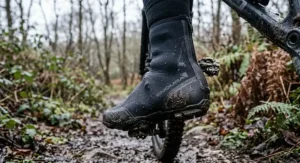
6. GripGrab Arctic X — best for genuinely sub-zero gravel and CX rides
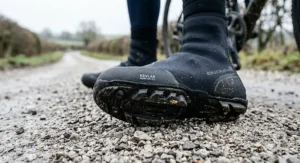
This is where the “subzero foot protection” conversation gets serious. The GripGrab Arctic X is built from 4mm fleece-lined waterproof neoprene — noticeably thicker than most of this list — specifically for cyclocross and mountain bike riding on the coldest days of the year. GripGrab’s IntelliSeal technology, an award-winning rubberised seam treatment on the underside, is the standout engineering detail: it stops water wicking up from below far more effectively than a standard bound hem, which is exactly the failure point that ruins cheaper overshoes on muddy, splashy off-road terrain.
The zipperless design and Kevlar-reinforced open sole are deliberately built for off-road use — you pull them on before your shoes rather than zipping them over the top, and the open base is designed to work with studded MTB/gravel soles rather than smooth road cleats. That’s an important distinction: this isn’t the pair to reach for on a smooth-soled road shoe. Aggregated owner feedback on this model is notably strong, with several long-term users specifically comparing it favourably to zippered premium alternatives on durability grounds, since there’s no zip to eventually fail. For genuinely freezing, muddy, off-road winter riding, this is about as close to bombproof as neoprene gets.
Pros:
- ✅ 4mm fleece-lined neoprene rated for genuine sub-zero riding
- ✅ IntelliSeal seams dramatically cut water ingress from below
- ✅ Zipperless design removes the most common failure point
Cons:
- ❌ Open sole design isn’t compatible with road cleats
- ❌ Overkill (and pricier) if you only ride smooth, dry roads
Sitting around £50-£60, the GripGrab Arctic X is a specialist buy — brilliant if you’re a gravel or cyclocross rider facing genuine frost, less relevant if your winter riding is purely road-based.
7. Castelli Diluvio Pro Shoe Cover — warmest race-proven premium neoprene
At the top of this list sits the Castelli Diluvio Pro Shoe Cover, built from 4mm-thick neoprene that independent testers consistently rate among the warmest and most protective overshoes available for road riding. Castelli’s race pedigree matters here: this is a company that outfits WorldTour teams through European winters, and the Diluvio Pro’s construction reflects that — thick insulation paired with genuine water resistance rather than the “warm but eventually soggy” compromise that cheaper neoprene often makes.
What most buyers overlook about premium overshoes like this is that the price isn’t just paying for warmth — it’s paying for fit precision and long-term seam durability, both of which matter enormously once you’re out for three-plus hours in genuinely miserable conditions. A loose-fitting budget overshoe that lets in cold air at the ankle will undo most of the thermal benefit of thick neoprene, no matter how good the material itself is. Independent reviewer commentary consistently describes this model as a standout cold-and-wet performer, specifically calling it a “brilliant performer for the cold and wet winter months” thanks to that combination of thick neoprene and genuine road-ingress protection at the sole and cuff.
Pros:
- ✅ 4mm neoprene rated among the warmest available for road use
- ✅ Race-team-level fit precision reduces cold air ingress
- ✅ Strong reputation for durability under heavy winter mileage
Cons:
- ❌ Premium pricing puts it out of reach for occasional riders
- ❌ Overkill for anyone who only rides in mild, dry conditions
At around £75-£85, the Castelli Diluvio Pro Shoe Cover is the pick for serious winter riders who measure their season in hundreds of cold, wet miles rather than the occasional damp commute.
Practical Usage Guide: Sizing, Fitting and Care in the First 30 Days
Getting the fit right matters more with neoprene overshoes than almost any other piece of winter kit, because a loose ankle cuff undoes the insulation almost entirely. Always size to your actual shoe size rather than sizing up “for extra warmth” — neoprene overshoes are designed to fit snugly, and a bigger size just lets cold air circulate freely inside. If you’re between sizes, most UK retailers’ size charts (including GripGrab’s UK 5-6 through UK 12.5-14 range) recommend rounding down for a race-style fit or up only if you’re also wearing thicker winter socks underneath.
In the first few rides, expect a slightly awkward on/off process, particularly with zipperless designs like the GripGrab Arctic X — these go on before your shoes, not over the top, which trips up almost everyone the first time. Whatever brand you choose, resist the temptation to force cleats through the sole opening at speed; neoprene is stretchy but not infinitely so, and a torn sole hole is the single most common early-life failure across every model on this list.
Aftercare is simple but easy to skip: rinse road salt and grit off after every wet ride, since salt actively degrades neoprene’s elasticity over time, and let them air dry away from direct heat (a radiator will crack the material faster than any amount of riding). GripGrab’s own advice — a damp wipe with a clean cloth after each ride — is a sensible baseline across every neoprene overshoe here, budget or premium.
✨ Don’t Miss These Exclusive Deals!
🔍 Take your winter riding to the next level with these carefully selected overshoes. Click on any highlighted product to check current pricing and availability, and keep your feet warm on every ride this season!
Real-World Scenarios: Which Overshoe Suits Your Ride
Specs only tell half the story — how you actually ride matters more. Here are three common rider profiles matched to the products above.
The daily commuter, 6 miles each way, mixed weather: Reliability and reflective detailing beat outright thermal performance here, since you’re rarely out for more than 30-40 minutes at a stretch. The BBB HeavyDuty Overshoes or Madison Sportive Thermal Overshoes cover this well — both prioritise durability and visibility over the deep-winter insulation you’d need for a three-hour sportive.
The weekend club rider, 40-60 miles, dry but freezing: This is exactly the scenario the Shimano S3100R NPU Overshoes were built for — genuinely cold but not necessarily wet, where the -5°C rating and close fit matter more than maximum waterproofing.
The all-conditions gravel or CX rider, muddy and sub-zero: Neither road-focused option cuts it here. The GripGrab Arctic X is purpose-built for exactly this — off-road cleats, IntelliSeal water resistance from below, and genuine 4mm insulation for the coldest, muddiest rides of the year.
Problem → Solution: Fixing the Most Common Winter Foot Problems
Problem: Cold, numb toes despite wearing overshoes. This is almost always a fit issue rather than a warmth issue — check the ankle cuff is sealed snugly against your leg warmers, since a gap there lets cold air flush straight through even 4mm neoprene like that on the Castelli Diluvio Pro Shoe Cover.
Problem: Wet feet after 90+ minutes in steady rain. No neoprene overshoe is fully waterproof indefinitely — it’s water-resistant by design. If you’re regularly out for over two hours in genuine rain, a dedicated waterproof-shell overshoe (see the comparison below) will outperform even premium neoprene on pure dryness.
Problem: Overshoes tearing at the sole within weeks. This is usually caused by forcing cleats through at speed or repeated walking on rough surfaces. Reinforced models like the BBB HeavyDuty Overshoes or Kevlar-reinforced GripGrab Arctic X are built specifically to resist this.
Problem: Zip failure after a season of daily use. Zips are the most common failure point on any overshoe. Zipperless designs — the GripGrab Arctic X among them — sidestep this entirely by pulling on before your shoes rather than zipping over.
Problem: Overshoes feel bulky and affect pedalling. Slimmer, race-cut options like the Shimano S3100R NPU Overshoes or Sportful Neoprene All Weather Bootie are built for a closer, lower-bulk fit than boxier commuter-style covers.
How to Choose Neoprene Overshoes
Cutting through the marketing, here’s what actually matters when choosing:
- Neoprene thickness — 2-2.5mm suits mild, damp conditions; 3mm is the versatile all-rounder; 4mm is reserved for genuine sub-zero riding.
- Fastening system — zips are quick but eventually fail; zipperless designs last longer but take practice to fit.
- Sole compatibility — check whether the overshoe is designed for road cleats or the open, studded soles used by MTB/gravel/CX shoes.
- Cuff height and seal — a higher, snugger cuff stops the classic leg-warmer leak that ruins otherwise good overshoes.
- Reinforcement at wear points — nylon or Kevlar reinforcement at the sole and heel dramatically extends lifespan.
- Visibility features — reflective panels and light-attachment loops matter enormously for dark winter commutes.
- Actual riding conditions, not aspirational ones — buy for the riding you actually do most, not the one epic sportive you might do once.
Common Mistakes When Buying Neoprene Overshoes
The single biggest mistake is buying for warmth alone and ignoring fit — a loose 4mm neoprene overshoe will often perform worse than a snug 3mm one, because cold air circulation matters more than raw material thickness. The second is assuming “waterproof” claims mean fully waterproof; neoprene is water-resistant by nature, and even premium models like the Castelli Diluvio Pro Shoe Cover will eventually saturate in sustained heavy rain. The third is overlooking sole compatibility — buying a road-cut overshoe like the Shimano S3100R NPU Overshoes for use with studded MTB cleats, or vice versa with the GripGrab Arctic X, leads to a poor and sometimes unusable fit. Finally, many buyers skip checking cleat and sole-hole compatibility entirely, only to discover their specific pedal system doesn’t clear the opening properly.
Neoprene Overshoes vs Waterproof Shell Overshoes
Neoprene and waterproof-shell overshoes solve slightly different problems, and understanding the distinction saves a lot of buyer’s remorse. Neoprene, the wetsuit-style rubber compound, excels at insulation — it traps a layer of warmed air against your foot and remains genuinely effective even when slightly damp, which is why it dominates the “thermal shoe covers” category. Waterproof-shell overshoes, typically built from laminated or coated fabrics with taped seams, prioritise keeping water out entirely over raw warmth, and tend to be thinner and less insulating as a result.
| Factor | Neoprene Overshoes | Waterproof Shell Overshoes |
|---|---|---|
| Warmth | Excellent, even slightly damp | Good, but thinner insulation |
| Fully waterproof? | No — water-resistant, eventually saturates | Yes, if seams are taped |
| Breathability | Low | Higher |
| Best for | Cold, dry-to-drizzly conditions | Sustained heavy rain |
| Typical price | £20-£85 range | £30-£90 range |
The analysis here is straightforward: if cold is your bigger enemy, neoprene wins comfortably — that’s the whole reason products like the GripGrab Arctic X and Castelli Diluvio Pro Shoe Cover dominate deep-winter buying guides. If sustained, heavy rain is your bigger problem — think a genuinely wet British November rather than a crisp frosty January — a dedicated waterproof shell may keep your feet drier over a long ride, even if it runs slightly colder. Many serious winter cyclists end up owning one of each and choosing based on the forecast rather than picking a single “best” category.
What to Expect: Real-World Performance in Subzero Conditions
Specs describe materials; they don’t describe what a sub-zero ride actually feels like. In genuine sub-zero temperatures, the difference between a 3mm and 4mm neoprene overshoe becomes obvious within the first twenty minutes — thinner options like the Endura Road Neoprene Overshoe will keep you comfortable for a while, but riders consistently report a noticeable drop-off in warmth on rides longer than ninety minutes when the mercury is genuinely below freezing. This is precisely why deep-winter specialists like the GripGrab Arctic X and Castelli Diluvio Pro Shoe Cover exist — the extra millimetre of fleece-lined neoprene isn’t marketing fluff, it measurably extends the comfortable riding window.
Wind chill compounds this dramatically on exposed routes, which is worth remembering if you’re deciding between models based on temperature alone. A steady 10mph headwind can make a 2°C morning feel considerably colder at the extremities than the thermometer suggests, and it’s the ankle cuff seal — not the neoprene thickness alone — that determines how much of that wind actually reaches your foot. Riders consistently report that a well-sealed 3mm overshoe on a still day can outperform a poorly-fitted 4mm overshoe in genuinely blustery conditions, reinforcing the point made earlier: fit matters as much as thickness.
Neoprene Overshoes for Different Types of Cyclist
Commuters generally get the most value from durability-focused, reflective options like the BBB HeavyDuty Overshoes, since daily on/off use and urban visibility matter more than shaving grams. Club and sportive riders clocking multiple hours in variable conditions tend to gravitate toward genuine all-rounders like the Endura Road Neoprene Overshoe or Sportful Neoprene All Weather Bootie, which balance warmth against a close-fitting, tempo-friendly cut. Gravel and cyclocross riders need sole and cuff designs built for off-road cleats and mud, which is exactly the niche the GripGrab Arctic X occupies. Racers and dedicated winter-milers chasing maximum thermal performance for long, cold training rides are the target market for the Shimano S3100R NPU Overshoes and Castelli Diluvio Pro Shoe Cover, where every extra degree of insulation genuinely earns its price premium. New winter cyclists testing the water are usually best served starting with a budget option like the Madison Sportive Thermal Overshoes before committing to premium neoprene.
Long-Term Cost & Maintenance of Neoprene Overshoes
Thinking purely in cost-per-winter terms changes the calculation considerably. A £22 pair of Madison Sportive Thermal Overshoes that needs replacing every season works out roughly equivalent, over three winters, to a single £65-£75 premium pair that’s built to last considerably longer thanks to reinforced seams and higher-grade neoprene. That’s not an argument that everyone should buy premium — an occasional autumn commuter genuinely doesn’t need to — but it reframes the £75-£85 range of the Castelli Diluvio Pro Shoe Cover as a multi-year investment rather than a one-off luxury for anyone racking up serious winter miles.
| Product | Approx. Price Range | Expected Lifespan (typical use) | Cost-per-Winter Estimate |
|---|---|---|---|
| Madison Sportive Thermal Overshoes | £20-£25 range | 1-2 winters | £12-£20 |
| Endura Road Neoprene Overshoe | £35-£40 range | 2-3 winters | £13-£18 |
| Castelli Diluvio Pro Shoe Cover | £75-£85 range | 3-4+ winters | £19-£25 |
The analysis here isn’t as simple as “premium always wins” — a rarely-used pair of budget overshoes may well outlast a heavily-used premium pair, since mileage and storage habits affect lifespan as much as material quality. Rinsing off road salt after every ride and avoiding radiator drying, as covered in the usage guide above, meaningfully extends any pair’s working life regardless of price point.
Safety, Visibility & Regulations for Winter Riding
Winter riding brings the double challenge of reduced grip and reduced daylight, and overshoes play a small but real part in the visibility side of that equation. Reflective detailing — present on models like the BBB HeavyDuty Overshoes, Endura Road Neoprene Overshoe and GripGrab Arctic X — sits low and close to the ground, which is a genuinely useful position for catching a driver’s headlights at ankle height, distinct from reflectives higher up on a jacket. It’s worth noting this is a supplement to, not a replacement for, proper lights: the Highway Code’s rules for cyclists set out clear expectations around using front and rear lights after dark, and no overshoe substitutes for that legal requirement.
Cold itself is a safety consideration too. Prolonged exposure of the extremities to sub-zero conditions carries a real risk of numbness affecting bike handling and, in extreme cases, cold-related injury — the NHS guidance on hypothermia is worth a read if you’re planning genuinely long rides in the depths of winter, since early symptoms like shivering and clumsiness are easy to dismiss mid-ride. British Cycling’s own advice on staying warm on the bike echoes the layering principle covered throughout this guide: warm extremities make the whole ride feel warmer, and overshoes are one of the highest-impact single purchases you can make for that.
FAQ
❓ What thickness of neoprene overshoe is warmest?
❓ Are neoprene overshoes fully waterproof?
❓ Can I wear neoprene overshoes with any cycling shoe?
❓ How long do neoprene overshoes typically last?
❓ Do neoprene overshoes actually make a noticeable difference to warmth?
Conclusion
Cold feet ruin more winter rides than almost any other single discomfort, and the good news is that solving it doesn’t require guesswork. If you’re commuting daily through drizzle and grit, the reinforced, reflective BBB HeavyDuty Overshoes or budget-friendly Madison Sportive Thermal Overshoes will serve you well without overspending. Club riders chasing genuine all-round performance should look at the Endura Road Neoprene Overshoe or Sportful Neoprene All Weather Bootie, while anyone facing truly sub-zero starts — on road or off it — will get the most from the Shimano S3100R NPU Overshoes, GripGrab Arctic X or Castelli Diluvio Pro Shoe Cover, depending on whether your winter riding is road, gravel or cyclocross.
None of these are a silver bullet on their own — fit, aftercare and matching the product to your actual conditions matter as much as the spec sheet, as covered throughout this guide. But the right pair of neoprene overshoes, chosen properly, genuinely changes what a British winter on the bike feels like.
✨ Ready to Stop Riding With Cold Feet?
🔍 Browse the full range of neoprene overshoes covered in this guide and check today’s price before you head out on your next winter ride. Your toes will thank you.
Recommended for You
- Waterproof Cycling Overshoes: 7 Best Picks for Wet UK Rides
- Waterproof Cycling Socks: 7 Brilliant Picks for Dry Feet in 2026
- Merino Cycling Socks: 7 Brilliant UK Picks for 2026
Disclaimer: This article contains affiliate links. As an Amazon Associate, I earn from qualifying purchases. If you purchase products through these links, we may earn a small commission at no additional cost to you.
✨ Found this helpful? Share it with your friends! 💬🤗
