
In This Article
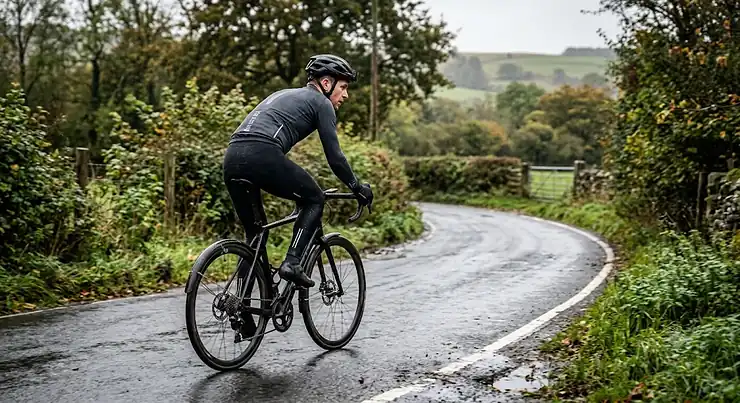
There’s a particular kind of stubbornness that gets British cyclists out the door in January, and cycling bib tights are the garment that makes that stubbornness bearable. In plain terms, cycling bib tights are full-length cycling trousers with an integrated bib brace that clips over the shoulders instead of a waistband, usually built with a padded chamois and a fleece-backed thermal fabric designed to trap heat without restricting the pedalling motion. That bib design matters more than it sounds like it should: no waistband means nothing digging into your stomach when you’re hunched over the drops on a wet descent, and nothing riding down when you’re three hours deep into a soggy Sunday loop.
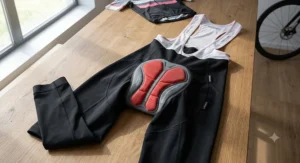
Here’s the thing nobody tells you when you’re shopping for your first pair: the difference between a merely acceptable winter and a genuinely enjoyable one often comes down to which tights are hanging on the radiator the night before. Cheap ones bunch at the knee, sag at the ankle, and turn into a cold, wet flannel the second the drizzle starts. Good ones disappear entirely, letting you focus on the road rather than your own discomfort.
This guide pulls together seven real, currently available pairs spanning budget, mid-range, and genuinely premium territory, with honest analysis of the specs, the fabric technology, and what actual reviewers have reported after wearing them through proper British winters. We’ll also get into thermal bib tights fabric science, how bib tights vs bib shorts actually differ in practice, when thermal leg warmers are the smarter buy instead, and the regulatory bits around visibility that most buying guides skip entirely. By the end, you should know exactly which winter cycling comfort trade-offs matter to you personally, rather than just which pair has the shiniest marketing copy.
Quick Comparison Table
| Product | Best For | Price Range | Warmth Rating |
|---|---|---|---|
| dhb Aeron Lab Winter Bib Tight | Best value all-rounder | £90-£120 | ★★★☆☆ |
| Endura GV500 Thermal Bibtight | Gravel and rough terrain | £120-£150 | ★★★★☆ |
| Santini Vega Absolute Bib Tights | Wet, mild British winters | £110-£140 | ★★★☆☆ |
| Gore Wear Spinshift Thermo Bib Tights | Windproof front-panel protection | £150-£180 | ★★★★☆ |
| Castelli Sorpasso RoS Wind Bib Tights | All-round premium performance | £175-£200 | ★★★★☆ |
| Castelli Espresso Bib Tights | Sub-zero deep winter rides | £175-£200 | ★★★★★ |
| Le Col Pro Bib Tights | Race-fit, high-intensity riders | £150-£180 | ★★★★☆ |
Looking at this snapshot, a clear pattern emerges: warmth and price track together, but not in a straight line. The dhb Aeron Lab Winter Bib Tight proves you can get most of the way to premium performance for roughly half the outlay, while the Castelli Espresso Bib Tights justify their position at the top only if you’re genuinely riding in sub-zero conditions rather than just cool, damp ones. Meanwhile the Endura GV500 Thermal Bibtight and Gore Wear Spinshift Thermo Bib Tights sit in an interesting middle ground where the extra spend buys stretch and wind-blocking rather than raw insulation.
💬 Just one click — help others make better buying decisions too!😊
Top 7 Cycling Bib Tights: Expert Analysis
1. dhb Aeron Lab Winter Bib Tight — best value performance for UK winters
The dhb Aeron Lab Winter Bib Tight has built a reputation for punching above its price point, and the spec sheet backs that up. Built with a brushed thermal fabric and a close, performance-oriented cut, it trades a little raw weatherproofing for genuinely impressive articulation through the knee and hip.
The absence of ankle zips keeps the construction simple and the price down, though it does mean a careful, unhurried approach when pulling them on over shoe-clad feet — reviewers have noted the ankle cuffs are a snug fit for larger UK sizes. What that means practically is you’ll want to remove your shoes first, every time, rather than wrestling the cuffs over them.
Based on the spec comparison with pricier rivals, what stands out here is how little compromise dhb has made on comfort and fit despite undercutting premium brands by £60-£70. Aggregated reviewer sentiment consistently frames these as strong performers against far more expensive Rapha and Castelli options, with the caveat that weather protection is slightly more limited than dedicated deep-winter tights.
Pros:
- ✅ Markedly cheaper than premium rivals with similar performance
- ✅ Excellent articulation and fit through the knee and hip
- ✅ Comfortable chamois suited to long weekend rides
Cons:
- ❌ No ankle zips, so care is needed when removing them
- ❌ Weather protection trails true deep-winter tights
At around £90-£120, the dhb Aeron Lab Winter Bib Tight represents the strongest pound-for-pound value in this entire round-up, and it’s the pair I’d point a first-time buyer toward.
2. Endura GV500 Thermal Bibtight — best stretch for gravel and rough roads
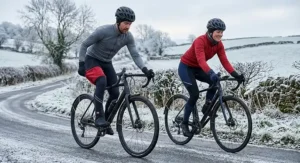
Ostensibly built for gravel riding, the Endura GV500 Thermal Bibtight earns its spot here because that extra stretch and give translates directly into comfort on any pockmarked British B-road. The four-way stretch fabric moves with twisting, out-of-saddle efforts in a way that stiffer road-focused tights simply don’t.
Reviewers have reported warmth holding up into sub-zero conditions, which is a genuinely rare claim for a tight in this price bracket. The chamois offers generous coverage without adding bulk, and the thinner bib straps — while less substantial-looking than some rivals — have been consistently praised for staying comfortable across long rides.
What most buyers overlook about this model is that the gravel-specific extras (reflective detailing, tougher ankle cuffs) add real value even if you never leave tarmac, since they’re essentially free durability upgrades bundled into a road-worthy silhouette. Here’s what to weigh: if you want one pair that handles both a muddy towpath and a fast club run, this is the one earning that dual-purpose reputation.
Pros:
- ✅ Genuinely warm down to close to freezing conditions
- ✅ Four-way stretch fabric ideal for varied terrain
- ✅ Comfortable straps despite a slimmer profile
Cons:
- ❌ Gravel-oriented cut may feel slightly baggy for racers
- ❌ Reflective extras add marginal cost versus plainer road tights
Priced in the £120-£150 range, the Endura GV500 Thermal Bibtight delivers standout value for anyone whose winter rides mix surfaces.
3. Santini Vega Absolute Bib Tights — best rain-resistant mid-range pick
The Santini Vega Absolute Bib Tights sit in that awkward, useful middle ground: not the warmest tights on this list, but consistently singled out by reviewers for handling proper British drizzle without turning into a soggy sponge. The Acquazero water-resistant treatment on the outer fabric genuinely beads water rather than absorbing it.
The jacquard elasticated braces are a standout feature worth calling out on their own — they’re notably more comfortable than the high-backed, bulkier straps found on some rivals, distributing pressure across a slim, breathable mesh panel rather than digging in under a winter jacket. Aggregated reviewer sentiment is consistent on one trade-off, though: because the fabric isn’t a true Roubaix fleece, insulation lags behind rivals at the same price when temperatures properly plummet.
On paper this means the Santini Vega Absolute Bib Tights suit riders whose winter problem is wet roads more often than genuinely freezing air — which, if you’ve ridden a British December, describes an awful lot of days.
Pros:
- ✅ Effective Acquazero coating repels rain and road spray
- ✅ Exceptionally comfortable jacquard elasticated braces
- ✅ High-quality construction and anatomical fit
Cons:
- ❌ Less insulating than true Roubaix-lined tights
- ❌ Not ideal for consistently sub-freezing temperatures
At roughly £110-£140, the Santini Vega Absolute Bib Tights reward riders who prioritise staying dry over staying maximally warm.
4. Gore Wear Spinshift Thermo Bib Tights — best windproof front-panel protection
The Gore Wear Spinshift Thermo Bib Tights apply Gore’s long-standing membrane expertise to a winter tight, concentrating a windproof panel exactly where wind chill bites hardest: the front of the thigh and knee. The rear and inner leg use a more breathable, stretch-friendly thermal fabric to avoid overheating on climbs.
That panel placement is the whole story here, and it’s worth explaining why it matters. A gust hitting your thighs at 20mph on a headwind descent pulls heat away far faster than still air ever could, so blocking wind precisely where you generate the most frontal surface area achieves more real-world warmth than simply using a uniformly thick fabric everywhere. Reviewers have flagged the fit as running true to size with a slightly race-oriented cut through the hip.
Reviewers consistently note the chamois handles multi-hour rides without hot-spots forming, which matters more than headline warmth figures once you’re four hours into a winter audax.
Pros:
- ✅ Targeted windproof panelling exactly where it’s needed
- ✅ Breathable rear panel prevents overheating on climbs
- ✅ Comfortable, hot-spot-free chamois on long rides
Cons:
- ❌ Race-oriented cut may not suit riders wanting a relaxed fit
- ❌ Premium pricing versus similarly specced rivals
Sitting around £150-£180, the Gore Wear Spinshift Thermo Bib Tights are the pick for anyone who rides fast into headwinds more often than they’d like to admit.
5. Castelli Sorpasso RoS Wind Bib Tights — best all-round premium performer
Consistently named a category leader by independent testers, the Castelli Sorpasso RoS Wind Bib Tights combine Castelli’s Thermoflex fleece-backed fabric with a wind-blocking front treatment that’s earned repeated “best overall” nods across major UK cycling publications.
What the spec sheet won’t tell you, but reviewers note, is how well this pair balances flexibility against protection — a genuinely difficult trade-off, since more wind-blocking fabric usually means stiffer, more restrictive knees. The Sorpasso RoS manages a compromise most rivals fumble, keeping articulation supple even as the front panel does real work against a headwind.
Based on the aggregated review data, the honest analytical take is that these aren’t the single warmest tights available, but they’re consistently rated as the most complete package: warm enough for the vast majority of UK winter riding, flexible enough to forget you’re wearing them, and durable enough to justify the outlay over several seasons.
Pros:
- ✅ Excellent balance of warmth, wind-blocking and flexibility
- ✅ Consistently rated among the best all-round winter tights
- ✅ Durable construction that holds up over multiple seasons
Cons:
- ❌ Premium price point versus mid-range alternatives
- ❌ Not the outright warmest option for extreme cold
Expect to pay in the £175-£200 range for the Castelli Sorpasso RoS Wind Bib Tights, and expect them to remain in rotation for years, not one season.
6. Castelli Espresso Bib Tights — warmest for sub-zero rides
When the forecast reads minus figures and you’re still committed to riding, the Castelli Espresso Bib Tights are built specifically for that scenario. This is Castelli’s deep-winter flagship, using a thicker brushed fleece throughout rather than concentrating warmth only at the front.
Here’s what to weigh before buying: that extra insulation comes with genuine bulk, and riders used to lighter tights have reported an adjustment period getting comfortable with the thicker knee fabric during high-cadence efforts. Reviewers consistently frame this as an acceptable trade for anyone riding regularly below freezing, less so for milder, wetter UK winters where the fabric can feel like overkill.
The honest analytical take: this isn’t a tight for everyone, and that’s precisely the point. It exists for the small but committed group of cyclists who ride through proper cold rather than merely cool, damp conditions, and for them, aggregated reviewer sentiment is emphatic about the warmth-to-comfort ratio being worth the premium.
Pros:
- ✅ Genuinely warm in sub-zero and near-freezing conditions
- ✅ Thick, high-quality brushed fleece throughout
- ✅ Built to Castelli’s usual premium construction standard
Cons:
- ❌ Can feel bulky and warm for milder UK winter days
- ❌ Among the priciest options in this round-up
At around £175-£200, the Castelli Espresso Bib Tights are a specialist purchase for genuinely cold-weather riders, not an everyday winter default.
7. Le Col Pro Bib Tights — lightest race-fit premium option
Closing out the list, the Le Col Pro Bib Tights use a Super Roubaix fleece fabric to achieve something that sounds contradictory: a thin, supple tight that still holds heat in low single-figure temperatures. That balance is the entire selling point, and reviewers have consistently praised how much freedom of movement it preserves versus bulkier deep-winter rivals.
The effective DWR water-repellent treatment extends the useful range further, keeping the tights performing through light showers rather than folding at the first sign of drizzle. What most buyers overlook about this model is that its race-fit cut, designed for high-intensity efforts, makes it a genuinely capable option for cold-weather races or fast chaingang rides where bulkier tights would restrict a hard, out-of-saddle effort.
Based on the spec comparison with the rest of this list, the Le Col Pro Bib Tights occupy a genuinely useful niche: warm enough for proper winter, light enough that you’d happily wear them in a race.
Pros:
- ✅ Thin, supple Super Roubaix fabric that still insulates well
- ✅ Excellent freedom of movement for high-intensity efforts
- ✅ Effective DWR treatment for light rain and showers
Cons:
- ❌ Race-oriented fit is snugger than relaxed-fit rivals
- ❌ Premium price without deep-winter bulk warmth
Priced around £150-£180, the Le Col Pro Bib Tights suit the rider who refuses to slow down just because it’s cold.
Top 7 Bib Tights: Full Specification Comparison
| Product | Fabric Type | Price Range | Best For |
|---|---|---|---|
| dhb Aeron Lab Winter Bib Tight | Brushed thermal | £90-£120 | Value-focused all-rounders |
| Endura GV500 Thermal Bibtight | Four-way stretch thermal | £120-£150 | Gravel and mixed terrain |
| Santini Vega Absolute Bib Tights | Acquazero water-resistant | £110-£140 | Wet, milder winters |
| Gore Wear Spinshift Thermo Bib Tights | Targeted windproof panel | £150-£180 | Fast riding into headwinds |
| Castelli Sorpasso RoS Wind Bib Tights | Thermoflex + wind panel | £175-£200 | All-round premium use |
| Castelli Espresso Bib Tights | Thick brushed fleece | £175-£200 | Sub-zero deep winter |
| Le Col Pro Bib Tights | Super Roubaix | £150-£180 | Race-fit, high intensity |
Reading across this table, the clearest dividing line isn’t price but fabric philosophy: dhb, Endura and Santini all lean on flexibility and value, while Gore Wear, Castelli and Le Col engineer for a specific weather scenario rather than trying to do everything at once. If you only ride two or three times a week through a typical mild-and-damp UK winter, the mid-range trio will serve you just as well as the premium three — the extra spend only pays off once you’re chasing specific conditions like sub-zero cold or sustained headwinds.
Practical Usage Guide: Getting the Most From Your Winter Bib Tights
Buying the right tights is only half the job — how you use and maintain them determines whether they last two winters or five. First, resist the urge to size down for a “snugger race fit” in cold weather gear; a slightly looser fit traps a thin layer of warm air against the skin, which is doing real thermal work that a compression-tight pair can’t replicate.
Washing is where most people shorten a tight’s lifespan without realising it. Fleece-backed and Roubaix fabrics lose loft and insulating power if washed on a hot cycle or tumble-dried, so a cool wash and air-drying away from direct heat keeps the fleece lofted for longer. Avoid fabric softener entirely — it coats the fibres and reduces both breathability and any DWR water-repellent coating’s effectiveness.
For the first thirty days, expect a short break-in period around the chamois seams, and don’t judge comfort on a twenty-minute test spin; most winter chamois pads are tuned for rides of two hours or more. A common early mistake is pairing bib tights with the wrong base layer — a heavy long-sleeve top under a snug bib brace can create pressure points across the chest that only appear an hour into a ride. Finally, rotate two pairs if you ride most days: letting one fully dry between uses preserves the DWR coating and the elastic recovery in the chamois far better than back-to-back daily wear.
Real-World Scenarios: Which Bib Tights Suit Your Riding?
Picture three different riders staring at the same shortlist. The first is a weekday commuter doing eight miles each way on wet, well-lit urban roads, riding regardless of forecast because the train’s more expensive. For them, the Santini Vega Absolute Bib Tights make the most sense: the Acquazero coating handles road spray better than raw warmth ever could, and the price sits comfortably within a commuting budget that also needs to stretch to lights and a decent jacket.
Second, consider a weekend gravel rider covering twenty-five miles of mixed tracks and lanes around a market town, often out for three-plus hours at a stretch. The Endura GV500 Thermal Bibtight answers that brief directly — the stretch fabric handles the twisting body position gravel demands, and the reflective detailing pulls double duty on unlit lanes at dusk.
Finally, imagine a committed club cyclist chasing winter base miles, riding most days regardless of temperature, sometimes into proper sub-zero mornings before frost has lifted. That rider is the exact audience for the Castelli Espresso Bib Tights: the extra bulk and cost are justified by frequency of use and genuine exposure to harsh cold, where a lighter tight would mean cutting rides short.
Cycling Bib Tights vs Bib Shorts: Which Do You Actually Need?
The honest answer is that cycling bib tights and bib shorts solve different problems, and the confusion mostly comes from both sharing that distinctive shoulder-brace design. Bib shorts end above the knee and are built for warmer months, prioritising ventilation and a lighter chamois; bib tights extend to the ankle and add fleece-backed insulation, trading breathability for warmth.
Where people go wrong is assuming tights are simply “shorts with legs added.” In practice, the chamois padding, fabric weight, and even the cut through the knee differ substantially, because a tight has to accommodate a full range of knee flexion without the fabric riding up or bunching — a problem shorts never face. Reviewers consistently note that tights borrowed from a brand’s summer short pattern, rather than purpose-designed, tend to bunch behind the knee on longer rides.
The practical rule of thumb: once ambient temperature drops into single digits Celsius, or once you find yourself reaching for knee warmers over shorts more days than not, it’s time to switch to dedicated tights rather than layering accessories onto summer kit.
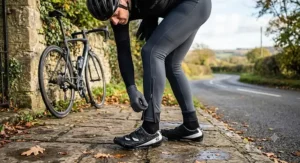
Thermal Leg Warmers vs Full Bib Tights: When to Choose Which
Thermal leg warmers are the cheaper, more flexible cousin of bib tights, and for genuinely changeable British weather, that flexibility is often the smarter buy. Leg warmers pair with your existing summer bib shorts, meaning you can strip them off mid-ride and stuff them in a jersey pocket the moment the sun breaks through — something no pair of tights allows.
The trade-off is coverage and consistency. Leg warmers leave a seam at the top of the thigh where two fabrics and two chamois pads overlap, which can create pressure points that a single-piece bib tight avoids entirely. They also tend to migrate downward on longer rides without a grippy silicone band, something reviewers of budget leg warmers flag repeatedly.
Here’s a simple decision framework: if your rides rarely exceed ninety minutes and the forecast is genuinely uncertain, leg warmers plus shorts offer better winter cycling comfort through adaptability. If you’re committing to two-hour-plus rides in consistently cold conditions, a dedicated pair of tights — such as the dhb Aeron Lab Winter Bib Tight for value or the Castelli Sorpasso RoS Wind Bib Tights for an all-round premium option — will outperform layered leg warmers on both warmth and comfort.
How to Choose Winter Cycling Bib Tights
- Establish your typical riding temperature range. If most rides happen between five and twelve degrees Celsius, prioritise breathability over maximum insulation; below freezing, a thicker fleece like the one in the Castelli Espresso Bib Tights earns its keep.
- Decide how much water resistance you actually need. Riders on gritty, spray-heavy roads benefit far more from a DWR coating, like that on the Santini Vega Absolute Bib Tights, than from raw thermal thickness.
- Match the cut to your riding style. A relaxed, endurance-oriented cut suits long steady miles; a race-fit tight like the Le Col Pro Bib Tights suits faster, more intense efforts where baggy fabric would flap.
- Check the chamois against your typical ride duration. Longer rides justify a denser, higher-volume pad; shorter commutes can get away with a lighter one, saving weight and cost.
- Consider ankle cuff design before you buy. Zipped cuffs are easier over cycling shoes but add cost and a failure point; elasticated cuffs, as on several tights here, are simpler but can be tight over larger UK shoe sizes.
- Weigh brand-specific fabric technology against your budget. Proprietary fabrics like Castelli’s Thermoflex or Gore’s targeted membrane genuinely perform differently, but the dhb Aeron Lab Winter Bib Tight proves a simpler brushed thermal fabric still delivers real-world comfort at a fraction of the price.
- Factor in how many pairs you’ll actually need. Riding most days through winter justifies two pairs in rotation, which can change the maths toward a mid-range option rather than a single premium pair.
Common Mistakes When Buying Thermal Bib Tights
The single most common mistake is chasing the warmest possible fabric without considering breathability, which leads directly to a clammy, sweaty ride that feels colder once you stop pedalling than a lighter tight would have. Reviewers repeatedly flag this exact complaint about deep-winter tights worn on unseasonably mild days.
A second frequent error is buying based on chest size rather than the tight’s actual leg and waist measurements, since the bib brace design means sizing charts differ meaningfully from a standard trouser fit. Skipping the sizing chart because “I know my size in other cycling kit” is a false shortcut that shows up constantly in ill-fitting-tights complaints.
Finally, plenty of buyers underestimate how much washing habits affect a fleece-backed fabric’s lifespan, tumble-drying tights that were never designed for it and wondering, a season later, why the warmth has faded. Treating winter cycling comfort as a one-off purchase rather than an ongoing care routine is the quiet reason so many tights disappoint by their second winter.
Understanding Roubaix Fabric: What Makes Winter Tights Warm
Roubaix fabric takes its name from the cold, cobbled town at the heart of the Paris–Roubaix cycling race, and the connection isn’t just marketing — the fabric was developed to handle exactly the kind of raw, wet, chilly conditions that race is famous for. It’s a knit with a smooth outer face and a fleeced, brushed inner face that traps a thin layer of air against the skin, providing insulation even when the fabric itself gets damp.
What most buyers overlook is that not all Roubaix is equal: standard Roubaix, Super Roubaix, and brand-specific variants like Castelli’s Thermoflex differ mainly in the density and thickness of that inner brushed layer, which is why two tights both labelled “Roubaix” can feel meaningfully different on the bike. Thicker variants trap more air and insulate better, but at a real cost in flexibility and weight.
Reviewers consistently note that Roubaix-lined tights outperform plain thermal-knit alternatives specifically in damp conditions, since the trapped air layer keeps working even after the outer surface is wet through — which, on a UK winter ride, is more often the rule than the exception.
What to Expect: Real-World Winter Cycling Comfort
Specs on a page rarely translate directly into how a ride actually feels, so it’s worth translating a few numbers into lived experience. A tight rated for use “down to freezing” doesn’t mean you’ll feel warm at zero degrees — it typically means you’ll avoid discomfort or numbness at moderate riding intensity, assuming you’re also wearing appropriate base layers and overshoes.
Real-world winter cycling comfort is also heavily influenced by wind chill rather than ambient temperature alone, which is precisely why the targeted front-panel approach used in the Gore Wear Spinshift Thermo Bib Tights exists: still air at five degrees feels utterly different from a fifteen-mile-per-hour headwind at the same reading. Reviewers who’ve tested multiple pairs back-to-back consistently note that perceived warmth shifts more with wind exposure and moisture than with the marketed temperature rating on the box.
The honest takeaway: no single tight performs identically for every rider, since body composition, riding intensity, and pace all change how much heat you generate and lose. Buy for your typical ride, not your coldest imaginable one, and layer accessories like leg warmers or overshoes for the outlier days instead.
Long-Term Cost & Maintenance of Bib Tights
| Consideration | Budget Tights (~£100) | Premium Tights (~£190) |
|---|---|---|
| Typical usable seasons | 1-2 seasons with heavy use | 3-4+ seasons with proper care |
| Cost per season (rough estimate) | £50-£100 | £45-£65 |
| Chamois durability | Moderate; softens sooner | Higher-density foam holds shape longer |
| Best For | Occasional or budget-conscious riders | Frequent, multi-season riders |
Read purely on sticker price, budget tights look like the obvious win, but the cost-per-season figures tell a more nuanced story once you factor in typical lifespan and how well the chamois and fabric hold up to repeated washing. A well-cared-for premium pair, like the Castelli Sorpasso RoS Wind Bib Tights, can end up cheaper per season of use than replacing a budget pair every year — though that maths only favours premium kit if you’re genuinely riding often enough to wear either pair out through use rather than simply owning them.
Maintenance genuinely extends this equation further: cool washes, air drying, and rotating between two pairs can add a full extra season to any tight regardless of price bracket, which is arguably the single highest-leverage thing a buyer can do to improve long-term value.
Safety and Visibility: Regulations for Winter Cycling Kit
Winter riding means shorter daylight hours, and while there’s no legal requirement in the UK to wear reflective or fluorescent clothing while cycling, the Highway Code strongly recommends light-coloured or reflective clothing to help other road users see you, particularly at dawn, dusk, and after dark. Several tights in this round-up, including the Endura GV500 Thermal Bibtight, build in reflective detailing at the ankle and thigh specifically to address this.
Cold exposure itself is also worth taking seriously rather than treating purely as a comfort issue; the NHS’s guidance on staying warm in winter notes that maintaining core body warmth reduces strain on the circulatory system in cold conditions, which is a genuinely useful frame for thinking about why proper thermal kit matters beyond simply “feeling nice.” A soaked, under-insulated pair of tights on a long ride isn’t just uncomfortable — it accelerates heat loss in a way that’s worth taking seriously on longer winter routes, particularly if you’re riding alone in rural areas.
Practically, that means treating ankle and thigh reflectivity as a genuine buying criterion alongside warmth, not an afterthought, especially if any part of your ride happens in low light.
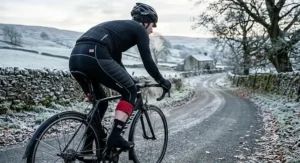
Frequently Asked Questions
❓ What is the difference between cycling bib tights and bib shorts?
❓ Are thermal bib tights worth it for occasional riders?
❓ Do I need bib tights or would leg warmers work instead?
❓ How warm do winter cycling bib tights need to be for UK conditions?
❓ How should I wash roubaix bib tights to make them last?
Conclusion
Choosing the right cycling bib tights ultimately comes down to being honest about your own riding habits rather than chasing whichever pair tops a “best of” list. The dhb Aeron Lab Winter Bib Tight remains the most sensible starting point for most riders, delivering genuinely competitive comfort and warmth without the premium price tag. Riders tackling mixed terrain should look hard at the Endura GV500 Thermal Bibtight, while anyone whose winter problem is rain rather than raw cold will get more real-world value from the Santini Vega Absolute Bib Tights.
At the premium end, the Castelli Sorpasso RoS Wind Bib Tights earn their reputation as the most complete all-rounder, the Castelli Espresso Bib Tights exist specifically for genuinely sub-zero commitment, and the Le Col Pro Bib Tights and Gore Wear Spinshift Thermo Bib Tights both serve riders who refuse to slow down just because the temperature has dropped.
Whichever pair you land on, remember that fit, fabric care, and matching the tight to your actual conditions matter more than any single spec on the page. Get those right, and winter stops being something you endure on the bike and starts being just another season you ride through.
✨ Don’t Miss These Exclusive Deals!
🔍 Take your winter riding to the next level with these carefully selected bib tights. Click on any highlighted item to check current pricing and availability. These picks will help you stay warm, dry, and genuinely comfortable through every cold ride this season!
Recommended for You
- Women’s Bib Shorts UK 2026: 7 Best Picks Reviewed
- Men’s Bib Shorts 2026: 7 Best Padded Picks Ranked
- Women’s Cycling Jersey: 7 Real Picks Tested & Ranked (2026)
Disclaimer: This article contains affiliate links. As an Amazon Associate, I earn from qualifying purchases. If you purchase products through these links, we may earn a small commission at no additional cost to you.
✨ Found this helpful? Share it with your friends! 💬🤗
