In This Article
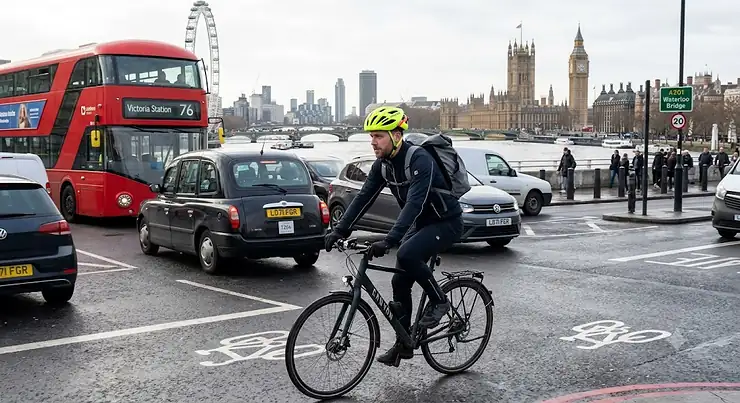
Let’s be honest about British cycling commutes for a moment. You’re not descending Alpe d’Huez. You’re navigating a bus lane in Birmingham at 8:15 in the morning, dodging a Royal Mail van that’s decided the cycle path is actually a parking space, while the rain does that specific British thing where it’s not quite raining but you’re somehow completely wet. What you need is a road cycling helmet for commuting that protects your head properly, doesn’t look like a novelty Frisbee, and holds up through months of damp, grey, relentless British use.
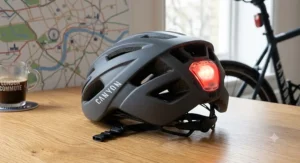
A road cycling helmet for commuting occupies an interesting middle ground: it needs to be well-ventilated enough for the physical effort of cycling, streamlined enough not to catch every gust of wind on an exposed A-road, and — critically — safe enough to genuinely matter if something goes wrong. In 2026, the technology has caught up to the point where you don’t need to choose between any of those things.
This guide reviews seven real helmets available right now on Amazon.co.uk, covering everything from sub-£90 options that punch significantly above their weight to smart commuter helmets with integrated LEDs that make you visible even in the grey soup of a November morning. Every recommendation includes honest commentary on who it’s actually for, how it performs in the conditions UK riders actually face, and whether the price makes sense against what you get.
According to Cycling UK, more people are cycling to work than at any point in recent history — a trend accelerated by urban infrastructure investment and the continuing appeal of skipping the tube. With more riders on UK roads, a properly rated, well-fitted helmet isn’t optional. It’s the one piece of kit that earns its money every single time you clip in and head out.
Quick Comparison: 7 Best Road Cycling Helmets for Commuting UK 2026
| Model | Safety Tech | Vents | Weight | Price Range (GBP) | Best For |
|---|---|---|---|---|---|
| Giro Syntax MIPS | MIPS | 25 | ~260g | Under £80 | Budget entry-level |
| ABUS Viantor MIPS | MIPS | 20 | ~268g | £60–£90 | Affordable protection |
| MET Vinci MIPS | MIPS-C2 | 16 | ~240g | £70–£100 | Value & safety score |
| Giro Agilis MIPS | MIPS | 32 | ~290g | £85–£110 | Deep fit, all-day wear |
| Kask Sintesi WG11 | WG11 | 13 | ~230g | £80–£120 | Lightweight Italian design |
| POC Omne Air MIPS | MIPS Integra | 14 | ~302g | £110–£150 | Scandinavian minimalist |
| Lumos Ultra Smart MIPS | MIPS + LEDs | 13 | ~370g | £120–£170 | Smart visibility-first |
The table reveals a clear pattern: MIPS (Multi-directional Impact Protection System) is now available across nearly every price bracket, which is exactly where the market should be in 2026. What separates the sub-£100 options from the £150+ brackets isn’t dramatically better protection — it’s fit systems, weight, ventilation quality, and extra features. For most UK commuters, the sweet spot sits firmly between £80 and £130, where you get proper rotational protection, decent airflow for the ride in, and a fit system that actually adjusts properly with numb morning fingers.
✨ Don’t Miss These Exclusive Deals!
🔍 Ready to upgrade your commute? Click on any highlighted product name to check current pricing and availability on Amazon.co.uk. All picks below are Prime-eligible for fast UK delivery — many available next day.
Top 7 Road Cycling Helmets for Commuting: Expert Analysis
1. Giro Syntax MIPS — The Honest Entry Point That Earns Its Place
The Syntax MIPS is Giro’s approachable starting point — and approaching it cynically is a mistake. This is a genuinely capable road helmet with 25 ventilation ports, In-Mold construction (where the polycarbonate shell is permanently bonded to the EPS foam, improving both durability and ventilation efficiency), and Giro’s Roc Loc 5 Air adjustment system, which lets you fine-tune the fit by turning a dial at the back of the helmet. That rear dial matters more than people realise when you’re pulling on a helmet at 7am — you don’t want to be fiddling with straps in the dark.
The MIPS liner is the real headline at this price point. MIPS adds a low-friction slip plane between the helmet and your head, designed to absorb rotational forces during an angled impact — the kind that’s most common in real cycling accidents. Having it at sub-£80 pricing makes this genuinely good value for the safety technology on offer.
For UK commuters, 25 vents is more than adequate. On the ride in, you want airflow; on the ride home in October when the temperature has dropped, you’ll be glad the Syntax isn’t a wind tunnel. The helmet comes in a range of colours including high-visibility options, which — given the quality of UK winter light — is genuinely worth considering over a stylish matte black.
UK buyers on Amazon.co.uk note the excellent build quality and comfortable fit out of the box. A few mention that sizing runs slightly narrow for wider heads — always worth checking the sizing chart before ordering, as Giro provides head circumference guidance with each listing.
✅ MIPS at an accessible price — proper rotational protection
✅ 25 vents — good airflow for active commuting
✅ Roc Loc 5 adjustment — quick to size correctly
❌ Slightly narrow fit may not suit wider head shapes
❌ Fewer colour options than some competitors at this price
Price range: Under £80 | Verdict: The no-nonsense entry into proper road commuter helmets. Prime-eligible on Amazon.co.uk.
2. ABUS Viantor MIPS — The German Safety Specialist’s Budget Answer
ABUS is a German brand best known in Britain for making locks so effective that bicycle thieves apparently move on and become honest citizens. Their approach to helmets is similarly methodical: solid fundamentals, no unnecessary frills, MIPS protection, and a price that doesn’t require a significant life event to justify.
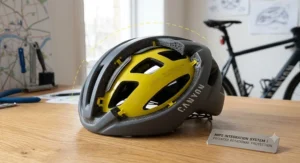
The Viantor MIPS features 20 ventilation channels, an In-Mold shell construction, and the ActiFit system at the rear for adjustment. The MIPS liner provides rotational impact protection alongside the standard EPS impact absorption. At around 268g, it sits comfortably in the “you’ll forget you’re wearing it after ten minutes” category — which is important for a helmet you’re putting on five mornings a week.
What stands out about the Viantor for British commuters specifically is the neutral, versatile aesthetic. This is a helmet that doesn’t shout “I am A Cyclist” in a way that makes office-appropriate arrival feel jarring. It looks purposeful without looking performative — an underrated quality when you’re locking your bike to a Sheffield stand outside a corporate office in Leeds or Manchester.
The ActiFit adjustment system is reliable if not the most premium available. It provides solid vertical adjustment to keep the helmet stable during the inevitable head-down push through headwinds on an exposed stretch of your route, but lacks the fine-grain control of Giro’s Roc Loc system. For most commuters, this is a non-issue.
UK Amazon reviewers highlight the comfortable padding and solid build. Several note it represents one of the better sub-£90 options currently available, particularly for riders who prioritise safety certification and brand pedigree over feature density.
✅ MIPS at a budget price — ABUS quality assurance behind it
✅ Neutral styling — commute-to-office appropriate
✅ Lightweight at ~268g — comfortable for daily wear
❌ ActiFit system less precise than premium alternatives
❌ Fewer vents (20) than some competitors — warmer on hard efforts
Price range: £60–£90 | Verdict: German reliability at a very British price. Solid choice for straightforward daily use.
3. MET Vinci MIPS — The Italian Overachiever With a Five-Star Safety Score
MET is an Italian brand that’s been making helmets since 1987, and the Vinci MIPS is their answer to the question: what if you designed a mid-range commuter helmet with the same level of seriousness you’d apply to a race lid? The result is a helmet that sits at a mid-range price but comes with a five-star Virginia Tech safety rating — the independent benchmark that actually tests helmet performance in conditions that simulate real accidents, not just minimum regulatory compliance.
The MIPS-C2 system used in the Vinci is MET’s latest implementation of the rotational protection technology, and it’s lighter and more comfortable against the skin than older MIPS versions. The 16 vents are connected by internal channels, so the airflow is more efficiently directed than simply counting holes would suggest. The included Dual Gel pad option — available separately — provides better sweat absorption on longer or more intense rides, which matters if you’re pushing hard on the commute in.
For UK buyers, the availability in genuinely bright colour options is meaningful. Fluro yellow and bright colours improve your conspicuity to motorists in the grey drizzle that defines British autumn and winter. The spec sheet won’t tell you this, but on an overcast November morning in Birmingham or Bristol, a high-vis helmet colour could be the difference between a driver clocking you 50 metres earlier or not.
UK reviewers on Amazon.co.uk consistently praise the MET Vinci MIPS for its lightweight feel and quality finish at the price, noting it compares favourably to helmets costing considerably more. One UK buyer described it as “the best helmet I’ve owned, and I’ve spent more than twice as much on others.”
✅ Five-star Virginia Tech safety rating — independently verified
✅ MIPS-C2 — latest generation rotational protection
✅ Available in high-visibility colour options — meaningful for UK commuting
❌ Largest available size may not fit bigger heads
❌ Internal fit adjustment requires a little patience initially
Price range: £70–£100 | Verdict: The safety-first choice. That Virginia Tech score is genuinely reassuring.
4. Giro Agilis MIPS — The All-Day Comfort Champion for Serious Commuters
The Agilis MIPS is where Giro steps up from the entry tier and delivers something that feels considerably more premium than its price suggests. Thirty-two ventilation ports — which is meaningfully more than most helmets in this bracket — combined with Coolfit antimicrobial padding that wicks sweat effectively, and a deep, wrap-around fit that provides a secure, confidence-inspiring feeling that cheaper helmets simply don’t match.
That deep coverage is the headline feature for commuting specifically. A deeper helmet shell means better coverage of the temples and lower skull — areas that are more exposed in the kind of low-speed urban tumbles that characterise most cycling accidents. This isn’t an aero racing helmet optimised for wind-tunnel performance at 45 km/h; it’s a helmet that thinks about what actually happens when commuters come off their bikes.
The Roc Loc 5.5 adjustment system is a genuine step up from the entry-level Roc Loc 5 found in the Syntax. It offers both vertical and horizontal adjustability, which means you can fine-tune the fit to your specific head shape rather than just sizing up or down. For riders who’ve struggled to find helmets that feel stable rather than just sitting on top of their head, the Agilis MIPS often solves that problem.
What most UK buyers overlook about this model is how genuinely comfortable it is during longer commutes. If you’re covering 10–20 km each way, helmet comfort over 45–60 minutes of riding becomes significant. At 32 vents, head temperature is well managed even when you’re pushing a reasonable pace.
UK reviewers consistently cite the Agilis MIPS as the helmet they wish they’d bought earlier, often after cycling through two or three cheaper alternatives. Several specifically mention the fit system as the best they’ve used at the price point.
✅ 32 vents — exceptional airflow for active commuters
✅ Deep coverage — better protection geometry for urban cycling
✅ Roc Loc 5.5 — most adjustable fit system at this price
❌ ~290g — slightly heavier than the Kask Sintesi
❌ No integrated rear light — worth pairing with a separate light
Price range: £85–£110 | Verdict: The commuter’s first choice if daily comfort is the priority. Highly recommended.
5. Kask Sintesi WG11 — Italian Lightweight for Riders Who Value Refinement
Kask is the Italian brand that kits out some of the world’s best professional cyclists — including the Team Ineos squad who wear Protone Icons on the Grand Tours. The Sintesi is their multi-discipline lid, designed explicitly for road, gravel, and urban commuting, and it’s the lightest helmet on this list at approximately 230g (size medium). That’s not a marginal difference — you notice 60g less weight over a 45-minute commute, particularly on hillier routes in cities like Sheffield, Bristol, Edinburgh, or Bath.
Rather than MIPS, Kask uses their proprietary WG11 rotational impact system, tested at five impact points (side, rear, front, front lateral, and rear lateral) by the Newton Lab in Milan. The system is integrated invisibly into the helmet structure, which contributes to the weight advantage over MIPS-equipped competitors. It also means there’s no internal slip liner that can move slightly against the head during adjustment — some riders find MIPS liners marginally warmer.
The Ergo Fit retention system uses a wide vertical and circumference adjustment range, allowing the rear cradle to be repositioned both higher and lower. Two sizes (medium and large) cover most adult head circumferences. The 13 vents offer adequate airflow — not exceptional, but sufficient for most commuting efforts — and the slimline profile cuts a more urban-appropriate silhouette than a vented race helmet.
One note for budget-conscious buyers: the Sintesi comes without a UKCA marking visible on some listings — check for CE EN1078 certification, which remains valid for helmets sold in the UK. The Consumer Rights Act 2015 protects your purchase regardless.
UK Amazon reviewers highlight the exceptional build quality, the Kask heritage, and the surprisingly competitive pricing against what you’d pay at a specialist cycle shop.
✅ ~230g — lightest helmet on this list
✅ Italian build quality — materials and finish feel premium
✅ WG11 rotational protection built into the structure
❌ 13 vents — less airflow than the Giro Agilis MIPS
❌ WG11 not yet Virginia Tech rated — less third-party data available
Price range: £80–£120 | Verdict: For riders who prioritise weight and premium feel above all else, this is the one.

6. POC Omne Air MIPS — The Scandinavian Minimalist That Takes Safety Seriously
POC is a Swedish brand that approaches helmet design with an almost philosophical seriousness about safety. The Omne Air MIPS is their commuting and road cycling crossover — a helmet designed to perform on your weekend club run and then handle the Monday morning commute without looking out of place at either.
The MIPS Integra system used in the Omne Air is a more advanced implementation than standard MIPS. Rather than an additional liner, it integrates the slip-plane technology directly into the helmet’s padding, resulting in a lower-profile, arguably more comfortable implementation that still delivers the rotational protection the system is known for. The 14 vents are engineered for directional airflow rather than maximum quantity — POC’s internal channelling is well-designed, and the helmet manages head temperature effectively despite fewer visible openings than competitors.
What distinguishes the Omne Air for commuting is the adjustability of the 360° retention system, which accommodates a wide range of head shapes including the slightly rounder profiles that some European-designed helmets with narrower internal dimensions can exclude. For UK riders who’ve tried multiple helmets and found none that sit properly without pressure points, the Omne Air is worth the price premium specifically for fit quality.
At around 302g, it’s the heaviest helmet on this list — though “heavy” is relative, and few commuters would notice during a normal ride. The weight is partly the consequence of the thorough coverage: the Omne Air has a deeper shell than most road helmets, which contributes to the secure, enveloping fit that POC riders consistently describe.
UK Amazon reviewers with 172 ratings and 4.6 stars confirm the quality. Several specifically praise the fit for oval head shapes that struggle with narrower helmets.
✅ MIPS Integra — most integrated MIPS implementation at this price
✅ Excellent fit for round/oval head shapes
✅ Scandinavian design — smart, understated aesthetic
❌ ~302g — heaviest on this list
❌ 14 vents — adequate but not exceptional for hard efforts
Price range: £110–£150 | Verdict: The fit-first choice. If you’ve struggled with other helmets, try this one.
7. Lumos Ultra Smart MIPS — The Visibility-First Helmet Built for Urban Commuting
The Lumos Ultra is a genuinely different proposition from every other helmet on this list. It’s not primarily about aerodynamics or weight or ventilation — it’s about making you visible on the roads. And in British urban commuting, visibility is the feature that actually saves lives most frequently. The Ultra combines MIPS impact protection with 30 front white LEDs, 64 rear red LEDs, turn signals (via a handlebar-mounted remote), and automatic brake lights — all built into a helmet that weighs approximately 370g and charges via USB-C.
The turn signal function is more useful than it sounds initially. On a dark November morning on a busy road in Manchester or London, indicating your intentions to the lorry behind you before you swing left isn’t a gimmick — it’s a genuine safety tool. The remote sits on the handlebars and activates left and right signals with a thumb tap. The system is Bluetooth-connected to the Lumos app, which also allows you to customise flash patterns and synchronise with Lumos bike lights for full-system integration.
The battery life of 4–10 hours (depending on lighting mode) is adequate for most commuting scenarios, and the USB-C charging means you can top it up at your desk. The waterproofing is solid — this helmet is designed for commuting and handles British rain without any issues, though Lumos recommends against direct pressure washing.
What most UK buyers overlook about this model is how significantly it changes the experience of commuting in low-light conditions. During the six months of the year when British commutes happen largely in the dark, the Lumos Ultra provides a level of active visibility that no amount of retroreflective material on clothing quite matches.
UK Amazon reviews confirm fit quality and LED brightness. Several UK reviewers note the front light, while helpful, isn’t bright enough to replace a dedicated bar-mounted light — treat it as supplementary visibility, not primary illumination.
✅ 360° active LED lighting — front, rear, and turn signals
✅ Automatic brake lights — genuinely useful in urban traffic
✅ MIPS protection — safety not sacrificed for tech features
❌ ~370g — heaviest on this list
❌ Front LEDs supplement rather than replace a bar light
Price range: £120–£170 | Verdict: 🇬🇧 The commuter’s visibility companion. Unmatched for urban safety on dark British mornings.
Getting the Fit Right: A Practical Helmet Setup Guide for UK Commuters
The best helmet in the world protects nothing if it’s fitted incorrectly. This is consistently the most overlooked aspect of helmet ownership — and it matters far more than the brand name or price point.
Step one: Measure your head circumference. Use a flexible tape measure around your head approximately 2.5 cm above your eyebrows — that’s the widest point. Write down the measurement in centimetres. Every helmet on this list provides a size guide on the Amazon.co.uk listing based on head circumference. Follow it. Most UK buyers who report helmets not fitting well haven’t measured; they’ve guessed by trying on a friend’s helmet or assumed they’re a “medium” without checking.
Step two: Set the rear retention system first. Before adjusting straps, use the adjustment dial or system at the back of the helmet to get the cradle fitting snugly around your head. It should feel secure without pressure points. The helmet shouldn’t rock forward or backward when you shake your head.
Step three: Position the helmet correctly. The front edge should sit approximately two finger-widths above your eyebrows. Too high and it exposes your forehead; too low and it blocks your vision. A common mistake is wearing helmets slightly tilted back — get it horizontal.
Step four: Adjust the side straps into a V-shape below each ear. The junction of the straps should sit just below the earlobe. Fasten the chin buckle with enough snugness that you can fit two fingers between strap and chin — but no more.
British weather tip: Helmet liners and thin cycling caps fit under most road helmets, providing warmth on cold mornings without compromising fit. In summer — all three days of it — remove the liner and let the vents do their job. Store your helmet away from direct sunlight; UV degradation weakens EPS foam over time, and a helmet left on a sun-facing dashboard is getting quietly compromised.
Replace after any significant impact, even if visible damage isn’t obvious. EPS foam compresses once — that’s the point of it — and a helmet that’s absorbed one impact offers reduced protection thereafter. Under the Consumer Rights Act 2015, if a helmet fails unreasonably soon after purchase, you have statutory rights regardless of whether it was involved in an accident.
Real British Commuter Profiles: Which Helmet Suits Whom?
Not every commuter has the same route, budget, or head shape. Here’s how the seven helmets map to real UK cycling profiles.
The central London commuter. You’re covering 8–12 km each way through congested traffic, cycling in low-light conditions for at least six months of the year, and your biggest risk is drivers not seeing you at junctions. The Lumos Ultra Smart MIPS is purpose-built for you — the active LEDs and turn signals provide conspicuity that passive reflectors can’t match at busy junctions on the Old Street roundabout or along the Embankment.
The suburban daily rider. You’re in Manchester, Birmingham, or Leeds, covering 12–18 km each way on a mix of cycle paths and A-roads. You’re pushing a decent pace and want solid airflow, reliable fit, and sensible price. The Giro Agilis MIPS delivers: 32 vents, deep coverage, and a fit system that works properly after five minutes of adjustment rather than five months of compromise.
The student or new commuter on a budget. You need solid safety certification, reasonable comfort, and a price that doesn’t hurt. The MET Vinci MIPS with its five-star Virginia Tech rating and competitive pricing delivers more genuine safety performance per pound than anything else on this list.
The weekend-plus-weekday rider. You commute Monday to Friday but also ride longer weekend routes. You want one helmet that does both convincingly, looks appropriate in a café on a Saturday morning, and doesn’t make you look like a novelty. The POC Omne Air MIPS crosses over seamlessly between contexts — Scandinavian design reads equally well at a traffic light and at a coffee stop.
The hill-heavy commuter. You’re in Sheffield, Bristol, Bath, or Edinburgh — somewhere where every route involves a proper climb. Weight matters because you’re fighting gravity, and ventilation matters because you’re working. The Kask Sintesi WG11 at ~230g with adequate ventilation is the call for routes where grams accumulate.
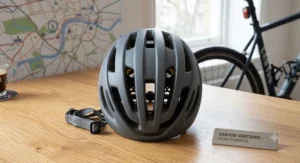
How to Choose a Road Cycling Helmet for Commuting: 6 Criteria That Actually Matter
1. Safety certification above all else
Every helmet sold in the UK must meet EN 1078, the European standard for cycling helmets (which remains valid in the UK post-Brexit alongside UKCA marking). This covers basic impact protection. Beyond this baseline, look for MIPS or equivalent rotational protection (Kask WG11, POC SPIN/Integra) — rotational forces in angled impacts are a primary cause of brain injury, and the evidence base for managing them is solid. Virginia Tech’s five-point helmet safety ratings provide the most useful independent comparison between helmets.
2. Fit system quality
A poorly fitted helmet is worse than no helmet in some failure modes — it can move at the moment of impact. Good retention systems (Giro’s Roc Loc, POC’s 360° system) offer both vertical and horizontal adjustment. Check specifically that vertical adjustment is available: a helmet cradle that only adjusts tighter or looser without changing height will never fit some head shapes correctly.
3. Ventilation for your effort level
If you’re covering 5 km at a gentle pace, 13 vents is fine. If you’re doing 20 km with a bag on your back, 32 vents is worth prioritising. For British conditions, note that more vents means a colder head in winter — a cycling cap or thin liner solves this, but it’s worth knowing before purchasing a maximum-ventilation road helmet for a January commute in Leeds.
4. Weight for your route
On flat urban commutes, 140g of weight difference between helmets is imperceptible. On hilly routes, lighter helmets reduce neck fatigue over the longer term. If your commute involves sustained climbing, the Kask Sintesi’s weight advantage is meaningful.
5. Visibility features for British conditions
Bright colour options or integrated/compatible rear lighting matter more on UK roads than on continental ones, where cycling infrastructure is generally more separated from traffic. If your route involves any shared roads, treat conspicuity as a safety feature, not an aesthetic choice.
6. Budget versus replacement cycle
Helmets should be replaced every 3–5 years regardless of accident history (UV and sweat degrade EPS foam), and immediately after any significant impact. A £90 helmet replaced every four years costs less than £25 per year for head protection. Spending an extra £30–40 for meaningfully better safety technology (a five-star Virginia Tech score, a more advanced MIPS implementation) works out to pennies per day. Think about it that way.
Common Mistakes UK Commuters Make When Buying a Road Cycling Helmet
Buying on looks alone. Matte black is aesthetically satisfying but practically inferior to high-visibility colours on gloomy British roads. The most stylish helmet in the world doesn’t help if a driver doesn’t notice you.
Ignoring MIPS or equivalent rotational protection. Standard EN 1078 testing only covers direct impact — not the rotational forces that are most common in real cycling accidents. In 2026, there is no reason to buy a helmet without MIPS or equivalent rotational management. Every helmet on this list has it.
Assuming helmet sizing is universal. Giro runs slightly narrower than POC, which runs differently from Kask. Always measure your head circumference in centimetres and cross-reference the brand’s specific size chart on the Amazon.co.uk listing before ordering. The 14-day cooling-off period under Consumer Contracts Regulations means you can return a helmet that doesn’t fit if you’re ordering from Amazon.co.uk — but it’s better to measure first.
Buying an old helmet second-hand. You can’t assess EPS foam degradation visually. A helmet that’s five years old and sat in a garage has likely compromised protection regardless of appearance. Always buy new, particularly when buying blind online.
Ignoring replacement timelines. Most manufacturers recommend replacing helmets every 3–5 years. If you commute daily through British weather — damp, UV exposure through windscreens, sweat — the lower end of that range is more appropriate. Write the purchase date inside the helmet when you first wear it.
What to Expect: Road Helmet Performance on British Roads
British cycling conditions are specific, and they’re worth addressing directly. Here’s what the spec sheet won’t tell you.
Rain. All helmets on this list will handle being ridden in rain. None of them keeps your head dry — that’s what waterproof cycling caps, buffs under the helmet, and ear covers are for. What matters is that the adjustment systems, particularly dial-based retention systems, remain functional when wet. All models reviewed here hold up fine.
Cold. More vents means a colder head. The Giro Agilis MIPS’s 32-vent design is wonderful in July and noticeably cold in November. A thin cycling cap — the classic cotton or Merino kind, available on Amazon.co.uk for under £15 — solves this for most temperature ranges. The Kask Sintesi’s 13 vents are warmer through autumn and winter.
Dark commutes. From late October to mid-March, most British commutes happen in the dark or near-dark. Helmet colour matters. A rear light mounted to the helmet (some helmets have mounts, or a clip-on light works fine) matters more. The Lumos Ultra makes this a non-issue; for all other helmets, a dedicated clip-on rear light is a necessary accessory.
Wind. On open A-roads and particularly on exposed bridges or estuaries, road helmets with smooth-top designs handle crosswinds better than heavily vented models. This is a marginal consideration for most urban commutes but worth noting for riders on more exposed routes.

Frequently Asked Questions: Road Cycling Helmets for UK Commuters
❓ Is it a legal requirement to wear a cycling helmet in the UK?
❓ What safety standard should a UK road cycling helmet meet?
❓ How do I know when to replace my road cycling helmet?
❓ Can I use a road cycling helmet for commuting in British rain?
❓ Is MIPS worth paying extra for in a commuter road cycling helmet?
Conclusion: The Right Road Cycling Helmet for Commuting Pays for Itself
The British cycling commute is genuinely worth doing. It’s cheaper than the tube, better for your health than sitting in traffic, and occasionally — on a clear autumn morning when the light is low and golden and the roads are quiet — genuinely lovely. The road cycling helmet for commuting that sits on your head through all of it deserves to be chosen carefully.
For most UK commuters, the Giro Agilis MIPS represents the best overall balance of ventilation, fit quality, and safety technology at a price that’s straightforward to justify. If budget is the primary constraint, the MET Vinci MIPS delivers a five-star safety rating at a price that’s hard to argue with. If you commute in the dark — and in Britain, that’s most of the year — the Lumos Ultra Smart MIPS changes what it feels like to share the road with drivers who aren’t always paying full attention.
Whatever you choose: measure your head first, wear it correctly, replace it after impacts, and remember that the goal is arriving at work with all your faculties intact and ideally not soaking wet. Two of those three are within the helmet’s control.
✨ Ready to Choose?
🔍 Click any highlighted product name above to check current pricing and availability on Amazon.co.uk. All picks are Prime-eligible for fast UK delivery.
Recommended for You
- Best Budget Road Cycling Helmets with MIPS UK 2026: Top 7 Picks
- 7 Best Budget Road Cycling Helmets UK 2026
- Best Time Trial Aero Helmet UK 2026: 7 Fastest Picks Reviewed
Disclaimer: This article contains affiliate links. As an Amazon Associate, I earn from qualifying purchases. If you purchase products through these links, we may earn a small commission at no additional cost to you.
✨ Found this helpful? Share it with your mates! 💬🤗
