In This Article
Let’s be honest: most of us spend more time agonising over tyre pressure than helmet choice. Which is a bit odd, when you think about it — your tyres have never once saved your life.
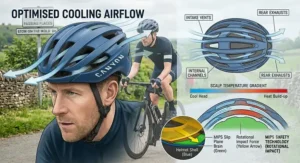
A good road cycling helmet is arguably the single most important piece of kit you’ll buy. Yet the market is absolutely overwhelming — aero helmets, ventilated helmets, MIPS helmets, helmets with Spherical technology, WG11-certified helmets, helmets that probably do your tax return. It can feel like you need a degree in materials science just to get started.
Here’s the short version, if you’d like one: the best road cycling helmet is the one that fits well, meets EN1078 safety certification, and actually gets worn on every ride — not just the ones where you’re trying to impress someone on Strava. According to British cycling safety charity Cycling UK, head injuries account for a significant proportion of cycling fatalities in the UK, and a properly fitted, certified helmet remains your best line of defence.
That said, fit is everything. A £300 helmet worn loosely is dramatically less effective than an £80 one worn correctly. We’ll get into the nuances of fit, safety ratings, and the features that actually matter in this guide — because the spec sheet will only tell you half the story.
We’ve researched and cross-referenced the top options currently available on Amazon.co.uk, verified their UK compatibility and EN1078 compliance, and broken them down across every budget from around £50 to over £250. Whether you’re commuting through central London, smashing out Saturday sportives in the Peak District, or grinding up climbs in the Welsh valleys in horizontal rain (the true British cycling experience), there’s a helmet here for you.
Let’s get into it. 🚴♂️
Quick Comparison: Top 7 Road Cycling Helmets on Amazon.co.uk
| Helmet | Best For | Safety Tech | Weight | Price Range |
|---|---|---|---|---|
| Lazer Tonic KinetiCore | Budget buyers | KinetiCore | ~249g | Under £70 |
| Giro Agilis MIPS | Everyday road riders | MIPS | ~255g | £70–£100 |
| MET Vinci MIPS | Mid-range all-rounders | MIPS-C2 | ~269g | £90–£115 |
| POC Ventral Air MIPS | Hot-weather & summer | MIPS Air Node | ~282g | £130–£165 |
| ABUS GameChanger | Aero-conscious riders | In-Mould | ~255g | £110–£150 |
| Giro Aries Spherical | Serious/competitive | Spherical MIPS | ~265g | £200–£265 |
| KASK Protone Icon WG11 | Premium road cyclists | WG11 | ~215g | £220–£290 |
What the table above tells you, at a glance, is that safety technology has genuinely democratised at every price point — even the budget Lazer includes meaningful rotational impact protection, something that cost two or three times more just five years ago. That said, weight, ventilation, and fit refinement remain the primary reasons to spend more. If you’re riding a few hundred miles per year, the Lazer or Giro Agilis will serve you brilliantly. If you’re on the bike four or five times a week and your average ride is over two hours, the extra investment in something like the Giro Aries or KASK Protone pays for itself in comfort and longevity alone.
✨ Don’t Miss These Exclusive Deals!
🔍 Take your road cycling to the next level with these carefully selected helmets. Click on any highlighted product below to check current pricing and availability on Amazon.co.uk. These picks will help you find exactly what you need!
Top 7 Road Cycling Helmets on Amazon.co.uk: Expert Analysis
1. Lazer Tonic KinetiCore — Best Budget Road Helmet 🏆
The Lazer Tonic KinetiCore is the kind of helmet that makes you wonder what everyone else is charging for. At well under £70, it punches so far above its weight that more expensive competitors must find it quietly embarrassing.
The headline feature is KinetiCore — Lazer’s proprietary alternative to MIPS, which uses crumple zones sculpted directly into the EPS foam to absorb rotational energy on impact. No separate slip-liner required, which actually reduces the overall weight. At approximately 249g (medium), it’s one of the lightest helmets in its price bracket, and in independent Virginia Tech testing it scored a respectable four stars — better than several helmets costing twice as much. Eighteen vents and a well-executed in-mould construction keep things moving aerially, and the Advanced TurnSys dial system provides a quick, confident fit. Available in sizes S–XL.
For UK riders, the Tonic KinetiCore is an excellent choice for commuters, weekend warriors, or anyone returning to cycling who doesn’t want to spend a premium while still wanting real safety credentials. It conforms to EN1078 standards and is currently available on Amazon.co.uk with Prime-eligible delivery on many colour variants. UK buyers note that the in-mould shell is fairly exposed at the rim — sensible enough for road riding, less ideal if you’re occasionally hopping kerbs.
UK reviewers have praised the fit consistency and value, with several noting it feels more expensive than it is.
✅ Outstanding value-to-safety ratio
✅ Genuinely lightweight for the price
✅ Four-star Virginia Tech rating
❌ Exposed EPS rim — less durable if dropped
❌ Ventilation merely adequate rather than excellent on hot days
Price range: under £70 — arguably the best road cycling helmet for riders on a tight budget.
2. Giro Agilis MIPS — Best Mid-Range All-Rounder
The Giro Agilis MIPS has quietly been one of the best road cycling helmets in the £70–£100 bracket for years, and the current version continues that tradition without fanfare. It’s the sensible choice — and that’s not faint praise.
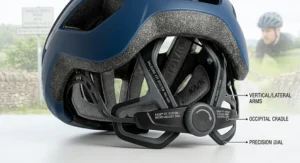
The Agilis uses Giro’s Roc Loc 5.5 MIPS system, which combines fit adjustment and MIPS rotational protection in a single integrated mechanism. In practice, this means fewer fiddly components and a noticeably lower-profile feel at the back of the head — something riders with longer hair or a ponytail will particularly appreciate. The full-wrap In-Mould polycarbonate shell is fused permanently to the EPS liner, giving it better structural integrity than helmets in this price range typically manage. Coolfit antimicrobial padding handles moisture absorption — handy on those warm summer days when British weather briefly pretends it’s somewhere else.
For UK commuters riding in and out of cities like Manchester, Bristol, or Edinburgh, the Agilis MIPS strikes a sweet spot between aerodynamics, ventilation, and head protection. The deeper rear coverage provides slightly better protection for urban riding where low-speed tumbles are more common than high-speed crashes. Available across multiple sizes and colourways on Amazon.co.uk, often Prime-eligible.
Customer feedback highlights the comfortable, secure fit and the attractive price for a MIPS-equipped helmet. A small number of reviewers with particularly round heads note the fit system can feel less accommodating — worth checking return policies before buying.
✅ Integrated MIPS at a sensible price
✅ Deep rear coverage — good for urban riding
✅ Excellent durability for the price
❌ Ventilation merely adequate for hot-weather sportive riding
❌ Fit system less accommodating for round head shapes
Price range: £70–£100 — reliable, well-executed, and available on Amazon.co.uk.
3. MET Vinci MIPS — Best Mid-Range Road Helmet with Pro-Level Tech
MET is an Italian brand that doesn’t get quite the credit it deserves on this side of the Alps, which is somewhat baffling given that its helmets are worn at the highest level of professional racing. The MET Vinci MIPS is their trickle-down offering — borrowing design DNA from the Trenta used by pros, but pitched at around £90–£115 on Amazon.co.uk.
The key upgrade over the Giro Agilis is the MIPS-C2 system — a more advanced iteration of MIPS that uses two integrated slip planes rather than one, offering improved rotational energy management from multiple impact angles. Combined with a five-star Virginia Tech safety rating, this is among the safest helmets you can buy in its price range. Weight comes in at approximately 269g (size large), which is respectable. The Safe-T DUO fit system offers both circumference and vertical adjustment — that vertical fine-tuning is genuinely useful, especially for riders with a longer head shape. Sixteen well-positioned vents and internal air-channelling keep things comfortable.
For UK riders who want the peace of mind of premium safety technology without the premium price tag, the Vinci MIPS is compelling. It works equally well commuting through London’s ULEZ zones as it does on a Saturday club run in the Surrey Hills. Available in several bright colourways with reflective rear stickers — a subtle but important feature for visibility on dark British mornings and evenings.
A handful of UK reviewers note the fit adjustment dial is slightly fiddly compared to Giro’s system, and the largest size may not accommodate very large heads. Otherwise, the consensus is overwhelmingly positive.
✅ Five-star Virginia Tech rating
✅ MIPS-C2 — more advanced rotational protection
✅ Vertical fit adjustment — accommodates more head shapes
❌ Fit dial less refined than some competitors
❌ Limited sizing for larger head circumferences
Price range: £90–£115 — excellent safety credentials at a mid-range price.
4. POC Ventral Air MIPS — Best Road Helmet for Ventilation 🌬️
Swedish brand POC occupies an interesting position in the helmet market: not quite as ubiquitous as Giro or Specialized, but genuinely obsessive about engineering. The Ventral Air MIPS is the product of that obsession applied specifically to one problem — keeping your head cool.
Precisely placed ventilation ports feed integrated internal channels that control air intake and exhaust at both high and low speeds, meaning it works at climbing pace as effectively as it does at 40 km/h on a descent. The aerodynamically optimised 22° trailing edge reduces turbulence at the rear — a detail you won’t find on helmets at this price level. MIPS Integra is built directly into the comfort padding rather than added as a separate layer, which preserves the helmet’s clean internal geometry and avoids any friction hotspots. The unibody shell construction — polycarbonate wrapped entirely around the EPS liner — gives excellent structural integrity.
For UK riders who primarily ride spring through autumn and want the best possible ventilation for sportive racing, longer climbs, or simply not arriving at work looking like they’ve been through a car wash, the Ventral Air MIPS is outstanding. At around £130–£165 on Amazon.co.uk, it represents a genuine performance step up from the mid-range options. Available in multiple colourways including high-visibility options suited to low-light British conditions.
UK reviewers consistently praise the airflow, with several noting it feels noticeably cooler than previous helmets they’d owned. Some find the fit system slightly basic compared to Giro or KASK offerings.
✅ Best-in-class ventilation at this price point
✅ Aerodynamic trailing edge reduces turbulence
✅ MIPS Integra — no-compromise rotational protection
❌ Fit system less refined than competitors
❌ Premium price bracket for its safety rating tier
Price range: £130–£165 — the ventilation benchmark for mid-to-high-budget riders.
5. ABUS GameChanger — Best Aero Road Helmet Under £150 ⚡
German brand ABUS is the name most British cyclists associate with D-locks rather than helmets, which is doing the GameChanger a disservice. This is a seriously aerodynamic road helmet at a price that makes it genuinely tempting for riders who don’t want to spend Giro Aries money but do want to feel like they’re going faster.
The GameChanger’s defining feature is its wind-tunnel-developed aerodynamic shell, which prioritises a low drag coefficient without entirely sacrificing ventilation. At approximately 255g in medium (the current version varies slightly by colourway and market), it’s meaningfully lighter than many aero-focused helmets. The in-mould construction is clean and well-executed, and the ActiCage reinforcement system — internal plastic reinforcing structures — improves both structural integrity and overall rigidity. It’s available in multiple sizes and colourways on Amazon.co.uk, and several variants are Prime-eligible.
For UK riders who primarily ride on flat or undulating terrain — think East Anglia, Lincolnshire, or the roads around Cambridge — and want aerodynamic gains without going full time-trial helmet, the GameChanger makes a persuasive case. It’s also popular among riders who want something that looks purposeful for sportive events.
The GameChanger does not include MIPS or an equivalent rotational impact protection system in its base version, which is worth noting at this price point. If rotational impact protection is a priority (and the evidence suggests it should be), factor that into your comparison.
✅ Excellent aerodynamic performance for the price
✅ Lightweight in-mould construction
✅ Strong visual appeal for sportive/race-oriented riders
❌ No rotational impact protection (MIPS or equivalent) in base model
❌ Ventilation modest — less comfortable on long hot-weather climbs
Price range: £110–£150 — the best aero road cycling helmet for budget-conscious speed merchants.
6. Giro Aries Spherical — Best Premium Road Helmet 🥇
If the Giro Agilis is the sensible choice, the Aries Spherical is the one you buy when you’ve stopped making excuses. It is, quite simply, one of the finest road cycling helmets currently available on Amazon.co.uk — and the fact that it’s available in the UK at all is worth noting, since several top-tier helmets from US brands remain absent from the UK market.
The defining technology is Spherical — Giro’s ball-and-socket MIPS implementation, where two full shells nest inside each other. The outer shell can rotate independently of the inner shell upon impact, redirecting rotational energy away from the brain far more smoothly than a traditional MIPS slip-liner. It’s the same fundamental principle as the cerebro-spinal fluid protecting your brain, which is either comforting or unsettling depending on your disposition. At approximately 265g (medium), the weight is excellent. The AURA II Reinforcement Arch — twin translucent shatter-resistant bridges running through the helmet — allows 24 wind-tunnel-maximised vents without structural compromise. The Roc Loc 5+ Air fit system is genuinely one of the best in the industry: micro-adjust vertically and circumferentially while riding, without removing a glove.
For UK riders who take their riding seriously — whether that’s racing crits, completing multi-day sportives, or simply wanting the best possible head protection on long weekend rides — the Aries Spherical is hard to fault. The price, at £200–£265 on Amazon.co.uk, is significant but not unreasonable given what you’re getting.
UK reviewers with experience of previous Giro helmets consistently note the Aries feels like a meaningful step forward in comfort and confidence.
✅ Spherical MIPS — the gold standard in rotational impact protection
✅ 24 wind-tunnel-optimised vents — excellent for British sportive riding
✅ Roc Loc 5+ Air — finest fit system at this price point
❌ Significant investment — not for occasional riders
❌ Price gap to mid-range options is steep
Price range: £200–£265 — the best road cycling helmet for serious riders who want the best.
7. KASK Protone Icon WG11 — Best Ultra-Lightweight Premium Helmet
KASK is an Italian brand with the kind of origin story that makes British cyclists quietly envious. Developed in collaboration with Team Sky (now Team INEOS) — the team that delivered Bradley Wiggins and Chris Froome to Tour de France glory — the Protone has been a staple at the highest level of professional road cycling for over a decade. The Protone Icon WG11 is the current iteration.
At 215g, it’s the lightest helmet in this guide — by a noticeable margin. The WG11 designation refers to KASK’s own rotational impact testing protocol, which goes beyond the minimum requirements of EN1078 and independently assesses rotational energy transfer. The OCTOFIT+ adjustment system is genuinely clever: a large rubberised dial gives excellent grip even with gloved hands, and the vertical stabiliser across the nape provides ergonomic neck support during long rides in an aggressive position. Internal CoolMax padding is removable and machine washable. The seamless outer shell — joining upper and lower polycarbonate sections invisibly — is aerodynamically refined and aesthetically elegant. A reflective insert at the rear aids visibility on overcast British days.
Available on Amazon.co.uk in multiple colourways, with several variants currently Prime-eligible. At £220–£290, this is the most expensive helmet in the guide, and it’s priced accordingly. What you’re paying for is featherweight luxury and the kind of fit refinement that becomes meaningful on rides of four hours or more. For UK riders who log serious mileage, regularly ride in the hills, or simply find that head fatigue accumulates on long days in the saddle, the weight saving alone justifies the premium.
✅ 215g — extraordinary lightweight performance
✅ WG11 certified — exceeds EN1078 rotational impact testing
✅ OCTOFIT+ — excellent gloved-hand adjustability on long rides
❌ Eye-watering price for occasional cyclists
❌ Ventilation, though effective, is not class-leading at this price
Price range: £220–£290 — the helmet for riders who know exactly what they’re paying for.
How to Fit and Maintain Your Road Helmet in British Conditions
Buying the right helmet is only half the job. The other half — fitting it correctly and keeping it in good working order — is where most British cyclists quietly go wrong.
Fitting correctly: The helmet should sit level on your head, approximately two finger-widths above your eyebrows. The rear cradle should cup the back of your head snugly, and the side straps should form a V-shape just below each ear. The chin strap should allow you to fit one finger underneath when buckled — no more. Shake your head firmly; the helmet should move with it, not independently. If it slides, tighten the fit dial or try a different size.
Wet-weather care: Britain’s climate is the helmet’s adversary in slow motion. Moisture ingress, particularly into the comfort padding, can degrade antimicrobial treatments and, over extended periods, the EPS foam itself. After wet rides, remove the pads (most quality helmets have removable, washable padding) and allow both the shell and padding to dry fully before storage. Never store a damp helmet in a closed sports bag — the resulting mould spores are a spectacular way to ruin perfectly good padding. Most quality road helmets, including all seven in this guide, have hand-washable pads; the MET Vinci MIPS pads can be machine-washed on a gentle cycle.
Storage in compact spaces: For riders in flats, terraced houses, or anywhere with limited storage (which describes a significant proportion of UK homes), a helmet hook beside the door is far preferable to piling kit into a cupboard. Compression will deform EPS foam over time, even if the damage is invisible externally.
Replacement after impact: Here’s the rule: if your helmet takes a significant impact — whether in a crash or dropped onto a hard surface from head height — replace it. EPS foam is a single-use material; it crushes to absorb energy but does not recover. External damage isn’t required for internal compromise. UK retailers including those on Amazon.co.uk are covered by the Consumer Rights Act 2015 if a product proves defective, and most brands offer crash replacement programmes — worth registering for at purchase.
Which Helmet for Which UK Rider? A Practical Scenario Guide
Not every road cyclist in Britain is the same person, which is — on reflection — the entire premise of buying guides.
The London/City Commuter: You’re riding to work three or four days a week, averaging 8–15 km each way through traffic. Falls, if they happen, are more likely to be low-speed urban tumbles than high-speed crashes. Rotational protection matters, visibility matters, and you want something you’re comfortable locking your bike up with under the desk. The Giro Agilis MIPS is the call here — deep rear coverage, MIPS protection, and a price that won’t hurt as badly if you scratch it on a bollard. The Lazer Tonic KinetiCore is the budget-savvy version of the same logic.
The Weekend Warrior Sportive Rider: You’re covering 80–150 km on Saturday mornings, probably clipping out somewhere in the Cotswolds, Dales, or Chilterns. Speed and ventilation matter; you’ll be in the saddle for three to five hours. The MET Vinci MIPS handles this superbly at the mid-range, while the Giro Aries Spherical is the upgrade for riders who want the best all-round performance on longer efforts.
The Heat-Sensitive Summer Rider: You ride hard from May through September, you run hot, and a warm helmet ruins your effort. You need the POC Ventral Air MIPS — it genuinely keeps your head cooler than the competition, and on the rare British days when the temperature climbs past 25°C, that difference is very real.
The Competitive Club/Criterium Racer: You want aero gains and you want them now. The ABUS GameChanger delivers wind-tunnel aerodynamics at a reasonable price. If budget allows, the KASK Protone Icon WG11 is what the pros have worn at the Tour de France — at 215g, it won’t weigh your efforts down either.
The Older or Long-Distance Touring Rider: Comfort over hours is paramount, and head fatigue on eight-hour days is a genuine issue. The KASK Protone Icon’s featherweight design and OCTOFIT+ system are specifically the engineering response to this problem — the ergonomic neck support alone is worth considerable attention.
How to Choose a Road Cycling Helmet in the UK: 7 Key Criteria
Choosing the best road cycling helmet doesn’t have to be overwhelming. Work through these criteria in order, and the field narrows quickly.
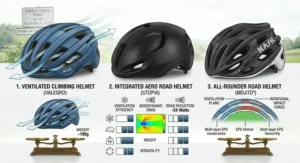
1. Safety certification first. In the UK and EU, every road cycling helmet sold legally must meet EN1078. This is the baseline. Beyond that, look for Virginia Tech ratings (five stars being excellent) and KASK’s WG11 for additional rotational impact testing data. More detail is available via the Virginia Tech Helmet Lab.
2. Rotational impact protection. MIPS, KinetiCore, WG11, Spherical — the specific technology matters less than the presence of some form of rotational energy management. The evidence base for rotational protection is now substantial. See Cycling UK’s safety resources for an overview.
3. Fit system quality. A bad fit system means a poorly positioned helmet, and a poorly positioned helmet is a safety risk. Test the dial adjustment — it should be smooth, precise, and operable with gloves on.
4. Ventilation for your use case. For commuting, moderate ventilation is fine. For multi-hour sportive riding or summer road riding, make ventilation a genuine priority — head overheating increases fatigue and reduces decision-making sharpness.
5. Weight. Below 250g is excellent; 250–300g is fine for most riders. Above 300g starts to matter on long rides. The neck fatigue from an extra 80–100g over five hours is real.
6. Compatibility with eyewear. Most quality road helmets include glasses docking ports. If you ride with sunglasses (and in Britain, where the sun appears unpredictably and blindingly, you should), confirm your helmet accommodates them.
7. Budget honesty. Set a realistic budget before you start browsing. The Lazer Tonic KinetiCore proves that under £70 can deliver real safety credentials. Spending more buys refinement, weight savings, and comfort — not categorically more protection.
Common Mistakes When Buying a Road Cycling Helmet in the UK
Ignoring rotational impact certification. EN1078 covers linear impact. Rotational forces — the kind generated when your head glances off tarmac at an angle — are a different problem, and one EN1078 doesn’t specifically address. Don’t buy a helmet without MIPS, KinetiCore, WG11, or equivalent.
Buying on weight or looks alone. A beautiful 200g helmet that doesn’t fit well is genuinely dangerous. Fit is a prerequisite; everything else is secondary.
Overlooking UK sizing differences. European helmet sizes are typically measured in centimetres of head circumference. Measure your head before buying, 2 cm above the eyebrows. Many riders discover they’re a different size to what they assumed.
Assuming CE marking is sufficient post-Brexit. The UK has transitioned to UKCA marking for products sold in Britain — though for cycling helmets, EN1078 remains the applicable standard and helmets marked CE or UKCA (or both) are legally acceptable. If you’re purchasing from an EU seller shipping to the UK, check the product complies with EN1078 specifically, not a different standard.
Replacing a helmet too infrequently. Most manufacturers recommend replacing road helmets every three to five years regardless of visible damage, as EPS foam degrades with UV exposure and normal wear. British storage conditions — damp garages, sheds — can accelerate this process.
EN1078 Safety Standards, MIPS & What the Ratings Actually Mean 🇬🇧
Every road cycling helmet sold legally in the UK must comply with EN1078, the European safety standard covering impact attenuation, retention system strength, and field of vision. The British Standards Institution oversees standards compliance in the UK, and EN1078 remains the applicable norm for cycling helmets following Brexit, with UKCA marking replacing CE marking for UK-market sales.
What EN1078 tests: a helmet is dropped from a prescribed height onto both flat and kerbstone-shaped anvils, and the transmitted deceleration to a headform inside must not exceed 250g. This covers direct impact. What EN1078 does not test: rotational acceleration — the twisting forces associated with oblique impacts, which are actually the most common type in real cycling crashes. This is the gap that MIPS, KinetiCore, WG11, and Spherical technology exist to fill.
Virginia Tech’s independent Bicycle Helmet Ratings programme (available publicly at their website) subjects helmets to oblique impact testing at multiple sites and speeds, and awards one to five stars accordingly. A five-star rating means the helmet reduces concussion risk by over 50% relative to the minimum EN1078 baseline. Of the helmets in this guide, the MET Vinci MIPS and Lazer Tonic KinetiCore each hold strong Virginia Tech ratings, and the data is publicly accessible if you’d like to geek out properly.
The practical upshot for UK buyers: always buy EN1078 certified, always include some form of rotational protection, and consult Virginia Tech ratings if you want the most rigorous independent data available.
Features That Actually Matter (And Those That Don’t)
Genuinely matters:
- Rotational impact technology ✅
- Fit system precision and adjustability ✅
- Ventilation for your ride duration and pace ✅
- EN1078 certification ✅
- Weight (becomes significant above 300g or on rides over 3 hours) ✅
- Reflective elements for UK riding in autumn/winter ✅
Genuinely doesn’t matter as much as marketing suggests:
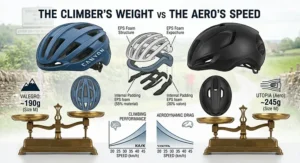
- Aero claims at sub-40 km/h speeds. At club ride or commuting pace, the aerodynamic difference between most helmets is measured in watts you’d never notice. Save the aero obsession for when you’re trying to win a time trial.
- Colour options. Lovely, but irrelevant to safety.
- “Pro team use.” Teams are sponsored; their kit choices are not necessarily independent endorsements.
- Exact gram weights as stated by manufacturers. Independently weigh any helmet you’re interested in — claimed weights are sometimes optimistic.
Frequently Asked Questions ❓
❓ What safety standard should a road cycling helmet have in the UK?
❓ How often should I replace my road cycling helmet?
❓ Is MIPS worth it on a road cycling helmet?
❓ Do road cycling helmets meet UK UKCA requirements?
❓ What is the lightest road cycling helmet available on Amazon.co.uk?
Conclusion: Protect What Matters
Here’s the uncomfortable truth: no matter how much you’ve spent on your bike, your wheels, or your carbon-fibre bidons, none of it matters quite as much as what’s on your head. And yet helmets remain the category where British cyclists most often make do, cut corners, or ride with something five years past its replacement date.
The good news is that 2026 is an extraordinary time to buy a road cycling helmet. The Lazer Tonic KinetiCore proves you can get four-star Virginia Tech safety credentials for under £70. The MET Vinci MIPS delivers pro-level MIPS-C2 technology for around £100. And at the top end, the Giro Aries Spherical and KASK Protone Icon WG11 represent genuinely world-class head protection for UK riders who want the best.
Whatever your budget, whatever your route — city commute or mountain sportive, Surrey Hills or Scottish Highlands — the right helmet is on Amazon.co.uk right now. Use the comparison table above, consider your use case honestly, and buy the one that fits.
Your head will thank you. Possibly quite fervently.
✨ Don’t Miss These Exclusive Deals!
🔍 Click on any highlighted helmet in this guide to check current pricing and availability on Amazon.co.uk. Whether you’re after a budget buy or a premium lid, these picks represent the best road cycling helmet options for UK riders in 2026.
Recommended for You
- Best MIPS Road Cycling Helmet UK 2026: 7 Top Picks Rated
- Best Lightweight Road Cycling Helmets UK 2026: 7 Expert-Tested Picks
- Road Bike Helmet Buying Guide: 7 Best Picks UK 2026
Disclaimer: This article contains affiliate links. As an Amazon Associate, I earn from qualifying purchases. If you purchase products through these links, we may earn a small commission at no additional cost to you.
✨ Found this helpful? Share it with your mates! 💬🤗
