In This Article
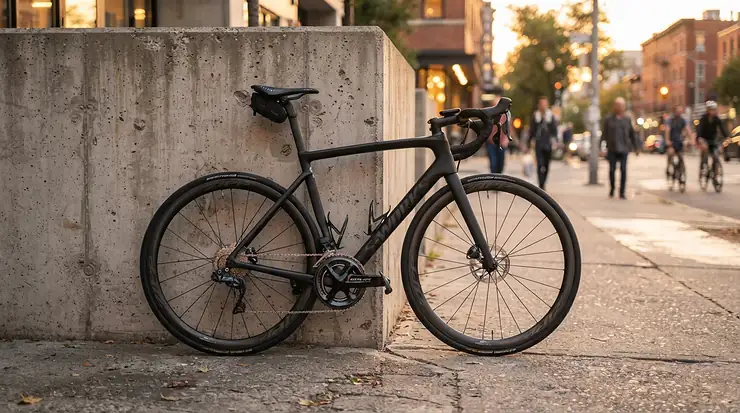
You can spend £3,000 on wheels and still lose the plot because of a 160-gram wedge of foam. Road racing saddles quietly decide whether you stay tucked and fast for three hours or spend the last hour wriggling like you’re sat on a bag of marbles.
Nobody mentions this in the bike shop: a saddle doesn’t just carry you, it positions your pelvis. Your pelvis steers everything from your lower back to your knees. A bicycle saddle is one of only five contact points between you and the bike, and it’s the only one you can’t shift your weight off. Get it wrong and no amount of aero kit will save you. Get it right and a good road racing saddle simply disappears.
The category has split in two for 2026. On one side sit short-nosed, cutout designs built for a flat-backed position. On the other is a wave of 3D-printed lattice tops and carbon rail saddles promising feather weights and fewer pressure points. Prices run from about £50 to well over £350, so the decision feels riskier than it should.
This guide cuts through it. You’ll find seven real, currently available saddles compared on weight, shape, rail material and value, using UK price ranges rather than hype. Nothing here is pretend ride-testing. It’s built from independent test data, published reviews and retailer feedback, plus analysis of what the numbers mean for you.
Quick Comparison: Seven Road Racing Saddles at a Glance
Start here if you want the short version. Weights are a mix of manufacturer claims and independent weighing, so treat them as close guides rather than lab-certified figures.
| Saddle | Weight (approx.) | Rails | Best For |
|---|---|---|---|
| PRO Stealth Team | ~161g (142mm) | Carbon | Deep aero tucks on a sensible budget |
| Specialized Power Pro with Mirror | ~247g (155mm) | Titanium | Riders fighting pressure points |
| Fizik Vento Argo 00 Adaptive | ~188g (150mm) | Carbon | Firm, hard-effort racing |
| Trek Aeolus RSL AirLoom | ~164-167g | Carbon (7x10mm) | Lowest weight with 3D-printed comfort |
| Prologo Scratch M5 Space | ~213-230g | TiRox alloy | Stable, forgiving all-rounder |
| Fizik Vento Argo R3 | ~220g (150mm) | K:ium alloy | Value-minded short-nose racing |
| Ritchey Comp Cabrillo | ~266g | Chromoly | Tight budgets and flat-profile fans |
Look at the weight column against the rails column and a pattern jumps out. Everything under 190g has carbon rails, and everything with alloy or chromoly rails sits above roughly 210g. The PRO Stealth Team is the outlier: carbon rails and a very low weight without the premium price of the 3D-printed options. If you care more about comfort than grams, the Specialized Power Pro with Mirror and Prologo Scratch M5 Space deserve a closer look.
💬 Just one click — help others make better buying decisions too!😊
Top 7 Road Racing Saddles: Expert Analysis
Each saddle below gets the same treatment: what the specs mean in practice, who it suits, what published reviews and retailer feedback say, and where it sits on value. Prices are ranges, so check current pricing before you buy.
1. PRO Stealth Team — carbon rails without the boutique price tag
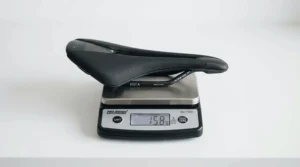
Shimano’s PRO brand helped popularise the short, wide-cutout shape, and the PRO Stealth Team is its race-day take on it. Claimed weight is 161g in the 142mm width, with independent weighing landing only slightly higher. That’s remarkable for a saddle with carbon rails and a carbon-reinforced base.
The nose is short and wide, and the cutout runs deep, so a flexible rider can hang in the drops without loading soft tissue. One independent tester found it needed to be tilted nose-down further than expected, which looks odd but gave strong support in extreme tucks.
Based on the spec comparison, it suits flexible riders who live low on the bike. It’s a poor match if you hop between hoods and tops all day. Note the 7x9mm carbon rails need a compatible clamp or adapter. Published reviews of the Stealth family are broadly positive on the shape, and one retailer reviewer calls it the best saddle they’ve ridden after replacing a worn original.
Pros:
- ✅ Carbon rails at a mid-range price
- ✅ Wide cutout suits deep aero tucks
- ✅ Two widths: 142mm and 152mm
Cons:
- ❌ Needs patient nose-down set-up
- ❌ Less versatile for riders who change hand positions often
Expect a street range of roughly £130-£200 depending on retailer. It’s some of the strongest value among saddles with carbon rails.
2. Specialized Power Pro with Mirror — the 3D-printed comfort benchmark
The Specialized Power Pro with Mirror swaps conventional foam for a liquid-polymer lattice of roughly 14,000 struts, tuned with fit data so firmness varies across the top. The aim is firmer support under the sit bones and relief where soft tissue sits. At about 247g in the 155mm width with titanium rails, it isn’t the lightest. Titanium does keep the rails flexier, quieter on rough tarmac, and compatible with almost any seatpost. The shape follows the popular short-nose, large-cutout Power template with an upswept rear for pelvic support. What most buyers overlook is the adjustment period. One independent tester found the lattice distractingly soft at first, then came to prefer it after a few rides. A UK launch review also questioned whether the comfort gain over the non-Mirror version justified the extra spend. That’s fair, and a reason to buy somewhere with a comfort guarantee.
Pros:
- ✅ Lattice top targets sit-bone pressure
- ✅ Proven short-nose Power shape
- ✅ Standard 7x7mm titanium rails
Cons:
- ❌ Heavy for the money
- ❌ Soft feel takes some getting used to
Expect roughly £250-£300. It’s worth it if pressure points have plagued you, and hard to justify if you’re chasing grams.
3. Fizik Vento Argo 00 Adaptive — firm, flat and fully carbon
The Fizik Vento Argo 00 Adaptive pairs a 3D-printed upper with a carbon shell and carbon 7x9mm rails. The result weighed about 188g in the 150mm width. Its flat fore-aft profile lets you slide back for climbs and roll forward onto the nose for descents. Independent testers noted the carbon base filtered out the low-frequency buzz of rough tarmac. They also found it much firmer than the Specialized Power Pro with Mirror, which favours shorter, high-intensity rides over all-day comfort. In my reading, that makes it a racer’s saddle rather than a sportive saddle. The firmness rewards riders who already tolerate stiff saddles and punishes those hoping for plush cushioning. The review pool I could find is thin, with only a handful of retailer ratings and summaries describing it as light and comfortable. Treat that as indicative, not conclusive.
Pros:
- ✅ Full carbon shell and rails
- ✅ Flat profile for easy position changes
- ✅ Suppresses road buzz well
Cons:
- ❌ Very expensive
- ❌ Firm feel suits short, hard rides best
Expect roughly £350-£400. Buy it if you want a lightweight racing saddle with a modern 3D top and you already like firm saddles.
4. Trek Aeolus RSL AirLoom — the lightest here, with a 3D-printed lattice
The Trek Aeolus RSL AirLoom is the featherweight of this group. It has a carbon shell, oversized 7x10mm oval carbon rails and a 3D-printed lattice top, with UK retailer listings giving 164g to 167g depending on width. It’s a short saddle with a continuous cutout and an integrated mount for a rear light. Those oversized rails are the catch. Road.cc’s review notes you must use compatible side clamps, because round clamps can crush them. In practice, check your seatpost before you click buy. A separate review judged it slightly more comfortable than the older Trek RSL, as the raised upper keeps you centred. Published reviews praise comfort and weight, with price and rail size the main negatives. I couldn’t verify a meaningful pool of owner reviews.
Pros:
- ✅ Among the lightest saddles with 3D padding
- ✅ Integrated light mount
- ✅ Lattice top helps keep you centred
Cons:
- ❌ Oversized rails need compatible clamps
- ❌ Premium pricing
Expect roughly £300-£350. It’s the best choice on this list if you want the lowest weight and your bike already has a compatible clamp.
5. Prologo Scratch M5 Space — the stable all-rounder
The Prologo Scratch M5 Space is the “sensible shoes” pick: a short nose, a perineal cutout and a slightly softer, wider platform at 147mm. Its party trick is the Multi-Sector System, developed with the Polytechnic of Milan. Separate foam zones are meant to follow the pushing and pulling phases of the pedal stroke. In practice, that helps keep your pelvis from creeping forward when you sprint or sit and grind. The textured rear also helps anchor your bib shorts. Weight sits around 213g to 230g depending on the source. That’s heavier than the carbon-railed options but respectable for the money. An independent test praised its pelvic stability and cushioning balance. I found no meaningful volume of retailer reviews, so the evidence rests on test reports. A Nack carbon rail version exists if you want to shed weight later.
Pros:
- ✅ Strong lateral and fore-aft stability
- ✅ Textured rear grips shorts
- ✅ Round shape suits natural pelvic rotation
Cons:
- ❌ Heavier than carbon-railed rivals
- ❌ Not the most aggressive shape
Expect roughly £100-£140 based on UK and European listings, so check current pricing. It’s a smart mid-range pick for riders who want a lightweight racing saddle without extremes.

6. Fizik Vento Argo R3 — value-minded short-nose racing
The Fizik Vento Argo R3 is the sensible sibling in the Vento Argo range: an EVA foam top, a polyurethane base and alloy K:ium rails at around 220g in the 150mm width. At 265mm it’s longer than most short-nose rivals, which gives more room to shift forward on climbs. BikeRadar’s review praised a rare combination of support and a slightly bouncy, buoyant feel. An independent tester flagged that the edges of the cutout created pressure ridges on longer rides. Retailer feedback is genuinely mixed: some riders love it, while others report numbness after roughly 45 minutes or find it firmer than alternatives. That split is why the brand’s comfort guarantee matters. It looks excellent value on paper, and it rewards trying before committing.
Pros:
- ✅ Large cutout suits aggressive positions
- ✅ Clean build, minimal branding
- ✅ Upswept rear supports climbing
Cons:
- ❌ Cutout edges can cause pressure ridges
- ❌ Retailer feedback is mixed
Expect roughly £110-£160 depending on the retailer. It’s good value if your anatomy agrees with the shape.
7. Ritchey Comp Cabrillo — the budget saddle that punches above its weight
The Ritchey Comp Cabrillo is the least glamorous saddle here and perhaps the most interesting. It has a flat profile, chromoly rails and a 260mm length. Ritchey’s Vector Wing design suspends the rear rail attachment points so each side flexes slightly, aiming to spread pressure and avoid hot spots. At 266g it won’t win any weight contests. Because it’s flat and moderate in length, though, it lets you slide around freely rather than locking you in one spot, which suits riders who vary position. The one big limitation is a single 146mm width. Based on the test data, it’s a smart first racing saddle for someone on a tight budget. I couldn’t verify a large pool of owner reviews, but the independent tester called it hard to beat at the price, provided the width fits.
Pros:
- ✅ Genuinely affordable
- ✅ Flat profile lets you move around
- ✅ Vector Wing flex adds compliance
Cons:
- ❌ Only one width
- ❌ Not a lightweight racing saddle
Expect roughly £50-£70. If it fits, it’s the best bang-per-pound here.
Top 7 Specs and UK Price Ranges Compared
| Saddle | Widths | Length | UK price range | Best For |
|---|---|---|---|---|
| PRO Stealth Team | 142 / 152mm | 255mm | £130-£200 | Flexible aero riders |
| Specialized Power Pro with Mirror | 143 / 155mm | 240mm | £250-£300 | Comfort-first racers |
| Fizik Vento Argo 00 Adaptive | 140 / 150mm | 265mm | £350-£400 | Short, hard efforts |
| Trek Aeolus RSL AirLoom | 145 / 155mm | 250mm | £300-£350 | Weight-focused racers |
| Prologo Scratch M5 Space | 140 / 147mm | 250mm | £100-£140 | Mid-budget stability |
| Fizik Vento Argo R3 | 140 / 150mm | 265mm | £110-£160 | Value-minded racing |
| Ritchey Comp Cabrillo | 146mm | 260mm | £50-£70 | First racing saddle |
The price column tells a clear story. Moving from the Ritchey Comp Cabrillo to the Trek Aeolus RSL AirLoom costs roughly £250 more for around 100g saved, which is a genuine luxury purchase. The mid-range trio of Prologo Scratch M5 Space, Fizik Vento Argo R3 and PRO Stealth Team offers the best balance for most racers. Width is the one column you can’t compromise on, so measure before you buy.
✨ Ready to upgrade your contact points?
🔍 Take your racing setup to the next level with these carefully selected saddles. Click on any highlighted product name to check current pricing and availability. A saddle that suits your anatomy can make your fastest rides feel easier!
How to Fit and Dial In Your New Saddle in the First 30 Days
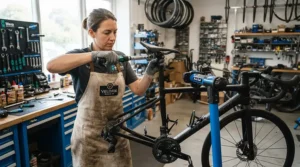
Buying the right saddle is half the job. Fitting it is the other half, and most riders give up on a perfectly good saddle after one bad ride.
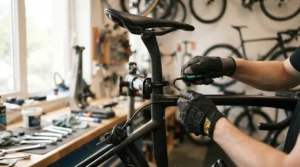
Week one: start neutral. Clamp the saddle level and centred on its rails, then ride it. Cycling UK’s advice is to start with the saddle horizontal and adjust from there. Check height too, because saddles differ in stack. Swapping to a lower-stack saddle can leave your leg effectively too long, so be ready to nudge it.
Week two: change one thing at a time. Tilt the nose down in small steps if you feel pressure on soft tissue. Slide fore or aft in small increments if your reach feels off. Change only one variable per ride, otherwise you won’t know what worked.
Week three: judge by the long ride. A two-hour ride reveals what a 30-minute spin hides. Notice where pressure builds after the first hour.
Week four: lock it in. Mark the rail position with a small piece of tape or a paint pen. Check clamp bolts with a torque wrench to your seatpost maker’s specification. If you have a crash, inspect carbon shells and rails carefully before riding again. If you’re unsure about any of this, a professional bike fit is the fastest route to getting it right.
Real-World Scenarios: Three Riders, Three Saddles
The tight-budget newcomer. You’re entering your first local road races on a £150 saddle-and-shorts budget, riding three or four times a week on mixed British roads. A budget route works: the Ritchey Comp Cabrillo, if 146mm suits you, leaves money for better bib shorts. Alternatively, the Fizik Vento Argo R3 is the step up if you want a more aggressive shape.
The weekend crit racer. You race flat, technical circuits, spend most of the time in the drops and train five days a week. You need support in deep tucks and a lightweight racing saddle that won’t punish you under sprint load. The PRO Stealth Team matches that profile on paper, with a short nose, a deep cutout and carbon rails at a mid-range price.
The sportive-turned-racer who fights pressure points. You’ve done long hilly rides and now want to race, but you struggle with soreness on rough roads. The Specialized Power Pro with Mirror or the Prologo Scratch M5 Space suit you better. Both prioritise pelvic support over absolute minimum weight, so you won’t pay a comfort penalty for chasing marginal gains.
Notice the pattern. Each rider’s budget, position and riding hours drive the choice, not the weight on the spec sheet.
What Are Road Racing Saddles?
Road racing saddles are lightweight, firm, typically short-nosed saddles designed to hold a rider in a low, forward-hinged position while transferring power efficiently. They combine pressure-relieving cutouts or channels, minimal padding and stiff shells and rails, trading plush comfort for weight savings and stability under hard pedalling.
A road racing saddle differs from a commuter or touring saddle in shape, not just padding. Where upright saddles support your weight with cushioning, racing saddles lean on geometry. The short nose lets your pelvis rotate forward without jamming into the nose, and the cutout reduces pressure where soft tissue sits. Most also come in several widths, because sit-bone spacing varies widely between riders.
Think of it as the difference between a sofa and a bucket seat. A sofa feels nicer for five minutes, while a bucket seat is better after three hours of hard driving.
How to Choose Road Racing Saddles
Use this six-step checklist to narrow the field fast.
- Measure your sit bones. Width is the most important comfort factor. Cycling UK explains that leaning forward on a road bike calls for a narrower saddle than sitting upright. Its rule of thumb is to choose a saddle at least 20mm wider than your measured sit-bone width, and its saddle comfort guide is a useful starting point.
- Match the shape to your flexibility. Flexible riders who live in the drops suit short, flat saddles with deep cutouts. Less flexible riders may prefer a slightly rounder profile.
- Choose rail material for your budget and seatpost. Alloy and titanium suit most clamps. Carbon rails save weight but need compatible clamps (more on this below).
- Check padding against your ride length. Firm saddles suit short, hard efforts, while a little more compliance helps on rough roads and long rides.
- Look for a comfort guarantee. Brands such as Fizik and Trek offer trial periods, which reduces the risk of a wrong guess.
- Set a realistic budget. Mid-range saddles often match premium comfort and trade only grams.
Racing Saddle vs Endurance Saddle: Which Do You Actually Need?
The racing saddle vs endurance saddle question comes down to position, not pride. A racing saddle assumes you’re tucked low with a rotated pelvis, so it’s short, flat and firm. An endurance saddle assumes you sit more upright, so it’s usually longer, rounder and more cushioned.
| Feature | Racing saddle | Endurance saddle |
|---|---|---|
| Typical length | Short (around 240-265mm) | Longer (the Brooks Cambium C15 Carved measures 283mm) |
| Typical weight | Roughly 160-270g | Often 300g+ (the Brooks Cambium C15 Carved weighs about 435g) |
| Padding | Minimal, firm | More compliant, cradled |
| Profile | Flat, supports movement | Rounder, supports a neutral position |
| Best For | Low, forward riding positions | Upright, long, relaxed rides |
The table shows why the racing saddle vs endurance saddle choice isn’t about comfort alone. A cradled endurance shape actively holds you upright. The Brooks Cambium C15 Carved weighs roughly double most racing saddles, but it can still be the right choice if comfort over hours matters most. If you mostly ride from the hoods or tops, an endurance shape may serve you better than a race saddle.
Honest rule: pick the saddle for the position you actually ride, not the one you aspire to. If you ride sportives, race occasionally and switch positions constantly, a flat profile such as the Ritchey Comp Cabrillo can bridge both worlds.
Saddle Weight Savings: What Do the Grams Actually Cost?
Saddle weight savings are the most seductive upgrade in cycling because they’re easy to buy and easy to measure. The question is whether they’re worth it.
Here’s a back-of-envelope estimate. A rider, bike and kit might total around 87kg. Saving 100g is roughly 0.1% of that mass. On a 30-minute climb, simple physics suggests a gain of a couple of seconds. That’s a rough estimate, not a measured result, but it shows the scale. Weight savings matter more for riders chasing marginal gains, and far less than fit, fitness or aerodynamics.
Cost per gram sharpens the picture. Moving from the Ritchey Comp Cabrillo to the Trek Aeolus RSL AirLoom saves roughly 100g for about £250-£300 extra, which works out at several pounds per gram. Moving from the Prologo Scratch M5 Space to the PRO Stealth Team saves about 50-70g for a modest premium, which is far better value.
Independent testers also note that saddles with carbon rails can shed upwards of 100g, which is why they dominate lightweight racing saddle lists. The takeaway: pursue saddle weight savings after you’ve sorted width, shape and fit. A lighter saddle that doesn’t fit is just a lighter way to be uncomfortable.

Carbon Rail Saddles: Are They Worth the Money and the Hassle?
Carbon rail saddles are the headline of every premium range, and for good reason. Carbon cuts weight, damps vibration and looks superb. Independent testers say the PRO Stealth Team, for example, kept useful compliance despite carbon rails, never feeling buzzy.
The hassle is compatibility. Most carbon rail saddles use 7x9mm rails rather than the standard 7x7mm round rails, so many seatpost clamps won’t accept them without an adapter. The Trek Aeolus RSL AirLoom goes further with oversized 7x10mm oval rails that need compatible side clamps. Bikerumor’s road saddle buyer’s guide makes the same point: verify your seatpost before buying carbon rail saddles, and note that carbon can also feel stiffer than titanium.
Practical advice:
- Check your seatpost clamp type and rail-size support before ordering.
- Confirm any rider weight limits in the manufacturer’s documentation.
- Inspect carbon rails after any crash or if you hear creaking.
Verdict: carbon rail saddles are worth it if you’re chasing weight and your seatpost is compatible. If not, titanium or alloy rails deliver most of the benefit with far less fuss.
Racing Riding Position: How Your Posture Shapes Your Saddle Choice
A proper racing riding position tilts your pelvis forward, rolls weight off your sit bones and onto softer tissue, and flattens your back. That’s why racing saddles have cutouts and short noses: they accommodate that rotation rather than fight it.
Flexibility is the key variable. If you can comfortably hold the drops for long periods, a short, flat saddle supports you there. If your hamstrings and hip flexors are tight, you’ll rock backward onto the rear of the saddle and a rounder shape will feel kinder. Be honest about which rider you are.
Saddle set-up and bar position matter as much as the saddle itself. Cycling UK points out that handlebar position is part of saddle comfort. If you’re stretched too far, your pelvis rotates excessively and no saddle will feel right. Lowering your bars before your body is ready is one of the fastest routes to saddle pain. In a true racing riding position, small angle changes make big differences, which is why the PRO Stealth Team needs patient set-up.
Common Mistakes When Buying Road Racing Saddles
Buying by weight alone. A 160g saddle that doesn’t fit is worse than a 250g saddle that does. Weight is the last filter, not the first.
Ignoring width. Too narrow and your sit bones hang off the edges, too wide and you chafe. Measure first.
Skipping rail compatibility. Carbon rail saddles can be incompatible with your seatpost. A forced fit risks damaging expensive rails.
Paying for 3D printing without trying. Lattice tops feel different. The Specialized Power Pro with Mirror reportedly feels soft initially, so don’t judge on one ride and don’t buy blind.
Changing everything at once. Alter one variable per ride or you’ll never know what helped.
Copying a pro’s saddle. A WorldTour rider’s flexibility, position and hours differ from yours. Their saddle is a data point, not a prescription.
Giving up too soon. Give a new saddle several rides, ideally including one long one, before concluding it’s wrong.
Long-Term Cost and Value: What Road Racing Saddles Really Cost
Think of saddle value as cost per hour of comfortable riding, not pounds per saddle. A £60 saddle that fits can beat a £350 saddle that doesn’t.
| Tier | Typical UK range | What you gain | Example | Best For |
|---|---|---|---|---|
| Budget | Under £100 | Decent shape, heavier rails | Ritchey Comp Cabrillo | New racers |
| Mid-range | £100-£200 | Alloy or carbon rails, lower weight | Prologo Scratch M5 Space, Fizik Vento Argo R3, PRO Stealth Team | Most racers |
| Premium | £250+ | Carbon, 3D-printed padding | Specialized Power Pro with Mirror, Fizik Vento Argo 00 Adaptive, Trek Aeolus RSL AirLoom | Weight or comfort seekers |
Independent testers have noted that spending triple the price often doesn’t deliver a triple gain in comfort. Bikerumor’s testers found the budget Trek Verse Short Comp offered comfort similar to its pricier carbon sibling, just with extra weight. That’s useful perspective if you’re deciding between a mid-range and a premium road racing saddle.
Long-term, saddles are low-maintenance. Wipe the cover, check clamp torque occasionally and replace it after a crash or if the cover or base shows damage. Over several seasons, a mid-range road racing saddle costs very little per ride.

Frequently Asked Questions
❓ How much should I spend on road racing saddles?
❓ Can I fit carbon rail saddles to any seatpost?
❓ Is a lightweight racing saddle less comfortable?
❓ Where can I try road racing saddles before buying in the UK?
❓ How often should I replace a road racing saddle?
Conclusion
Here’s the honest summary. The best road racing saddles aren’t the lightest or the dearest. They’re the ones that match your sit-bone width, your flexibility and your riding position. The PRO Stealth Team offers carbon rails and aero-friendly support at a sensible price. The Specialized Power Pro with Mirror and Fizik Vento Argo 00 Adaptive push comfort and technology further for a premium. The Trek Aeolus RSL AirLoom targets minimal weight with 3D padding. The Prologo Scratch M5 Space and Fizik Vento Argo R3 cover the mid-range, and the Ritchey Comp Cabrillo proves you don’t need a big budget to start racing.
Whichever you choose, measure your sit bones, check rail compatibility, change one variable at a time and give it a fair trial. A well-chosen saddle will quietly improve every ride, while a poorly chosen one will quietly ruin them.
✨ Ready to find your perfect fit?
🚴♂️ Click any highlighted saddle name to check current pricing and availability, and shortlist two options to compare. Your next personal best might be sitting on a better saddle!
Recommended for You
- Saddle For Numbness Cycling: 7 Best Proven Picks (2026)
- Road Bike Saddles: 7 Best Comfy Picks For UK Riders (2026)
- Look Keo Cleats For Racing: 7 Proven Picks Under £25 (2026)
Disclaimer: This article contains affiliate links. As an Amazon Associate, I earn from qualifying purchases. If you purchase products through these links, we may earn a small commission at no additional cost to you.
✨ Found this helpful? Share it with your friends! 💬🤗
