In This Article
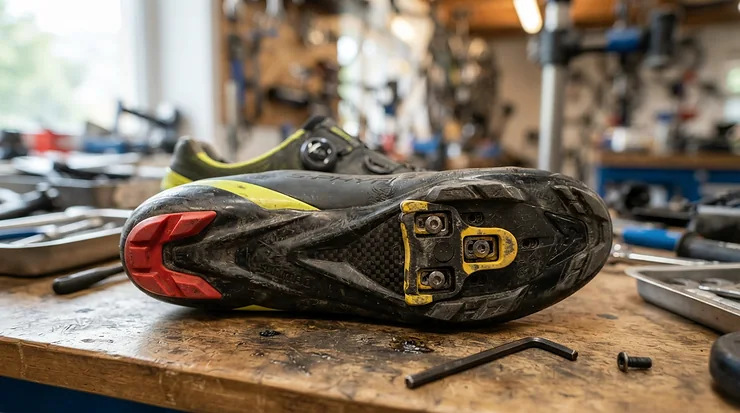
A clipless pedal system is only as good as the two small plastic wedges bolted to the bottom of your shoes, and for road riders on a Look-compatible setup, that means the cleat is doing more work than the pedal gets credit for. The best Look Keo cleats aren’t just a spare part you replace when the old ones snap — they’re the difference between a pedal stroke that feels locked-in and one that leaves your knees grumbling by mile forty. A Look Keo cleat is the three-bolt plastic interface that clips a road shoe into any Look Keo, Keo Blade or Keo Max pedal, available in three float settings (0°, 4.5° and 9°) that determine how much your heel can rotate before you clip out.
This guide pulls together seven genuine Look-compatible cleats, from official Look Cycle originals to well-reviewed third-party alternatives, and breaks down what actually separates them: float feel, walkability, wear life, and where each one earns its keep on a UK rider’s shoe rack. We’ll also get into the float debate properly, put Look Keo cleats up against Shimano’s SPD-SL system, and cover the compatibility questions that trip up first-time buyers. As the Wikipedia entry on clipless pedal systems explains, the format has dominated road cycling since the late 1980s precisely because it lets manufacturers tune float and release tension independently — which is exactly the trade-off we’re unpacking here.
Whether you’re replacing worn originals, switching from an older Delta-standard setup, or building a winter bike on a budget, there’s a cleat below that fits the brief.
Quick Comparison Table
| Cleat | Float | Best For | Price Range |
|---|---|---|---|
| LOOK Kéo Grip Cleats – Red (9°) | 9° | Sensitive knees, beginners | around £18-£22 |
| LOOK Kéo Grip Cleats – Grey (4.5°) | 4.5° | All-round balance | around £18-£22 |
| LOOK Kéo Grip Cleats – Black (0°) | 0° | Racing, sprinting | around £18-£22 |
| LOOK Kéo Classic Cleats (Non-Grip) | 0°/4.5°/9° | Budget-conscious originals | under £15 |
| LOOK Kéo Grip Tri-Material Cleats | 0°/4.5°/9° | Long-term durability | around £18-£25 |
| Exustar E-PK2 Cleats | 4.5°/6° | Third-party value | under £15 |
| VENZO Look Keo Compatible Cleats | 9° | Multi-pack budget buyers | under £20 |
Scanning the table, the pattern that jumps out is how tightly the official LOOK Kéo Grip Cleats cluster on price despite very different feel — the colour, not the pound sign, is what separates them. Budget hunters gravitate toward the LOOK Kéo Classic Cleats or the third-party Exustar E-PK2 Cleats, while anyone planning to rack up serious winter miles should look past the sticker price toward the LOOK Kéo Grip Tri-Material Cleats, whose reworked compound is built specifically to outlast the standard Grip line. None of these prices are fixed, of course — stock and promotions shift weekly, so treat every figure here as a starting point for your own check at the time of research.
Just one click — help others make better buying decisions too!😊
Top 7 Look Keo Cleats: Expert Analysis
1. LOOK Kéo Grip Cleats – Red (9° Float) — most forgiving float on the market
The nine-degree red cleat is the one Look itself points beginners toward, and the number matters more than it looks: that’s 4.5 degrees of rotation in each direction before the mechanism releases. In practice, that generous window means your heel can drift naturally through the pedal stroke instead of being pinned in one exact angle, which is precisely why it’s become the default recommendation for anyone with cranky knees or a still-evolving pedalling style. Reviewers on retail sites consistently describe the red Grip cleat as the easiest to live with day-to-day, praising the rubberised walking pads that stop you skating across a café floor, though a recurring theme in user feedback is that those same pads wear faster than the harder plastic underneath if you walk in them regularly.
Pros:
- ✅ Most forgiving float for developing pedalling technique
- ✅ Rubber walking pads reduce slipping off the bike
- ✅ Widely stocked, so replacements are easy to find
Cons:
- ❌ Rubber pads wear faster than the base plastic
- ❌ Too much float for riders chasing maximum power transfer
At around £18-£22 a pair, this is the safe, well-reviewed default — genuinely good value for anyone unsure which float suits them.
2. LOOK Kéo Grip Cleats – Grey (4.5° Float) — best all-round balance for daily riders
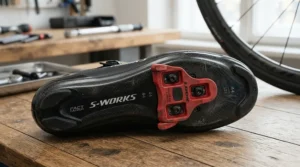
Grey sits in the middle of Look’s float range, offering 4.5 degrees of total rotation rather than nine, and that halving changes the feel more than you’d expect from a spec sheet. Where the red cleat lets your foot wander, the grey version gives you enough play to stay comfortable on a four-hour Sunday ride while still delivering a firmer, more connected pedal stroke when you stand up and sprint for a sign. Cycling retailers and independent reviewers routinely single this colourway out as the one most experienced riders settle on once they’ve stopped needing the training wheels of maximum float, and it’s the cleat most commonly bundled as the factory default on new Keo pedals.
Pros:
- ✅ Balanced feel — comfortable yet precise
- ✅ Factory-standard choice on most new Look Keo pedals
- ✅ Suits both long endurance rides and harder efforts
Cons:
- ❌ Not as forgiving as red for riders with knee sensitivity
- ❌ Marginal power gain over red is hard to notice below race pace
Expect to pay roughly the same £18-£22 range as the red version — the material cost is identical, only the float geometry changes.
3. LOOK Kéo Grip Cleats – Black (0° Float) — best for racers wanting zero play
Black is the fixed-position option: zero degrees of float, meaning your foot is locked at exactly the angle you set it during installation, full stop. Look markets this squarely at competitive riders and track specialists who have already dialled in a precise cleat position and want every watt going into forward motion rather than lateral drift. The trade-off is real and well documented in cycling forums — riders who install black cleats without first nailing their natural foot angle through weeks on a floating cleat often report knee discomfort within a few rides, because there’s no built-in margin for error. This is a cleat for riders who know their body, not one to reach for as a first purchase.
Pros:
- ✅ Zero lateral play for maximum, direct power transfer
- ✅ Precise, locked-in feel favoured by sprinters and crit racers
- ✅ Same durable Grip walking pads as red and grey
Cons:
- ❌ Unforgiving of poor initial cleat alignment
- ❌ Not recommended for riders new to clipless pedals
Priced identically to its siblings at around £18-£22, the black cleat’s value depends entirely on whether your biomechanics actually call for zero float.
4. LOOK Kéo Classic Cleats (Non-Grip) — best budget pick for original Look parts
Before Look introduced the rubberised Grip line, this was the standard Keo cleat, and it’s still sold today as a cheaper, no-frills alternative for riders who don’t mind a slightly more awkward walk to the café. Strip away the anti-slip pads and you’re left with the same core mechanism — the same three float options, the same memory-position system for swapping cleats without losing your fit — at a noticeably lower price point. Riders in long-running forum threads who’ve used both versions tend to agree the Classic cleats clip in and release with a slightly crisper, more mechanical snap, since there’s no rubber compound cushioning the interface; the flip side is a genuine safety consideration, since without a grip pad, worn Classic cleats become properly slippery on wet pavement.
Pros:
- ✅ Cheapest genuine Look Kéo cleat available
- ✅ Crisp, mechanical engagement feel
- ✅ Same three-float, memory-position system as pricier options
Cons:
- ❌ No grip pads — slippery when walking, especially wet floors
- ❌ Wears to a slick, shiny surface faster without rubber protection
Sitting under £15 in most UK stores, this is the pick for racers who barely walk in their shoes and want genuine Look parts on a budget.
5. LOOK Kéo Grip Tri-Material Cleats — best newest technology for long-term durability
Launched as Look’s most significant Keo Grip update since the line began, the Tri-Material cleat rebuilds the design around three compounds instead of two, specifically targeting the pair of complaints that dog every cleat eventually: creaking and premature wear. A new low-friction “Silent Float” insert sits at the rear of the cleat exactly where it grinds against the pedal’s rear engagement lever — the contact point most responsible for that maddening squeak that develops after a few thousand miles — while widened front and rear grip zones (2cm wider combined) genuinely improve stability walking across tile or wet pavement. Early coverage from cycling press outlets singles out the reduced creaking as the standout real-world improvement, which lines up with what the low-friction material is engineered to do.
Pros:
- ✅ Silent Float insert noticeably cuts pedal-cleat creaking
- ✅ Wider grip zones improve off-bike stability
- ✅ Longer-lasting compound extends replacement intervals
Cons:
- ❌ Costs more than the standard Grip line
- ❌ Not yet as widely stocked as the established colour range
At around £18-£25, this is a small premium over the standard Grip cleats, but the durability gains make a genuine case for the newest tech if you’re buying fresh anyway.
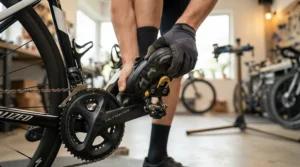
6. Exustar E-PK2 Look Keo-Compatible Cleats — best third-party value alternative
Exustar has built a reputation as the go-to third-party parts maker for riders who want Look-standard compatibility without paying Look’s own prices, and the E-PK2 delivers exactly that: a genuine 3-bolt Keo-pattern cleat, complete with float options, at a price that regularly undercuts the official range by a noticeable margin. Reviewers on retail platforms frequently note that the clip-in and release action feels marginally less refined than a genuine Look cleat — a touch more resistance on entry, a slightly less positive click — but for a winter bike, a spare pair kept in a saddle bag, or a first foray into clipless pedals where you’re not yet certain this is the system for you, that small compromise is easy to justify.
Pros:
- ✅ Significantly cheaper than genuine Look Kéo cleats
- ✅ Genuine 3-bolt compatibility with all Keo pedals
- ✅ Sensible backup or winter-bike option
Cons:
- ❌ Engagement feels slightly less crisp than genuine Look parts
- ❌ Smaller review pool makes long-term durability harder to verify
Typically found under £15, this is the pragmatic choice for anyone testing the waters or keeping spares on hand.
7. VENZO Look Keo Compatible Cleats — best multi-pack value buy
VENZO’s Keo-compatible cleats round out the budget end of the market with a straightforward, no-nonsense nine-degree float option aimed at riders who simply want a functional replacement without overthinking the purchase. They’re a common recommendation in online forums for indoor trainer setups and spin-class bikes running Look-pattern pedals, where the wear-and-tear cycle is faster and nobody wants to spend official Look money on cleats that will need replacing again within a year. Aggregated buyer feedback describes them as reliable enough for casual and indoor use, with the caveat — echoed across several budget third-party cleats — that the plastic compound feels noticeably harder and less refined underfoot than Look’s own Grip range.
Pros:
- ✅ Very competitive price for genuine Keo-pattern compatibility
- ✅ Popular choice for indoor trainers and spin bikes
- ✅ Straightforward installation with standard 3-bolt shoes
Cons:
- ❌ Harder plastic feel compared with Look’s own compounds
- ❌ Limited float options versus the full official range
Usually available under £20, this is the pick for high-wear indoor use where premium materials matter less.
Look Keo Cleats Float Comparison: Choosing Your Degree of Float
Float is the single most important spec on this entire list, and it’s the one number worth understanding before you type anything into a search bar. In Look’s system, float is colour-coded: black cleats give 0° (a fixed position with zero rotational play), grey cleats give 4.5°, and red cleats give the full 9°, split evenly as 4.5° in each direction. According to Look Cycle’s own explanation of cleat colours, float exists to let the foot rotate naturally during the pedal stroke rather than locking the ankle, knee and hip into a single rigid line — and how much of that rotation you actually want depends heavily on your biomechanics, not your fitness level.
| Float Option | Colour | Rotation | Best Suited To |
|---|---|---|---|
| 0° | Black | None — fixed | Experienced riders, racers, sprinters |
| 4.5° | Grey | Moderate | Most riders; the sensible default |
| 9° | Red | Maximum | Beginners, sensitive knees, rehab |
The takeaway from this table isn’t “more float is always better” or “zero float is for real cyclists” — it’s that float should match your knee history and riding style, not your ego. Riders recovering from a knee injury, or those who’ve never had a proper bike fit, are consistently better served starting with the LOOK Kéo Grip Cleats – Red (9° Float) and dialling down only if they later feel the platform is too vague under hard efforts.
Look Keo Cleats vs SPD-SL Cleats
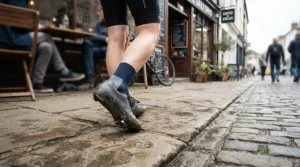
This is the comparison every rider entering the Look ecosystem eventually has, usually while standing in a bike shop holding two different boxes. Both systems are three-bolt, road-specific, spring-loaded designs that work the same basic way — hook the cleat’s nose into the pedal, press down until the rear mechanism clicks shut — but they are not interchangeable in any sense. A Look Keo cleat will not mount to a Shimano SPD-SL pedal, and the two brands use different bolt spacing and cleat geometry, so mixing components isn’t a workaround, it’s a non-starter.
| Feature | Look Keo Cleats | Shimano SPD-SL Cleats |
|---|---|---|
| Float colours | Black 0°, Grey 4.5°, Red 9° | Red 0°, Blue 2°, Yellow 6° |
| Walkability | Improved with Grip pads | Slight edge over standard Keo |
| Weight | Generally lighter platform | Slightly heavier plate |
| Cross-compatibility | None with SPD-SL | None with Keo |
As road.cc’s detailed comparison of Look and Shimano pedal systems points out, both brands colour-code float in broadly similar ways, but the actual degrees don’t line up — Shimano’s yellow cleat tops out at 6°, well short of Look’s 9° red — so a rider switching brands can’t simply match colours and expect an identical feel. In practical terms, most testers report Look’s platform as marginally lighter and its walking pads as slightly grippier since the 2026 Tri-Material update, while Shimano traditionally holds a small edge on raw plate stiffness for out-of-the-saddle efforts. Neither system is objectively “better” — the deciding factor is almost always which pedals came on your bike, or which system your local group ride has standardised on for easy cleat swaps.
✨ Don’t Miss These Exclusive Deals!
🔍 Compare current listings for every Look Keo cleat covered here and lock in the float option that actually matches your riding — click through before stock shifts.
Look Pedal System Compatibility: What Fits What
Compatibility questions cause more returned parcels than almost any other cleat mistake, so it’s worth being precise. Every cleat in this guide uses Look’s Keo standard, which is a three-bolt pattern compatible with every pedal in Look’s current road range — the entry-level Keo Classic 3, the mid-range Keo 2 Max, and the flagship Keo Blade and Keo Blade Carbon — because Look deliberately kept the cleat interface identical across the whole lineup and only changed the pedal-side spring tension mechanism between tiers. That’s genuinely good news for anyone upgrading pedals later: your existing Keo cleats, whatever colour, will clip straight into a nicer pedal without buying new cleats at the same time.
Where things get murkier is with older Look Delta-pattern pedals, a now-discontinued four-bolt standard that predates Keo and is not compatible with any cleat in this guide, and with third-party “universal” pedal systems that claim Keo compatibility but sometimes fit loosely. Power meter pedals from other brands, including several Garmin Vector and Exustar-branded models, are also built to the Keo cleat pattern specifically so riders can switch power meters without re-buying cleats — a detail worth knowing if a power meter upgrade is somewhere on your future shopping list. Before buying any cleat here, a thirty-second check of your existing pedal’s bolt pattern and cleat body shape will save you a return trip to the post office.
How to Choose the Best Look Keo Cleats for You
Picking the right cleat from seven genuinely decent options comes down to five practical questions, answered in the order that actually matters:
- Check your float history first. If you’ve never used floating cleats or have any history of knee discomfort, start at 9° red and reassess after a few hundred miles — dropping float later is easy, but riding on too little float can cause real joint strain.
- Decide how much you actually walk in cleats. Commuters and café-stop riders benefit hugely from Grip-series rubber pads; racers who clip in at the start line and clip out at the finish can save money with non-grip Classic cleats.
- Match your budget to your mileage. High-mileage riders get better long-term value from the durable LOOK Kéo Grip Tri-Material Cleats, while occasional or indoor riders are well served by budget third-party options like Exustar E-PK2 Cleats.
- Confirm your pedal compatibility. Anything Keo-pattern works across Look’s whole current pedal range — but double-check if you’re running an older Delta-standard pedal or a third-party “universal” option.
- Buy a spare pair before you need one. Cleats wear gradually rather than failing suddenly, and having a backup on hand means a five-minute swap instead of a missed ride.
Road Cleat Wear Indicators: When to Replace Your Cleats
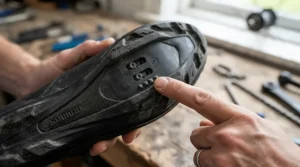
Every Look Keo cleat, Grip or Classic, includes built-in wear indicators — small sections of contrasting material embedded at the front and rear contact points that become visible as the outer layer grinds away. The official guidance, laid out in Look Cycle’s own wear-monitoring advice, is unambiguous: as soon as any one of the four indicators becomes visible, replacement isn’t optional, because continued wear at that point increases the risk of an unexpected release mid-pedal-stroke. That’s not marketing caution — several long-running cyclist forum threads describe exactly this failure mode on badly worn cleats, usually during a hard out-of-the-saddle effort.
Beyond the visible indicators, a handful of feel-based warning signs are worth watching for between inspections: engagement that no longer clicks in with a crisp, confident snap; a faint but persistent rocking or play under the foot while pedalling seated; unusual creaking or grinding noises from the pedal-cleat interface; and a release action that feels either gritty and stiff or, more worryingly, suspiciously easy. Riders who walk frequently in their cycling shoes — across car parks, into cafés, up flights of stairs — will burn through cleats noticeably faster than those who barely touch pavement, so mileage alone is a poor predictor of replacement timing. As a rough baseline, most manufacturers recommend budgeting for new cleats every 3,000 to 5,000 miles, sooner if you’re a frequent walker.
Practical Usage Guide: Installing, Adjusting and Maintaining Your Cleats
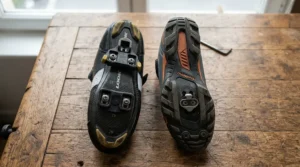
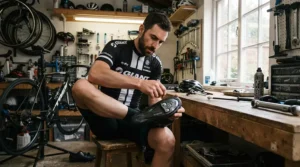
Getting a new set of cleats onto your shoes properly is a fifteen-minute job that pays dividends for months, provided you resist the urge to eyeball it. Start by marking your existing cleat position with a paint pen or masking tape before removing the old ones — this single step saves the guesswork of re-finding your fit from scratch, and it’s the step most first-timers skip. Loosely bolt the new cleat on, walk the shoe around to confirm the memory-position marks line up, then torque the three bolts evenly in a star pattern rather than fully tightening one at a time, which can twist the cleat slightly out of true.
Once fitted, a short adjustment window of two or three rides is normal — minor tweaks to fore-aft position affect knee tracking more than most riders expect, so don’t be afraid to loosen and nudge things by a few millimetres if something feels off. For maintenance, rinse grit and road debris off both cleats and pedal springs after wet rides, since embedded dirt accelerates wear far faster than mileage alone, and a light coat of PTFE-based lubricant on the pedal’s spring mechanism every few months keeps engagement feeling consistent. The single most common first-30-days mistake is over-tightening the release-tension screw on the pedal itself in an attempt to feel “more secure” — this makes unclipping harder under pressure, which is precisely the scenario where you most need a clean release.
Real-World Scenarios: Which Look Keo Cleat Suits Your Riding?
The weekend commuter. Riding twelve miles each way into the office, walking through two train stations and up three flights of stairs daily, this rider needs grip underfoot as much as performance on the bike — the LOOK Kéo Grip Cleats – Grey (4.5°) hits the balance between a stable pedal stroke and enough anti-slip confidence for a rushed platform dash, without the fixed-position harshness of black cleats on a foot that’s spent all day in different shoes.
The club racer on a budget. Training four times a week alongside two Sunday races, but watching every pound spent on consumables, this rider gets genuine value from the LOOK Kéo Classic Cleats (Non-Grip) for training miles, saving the fresher, grippier LOOK Kéo Grip Tri-Material Cleats for race day when a confident, creak-free clip-in at the start line actually matters.
The returning rider rebuilding fitness after injury. Coming back from a knee reconstruction and rebuilding base miles slowly, this rider has the clearest case in this whole guide for the LOOK Kéo Grip Cleats – Red (9°), whose maximum float removes rotational stress from a joint that’s still finding its range, with room to move toward less float only once a physio and a few hundred pain-free miles give the green light.
Common Mistakes When Buying Look Keo Cleats
The single most frequent error is buying based on price or colour preference alone rather than float requirement — a red cleat and a black cleat cost roughly the same, yet feel completely different underfoot, so choosing on price signals nothing useful. A close second is assuming any “Look-compatible” third-party cleat will feel identical to genuine Look parts; budget alternatives like Exustar E-PK2 Cleats and VENZO Look Keo Compatible Cleats are genuinely usable, but reviewers consistently note a less refined engagement feel, and that’s a reasonable trade for the price, not a manufacturing defect.
A third mistake is buying a single pair when a spare is genuinely cheap insurance — cleats wear gradually and a mid-season failure during a sportive is a miserable way to learn that lesson. Finally, plenty of riders switch float without accounting for the adjustment period; dropping from 9° to 0° cold, mid-season, without easing the knees into the more rigid platform, is a common cause of the very knee pain that floating cleats exist to prevent.
Features That Actually Matter (And Those That Don’t)
Marketing copy around cleats loves to talk up small refinements, but not everything moves the needle equally. Float accuracy and consistency genuinely matter — a cleat that delivers exactly the rotation its colour promises, batch after batch, protects your knees in a way no other spec can substitute for. Wear-indicator visibility matters too, because a cleat you can’t easily tell is worn out is a safety issue waiting to happen, which is exactly why Look builds four separate indicator points into every design rather than one.
What matters far less, despite the shelf space devoted to it, is marginal weight difference between cleat models — we’re talking single-digit grams that no rider will feel through the pedal stroke, unlike the difference float actually makes. Similarly, colour beyond its float-coding function is pure preference; there’s no performance case for choosing red over grey beyond the rotation number attached to it. If a retail listing leads with cosmetic detail before mentioning float degrees, that’s a fair signal to keep scrolling for the actual specification.
Long-Term Cost & Maintenance of Look Keo Cleats
Cleats are a genuine consumable, not a one-time purchase, and budgeting for that reality changes how the price comparison actually looks. At roughly 3,000 to 5,000 miles between replacements, a rider covering 4,000 miles a year — a realistic figure for a committed weekend cyclist — is looking at one new pair annually regardless of which cleat they choose, which puts the total cost of ownership gap between budget and premium options at perhaps £10 a year, not the headline price difference suggested by the shelf tag.
Viewed that way, the calculus shifts meaningfully toward buying the cleat that actually suits your float needs and walking habits rather than chasing the cheapest sticker price, because the annual cost difference is genuinely marginal against the comfort and safety cost of the wrong float. The one place genuine savings show up is in frequency of replacement — riders who consistently pick a durable compound like the LOOK Kéo Grip Tri-Material Cleats and look after them with regular rinsing may stretch replacement intervals toward the upper end of that mileage range, turning a small upfront premium into a real saving over two or three seasons.
Frequently Asked Questions
❓ Are Look Keo cleats compatible with all Look pedals?
❓ What degree of float should a beginner choose?
❓ Can I mix Look Keo cleats with Shimano SPD-SL pedals?
❓ How often should road cleats be replaced?
❓ Do third-party Look-compatible cleats work as well as genuine Look ones?
Conclusion
Seven cleats, three float settings, and one underlying truth: there’s no single “best” Look Keo cleat, only the one that matches your knees, your walking habits and your mileage. Riders chasing maximum comfort and forgiveness should look first at the LOOK Kéo Grip Cleats – Red (9° Float), while anyone wanting a locked-in, race-ready platform will get more from the LOOK Kéo Grip Cleats – Black (0° Float). Budget-focused buyers have two genuinely solid routes in the LOOK Kéo Classic Cleats (Non-Grip) and the third-party Exustar E-PK2 Cleats, and riders planning serious year-round mileage should give the newest LOOK Kéo Grip Tri-Material Cleats a proper look for the durability gains alone.
Whichever you land on, the research above should make the float decision — the one spec that actually changes how your knees feel three hours into a ride — far less of a guessing game than it was when you started reading. Check current stock and pricing before you commit, since availability across colours and versions shifts more often than the specs do.
Recommended for You
- SPD-SL Cleats For Knee Comfort: 7 Best Picks For UK Riders (2026)
- Best SPD-SL Cleats: 7 Top Picks For UK Road Riders (2026)
- SPD Cleats For Commuting: 7 Best Picks For UK Riders (2026)
Disclaimer: This article contains affiliate links. As an Amazon Associate, I earn from qualifying purchases. If you purchase products through these links, we may earn a small commission at no additional cost to you.
✨ Found this helpful? Share it with your friends! 💬🤗
